Glossar-Begriff: Erde
Beschreibung: Die Erde ist von der Sonne aus gesehen der dritte Planet und der fünftgrößte Planet des Sonnensystems. Sie ist ein erdähnlicher Gesteinsplanet mit einem Radius von etwa 6.400 Kilometern (km). Die Erde hat eine Masse von etwa sechs Billionen Billionen Kilogramm.
Die durchschnittliche Entfernung der Erde von der Sonne beträgt etwa 150 Millionen Kilometer. Dies wird als eine Astronomische Einheit (AE) definiert. Die Erde braucht 365,26 Jahre für einen Umlauf um die Sonne. Die Erde hat einen natürlichen Satelliten: den Mond.
Die Erde ist Heimat für Millionen verschiedener Arten von Lebewesen, darunter auch den Menschen. Sie ist der einzige bislang bekannte Ort im Universum, auf dem Leben existiert. Die Erde ist vermutlich vor etwa 4,54 Milliarden Jahren entstanden. Die Erde hat eine Atmosphäre und eine Magnetosphäre, die schädliche Strahlung abhalten, was für Lebewesen förderlich ist. Auf der Erde gibt es außerdem reichlich Oberflächenwasser (als einziger Planet im Sonnensystem), was ihr eine blaue Farbe verleiht.
Ähnliche Begriffe:
Dieser Begriff in anderen Sprachen
Begriffs- und Definitionsstatus Die Originaldefinition dieses Begriffes auf Englisch wurden von einem forschenden Astronom und einer Lehrkraft bestätigt Die Übersetzung dieses Begriffs und seiner Definition warten auf Prüfung und Bestätigung
The OAE Multilingual Glossary is a project of the IAU Office of Astronomy for Education (OAE) in collaboration with the IAU Office of Astronomy Outreach (OAO). The terms and definitions were chosen, written and reviewed by a collective effort from the OAE, the OAE Centers and Nodes, the OAE National Astronomy Education Coordinators (NAECs) and other volunteers. You can find a full list of credits here. All glossary terms and their definitions are released under a Creative Commons CC BY-4.0 license and should be credited to "IAU OAE".
Wenn dir ein inhaltlicher oder Übersetzungsfehler in diesem Glossarbegriff oder dieser Definition auffallen, bitte kontaktiere uns.
Ähnliche Medien
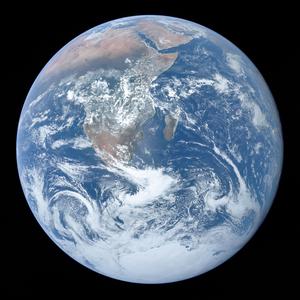
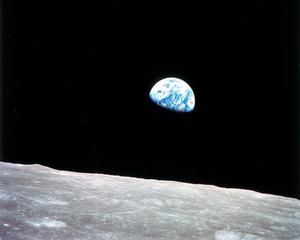
Die Erde, beobachtet von Apollo 17
Unterschrift: Gesamtansicht der Erde, aufgenommen am 7. Dezember 1972 von der Besatzung der Raumfähre Apollo 17 auf dem Weg zum Mond, aus einer Entfernung von rund 29.000 Kilometern (18.000 Meilen). Sichtbar sind Afrika, die Antarktis und die Arabische Halbinsel.
Bild: NASA/Apollo 17-Besatzung/Projekt Apollo-Archiv
License: PD Gemeinfrei Symbole

Blick von der ISS auf das nächtliche Japan
Unterschrift: Diese Nachtaufnahme der Erde wurde 2015 während der Expedition 44 vom Astronauten Scott Kelly von der Internationalen Raumstation (ISS) aus aufgenommen. Sie zeigt Japan bei Einbruch der Dunkelheit, wobei helle Stadtlichter die städtischen Zentren, Hauptverkehrsstraßen und dicht besiedelten Regionen nachzeichnen. Der nächtliche Blick aus dem Orbit verdeutlicht, wie menschliche Aktivitäten als Lichterteppiche auf der Erdoberfläche sichtbar werden, wobei sich ein starker Kontrast zwischen hell erleuchteten Gebiete und der umgebenden Dunkelheit ländlicher Regionen und offener Gewässer abzeichnet.
Fotos wie dieses verdeutlichen, wie die „Nacht“ aus dem Weltraum erscheint – nicht nur als Abwesenheit von Sonnenlicht, sondern auch als eine Zeit, in der künstliches Licht die Rhythmen des menschlichen Lebens rund um den Globus offenbart. Aus einer Höhe von Hunderten von Kilometern über dem Planeten erscheint die Nachtseite der Erde wie ein Gewebe aus leuchtenden Ballungsräumen und dunklen Flächen, das Einblicke in die Bevölkerungsverteilung, die Infrastruktur und die Tatsache gewährt, dass Städte noch lange nach Sonnenuntergang aktiv bleiben. Die niedrige Umlaufbahn der ISS ermöglicht es den Astronauten, diese detaillierten Ansichten der Erde nach Einbruch der Dunkelheit festzuhalten, und hilft uns so, sowohl die natürlichen als auch die vom Menschen geprägten Aspekte der Nacht auf unserem Planeten besser zu verstehen.
Bild: NASA
Quellenlink
License: PD Gemeinfrei Symbole
Ähnliche Aktivitäten
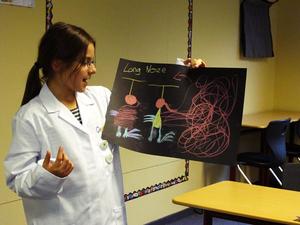
Design Your Alien
astroEDU educational activity (links to astroEDU website) Description: Design an alien life form suited for an extra-terrestrial world.
License: CC-BY-4.0 Creative Commons Namensnennung 4.0 International (CC BY 4.0) Symbole
Schlagworte
Life
, Environment
, Extra-terrestrial
, Art
, Creativity
, Hands-on
, Alien
Altersgruppen:
8-10
, 10-12
Bildungsniveau:
Primary
, Secundaria
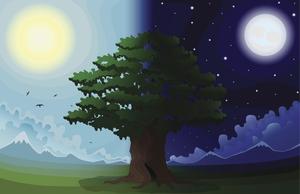
Why Do We Have Day and Night?
astroEDU educational activity (links to astroEDU website) Description: Explore day and night of Earth.
License: CC-BY-4.0 Creative Commons Namensnennung 4.0 International (CC BY 4.0) Symbole
Schlagworte
Tilt
Altersgruppen:
6-8
, 8-10
, 10-12
Bildungsniveau:
Primary
, Secundaria
Lernbereiche:
Modelling
, Simulation focussed
, Structured-inquiry learning
Kosten:
Low Cost
Dauer:
1 hour 30 mins
Gruppengröße:
Group
Fähigkeiten:
Asking questions
, Communicating information
Globe at Night Activity Guide
astroEDU educational activity (links to astroEDU website) Description: Learn to observe and record the faintest visible stars to measure the light pollution.
License: CC-BY-4.0 Creative Commons Namensnennung 4.0 International (CC BY 4.0) Symbole
Schlagworte
Hands-on
, Dark skies
, ecology
, Citizen science
Altersgruppen:
4-6
, 6-8
, 8-10
, 10-12
, 12-14
, 14-16
, 16-19
, 19+
Bildungsniveau:
Informal
, Middle School
, Other
, Primary
, Secundaria
, University
Lernbereiche:
Observation based
, Project-based learning
Kosten:
Low Cost
Gruppengröße:
Group
Fähigkeiten:
Communicating information
, Planning and carrying out investigations
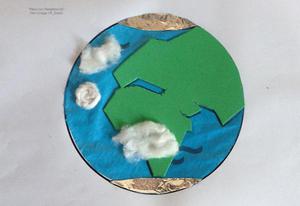
Meet Our Home: Planet Earth
astroEDU educational activity (links to astroEDU website) Description: Explore a tactile version of our home, the Earth, with household materials.
License: CC-BY-4.0 Creative Commons Namensnennung 4.0 International (CC BY 4.0) Symbole
Schlagworte
Hands-on
, Model
, Visually Impaired
, Tactile
Altersgruppen:
6-8
, 8-10
, 10-12
Bildungsniveau:
Middle School
, Primary
, Secundaria
Lernbereiche:
Interactive Lecture
, Modelling
Kosten:
Low Cost
Dauer:
1 hour 30 mins
Gruppengröße:
Group
Fähigkeiten:
Analysing and interpreting data
, Asking questions
, Communicating information
, Developing and using models
Blue Marble in Empty Space
astroEDU educational activity (links to astroEDU website) Description: Students are taken on a virtual journey to outer space to experience that we live on a tiny planet that floats in a vast and empty space.
License: CC-BY-4.0 Creative Commons Namensnennung 4.0 International (CC BY 4.0) Symbole
Schlagworte
Life
, Hands-on
, Model
, Scales
, Distances
, ISS
Altersgruppen:
6-8
, 8-10
Bildungsniveau:
Primary
, Secundaria
Lernbereiche:
Interactive Lecture
, Modelling
Kosten:
Low Cost
Dauer:
30 mins
Gruppengröße:
Group
Fähigkeiten:
Asking questions
, Communicating information
, Developing and using models