词条 地球
描述: 地球是太阳系中距离太阳第三近的行星,也是第五大行星。它是一颗岩石类的行星,半径约为6400公里,质量大约为六百万兆千克。
地球与太阳的平均距离约为1.5亿公里,这个距离被定义为一个天文单位。地球绕太阳一周需要365.26天。地球有一颗天然卫星,即月球。
地球是包括人类的数百万种生物的家园;迄今为止,地球是已知宇宙中唯一有生命存在的地方。科学家们认为地球形成于大约45.4亿年前。地球有一个大气层和磁层,它们能够阻挡有害辐射,从而促进生物的繁衍。地球表面还有广泛的水覆盖(这是太阳系中唯一已知有广泛水体的行星),使其呈现出蓝色。
相关词条
用其他语言查看该词条
词条和定义状态: 该术语的英文原始定义已通过天文研究人员和教师的审核 该术语及其定义的译文仍待审核
OAE多语言词汇表是由国际天文学联合会(IAU) 天文教育办公室(OAE) 和 国际天文学联合会(IAU) 天文推广办公室(OAO)合作的项目。. 术语和定义由 OAE中心, OAE 国家天文教育协调员(NAECs) 以及其他志愿者共同选择、撰写和审阅。您可以在 找到完整的致谢列表。所有词汇表术语及其定义均根据 Creative Commons CC BY-4.0许可证发布 且版权归属于 “IAU OAE”。
如果您发现此词汇术语或定义中的事实或翻译错误, 请向 发邮件 联系.
相关媒体
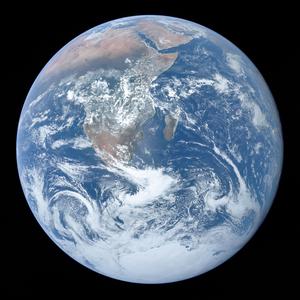
阿波罗 17 号观测到的地球
图注: 1972 年 12 月 7 日,阿波罗 17 号飞船乘员在前往月球途中拍摄的地球全景,距离约 29000 公里(18000 英里)。图中显示了非洲、南极洲和阿拉伯半岛。
来源: 美国国家航空航天局/阿波罗 17 号机组人员/阿波罗项目档案馆
License: PD 公共领域 图标

ISS' view of nightly Japan
图注: This nighttime photograph of Earth was taken from the International Space Station (ISS) by astronaut Scott Kelly in 2015 during Expedition 44. It captures the nation of Japan lit up after dark, with bright city lights tracing urban centers, major roadways, and densely populated regions. The view from orbit at night highlights how human activity shows up as patterns of light on Earth’s surface, with well-lit areas contrasting sharply against the surrounding darkness of rural regions and open water.
Photographs like this highlight what “night” looks like from space — not just a lack of sunlight, but also a time when artificial light reveals the rhythms of human life across the globe. From hundreds of kilometers above the planet, the night side of Earth appears as a tapestry of glowing clusters and dark spaces, offering insight into population distribution, infrastructure, and how cities remain active long after sunset. The ISS’s low orbit allows astronauts to capture these detailed views of Earth after dark, helping us appreciate both natural and human elements of nighttime on our planet.
来源: NASA
来源链接
License: PD 公共领域 图标
相关活动
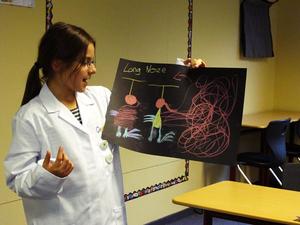
Design Your Alien
astroEDU educational activity (links to astroEDU website) Description: Design an alien life form suited for an extra-terrestrial world.
License: CC-BY-4.0 知识共享许可协议 署名 4.0 国际 (CC BY 4.0) 图标
标签:
Life
, Environment
, Extra-terrestrial
, Art
, Creativity
, Hands-on
, Alien
年龄段:
8-10
, 10-12
受教育等级:
Primary
, 中学
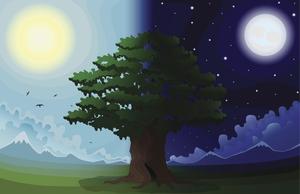
Why Do We Have Day and Night?
astroEDU educational activity (links to astroEDU website) Description: Explore day and night of Earth.
License: CC-BY-4.0 知识共享许可协议 署名 4.0 国际 (CC BY 4.0) 图标
标签:
Tilt
年龄段:
6-8
, 8-10
, 10-12
受教育等级:
Primary
, 中学
学习领域:
建模
, 以模拟为主
, 结构化探究式学习
费用:
低成本
时间跨度:
1 小时 30 分钟
组别大小:
小组
技能:
提出问题
, 传达信息
Globe at Night Activity Guide
astroEDU educational activity (links to astroEDU website) Description: Learn to observe and record the faintest visible stars to measure the light pollution.
License: CC-BY-4.0 知识共享许可协议 署名 4.0 国际 (CC BY 4.0) 图标
标签:
Hands-on
, Dark skies
, ecology
, Citizen science
年龄段:
4-6
, 6-8
, 8-10
, 10-12
, 12-14
, 14-16
, 16-19
, 19+
受教育等级:
非正式
, 初中
, 其他
, Primary
, 中学
, 大学
学习领域:
以观察为主
, 项目式学习
费用:
低成本
组别大小:
小组
技能:
传达信息
, 规划并开展调查
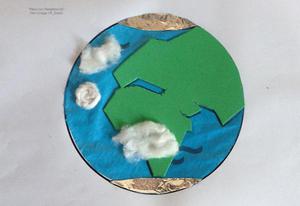
Meet Our Home: Planet Earth
astroEDU educational activity (links to astroEDU website) Description: Explore a tactile version of our home, the Earth, with household materials.
License: CC-BY-4.0 知识共享许可协议 署名 4.0 国际 (CC BY 4.0) 图标
标签:
Hands-on
, Model
, Visually Impaired
, Tactile
年龄段:
6-8
, 8-10
, 10-12
受教育等级:
初中
, Primary
, 中学
学习领域:
互动讲座
, 建模
费用:
低成本
时间跨度:
1 小时 30 分钟
组别大小:
小组
技能:
分析和解读数据
, 提出问题
, 传达信息
, 开发和使用模型
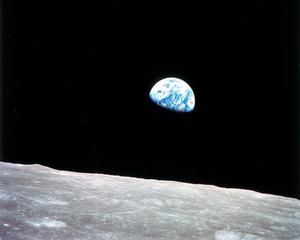
Blue Marble in Empty Space
astroEDU educational activity (links to astroEDU website) Description: Students are taken on a virtual journey to outer space to experience that we live on a tiny planet that floats in a vast and empty space.
License: CC-BY-4.0 知识共享许可协议 署名 4.0 国际 (CC BY 4.0) 图标
标签:
Life
, Hands-on
, Model
, Scales
, Distances
, ISS
年龄段:
6-8
, 8-10
受教育等级:
Primary
, 中学
学习领域:
互动讲座
, 建模
费用:
低成本
时间跨度:
30 分钟
组别大小:
小组
技能:
提出问题
, 传达信息
, 开发和使用模型