Loading...
Part of our capacity-building work, these seminars cover topics of broad interest to anyone working at the intersection of astronomy and education research — whether or not you are involved in the International Capacity-Building in Astronomy Education Research (ICAER) project. Sessions are open to all and recorded for asynchronous viewing.
If you are interested in attending one or more, please register here.
If you are interested in attending one or more, please register here.
Series Organizers


Magdalena Kersting
Office of Astronomy for Education/Max Planck Institute for Astronomy
OAE Main Office - Associate Researcher
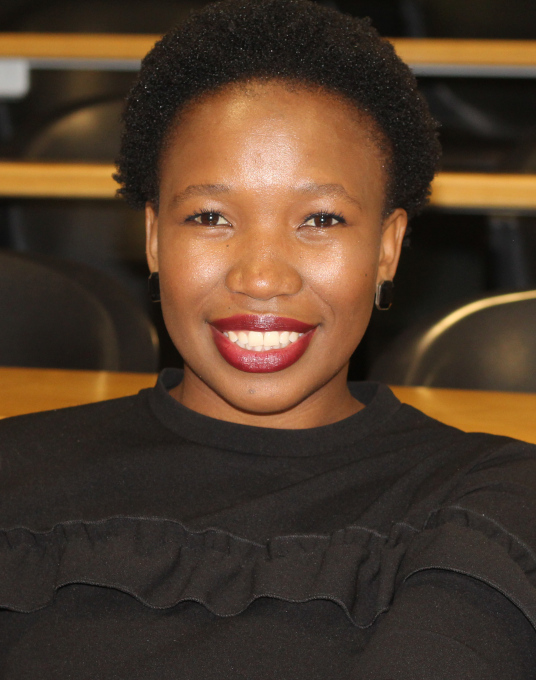
University of Cape Town
OAE Main Office - Astronomy Education Research Coordinator
Upcoming Seminars
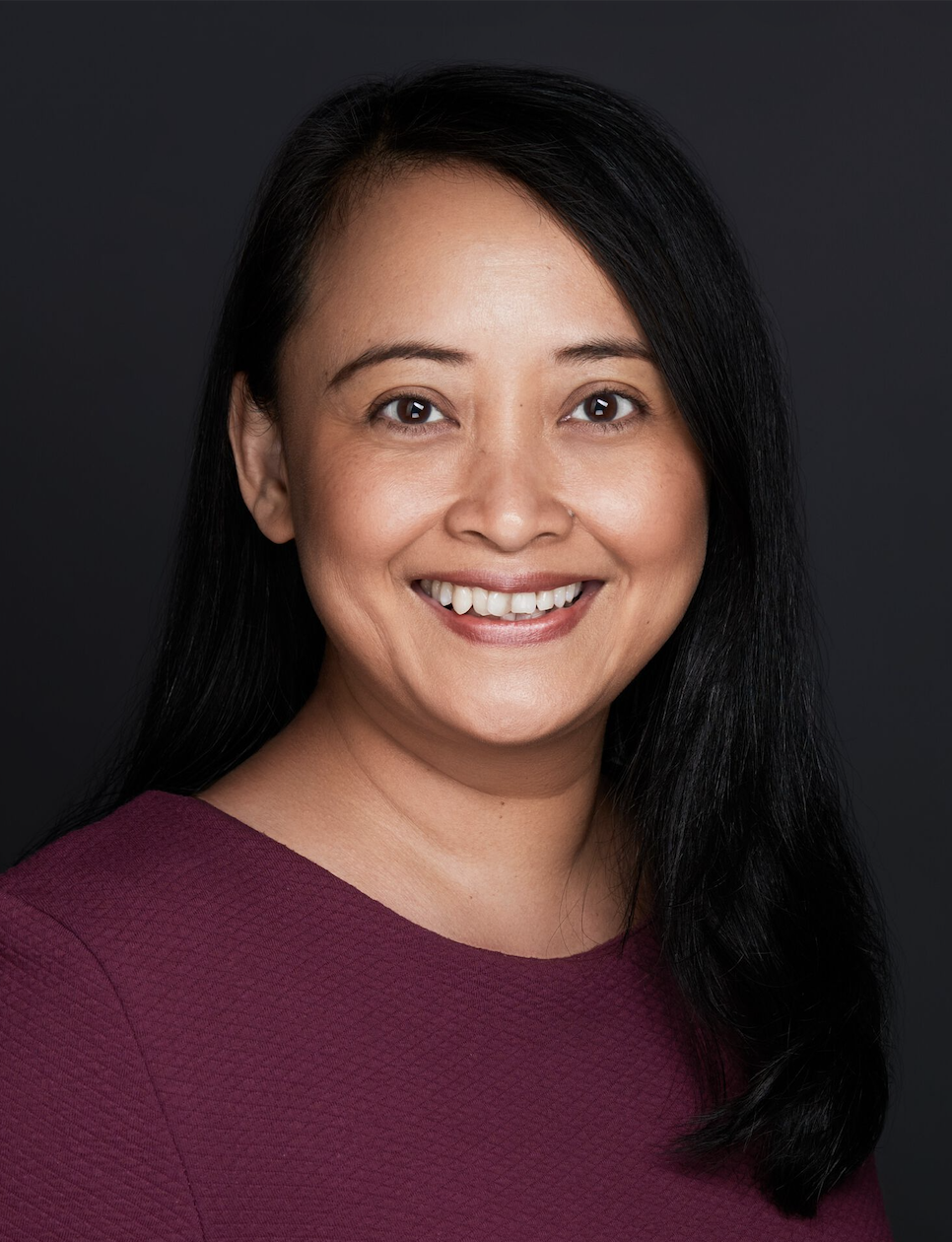
Nani Teig
University of Oslo - Department of Teacher Education and School Research
Friday Oct. 23, 2026
UTC: noon - 1 p.m.
UTC: noon - 1 p.m.
Abstract
This seminar introduces international large-scale assessment research through two influential studies: the Programme for International Student Assessment (PISA) and the Trends in International Mathematics and Science Study (TIMSS). We explore what these assessments measure, why their designs differ, and how researchers use carefully selected samples, questionnaires, and statistical methods to investigate patterns across countries and over time. These rich datasets offer opportunities to study student achievement, engagement with science, learning opportunities, educational inequality, and pathways into further science education.
At the same time, international comparisons require careful interpretation. We consider whose knowledge is represented, whether questions have comparable meanings across cultures, who may be excluded from the data, and why statistical relationships do not necessarily demonstrate causation. No advanced statistical background is required. The seminar introduces the main ideas in accessible terms and considers how large-scale evidence could contribute to astronomy education research.
By the end of this seminar, participants will be able to:
• Explain the main purposes and designs of international large-scale assessments
• Describe opportunities for using large-scale assessment data in education research
• Recognise key methodological challenges and interpret findings from these assessments critically
Glossary terms:
• International large-scale assessment (ILSA)
• Programme for International Student Assessment (PISA)
• Trends in International Mathematics and Science Study (TIMSS)
• Representative sample
• Plausible values
• Cross-national comparability
• Multilevel analysis
This seminar introduces international large-scale assessment research through two influential studies: the Programme for International Student Assessment (PISA) and the Trends in International Mathematics and Science Study (TIMSS). We explore what these assessments measure, why their designs differ, and how researchers use carefully selected samples, questionnaires, and statistical methods to investigate patterns across countries and over time. These rich datasets offer opportunities to study student achievement, engagement with science, learning opportunities, educational inequality, and pathways into further science education.
At the same time, international comparisons require careful interpretation. We consider whose knowledge is represented, whether questions have comparable meanings across cultures, who may be excluded from the data, and why statistical relationships do not necessarily demonstrate causation. No advanced statistical background is required. The seminar introduces the main ideas in accessible terms and considers how large-scale evidence could contribute to astronomy education research.
By the end of this seminar, participants will be able to:
• Explain the main purposes and designs of international large-scale assessments
• Describe opportunities for using large-scale assessment data in education research
• Recognise key methodological challenges and interpret findings from these assessments critically
Glossary terms:
• International large-scale assessment (ILSA)
• Programme for International Student Assessment (PISA)
• Trends in International Mathematics and Science Study (TIMSS)
• Representative sample
• Plausible values
• Cross-national comparability
• Multilevel analysis

Friday Nov. 6, 2026
UTC: noon - 1 p.m.
UTC: noon - 1 p.m.
Abstract
Surveys are widely used to measure attitudes, perceptions, experiences and other constructs that cannot be observed directly. However, developing a questionnaire that produces meaningful and interpretable data involves considerably more than writing a set of Likert-scale questions. This session will explore the process of designing and validating quantitative survey instruments, drawing on practical examples from research developing measures of students' attitudes towards astronomy and science, and experiences of inclusion in science engagement.
This webinar will consider how to move from defining a construct to developing appropriate survey items, including the use of existing literature and instruments, expert review, cognitive testing, and piloting. Key quantitative approaches to evaluating instruments will be reviewed, including item analysis, internal consistency and reliability, and exploratory and confirmatory factor analysis. The session will then discuss complimentary qualitative approaches to evaluating the appropriateness and effectiveness of survey instruments.
Rather than treating validation as a single statistical test, the session will emphasise validation as an ongoing process of accumulating evidence about whether an instrument supports the interpretations researchers wish to make from its scores. Participants will leave with a foundation for validating their own surveys, with practical examples, and an overview of common pitfalls and limitations.
Surveys are widely used to measure attitudes, perceptions, experiences and other constructs that cannot be observed directly. However, developing a questionnaire that produces meaningful and interpretable data involves considerably more than writing a set of Likert-scale questions. This session will explore the process of designing and validating quantitative survey instruments, drawing on practical examples from research developing measures of students' attitudes towards astronomy and science, and experiences of inclusion in science engagement.
This webinar will consider how to move from defining a construct to developing appropriate survey items, including the use of existing literature and instruments, expert review, cognitive testing, and piloting. Key quantitative approaches to evaluating instruments will be reviewed, including item analysis, internal consistency and reliability, and exploratory and confirmatory factor analysis. The session will then discuss complimentary qualitative approaches to evaluating the appropriateness and effectiveness of survey instruments.
Rather than treating validation as a single statistical test, the session will emphasise validation as an ongoing process of accumulating evidence about whether an instrument supports the interpretations researchers wish to make from its scores. Participants will leave with a foundation for validating their own surveys, with practical examples, and an overview of common pitfalls and limitations.
Anders Jidesjö
ROSES Team / Linkoping University
Friday Dec. 4, 2026
UTC: 1 p.m. - 2 p.m.
UTC: 1 p.m. - 2 p.m.
Abstract TBD
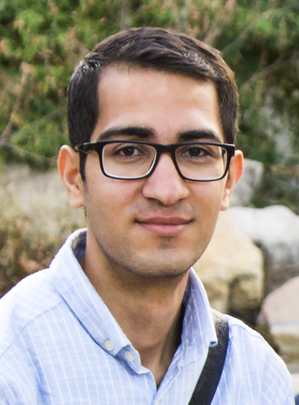
Saeed Jafari
Space Generation Advisory Council / Human and Space Museum
Team Chair and Contact Person, NAEC Team - The Islamic Republic of Iran
Friday Jan. 29, 2027
UTC: noon - 1 p.m.
UTC: noon - 1 p.m.
Abstract TBD
Previous Seminars
Friday Sept. 25, 2026
UTC: noon -
1 p.m.
Office of Astronomy for Education/Max Planck Institute for Astronomy
OAE Main Office - Associate Researcher

The Office of Astronomy for Education is hosted by the Haus der Astronomie on the campus of the Max Planck Institute for Astronomy in Heidelberg. The Office of Astronomy for Education is an office of the International Astronomical Union, with substantial funding from the Klaus Tschira Foundation and the Carl Zeiss Foundation. The Shaw-IAU Workshops on Astronomy for Education are funded by the Shaw Prize Foundation.