Glossar-Begriff: Licht
Beschreibung: Licht ist elektromagnetische Strahlung. Im allgemeinen Sprachgebrauch bezieht sich Licht in der Regel auf elektromagnetische Strahlung mit einer Wellenlänge, die mit dem bloßen menschlichen Auge wahrgenommen werden kann. Die für den Menschen sichtbare Wellenlänge des Lichts liegt ungefähr im Bereich von 380-750 Nanometern (nm), wobei die meisten Menschen Licht mit einer Wellenlänge von weniger als 400 nm kaum wahrnehmen können. Dieser sichtbare Bereich ist ein schmaler Teil des elektromagnetischen Spektrums, das eine breite Palette von Wellenlängen abdeckt, von Gammastrahlen (die kürzesten) bis zu Radiowellen (die längsten). Im weiteren Sinne wird der Begriff Licht manchmal für jede Art von elektromagnetischer Strahlung verwendet.
Grundlegende Eigenschaften des Lichts sind Intensität, Ausbreitungsrichtung, Frequenz, Spektrum und Polarisation. Die Geschwindigkeit des Lichts im Vakuum ist mit genau 299.792.458 Metern pro Sekunde definiert und gehört zu den Grundkonstanten der Natur.
Die Farbe des Lichts hängt von seiner Wellenlänge ab. Violettes Licht hat die kürzeste Wellenlänge im sichtbaren Spektrum, rotes die längste. Licht hat mehrere Quellen, natürliche und künstliche; die Sonne ist die Hauptlichtquelle der Erde. Licht wird in kleinen "Paketen", als sogenannte Photonen, emittiert und absorbiert. Photonen haben sowohl die Eigenschaften von Wellen als auch von Teilchen. Dieses Phänomen wird als Welle-Teilchen-Dualismus bezeichnet.
Ähnliche Begriffe:
Dieser Begriff in anderen Sprachen
Begriffs- und Definitionsstatus Die Originaldefinition dieses Begriffes auf Englisch wurden von einem forschenden Astronom und einer Lehrkraft bestätigt Die Übersetzung dieses Begriffs und seiner Definition warten auf Prüfung und Bestätigung
The OAE Multilingual Glossary is a project of the IAU Office of Astronomy for Education (OAE) in collaboration with the IAU Office of Astronomy Outreach (OAO). The terms and definitions were chosen, written and reviewed by a collective effort from the OAE, the OAE Centers and Nodes, the OAE National Astronomy Education Coordinators (NAECs) and other volunteers. You can find a full list of credits here. All glossary terms and their definitions are released under a Creative Commons CC BY-4.0 license and should be credited to "IAU OAE".
Wenn dir ein inhaltlicher oder Übersetzungsfehler in diesem Glossarbegriff oder dieser Definition auffallen, bitte kontaktiere uns.
Ähnliche Medien
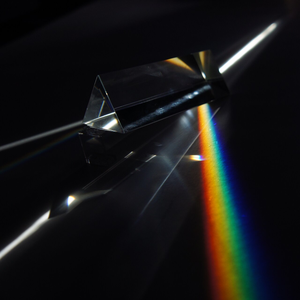
Light Dispersion by a Triangular Prism
Unterschrift: This photograph shows a prism splitting a beam of white light into its component colors — a beautiful demonstration of optics, the branch of physics that studies how light behaves and interacts with materials. When white light enters the prism, different wavelengths (colors) bend by different amounts because of a process called refraction. This separation of colors produces a spectrum — similar to a rainbow — revealing that white light is actually made up of many colors combined going from blue, through green and yellow to red.
Understanding optics helps scientists and engineers design lenses, microscopes, telescopes, cameras, and many other tools that shape and control light for practical use. The way the prism disperses light into a spectrum is the same principle that makes rainbows form in the sky when sunlight passes through raindrops.
Bild: Kelvinsong
Quellenlink
License: CC0 CC0 1.0 Universell (CC0 1.0) Public Domain Dedication Symbole
Ähnliche Aktivitäten
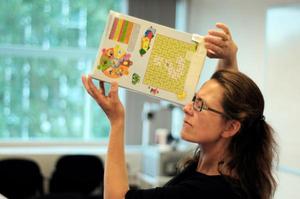
Build a Safe Sun Viewer
astroEDU educational activity (links to astroEDU website) Description: Build a safe Sun viewer using cheap household items and learn why it is dangerous to look directly at the Sun, even briefly.
License: CC-BY-4.0 Creative Commons Namensnennung 4.0 International (CC BY 4.0) Symbole
Schlagworte
Hands-on
, Safety
Altersgruppen:
6-8
, 8-10
, 10-12
Bildungsniveau:
Primary
, Secundaria
Lernbereiche:
Modelling
, Observation based
Kosten:
Low Cost
Gruppengröße:
Group
Fähigkeiten:
Planning and carrying out investigations
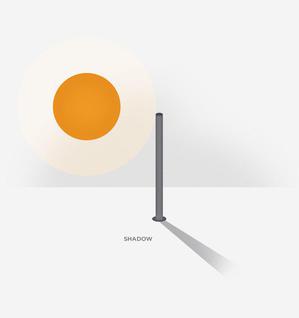
Sun’s Shadow
astroEDU educational activity (links to astroEDU website) Description: Why is the Sun's shadow so important?
License: CC-BY-4.0 Creative Commons Namensnennung 4.0 International (CC BY 4.0) Symbole
Schlagworte
Hands-on
, Shadows
Altersgruppen:
6-8
, 8-10
, 10-12
, 12-14
, 14-16
Bildungsniveau:
Informal
, Middle School
, Primary
, Secundaria
Lernbereiche:
Observation based
, Structured-inquiry learning
Kosten:
Medium Cost
Dauer:
1 day
Gruppengröße:
Group
Fähigkeiten:
Asking questions
, Communicating information
, Constructing explanations
, Engaging in argument from evidence
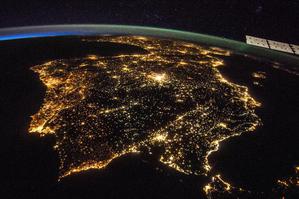
How Many Stars Can You See at Night?
astroEDU educational activity (links to astroEDU website) Description: Investigate the effects of light pollution on night sky observation.
License: CC-BY-4.0 Creative Commons Namensnennung 4.0 International (CC BY 4.0) Symbole
Schlagworte
Software
, ecology
, Observation of sky
, Pollution
, Constellations
, stellarium
Altersgruppen:
12-14
Bildungsniveau:
Middle School
Lernbereiche:
Observation based
, Structured-inquiry learning
Kosten:
Low Cost
Dauer:
45 mins
Gruppengröße:
Group
Fähigkeiten:
Analysing and interpreting data
, Communicating information
, Planning and carrying out investigations
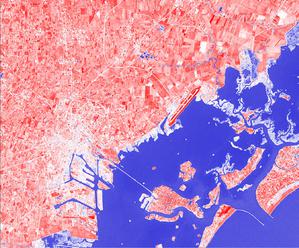
A View from Above
astroEDU educational activity (links to astroEDU website) Description: How do satellites take images of the Earth surface and how do we analyse and use them?
License: CC-BY-4.0 Creative Commons Namensnennung 4.0 International (CC BY 4.0) Symbole
Schlagworte
Maps
, Climate
, Landsat
, Earth observation
, Sentinel
, Copernicus
, Remote sensing
, Vegetation
Altersgruppen:
14-16
, 16-19
Bildungsniveau:
Middle School
, Secundaria
Lernbereiche:
Structured-inquiry learning
Kosten:
Low Cost
Dauer:
1 hour 30 mins
Gruppengröße:
Group
Fähigkeiten:
Analysing and interpreting data
, Asking questions
, Communicating information
, Constructing explanations
, Developing and using models
, Engaging in argument from evidence
, Using mathematics and computational thinking
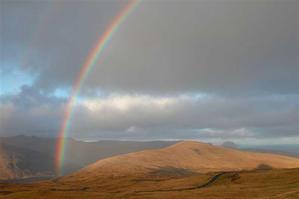
Reading the Rainbow
astroEDU educational activity (links to astroEDU website) Description: By understanding how rainbows work, you can discover about light and its properties, learning about stars, nebulae, galaxies, and our Universe.
License: CC-BY-4.0 Creative Commons Namensnennung 4.0 International (CC BY 4.0) Symbole
Altersgruppen:
14-16
, 16-19
, 19+
Bildungsniveau:
Informal
, Middle School
, Secundaria
, University
Lernbereiche:
Interactive Lecture
, Observation based
, Structured-inquiry learning
Kosten:
Low Cost
Dauer:
1 hour 30 mins
Gruppengröße:
Group
Fähigkeiten:
Analysing and interpreting data
, Asking questions
, Engaging in argument from evidence
.jpg)