Termo do glossário: Luz
Descrição: A luz é uma radiação eletromagnética. No uso comum, o termo “luz” refere-se, normalmente, à radiação eletromagnética cujo comprimento de onda pode ser percebido a olho nu. O comprimento de onda da luz visível aos seres humanos situa-se, de maneira geral, na faixa de 380 a 750 nanômetros (nm), embora a maioria das pessoas tenha pouquíssima sensibilidade à luz com comprimentos de onda inferiores a 400 nm. Essa é uma parte restrita do espectro eletromagnético, que abrange uma ampla gama de comprimentos de onda, desde os raios gama (os mais curtos) até as ondas de rádio (as mais longas). De maneira mais ampla, o termo “luz” é, às vezes, aplicado a qualquer radiação eletromagnética.
As propriedades básicas da luz são intensidade, direção de propagação, frequência, espectro e polarização. Sua velocidade no vácuo é definida como exatamente 299.792.458 metros por segundo, e essa é uma das constantes fundamentais da natureza. A cor da luz depende de seu comprimento de onda. A luz violeta tem o comprimento de onda mais curto no espectro visível; a vermelha, o mais longo. A luz tem múltiplas fontes, naturais e artificiais; o Sol é a principal fonte de luz da Terra. A luz é emitida e absorvida em pequenos “pacotes” chamados fótons, que possuem propriedades tanto de ondas quanto de partículas. Esse último fenômeno é chamado de dualidade onda-partícula.
Termos relacionados:
Ver este termo em outros idiomas
Status do termo e da definição: A definição original deste termo em inglês foi aprovada por um astrônomo(a) pesquisador(a) e um(a) professor(a) A tradução deste termo e de sua definição ainda aguarda aprovação
O Glossário Multilíngue da OAE é um projeto do Escritório da IAU de Astronomia para a Educação(OAE) em colaboração com o Escritório da IAU para Divulgação da Astronomia (OAO). Os termos e definições foram selecionados, escritos e revisados por meio de um esforço coletivo da OAE, dos Centros e Nós da OAE, dos Coordenadores Nacionais de Educação em Astronomia (NAECs) da OAE e de outros voluntários. Você pode encontrar uma lista completa dos créditos aqui. Todos os termos do glossário e suas definições são disponibilizados sob uma licença Creative Commons CC BY-4.0 e devem ser creditados à "IAU OAE".
Se você notar algum erro factual ou de tradução neste termo do glossário ou em sua definição, por favor entre em contato.
Mídia relacionada
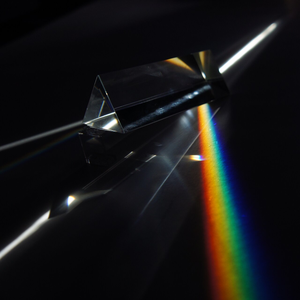
Light Dispersion by a Triangular Prism
Legenda: This photograph shows a prism splitting a beam of white light into its component colors — a beautiful demonstration of optics, the branch of physics that studies how light behaves and interacts with materials. When white light enters the prism, different wavelengths (colors) bend by different amounts because of a process called refraction. This separation of colors produces a spectrum — similar to a rainbow — revealing that white light is actually made up of many colors combined going from blue, through green and yellow to red.
Understanding optics helps scientists and engineers design lenses, microscopes, telescopes, cameras, and many other tools that shape and control light for practical use. The way the prism disperses light into a spectrum is the same principle that makes rainbows form in the sky when sunlight passes through raindrops.
Crédito: Kelvinsong
link do crédito
License: CC0 CC0 1.0 Universal (CC0 1.0) Public Domain Dedication ícones
Atividades relacionadas
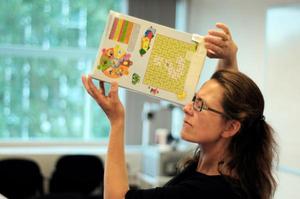
Build a Safe Sun Viewer
astroEDU educational activity (links to astroEDU website) Description: Build a safe Sun viewer using cheap household items and learn why it is dangerous to look directly at the Sun, even briefly.
License: CC-BY-4.0 Creative Commons Attribution 4.0 International (CC BY 4.0) ícones
Tags:
Hands-on
, Safety
Faixas etárias:
6-8
, 8-10
, 10-12
Nível de ensino:
Básico
, Médio
Áreas de aprendizagem:
Modelagem
, Baseado em observação
Custos:
Baixo custo
Tamanho do grupo:
Grupo
Habilidades:
Planejar e realizar pesquisas
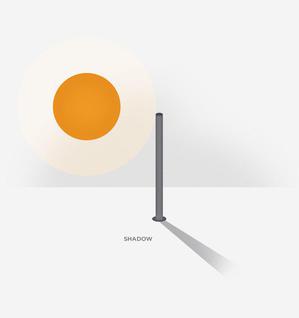
Sun’s Shadow
astroEDU educational activity (links to astroEDU website) Description: Why is the Sun's shadow so important?
License: CC-BY-4.0 Creative Commons Attribution 4.0 International (CC BY 4.0) ícones
Tags:
Hands-on
, Shadows
Faixas etárias:
6-8
, 8-10
, 10-12
, 12-14
, 14-16
Nível de ensino:
Informal
, Ensino fundamental
, Básico
, Médio
Áreas de aprendizagem:
Baseado em observação
, Aprendizagem por investigação estruturada
Custos:
Custo médio
Duração:
1 dia
Tamanho do grupo:
Grupo
Habilidades:
Fazer perguntas
, Comunicar informações
, Construir explicações
, Engajar-se em argumentação com base em evidências
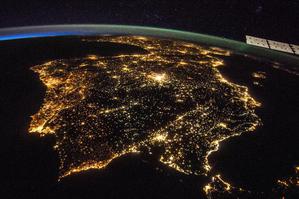
How Many Stars Can You See at Night?
astroEDU educational activity (links to astroEDU website) Description: Investigate the effects of light pollution on night sky observation.
License: CC-BY-4.0 Creative Commons Attribution 4.0 International (CC BY 4.0) ícones
Tags:
Software
, ecology
, Observation of sky
, Pollution
, Constellations
, stellarium
Faixas etárias:
12-14
Nível de ensino:
Ensino fundamental
Áreas de aprendizagem:
Baseado em observação
, Aprendizagem por investigação estruturada
Custos:
Baixo custo
Duração:
45 mins
Tamanho do grupo:
Grupo
Habilidades:
Analisar e interpretar dados
, Comunicar informações
, Planejar e realizar pesquisas
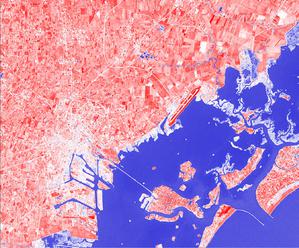
A View from Above
astroEDU educational activity (links to astroEDU website) Description: How do satellites take images of the Earth surface and how do we analyse and use them?
License: CC-BY-4.0 Creative Commons Attribution 4.0 International (CC BY 4.0) ícones
Tags:
Maps
, Climate
, Landsat
, Earth observation
, Sentinel
, Copernicus
, Remote sensing
, Vegetation
Faixas etárias:
14-16
, 16-19
Nível de ensino:
Ensino fundamental
, Médio
Áreas de aprendizagem:
Aprendizagem por investigação estruturada
Custos:
Baixo custo
Duração:
1 hour 30 mins
Tamanho do grupo:
Grupo
Habilidades:
Analisar e interpretar dados
, Fazer perguntas
, Comunicar informações
, Construir explicações
, Desenvolver e usar modelos
, Engajar-se em argumentação com base em evidências
, Usar matemática e pensamento computacional
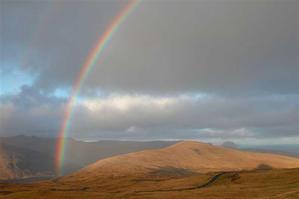
Reading the Rainbow
astroEDU educational activity (links to astroEDU website) Description: By understanding how rainbows work, you can discover about light and its properties, learning about stars, nebulae, galaxies, and our Universe.
License: CC-BY-4.0 Creative Commons Attribution 4.0 International (CC BY 4.0) ícones
Faixas etárias:
14-16
, 16-19
, 19+
Nível de ensino:
Informal
, Ensino fundamental
, Médio
, Universidade
Áreas de aprendizagem:
Aula interativa
, Baseado em observação
, Aprendizagem por investigação estruturada
Custos:
Baixo custo
Duração:
1 hour 30 mins
Tamanho do grupo:
Grupo
Habilidades:
Analisar e interpretar dados
, Fazer perguntas
, Engajar-se em argumentação com base em evidências





.jpg)
