Término del glosario: Rover
Descripción: Un rover es una máquina fabricada por el ser humano que se envía a la superficie de otro planeta o luna a bordo de una nave espacial para estudiar ese planeta de cerca y enviar a la Tierra los datos que recopila mediante un método de comunicación. La mayoría pueden controlarse desde la Tierra y desplazarse por la superficie del planeta o luna, aunque los vehículos lunares de la misión Apolo eran conducidos por los astronautas en la Luna. Un rover puede transportar numerosos instrumentos científicos, como pequeños taladros, una herramienta para la recogida de muestras, cámaras e incluso un pequeño laboratorio para analizar muestras del aire y del suelo y enviar los resultados a la Tierra.
Términos relacionados:
Ver este término en otros idiomas
Estado del término y la definición: La definición original de este término en inglés ha sido aprobada por unastrónomo o astrónoma investigadora y un docente La traducción de este término y su definición aún están pendientes de aprobación
El Glosario multilingüe de la OAE es un proyecto de la Oficina de Astronomía para la Educación de la UAI (OAE) en colaboración con la Oficina de Divulgación de Astronomía de la UAI (OAO). Los términos y definiciones fueron seleccionados, redactados y revisados gracias al esfuerzo colectivo de la OAE, los Centros y Nodos de la OAE, los Coordinadores Nacionales de Educación Astronómica (NAECs) y otros voluntarios. Puedes encontrar una lista completa de créditos aquí. Todos los términos del glosario y sus definiciones se publican bajo la licencia Creative Commons CC BY-4.0 y deben atribuirse a la "IAU OAE".
Si detectas algún error de contenido o de traducción en este término del glosario o en ladefinición, ponte en contacto con nosotros.
En otros idiomas
- Árabe: المركبة الجوالة
- Alemán: Rover
- Inglés: Rover
- Francés: Rover
- Italiano: Rover
- Portugués de Brasil: Veículo Explorador (Rover)
- Chino simplificado: 漫游车
- Chino tradicional: 漫遊車
Contenidos relacionados
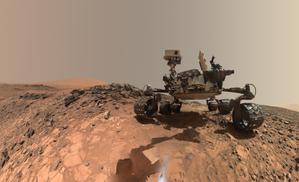
Mars rover Curiosity
Pie de foto: This self-portrait of NASA's Curiosity Mars rover shows the vehicle at the site from which it reached down to drill into a rock target called "Buckskin" on lower Mount Sharp. The selfie combines several component images taken by Curiosity's Mars Hand Lens Imager (MAHLI) on 5 August 2015, during the 1,065th Martian day, or sol, of the rover's work on Mars.
Crédito: NASA/JPL-Caltech/MSSS
enlace de crédito
License: PD Dominio público íconos

Record-Breaking Off-Earth Driving: Rovers on Mars & the Moon
Pie de foto: Part of the Simplifying Astronomy for Arabic Speakers project, this infographic highlights the longest distances traveled by rovers on Mars and the Moon, showcasing space exploration’s progress.
Top Rovers & Their Achievements
Mars: NASA’s Opportunity holds the record, covering 45.16 km between 2004–2018.
Moon: The Soviet Lunokhod 2 leads with 39 km, followed by Apollo rovers:
Apollo 17: 35.74 km
Apollo 15: 27.8 km
Apollo 16: 27.1 km
Mars vs. Moon: Different Challenges
1. Martian Terrain – Mars has a thin atmosphere, dust storms, and rugged landscapes, requiring durable, long-term rovers.
2. Lunar Terrain – The Moon’s cratered surface lacks an atmosphere, allowing easier movement but with shorter mission durations.
3. Mission Longevity – Mars rovers operate for years, while Apollo lunar rovers were used briefly.
Future Rovers & Expectations
Curiosity may reach 42.195 km, making it one of Mars' most traveled rovers.
Yutu-2 (China) continues exploring the Moon since 2019.
Conclusion
These record-breaking distances showcase technological advancements in planetary exploration. With continued innovation, future rovers will go even further, paving the way for ambitious human missions beyond Earth!
Crédito: Ali Al-Edhari ; adapted from the original by NASA/JPL-Caltech
License: CC-BY-4.0 Creative Commons Reconocimiento 4.0 Internacional (CC BY 4.0) íconos
Actividades relacionadas
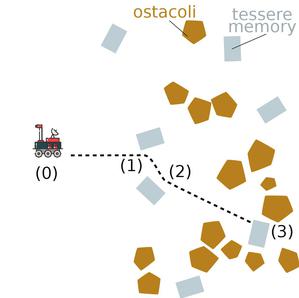
Driving on Mars
astroEDU educational activity (links to astroEDU website) Description: An educational interdisciplinary game to drive a rover on Mars
License: CC-BY-4.0 Creative Commons Reconocimiento 4.0 Internacional (CC BY 4.0) íconos
Etiquetas:
Game
, robot
, robotics
, simulation
, telecommunications
Rango de edades:
14-16
, 16-19
Nivel educativo:
Educación secundaria
, Secondary
Áreas de aprendizaje:
Aprendizaje por descubrimiento guiado
Costos:
Bajo coste
Duración:
2 horas
Tamaño del grupo:
Grupo
Competencias:
Comunicar información
, Desarrollar y utilizar modelos
, Utilizar las matemáticas y el pensamiento computacional