Glossary term: 漫遊車
Description: 漫遊車是一種人造機器,通過航天器被送往另一顆行星或月球表面,對該行星進行近距離研究,並通過通信方式將收集到的數據傳回地球。大多數漫遊車可以在地球上操作,並在行星或月球表面移動,不過阿波羅任務中的月球漫遊車是由宇航員在月球上駕駛的。漫遊車可以攜帶大量科學儀器,如小型鑽頭、樣本採集工具、照相機,甚至一個小型實驗室,用於分析空氣和地面樣本,並將結果傳回。
Related Terms:
See this term in other languages
Term and definition status: The original definition of this term in English have been approved by a research astronomer and a teacher The translation of this term and its definition is still awaiting approval
This is an automated transliteration of the simplified Chinese translation of this term
The OAE Multilingual Glossary is a project of the IAU Office of Astronomy for Education (OAE) in collaboration with the IAU Office of Astronomy Outreach (OAO). The terms and definitions were chosen, written and reviewed by a collective effort from the OAE, the OAE Centers and Nodes, the OAE National Astronomy Education Coordinators (NAECs) and other volunteers. You can find a full list of credits here. All glossary terms and their definitions are released under a Creative Commons CC BY-4.0 license and should be credited to "IAU OAE".
If you notice a factual or translation error in this glossary term or definition then please get in touch.
In Other Languages
- 阿拉伯語: المركبة الجوالة
- 德語: Rover
- 英語: Rover
- 西班牙語: Rover
- 法語: Rover
- 義大利語: Rover
- 巴西葡萄牙語: Veículo Explorador (Rover)
- 簡體中文: 漫游车
Related Media
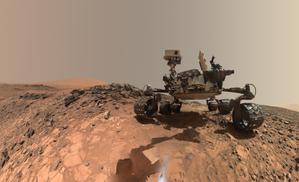
“好奇號”火星車
Caption: 這張NASA“好奇號”火星車的自拍照展示了它在夏普山下的“鹿皮”岩石目標區域進行鑽探的場景。該照片由“好奇號”上的火星手持透鏡成像儀(MAHLI)於2015年8月5日拍攝,由多張組件圖像合成,拍攝時間為“好奇號”在火星任務中的第1065個火星日。
Credit: 美國國家航空航天局/噴氣推進實驗室-加州理工學院/馬林空間科學系統公司
credit link
License: PD Public Domain icons

Record-Breaking Off-Earth Driving: Rovers on Mars & the Moon
Caption: Part of the Simplifying Astronomy for Arabic Speakers project, this infographic highlights the longest distances traveled by rovers on Mars and the Moon, showcasing space exploration’s progress.
Top Rovers & Their Achievements
Mars: NASA’s Opportunity holds the record, covering 45.16 km between 2004–2018.
Moon: The Soviet Lunokhod 2 leads with 39 km, followed by Apollo rovers:
Apollo 17: 35.74 km
Apollo 15: 27.8 km
Apollo 16: 27.1 km
Mars vs. Moon: Different Challenges
1. Martian Terrain – Mars has a thin atmosphere, dust storms, and rugged landscapes, requiring durable, long-term rovers.
2. Lunar Terrain – The Moon’s cratered surface lacks an atmosphere, allowing easier movement but with shorter mission durations.
3. Mission Longevity – Mars rovers operate for years, while Apollo lunar rovers were used briefly.
Future Rovers & Expectations
Curiosity may reach 42.195 km, making it one of Mars' most traveled rovers.
Yutu-2 (China) continues exploring the Moon since 2019.
Conclusion
These record-breaking distances showcase technological advancements in planetary exploration. With continued innovation, future rovers will go even further, paving the way for ambitious human missions beyond Earth!
Credit: Ali Al-Edhari ; adapted from the original by NASA/JPL-Caltech
License: CC-BY-4.0 Creative Commons 姓名標示 4.0 國際 (CC BY 4.0) icons
Related Activities
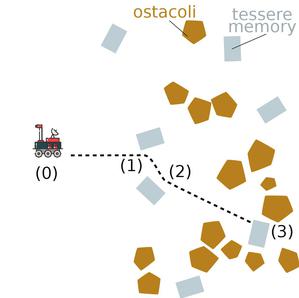
Driving on Mars
astroEDU educational activity (links to astroEDU website) Description: An educational interdisciplinary game to drive a rover on Mars
License: CC-BY-4.0 Creative Commons 姓名標示 4.0 國際 (CC BY 4.0) icons
Tags:
Game
, robot
, robotics
, simulation
, telecommunications
Age Ranges:
14-16
, 16-19
Education Level:
Middle School
, Secondary
Areas of Learning:
Guided-discovery learning
Costs:
Low Cost
Duration:
2 hours
Group Size:
Group
Skills:
Communicating information
, Developing and using models
, Using mathematics and computational thinking