Termo do glossário: Veículo Explorador (Rover)
Descrição: Um rover é uma máquina criada pelo homem que é enviada à superfície de outro planeta ou lua a bordo de uma espaçonave para estudar esse planeta de perto e enviar os dados coletados de volta à Terra por meio de um método de comunicação. A maioria pode ser operada a partir da Terra e se deslocar pela superfície do planeta ou da lua, embora os Veículos Lunares da missão Apollo tenham sido conduzidos por astronautas na Lua. Um rover pode transportar diversos instrumentos científicos, como pequenas brocas, uma ferramenta para coleta de amostras, câmeras e até mesmo um pequeno laboratório para analisar amostras do ar e do solo e enviar os resultados de volta.
Termos relacionados:
Ver este termo em outros idiomas
Status do termo e da definição: A definição original deste termo em inglês foi aprovada por um astrônomo(a) pesquisador(a) e um(a) professor(a) A tradução deste termo e de sua definição ainda aguarda aprovação
O Glossário Multilíngue da OAE é um projeto do Escritório da IAU de Astronomia para a Educação (OAE) em colaboração com o Escritório da IAU para Divulgação da Astronomia (OAO). Os termos e definições foram selecionados, escritos e revisados por meio de um esforço coletivo da OAE, dos Centros e Nós da OAE, dos Coordenadores Nacionais de Educação em Astronomia (NAECs) da OAE e de outros voluntários. Você pode encontrar uma lista completa dos créditos aqui. Todos os termos do glossário e suas definições são disponibilizados sob uma licença Creative Commons CC BY-4.0 e devem ser creditados à "IAU OAE".
Se você notar algum erro factual ou de tradução neste termo do glossário ou em sua definição, por favor entre em contato.
Mídia relacionada
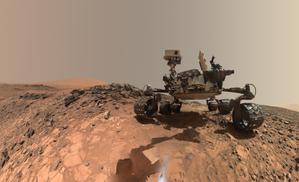
Veículo espacial Curiosity
Legenda: Este autorretrato do rover Curiosity da NASA mostra o veículo no local onde se posicionou para perfurar uma rocha chamada “Buckskin” na parte inferior do Monte Sharp. O autoretrato combina várias imagens capturadas pela Mars Hand Lens Imager (MAHLI) do Curiosity em 5 de agosto de 2015, durante o 1.065º dia marciano, ou sol, do atividades do rover em Marte.
Crédito: NASA/JPL-Caltech/MSSS
link do crédito
License: PD Domínio Público ícones

Record-Breaking Off-Earth Driving: Rovers on Mars & the Moon
Legenda: Part of the Simplifying Astronomy for Arabic Speakers project, this infographic highlights the longest distances traveled by rovers on Mars and the Moon, showcasing space exploration’s progress.
Top Rovers & Their Achievements
Mars: NASA’s Opportunity holds the record, covering 45.16 km between 2004–2018.
Moon: The Soviet Lunokhod 2 leads with 39 km, followed by Apollo rovers:
Apollo 17: 35.74 km
Apollo 15: 27.8 km
Apollo 16: 27.1 km
Mars vs. Moon: Different Challenges
1. Martian Terrain – Mars has a thin atmosphere, dust storms, and rugged landscapes, requiring durable, long-term rovers.
2. Lunar Terrain – The Moon’s cratered surface lacks an atmosphere, allowing easier movement but with shorter mission durations.
3. Mission Longevity – Mars rovers operate for years, while Apollo lunar rovers were used briefly.
Future Rovers & Expectations
Curiosity may reach 42.195 km, making it one of Mars' most traveled rovers.
Yutu-2 (China) continues exploring the Moon since 2019.
Conclusion
These record-breaking distances showcase technological advancements in planetary exploration. With continued innovation, future rovers will go even further, paving the way for ambitious human missions beyond Earth!
Crédito: Ali Al-Edhari ; adapted from the original by NASA/JPL-Caltech
License: CC-BY-4.0 Creative Commons Attribution 4.0 International (CC BY 4.0) ícones
Atividades relacionadas
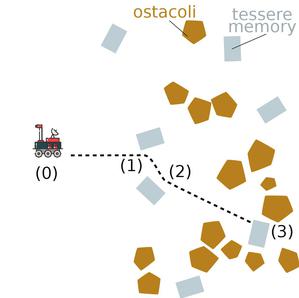
Driving on Mars
astroEDU educational activity (links to astroEDU website) Description: An educational interdisciplinary game to drive a rover on Mars
License: CC-BY-4.0 Creative Commons Attribution 4.0 International (CC BY 4.0) ícones
Tags:
Game
, robot
, robotics
, simulation
, telecommunications
Faixas etárias:
14-16
, 16-19
Nível de ensino:
Ensino fundamental
, Médio
Áreas de aprendizagem:
Aprendizagem por descoberta guiada
Custos:
Baixo custo
Duração:
2 hours
Tamanho do grupo:
Grupo
Habilidades:
Comunicar informações
, Desenvolver e usar modelos
, Usar matemática e pensamento computacional