Término del glosario: Magnitud
Descripción: En astronomía, la magnitud es una medida del brillo de un objeto celeste. El sistema de magnitudes utilizado en astronomía tiene su origen en la Antigüedad, donde se empleaba para clasificar a las estrellas de más brillantes a menos brillantes. Por eso, un valor de magnitud menor (o más negativo) indica que el objeto es más brillante, mientras que un número mayor indica que el objeto es más tenue. Por lo tanto, una estrella de magnitud -1 es más brillante que una de magnitud 0, que a su vez es más brillante que una de magnitud 1.
La magnitud sigue una escala logarítmica, en la que una diferencia de magnitud de cinco corresponde a una diferencia de un factor de 100 en la cantidad de energía recibida: una estrella de magnitud 10 es cien veces más tenue que una estrella de magnitud 5.
Existen diferentes tipos de magnitud: la magnitud aparente mide el brillo aparente de un objeto, que depende tanto de la luminosidad del objeto —la cantidad de luz que emite— como de su distancia a la Tierra.
Por el contrario, la magnitud absoluta es el valor que obtendríamos si el objeto se encontrara a una distancia estándar de 10 parsecs (32.6 años luz) de la Tierra. (Para los objetos reflectantes, como los asteroides, existe una definición diferente).
En la práctica, la magnitud se especifica para observaciones realizadas a través de un filtro concreto, que se corresponde con el brillo de un objeto en un rango determinado de longitudes de onda de la luz. Existen numerosos «sistemas fotométricos» para especificar los filtros y las magnitudes correspondientes. Por el contrario, la magnitud bolométrica es una medida directa de la luminosidad de un objeto: la energía electromagnética total emitida por unidad de tiempo. Las magnitudes visuales se corresponden con el brillo tal y como lo percibe el ojo humano.
Términos relacionados:
Ver este término en otros idiomas
Estado del término y la definición: La definición original de este término en inglés ha sido aprobada por unastrónomo o astrónoma investigadora y un docente La traducción de este término y su definición aún están pendientes de aprobación
El Glosario multilingüe de la OAE es un proyecto de la Oficina de Astronomía para la Educación de la UAI (OAE) en colaboración con la Oficina de Divulgación de Astronomía de la UAI (OAO). Los términos y definiciones fueron seleccionados, redactados y revisados gracias al esfuerzo colectivo de la OAE, los Centros y Nodos de la OAE, los Coordinadores Nacionales de Educación Astronómica (NAECs) y otros voluntarios. Puedes encontrar una lista completa de créditos aquí. Todos los términos del glosario y sus definiciones se publican bajo la licencia Creative Commons CC BY-4.0 y deben atribuirse a la "IAU OAE".
Si detectas algún error de contenido o de traducción en este término del glosario o en ladefinición, ponte en contacto con nosotros.
En otros idiomas
- Árabe: القدر الظاهري
- Alemán: Magnitude
- Inglés: Magnitude
- Francés: Magnitude
- Italiano: Magnitudo
- Japonés: 等級 (enlace externo)
- Coreano: 등급
- Portugués de Brasil: Magnitude
- Chino simplificado: 星等
- Chino tradicional: 星等
Actividades relacionadas
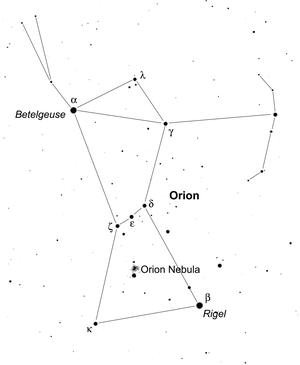
How Light Pollution Affects the Stars: Magnitude Readers
astroEDU educational activity (links to astroEDU website) Description: Build a Magnitude Reader to explore the magnitude of stars.
License: CC-BY-4.0 Creative Commons Reconocimiento 4.0 Internacional (CC BY 4.0) íconos
Etiquetas:
Hands-on
, Dark skies
, ecology
Rango de edades:
10-12
, 12-14
, 14-16
, 16-19
Nivel educativo:
Educación secundaria
Áreas de aprendizaje:
Modelización
, Basado en la observación
Costos:
Coste medio
Duración:
1 hora
Tamaño del grupo:
Grupo
Competencias:
Plantear preguntas
, Planificar y llevar a cabo investigaciones
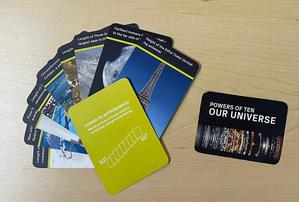
Let's play with powers of 10
astroEDU educational activity (links to astroEDU website) Description: A game of cards to understand powers of 10 and the very diverse scales in Nature
License: CC-BY-4.0 Creative Commons Reconocimiento 4.0 Internacional (CC BY 4.0) íconos
Etiquetas:
Scales
, Game
, Distances
, size
, Power
, length
Rango de edades:
12-14
, 14-16
, 16-19
, 19+
Nivel educativo:
Educación no forma
, Secondary
, Universitario
Áreas de aprendizaje:
Aprendizaje por descubrimiento guiado
, Aprendizaje basado en la investigación estructurada
Costos:
Bajo coste
Duración:
2 horas
Tamaño del grupo:
Grupo
Competencias:
Analizar e interpretar datos
, Plantear preguntas