Termo do glossário: Magnitude
Descrição: Na astronomia, a magnitude é uma medida do brilho de um objeto celeste. O sistema de magnitude utilizado na astronomia teve origem na Antiguidade como uma classificação das estrelas, da mais brilhante à menos brilhante. É por isso que um valor de magnitude menor (ou mais negativo) significa que o objeto é mais brilhante, e um número maior indica um objeto mais fraco. Portanto, uma estrela com magnitude -1 é mais brilhante do que uma estrela com magnitude 0, que, por sua vez, é mais brilhante do que uma estrela de magnitude 1.
A magnitude segue uma escala logarítmica, na qual uma diferença de magnitude de cinco corresponde a uma diferença de fator 100 na quantidade de energia recebida: uma estrela com magnitude 10 é cem vezes mais fraca do que uma estrela com magnitude 5.
Existem diferentes tipos de magnitude: a magnitude aparente mede o brilho aparente de um objeto, que depende tanto da luminosidade do objeto – a quantidade de luz que ele emite – quanto de sua distância da Terra.
Em contrapartida, a magnitude absoluta é o valor que obteríamos se o objeto estivesse a uma distância padrão de 10 parsecs (32,6 anos-luz) da Terra. (Para objetos refletores, como asteróides, há uma definição diferente.)
Na prática, a magnitude é especificada para observações realizadas por meio de um filtro específico, correspondendo ao brilho de um objeto em uma determinada faixa de comprimento de onda da luz. Existem inúmeros “sistemas fotométricos” para especificar filtros e as magnitudes correspondentes. Em contrapartida, a magnitude bolométrica é uma medida direta da luminosidade de um objeto: a energia eletromagnética total emitida por unidade de tempo. As magnitudes visuais correspondem ao brilho percebido pelo olho humano.
Termos relacionados:
Ver este termo em outros idiomas
Status do termo e da definição: A definição original deste termo em inglês foi aprovada por um astrônomo(a) pesquisador(a) e um(a) professor(a) A tradução deste termo e de sua definição ainda aguarda aprovação
O Glossário Multilíngue da OAE é um projeto do Escritório da IAU de Astronomia para a Educação(OAE) em colaboração com o Escritório da IAU para Divulgação da Astronomia (OAO). Os termos e definições foram selecionados, escritos e revisados por meio de um esforço coletivo da OAE, dos Centros e Nós da OAE, dos Coordenadores Nacionais de Educação em Astronomia (NAECs) da OAE e de outros voluntários. Você pode encontrar uma lista completa dos créditos aqui. Todos os termos do glossário e suas definições são disponibilizados sob uma licença Creative Commons CC BY-4.0 e devem ser creditados à "IAU OAE".
Se você notar algum erro factual ou de tradução neste termo do glossário ou em sua definição, por favor entre em contato.
Em outros idiomas
- Árabe: القدر الظاهري
- Alemão: Magnitude
- Inglês: Magnitude
- Espanhol: Magnitud
- Francês: Magnitude
- Italiano: Magnitudo
- Japonês: 等級 (link externo)
- Coreano: 등급
- Chinês Simplificado: 星等
- Chinês Tradicional: 星等
Atividades relacionadas
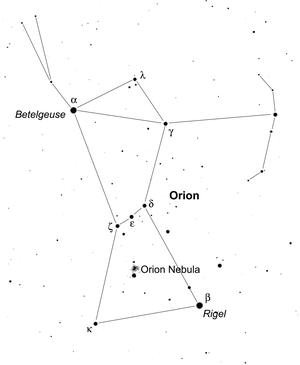
How Light Pollution Affects the Stars: Magnitude Readers
astroEDU educational activity (links to astroEDU website) Description: Build a Magnitude Reader to explore the magnitude of stars.
License: CC-BY-4.0 Creative Commons Attribution 4.0 International (CC BY 4.0) ícones
Tags:
Hands-on
, Dark skies
, ecology
Faixas etárias:
10-12
, 12-14
, 14-16
, 16-19
Nível de ensino:
Ensino fundamental
Áreas de aprendizagem:
Modelagem
, Baseado em observação
Custos:
Custo médio
Duração:
1 hour
Tamanho do grupo:
Grupo
Habilidades:
Fazer perguntas
, Planejar e realizar pesquisas
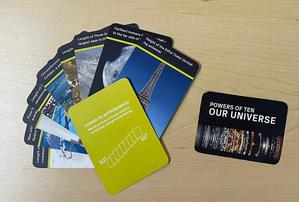
Let's play with powers of 10
astroEDU educational activity (links to astroEDU website) Description: A game of cards to understand powers of 10 and the very diverse scales in Nature
License: CC-BY-4.0 Creative Commons Attribution 4.0 International (CC BY 4.0) ícones
Tags:
Scales
, Game
, Distances
, size
, Power
, length
Faixas etárias:
12-14
, 14-16
, 16-19
, 19+
Nível de ensino:
Informal
, Médio
, Universidade
Áreas de aprendizagem:
Aprendizagem por descoberta guiada
, Aprendizagem por investigação estruturada
Custos:
Baixo custo
Duração:
2 hours
Tamanho do grupo:
Grupo
Habilidades:
Analisar e interpretar dados
, Fazer perguntas