وسائط ذات صلة
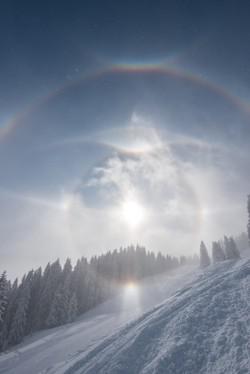
Winter Haloes, by Thomas Gigl, Germany
الشرح: Second place in the 2021 IAU OAE Astrophotography Contest, category Sun/Moon haloes.
Captured in Jochberg located in the famous Austrian ski-region of Tirol, this image shows multiple features related to ice halos, which are a more common appearance around the sun, due to its brightness, than the moon. External and internal reflection of sun rays from ice crystal faces and within different types of ice crystals lead to these halo related phenomena. The 22° halo encircles the sun, with two bright spots at the edge called Sundogs, Parhelia or Mock Suns observed to the left and right at the same height as the sun. The horizontal white band called the parhelic circle, named after the sun god Helios, passes through the sun and the Sundogs at the same angular elevation. An Upper tangent arc, a suncave parry arc and a lower tangent arc are also seen touching the top and bottom of the 22° halo. An upside down rainbow like arc or the circumzenithal arc is seen touching the bright supralateral arc, both of which are less frequently observed.
المصدر: Thomas Gigl/IAU OAE
License: CC-BY-4.0 المشاع الإبداعي نَسب المُصنَّف 4.0 دولي (CC BY 4.0) أيقونات
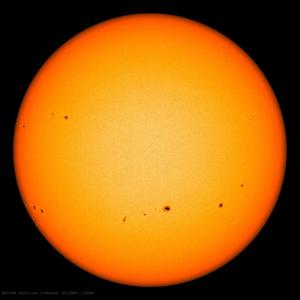
البقع الشمسية
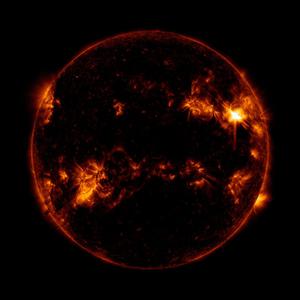
التوهج الشمسي

H-alpha image of the Sun's chromosphere
الشرح: This false-color image was captured with a 10-cm telescope at the Big Bear Solar Observatory (BBSO) in the United States in July 2002. It depicts the full disk of the Sun using the H-alpha emission line of hydrogen. When observed in this spectral line, the Sun's chromosphere appears particularly prominent due to hydrogen atoms emitting light at the specific wavelength. This emission produces a distinctive red color, making features such as spicules (jets of plasma that look hair-like) and plage (bright patches in the chromosphere) highly visible. Several small solar prominences can be seen protruding from the edge of the solar disk. When prominences (also known as filaments) cross the face of the disk they appear as dark threads caused by the cooler material in the prominence absorbing light. The chromosphere is also visible in the violet part of the solar spectrum due to ionized calcium showing emissions in these wavelengths.
المصدر: Big Bear Solar Observatory (BBSO)/New Jersey Institut of Technology (NJIT)
رابط المصدر
License: PD الملكية العامة أيقونات

Close-up view of a sunspot
الشرح: This image of a sunspot was taken by the Daniel K Inouye Solar Telescope (DKIST), operated by the U.S. National Science Foundation. It was taken only in light with a wavelength of 530 nanometers, within the greenish-yellow part of the visible spectrum.
The picture reveals the detail of the spot's structure and the Sun’s photosphere. The dark central region, known as the umbra, is surrounded by a lighter area called the penumbra with radially elongated features stretching towards the umbra. Note that the umbra and penumbra here are not the same as the umbra and penumbra that occur during an eclipse.
The sunspot measures approximately 5000 kilometres in diameter, roughly equivalent to the east-west span of China. While the umbra appears black, it is actually hot and bright. It only appears dark because it is a few thousand kelvin cooler than the surrounding solar photosphere. Surrounding the sunspot, granulation patterns of plasma are visible on the photospheric surface of the Sun.
المصدر: NSO/NSF/AURA
رابط المصدر
License: CC-BY-4.0 المشاع الإبداعي نَسب المُصنَّف 4.0 دولي (CC BY 4.0) أيقونات
الرسوم التوضيحية المرتبطة

Total Solar Eclipse
الشرح: This not to scale diagram shows what happens during a total solar eclipse. The Moon orbits the Earth, but its orbit is slightly tilted with respect to the Earth’s orbit around the Sun. During the new moon lunar phase, the Moon lies between the Earth and the Sun, but due to the Moon’s tilted orbit around the Earth, the Moon normally lies above or below the Sun at this point. However twice a year the Moon’s orbit lines up in such a way that the Moon can lie in a direct line between the Earth and Sun. During each of these periods (each of which last roughly a month) solar (and lunar) eclipses can occur. The Moon is about 400 times smaller than the Sun, but is 400 times closer to the Earth than the Sun. Hence the Sun and Moon have approximately the same angular size when viewed from the Earth. This means that it is possible for the Moon to completely cover the Sun when viewed from Earth. This is known as a total solar eclipse.
Here we see a schematic of such and eclipse. The Moon casts a shadow on the Earth known as the umbra. This is a roughly circular shadow a few hundred kilometres across although its shape can be severely distorted when the eclipse is at the edge of the illuminated part of the Earth. Any region within the umbra will see the Moon completely cover the Sun and thus will experience a total solar eclipse. Outside of the umbra there are regions where the Moon will cover part of the Sun. This partial shadow is known as the penumbra. Regions in the penumbra will experience a partial solar eclipse.
An eclipse is a dynamic event with the Moon moving in its orbit and the Earth rotating. Hence the umbra and penumbra move across the Earth’s surface together. The path the umbra takes across the Earth is known as the path of totality. Let’s consider one particular region that lies in the path of totality: except in rare cases where an eclipse begins at sunrise, a region that experiences totality will first see the Moon cover part of the Sun and gradually move across Sun until it is totally covered. From outside the Earth this would appear as the penumbra moving over this particular region followed by the umbra moving over this region. Once the Moon moves so that it no longer completely covers the Sun, totality ends and the umbra moves away from this particular region. The Moon will continue to uncover the Sun until (unless the Sun sets before the end of the eclipse) the Sun is completely uncovered. From outside the Earth this would appear as the umbra moving away from our particular region and the edge of the penumbra approaching and eventually passing over the region.
Outside of the path or totality there is a much broader region that will lie in the penumbra but will be missed by the umbra. Such regions will not experience a total solar eclipse during this event, only a partial solar eclipse.
المصدر: Aneta Margraf/IAU OAE
License: CC-BY-4.0 المشاع الإبداعي نَسب المُصنَّف 4.0 دولي (CC BY 4.0) أيقونات
الأنشطة المرتبطة
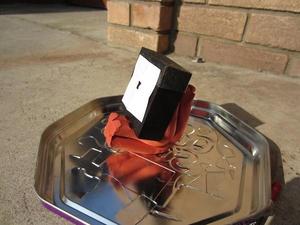
Measure the Solar Diameter
astroEDU educational activity (links to astroEDU website) Description: Hands-on activity to measure the Sun by using household materials.
License: CC-BY-4.0 المشاع الإبداعي نَسب المُصنَّف 4.0 دولي (CC BY 4.0) أيقونات
وسوم:
Hands-on
, Scales
, Observing
, Measurement
الفئات العمرية:
12-14
, 14-16
, 16-19
, 19+
المرحلة التعليمية:
المرحلة المتوسطة
مجالات التعلم:
تعلم منظم قائم على الاستقصاء
التكاليف:
تكلفة منخفضة
حجم المجموعة:
جماعي
المهارات:
توصيل المعلومات
, صياغة التفسيرات
, استخدام الرياضيات والتفكير الحاسوبي
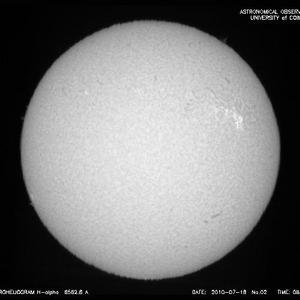
Counting Sunspots
astroEDU educational activity (links to astroEDU website) Description: Counting the Sunspots using real solar images and data.
License: CC-BY-4.0 المشاع الإبداعي نَسب المُصنَّف 4.0 دولي (CC BY 4.0) أيقونات
وسوم:
Hands-on
, Sunspots
, Data analysis
الفئات العمرية:
16-19
مجالات التعلم:
قائم على الملاحظة
التكاليف:
تكلفة منخفضة
المدة:
ساعة واحدة
حجم المجموعة:
جماعي
المهارات:
تحليل البيانات وتفسيرها
, صياغة التفسيرات
, استخدام الرياضيات والتفكير الحاسوبي
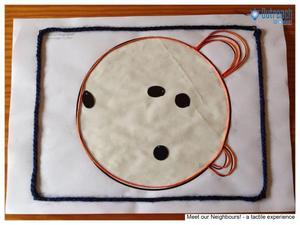
Meet Our Neighbours: Sun
astroEDU educational activity (links to astroEDU website) Description: Explore the tactile version of our star; the Sun with household materials.
License: CC-BY-4.0 المشاع الإبداعي نَسب المُصنَّف 4.0 دولي (CC BY 4.0) أيقونات
وسوم:
Hands-on
, Model
, Sunspots
, Visually Impaired
, Tactile
الفئات العمرية:
6-8
, 8-10
, 10-12
المرحلة التعليمية:
المرحلة المتوسطة
, المرحلة الابتدائية
, المرحلة الثانوية
مجالات التعلم:
محاضرة تفاعلية
, النمذجة
التكاليف:
تكلفة منخفضة
المدة:
ساعة واحدة
حجم المجموعة:
جماعي
المهارات:
تحليل البيانات وتفسيرها
, تطوير النماذج واستخدامها
Build a Safe Sun Viewer
astroEDU educational activity (links to astroEDU website) Description: Build a safe Sun viewer using cheap household items and learn why it is dangerous to look directly at the Sun, even briefly.
License: CC-BY-4.0 المشاع الإبداعي نَسب المُصنَّف 4.0 دولي (CC BY 4.0) أيقونات
وسوم:
Hands-on
, Safety
الفئات العمرية:
6-8
, 8-10
, 10-12
المرحلة التعليمية:
المرحلة الابتدائية
, المرحلة الثانوية
مجالات التعلم:
النمذجة
, قائم على الملاحظة
التكاليف:
تكلفة منخفضة
حجم المجموعة:
جماعي
المهارات:
تخطيط وتنفيذ التحقيقات
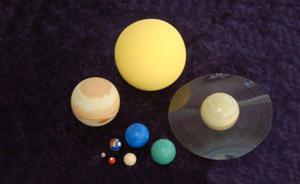
Solar System Model
astroEDU educational activity (links to astroEDU website) Description: Make a model of the Solar System planets using household materials.
License: CC-BY-4.0 المشاع الإبداعي نَسب المُصنَّف 4.0 دولي (CC BY 4.0) أيقونات
وسوم:
Hands-on
, Model
, Planets
الفئات العمرية:
4-6
, 6-8
, 8-10
المرحلة التعليمية:
مرحلة ما قبل المدرسة
, المرحلة الابتدائية
مجالات التعلم:
النمذجة
التكاليف:
تكلفة منخفضة
المدة:
30 دقيقة
حجم المجموعة:
جماعي
المهارات:
تحليل البيانات وتفسيرها
, طرح الأسئلة
, توصيل المعلومات
, تطوير النماذج واستخدامها