Termo do glossário: Telescópio
Descrição: Um telescópio é um dispositivo que coleta fótons (de luz visível ou de outros comprimentos de onda) de objetos distantes e fornece informações (por exemplo, uma imagem) sobre eles a um observador. Os primeiros telescópios (do início do século XVII) usavam lentes como elementos ópticos (ver telescópio refrator). As lentes têm limitações quanto ao tamanho que podem atingir, por isso, para observar objetos mais fracos com maior nível de detalhe com telescópios maiores, passou-se a utilizar espelhos (ver telescópio refletor) para focar a luz. Os maiores telescópios ópticos são telescópios refletores. No século XX, foram inventados telescópios para estudar outras regiões do espectro eletromagnético, de modo que hoje existem radiotelescópios, telescópios infravermelhos, telescópios de raios X, etc. Como as fontes celestes são tênues, os astrônomos tendem a construir telescópios de grande abertura para coletar mais luz e alcançar resoluções angulares mais precisas.
Termos relacionados:
- Radiação eletromagnética
- Telescópio infravermelho
- Radiotelescópio
- Telescópio Refletor
- Telescópio Refrator
- Resolução angular
- Telescópio de raios X
- Lente
- Espelho
Ver este termo em outros idiomas
Status do termo e da definição: A definição original deste termo em inglês foi aprovada por um astrônomo(a) pesquisador(a) e um(a) professor(a) A tradução deste termo e de sua definição ainda aguarda aprovação
O Glossário Multilíngue da OAE é um projeto do Escritório da IAU de Astronomia para a Educação (OAE) em colaboração com o Escritório da IAU para Divulgação da Astronomia (OAO). Os termos e definições foram selecionados, escritos e revisados por meio de um esforço coletivo da OAE, dos Centros e Nós da OAE, dos Coordenadores Nacionais de Educação em Astronomia (NAECs) da OAE e de outros voluntários. Você pode encontrar uma lista completa dos créditos aqui. Todos os termos do glossário e suas definições são disponibilizados sob uma licença Creative Commons CC BY-4.0 e devem ser creditados à "IAU OAE".
Se você notar algum erro factual ou de tradução neste termo do glossário ou em sua definição, por favor entre em contato.
Em outros idiomas
- Árabe: تليسكوب
- Alemão: Teleskop
- Inglês: Telescope
- Espanhol: Telescopio
- Francês: Télescope
- Hindi: दूरबीन (टेलिस्कोप)
- Italiano: Telescopio
- Japonês: 望遠鏡 (link externo)
- Marathi: दूरदर्शक दुर्बीण (टेलिस्कोप)
- Chinês Simplificado: 望远镜
- Chinês Tradicional: 望遠鏡
Mídia relacionada
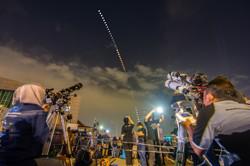
The Eclipse Between Us, by Muhammad Rayhan, Indonesia
Legenda: Second place in the 2021 IAU OAE Astrophotography Contest, category Total lunar eclipse.
Total lunar eclipses belong to the rather spectacular celestial events and can be observed easily with and without a telescope. Here we see the stages of the total lunar eclipse of 31.1.2018 photographed in Indonesia: starting with the entry of the full moon disk into Earth's round umbra, the totality as Blood Moon, and the beginning of the Moon's exit from Earth's umbra until moonset.
Crédito: Muhammad Rayhan/IAU OAE
License: CC-BY-4.0 Creative Commons Attribution 4.0 International (CC BY 4.0) ícones
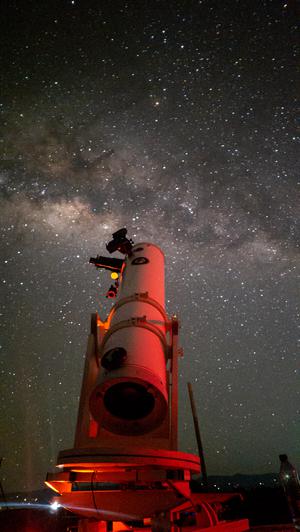
Learning Nights
Legenda: Honorable mention in the 2023 IAU OAE Astrophotography Contest, category of Still images taken exclusively with smartphones/mobile devices.
Beneath the sprawling expanse of the night sky over Colombia's Tatacoa Desert, a telescope finds its alignment with the majestic galactic core, while a smartphone captures this cosmic encounter. This snapshot, taken on 9 June 2023 during an astronomy camp, epitomises the accessible beauty of celestial marvels. It showcases the mesmerising grandeur of the night sky, inviting both the casual stargazer and the passionate astronomer alike. The splendour of the Milky Way, elegantly captured through a mobile device, seamlessly bridges the gap between sophisticated equipment and the pure, profound joy of observing the stars.
Crédito: Juan Pablo Botero Londoño/IAU OAE (CC BY 4.0)
License: CC-BY-4.0 Creative Commons Attribution 4.0 International (CC BY 4.0) ícones
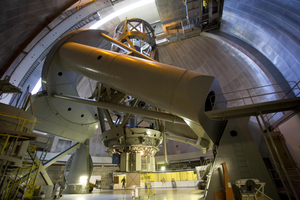
The Hale Telescope
Legenda: This image shows the Hale Telescope at the Palomar Observatory in northern San Diego County, California, USA and operated by the California Institute of Technology (Caltech). With its 5.1 m primary mirror, the Hale Telescope was the largest effective optical telescope in the world from its first light in 1949 until 1993.
Here we see the Hale Telescope when not in operation. The telescope itself is the large, vertical, approximately cylindrical object in the centre of the image. Telescopes like this use mirrors to gather faint light and form clear images of distant targets, enabling scientists to study everything from nearby stars and planets to remote galaxies. The primary mirror, seen here at the bottom of the telescope, focusses light from the sky to the prime focus at the top of the telescope. Instruments such as cameras and spectrographs can be placed at this prime focus or alternatively a secondary mirror can reflect light back down the telescope and through a hole in the primary mirror to instruments.
The telescope is supported by a large mount, seen here at an angle to the telescope. This particular mount is a type of equatorial mount. This means that one of the rotation axes of the mount points to the celestial poles. When a star or galaxy moves across the sky due to the Earth's rotation, the telescope only has rotate on this axis to keep pointing at that star or galaxy. Most modern large telescopes use a different kind of mount and rely on computer calculations to accurately track an object across the sky.
The Hale Telescope is housed under a large rotating dome that opens at night so the telescope can track objects across the sky.
Crédito: JPL/Caltech/Palomar Observatory
link do crédito
License: PD Domínio Público ícones
Atividades relacionadas
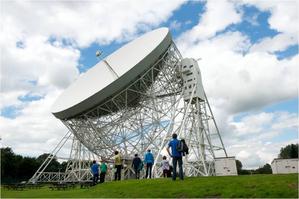
Big Telescopes: Gravity
astroEDU educational activity (links to astroEDU website) Description: Observing what gravity is doing to the Universe
License: CC-BY-4.0 Creative Commons Attribution 4.0 International (CC BY 4.0) ícones
Tags:
Experiment
Faixas etárias:
12-14
, 14-16
Nível de ensino:
Ensino fundamental
, Médio
Áreas de aprendizagem:
Aprendizagem por descoberta guiada
, Aula interativa
, Modelagem
Custos:
Alto custo
Duração:
1 hour 30 mins
Tamanho do grupo:
Grupo
Habilidades:
Analisar e interpretar dados
, Fazer perguntas
, Desenvolver e usar modelos
, Planejar e realizar pesquisas
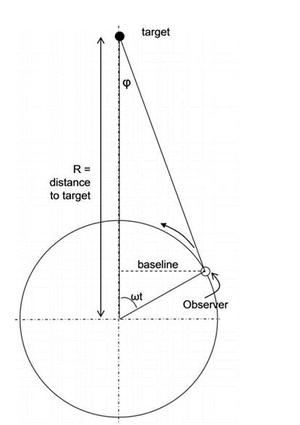
The 4-Point Backyard Diurnal Parallax Method
astroEDU educational activity (links to astroEDU website) Description: Measure the distance to an asteroid with a novel technique
License: CC-BY-4.0 Creative Commons Attribution 4.0 International (CC BY 4.0) ícones
Tags:
Hands-on
, Measurement
, Distances
, CCD imaging
, astrometry
Faixas etárias:
16-19
, 19+
Nível de ensino:
Informal
, Médio
, Universidade
Áreas de aprendizagem:
Aprendizagem por descoberta guiada
, Aprendizagem baseada em projetos
Custos:
Alto custo
Duração:
vários dias
Tamanho do grupo:
Grupo
Habilidades:
Analisar e interpretar dados
, Fazer perguntas
, Comunicar informações
, Construir explicações
, Planejar e realizar pesquisas
, Usar matemática e pensamento computacional
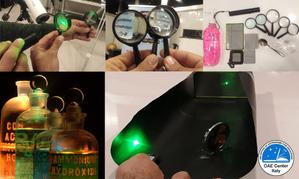
How do telescopes work?
astroEDU educational activity (links to astroEDU website) Description: Let's discover telescopes and experiment simple optics
License: CC-BY-4.0 Creative Commons Attribution 4.0 International (CC BY 4.0) ícones
Faixas etárias:
10-12
Nível de ensino:
Básico
Áreas de aprendizagem:
Aprendizagem por descoberta guiada
, Atividade com foco histórico
, Baseado em observação
Custos:
Custo médio
Duração:
1 hour
Tamanho do grupo:
Grupo
Habilidades:
Fazer perguntas