Término del glosario: Telescopio
Descripción: Un telescopio es un dispositivo que recoge fotones (de luz visible u otras longitudes de onda) procedentes de objetos lejanos y proporciona información (por ejemplo, una imagen) sobre ellos al observador. Los primeros telescopios (desde principios del siglo XVII) utilizaban lentes como elementos ópticos (véase «telescopio refractor»). Las lentes tienen un límite en cuanto al tamaño que pueden alcanzar, por lo que, para poder observar con mayor detalle los objetos más tenues con telescopios más grandes, se empezaron a utilizar espejos (véase «telescopio reflector») para enfocar la luz. Los telescopios ópticos más grandes son los telescopios reflectores. En el siglo XX se inventaron telescopios para estudiar otras regiones del espectro electromagnético, por lo que ahora existen radiotelescopios, telescopios infrarrojos, telescopios de rayos X, etc. Dado que las fuentes celestes son tenues, los astrónomos suelen construir telescopios de gran apertura para captar más luz y alcanzar resoluciones angulares más precisas.
Términos relacionados:
- Radiación electromagnética
- Telescopio infrarrojo
- Radiotelescopio
- Telescopio reflector
- Telescopio refractor
- Resolución Angular
- Telescopio de rayos X
- Lente
- Espejo
Ver este término en otros idiomas
Estado del término y la definición: La definición original de este término en inglés ha sido aprobada por unastrónomo o astrónoma investigadora y un docente La traducción de este término y su definición aún están pendientes de aprobación
El Glosario multilingüe de la OAE es un proyecto de la Oficina de Astronomía para la Educación de la UAI (OAE) en colaboración con la Oficina de Divulgación de Astronomía de la UAI (OAO). Los términos y definiciones fueron seleccionados, redactados y revisados gracias al esfuerzo colectivo de la OAE, los Centros y Nodos de la OAE, los Coordinadores Nacionales de Educación Astronómica (NAECs) y otros voluntarios. Puedes encontrar una lista completa de créditos aquí. Todos los términos del glosario y sus definiciones se publican bajo la licencia Creative Commons CC BY-4.0 y deben atribuirse a la "IAU OAE".
Si detectas algún error de contenido o de traducción en este término del glosario o en ladefinición, ponte en contacto con nosotros.
En otros idiomas
- Árabe: تليسكوب
- Alemán: Teleskop
- Inglés: Telescope
- Francés: Télescope
- Hindi: दूरबीन (टेलिस्कोप)
- Italiano: Telescopio
- Japonés: 望遠鏡 (enlace externo)
- Maratí: दूरदर्शक दुर्बीण (टेलिस्कोप)
- Portugués de Brasil: Telescópio
- Chino simplificado: 望远镜
- Chino tradicional: 望遠鏡
Contenidos relacionados
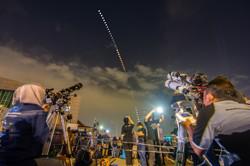
The Eclipse Between Us, by Muhammad Rayhan, Indonesia
Pie de foto: Second place in the 2021 IAU OAE Astrophotography Contest, category Total lunar eclipse.
Total lunar eclipses belong to the rather spectacular celestial events and can be observed easily with and without a telescope. Here we see the stages of the total lunar eclipse of 31.1.2018 photographed in Indonesia: starting with the entry of the full moon disk into Earth's round umbra, the totality as Blood Moon, and the beginning of the Moon's exit from Earth's umbra until moonset.
Crédito: Muhammad Rayhan/IAU OAE
License: CC-BY-4.0 Creative Commons Reconocimiento 4.0 Internacional (CC BY 4.0) íconos
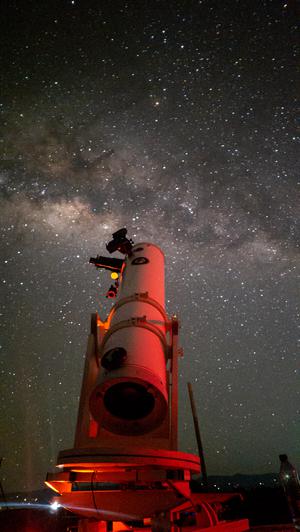
Learning Nights
Pie de foto: Honorable mention in the 2023 IAU OAE Astrophotography Contest, category of Still images taken exclusively with smartphones/mobile devices.
Beneath the sprawling expanse of the night sky over Colombia's Tatacoa Desert, a telescope finds its alignment with the majestic galactic core, while a smartphone captures this cosmic encounter. This snapshot, taken on 9 June 2023 during an astronomy camp, epitomises the accessible beauty of celestial marvels. It showcases the mesmerising grandeur of the night sky, inviting both the casual stargazer and the passionate astronomer alike. The splendour of the Milky Way, elegantly captured through a mobile device, seamlessly bridges the gap between sophisticated equipment and the pure, profound joy of observing the stars.
Crédito: Juan Pablo Botero Londoño/IAU OAE (CC BY 4.0)
License: CC-BY-4.0 Creative Commons Reconocimiento 4.0 Internacional (CC BY 4.0) íconos
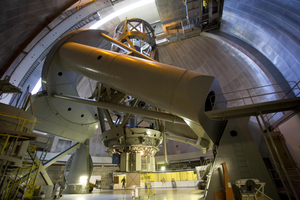
The Hale Telescope
Pie de foto: This image shows the Hale Telescope at the Palomar Observatory in northern San Diego County, California, USA and operated by the California Institute of Technology (Caltech). With its 5.1 m primary mirror, the Hale Telescope was the largest effective optical telescope in the world from its first light in 1949 until 1993.
Here we see the Hale Telescope when not in operation. The telescope itself is the large, vertical, approximately cylindrical object in the centre of the image. Telescopes like this use mirrors to gather faint light and form clear images of distant targets, enabling scientists to study everything from nearby stars and planets to remote galaxies. The primary mirror, seen here at the bottom of the telescope, focusses light from the sky to the prime focus at the top of the telescope. Instruments such as cameras and spectrographs can be placed at this prime focus or alternatively a secondary mirror can reflect light back down the telescope and through a hole in the primary mirror to instruments.
The telescope is supported by a large mount, seen here at an angle to the telescope. This particular mount is a type of equatorial mount. This means that one of the rotation axes of the mount points to the celestial poles. When a star or galaxy moves across the sky due to the Earth's rotation, the telescope only has rotate on this axis to keep pointing at that star or galaxy. Most modern large telescopes use a different kind of mount and rely on computer calculations to accurately track an object across the sky.
The Hale Telescope is housed under a large rotating dome that opens at night so the telescope can track objects across the sky.
Crédito: JPL/Caltech/Palomar Observatory
enlace de crédito
License: PD Dominio público íconos
Actividades relacionadas
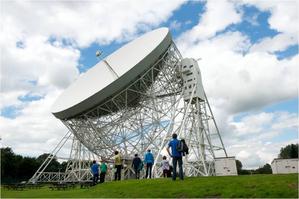
Big Telescopes: Gravity
astroEDU educational activity (links to astroEDU website) Description: Observing what gravity is doing to the Universe
License: CC-BY-4.0 Creative Commons Reconocimiento 4.0 Internacional (CC BY 4.0) íconos
Etiquetas:
Experiment
Rango de edades:
12-14
, 14-16
Nivel educativo:
Educación secundaria
, Secondary
Áreas de aprendizaje:
Aprendizaje por descubrimiento guiado
, Clase interactiva
, Modelización
Costos:
Alto coste
Duración:
1 hora y 30 minutos
Tamaño del grupo:
Grupo
Competencias:
Analizar e interpretar datos
, Plantear preguntas
, Desarrollar y utilizar modelos
, Planificar y llevar a cabo investigaciones
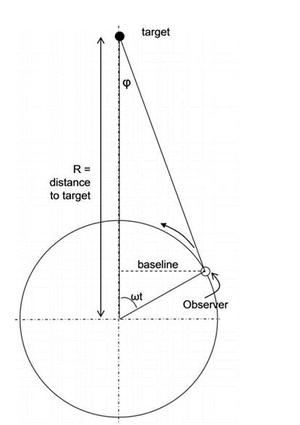
The 4-Point Backyard Diurnal Parallax Method
astroEDU educational activity (links to astroEDU website) Description: Measure the distance to an asteroid with a novel technique
License: CC-BY-4.0 Creative Commons Reconocimiento 4.0 Internacional (CC BY 4.0) íconos
Etiquetas:
Hands-on
, Measurement
, Distances
, CCD imaging
, astrometry
Rango de edades:
16-19
, 19+
Nivel educativo:
Educación no forma
, Secondary
, Universitario
Áreas de aprendizaje:
Aprendizaje por descubrimiento guiado
, Aprendizaje basado en proyectos
Costos:
Alto coste
Duración:
varios días
Tamaño del grupo:
Grupo
Competencias:
Analizar e interpretar datos
, Plantear preguntas
, Comunicar información
, Elaborar explicaciones
, Planificar y llevar a cabo investigaciones
, Utilizar las matemáticas y el pensamiento computacional
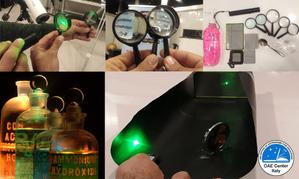
How do telescopes work?
astroEDU educational activity (links to astroEDU website) Description: Let's discover telescopes and experiment simple optics
License: CC-BY-4.0 Creative Commons Reconocimiento 4.0 Internacional (CC BY 4.0) íconos
Rango de edades:
10-12
Nivel educativo:
Primaria
Áreas de aprendizaje:
Aprendizaje por descubrimiento guiado
, Actividad centrada en la historia
, Basado en la observación
Costos:
Coste medio
Duración:
1 hora
Tamaño del grupo:
Grupo
Competencias:
Plantear preguntas