Termo do glossário: Óptica
Descrição: A óptica é a ciência da luz e suas interações com a matéria, bem como a arte de construir instrumentos que utilizam os princípios gerais das interações luz-matéria. Em astronomia, a “óptica” de um telescópio ou instrumento corresponde às partes que guiam a luz em direção a um detector, notadamente espelhos, lentes, máscaras, fendas ou guias de onda no que diz respeito à luz visível, assim como elementos dispersivos, como prismas e grades que produzem espectros. Óptica ativa é o termo usado para um espelho mantido na forma correta por elementos mecânicos ativos (“atuadores”), enquanto óptica adaptativa é um sistema pelo qual um espelho é rapidamente deformado da maneira adequada para compensar perturbações atmosféricas (o “cintilar” das estrelas). O adjetivo “óptico” também é usado para se referir à astronomia que utiliza luz visível.
Termos relacionados:
Ver este termo em outros idiomas
Status do termo e da definição: A definição original deste termo em inglês foi aprovada por um astrônomo(a) pesquisador(a) e um(a) professor(a) A tradução deste termo e de sua definição ainda aguarda aprovação
O Glossário Multilíngue da OAE é um projeto do Escritório da IAU de Astronomia para a Educação (OAE) em colaboração com o Escritório da IAU para Divulgação da Astronomia (OAO). Os termos e definições foram selecionados, escritos e revisados por meio de um esforço coletivo da OAE, dos Centros e Nós da OAE, dos Coordenadores Nacionais de Educação em Astronomia (NAECs) da OAE e de outros voluntários. Você pode encontrar uma lista completa dos créditos aqui. Todos os termos do glossário e suas definições são disponibilizados sob uma licença Creative Commons CC BY-4.0 e devem ser creditados à "IAU OAE".
Se você notar algum erro factual ou de tradução neste termo do glossário ou em sua definição, por favor entre em contato.
Mídia relacionada
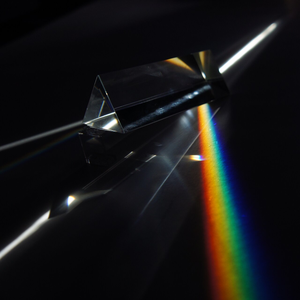
Light Dispersion by a Triangular Prism
Legenda: This photograph shows a prism splitting a beam of white light into its component colors — a beautiful demonstration of optics, the branch of physics that studies how light behaves and interacts with materials. When white light enters the prism, different wavelengths (colors) bend by different amounts because of a process called refraction. This separation of colors produces a spectrum — similar to a rainbow — revealing that white light is actually made up of many colors combined going from blue, through green and yellow to red.
Understanding optics helps scientists and engineers design lenses, microscopes, telescopes, cameras, and many other tools that shape and control light for practical use. The way the prism disperses light into a spectrum is the same principle that makes rainbows form in the sky when sunlight passes through raindrops.
Crédito: Kelvinsong
link do crédito
License: CC0 CC0 1.0 Universal (CC0 1.0) Public Domain Dedication ícones
Atividades relacionadas
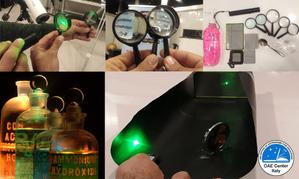
How do telescopes work?
astroEDU educational activity (links to astroEDU website) Description: Let's discover telescopes and experiment simple optics
License: CC-BY-4.0 Creative Commons Attribution 4.0 International (CC BY 4.0) ícones
Faixas etárias:
10-12
Nível de ensino:
Básico
Áreas de aprendizagem:
Aprendizagem por descoberta guiada
, Atividade com foco histórico
, Baseado em observação
Custos:
Custo médio
Duração:
1 hour
Tamanho do grupo:
Grupo
Habilidades:
Fazer perguntas






.jpg)
