Glossary term: नेभिगेसन / दिशानिर्देशन
Description: दिशानिर्देशन भनेको चाहे तपाईं पृथ्वीमा होस् वा अन्तरिक्षमा, जहाँ हुनुभए पनि तपाईंको यात्राको इच्छित दिशा के हो, र तपाईं जहाँ जान चाहनुहुन्छ त्यहाँ कसरी पुग्ने भनेर पत्ता लगाउने प्रक्रिया हो। परापूर्व काल देखि नै सूर्य र ताराहरूले दिशानिर्देशनमा महत्त्वपूर्ण भूमिका खेलेका छन्। सबैभन्दा सजिलो उदाहरण; उत्तरी गोलार्धमा सफा रातमा तपाईं उत्तर ध्रुव तारा (Pole Star) प्रयोग गरेर उत्तर दिशा कहाँ छ भनेर निर्धारण गर्न र त्यसअनुसार आफ्नो यात्राको दिशा छनोट गर्न सक्नुहुन्छ। त्यसै गरी, दक्षिणी गोलार्धमा चाहिँ दक्षिणी क्रस (Southern Cross) दक्षिण दिशातर्फ संकेत गर्छ। आधुनिक नेभिगेसन उपकरणहरूको विकास हुनुअघि, "नाक्षत्रिक दिशानिर्देशन" अत्यावश्यक थियो। नेभिगेटरहरूले आफ्नो अक्षांश (latitude) निर्धारण गर्न दिउँसो क्षितिजभन्दा माथि सूर्यको कोण निर्धारण गर्थे, र आफ्नो देशान्तर (longitude) निर्धारण गर्न स्थानीय मध्याह्नको समय (सूर्यको सबैभन्दा माथिल्लो आकाशीय स्थिति) लाई ग्रीनविच मिन समय देखाउने घडीसँग तुलना गर्थे। आधुनिक दिशानिर्देशन प्रायः जीपीएस GPS र यस्तै उपग्रह प्रणालीहरूबाट प्राप्त संकेतहरूमा निर्भर गर्दछ।
Related Terms:
See this term in other languages
Term and definition status: The original definition of this term in English have been approved by a research astronomer and a teacher The translation of this term and its definition is still awaiting approval
The OAE Multilingual Glossary is a project of the IAU Office of Astronomy for Education (OAE) in collaboration with the IAU Office of Astronomy Outreach (OAO). The terms and definitions were chosen, written and reviewed by a collective effort from the OAE, the OAE Centers and Nodes, the OAE National Astronomy Education Coordinators (NAECs) and other volunteers. You can find a full list of credits here. All glossary terms and their definitions are released under a Creative Commons CC BY-4.0 license and should be credited to "IAU OAE".
If you notice a factual or translation error in this glossary term or definition then please get in touch.
In Other Languages
- अरबिक: الملاحة
- जर्मन: Navigation
- अंग्रेजी: Navigation
- स्पेनिस: Navegación
- फ्रान्सेली: Navigation
- ईटालियन: Navigazione
- ब्राजिली पुर्तगाली: Navegação
- सरल चिनि: 导航
- प्राचिन चिनि: 導航
Related Media
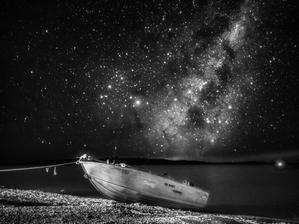
Sailing the Celestial Seas
Caption: Honorable mention in the 2023 IAU OAE Astrophotography Contest, category of Still images taken exclusively with smartphones/mobile devices.
In this black and white snapshot taken in April 2022 with a smartphone, a solitary boat rests on the shores of Lake Eucumbene, Australia, framed by the brilliant display of stars comprising the Milky Way. The prominent glow of the galactic centre stands out against the night sky, its intricate patterns of stars and nebulae casting a striking contrast. Each shimmering dot represents a distant sun, possibly orbited by uncharted planets, underscoring the vastness and complexity of our sprawling home galaxy.
Credit: Lucy Yunxi Hu/IAU OAE (CC BY 4.0)
License: CC-BY-4.0 Creative Commons Attribution 4.0 International (CC BY 4.0) icons
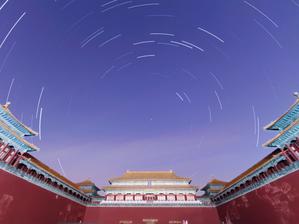
Star Trails of the Forbidden City
Caption: Honorable mention in the 2023 IAU OAE Astrophotography Contest, category of Still images taken exclusively with smartphones/mobile devices.
Beneath the celestial ballet of star trails that weave their way across the night sky, the Beijing Forbidden City stands as a testament to ancient celestial connections in this image captured in March 2022. Designed with a cosmic alignment in mind, the palace echoes the orientation of the North Star, also known as Polaris, a celestial anchor that has long guided navigators and symbolised steadiness in the sky. It was believed that the Emperor embodied the earthly representation of this pole star, bridging the realms between heaven and earth. In this harmonious one-hour exposure captured with a smartphone, the streaks of stars trace their nightly journey across the firmament, converging toward the North Star, reflecting the precision of both architectural design and celestial paths.
Credit: Stephanie Ziyi Ye/IAU OAE (CC BY 4.0)
License: CC-BY-4.0 Creative Commons Attribution 4.0 International (CC BY 4.0) icons
Related Activities
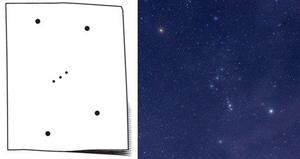
What is a Constellation?
astroEDU educational activity (links to astroEDU website) Description: Investigate three dimensional objects and perspective using constellations
License: CC-BY-4.0 Creative Commons Attribution 4.0 International (CC BY 4.0) icons
Tags:
Hands-on
Age Ranges:
6-8
, 8-10
Education Level:
Primary
Areas of Learning:
Modelling
, Structured-inquiry learning
Costs:
Medium Cost
Duration:
1 hour 30 mins
Group Size:
Group
Skills:
Analysing and interpreting data
, Asking questions
, Constructing explanations
, Developing and using models
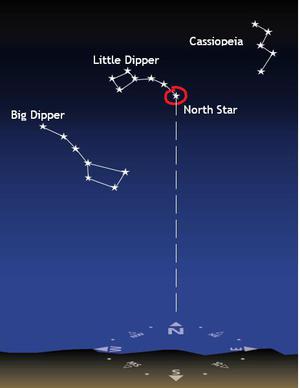
How To Travel on Earth Without Getting Lost
astroEDU educational activity (links to astroEDU website) Description: Use a globe to describe your position on Earth.
License: CC-BY-4.0 Creative Commons Attribution 4.0 International (CC BY 4.0) icons
Tags:
Geography
, Maps
, GPS
, Celestial navigation
Age Ranges:
8-10
, 10-12
, 12-14
Education Level:
Middle School
, Primary
Areas of Learning:
Structured-inquiry learning
Costs:
Low Cost
Duration:
1 hour
Group Size:
Group
Skills:
Analysing and interpreting data
, Developing and using models
, Using mathematics and computational thinking
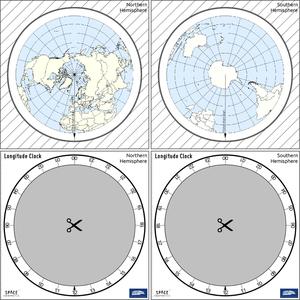
The Quest for Longitude
astroEDU educational activity (links to astroEDU website) Description: How to navigate at sea like an explorer?
License: CC-BY-4.0 Creative Commons Attribution 4.0 International (CC BY 4.0) icons
Tags:
Clocks
, Geography
, Coordinates
, Celestial navigation
, James Cook
, Exploration
Age Ranges:
14-16
, 16-19
Education Level:
Middle School
, Secondary
Areas of Learning:
Discussion Groups
, Modelling
, Structured-inquiry learning
Costs:
Low Cost
Duration:
2 hours
Group Size:
Group
Skills:
Analysing and interpreting data
, Asking questions
, Communicating information
, Developing and using models
, Planning and carrying out investigations
, Using mathematics and computational thinking
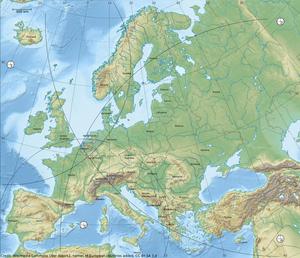
Where on Earth am I?
astroEDU educational activity (links to astroEDU website) Description: How do satellite-based positioning and GPS navigation work?
License: CC-BY-4.0 Creative Commons Attribution 4.0 International (CC BY 4.0) icons
Tags:
Clocks
, Geography
, Maps
, GPS
, Countries
, Speed of light
, Galileo
Age Ranges:
14-16
Education Level:
Middle School
Areas of Learning:
Guided-discovery learning
, Problem-solving
Costs:
Low Cost
Duration:
1 hour 30 mins
Group Size:
Group
Skills:
Analysing and interpreting data
, Asking questions
, Communicating information
, Constructing explanations
, Developing and using models
, Using mathematics and computational thinking
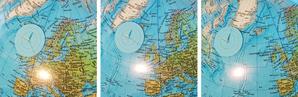
Navigate like a Viking – Use the Sun, not your phone!
astroEDU educational activity (links to astroEDU website) Description: Learn how the Vikings used the sky to navigate at sea with a hands-on activity!
License: CC-BY-4.0 Creative Commons Attribution 4.0 International (CC BY 4.0) icons
Tags:
History
, Geography
, Maps
, Coordinates
, Celestial navigation
Age Ranges:
12-14
, 14-16
Education Level:
Middle School
Areas of Learning:
Discussion Groups
, Modelling
, Structured-inquiry learning
Costs:
Medium Cost
Duration:
1 hour 30 mins
Group Size:
Group
Skills:
Analysing and interpreting data
, Asking questions
, Communicating information
, Developing and using models
, Planning and carrying out investigations
, Using mathematics and computational thinking