Glossary term: गुरुत्वाकर्षण
Description: गुरुत्वाकर्षण म्हणजे वस्तुमान असलेल्या वस्तूंचे परस्पर आकर्षण. शास्त्रीय यांत्रिकीमध्ये, वस्तुमान असलेली कोणतीही वस्तू वस्तुमान असलेल्या दुसर्या वस्तूवर नेहमीच आकर्षणाची शक्ती लावते. या आकर्षक शक्तीलाच आपण गुरुत्वाकर्षण म्हणून ओळखतो. आइन्स्टाईनचा सापेक्षतेचा सामान्य सिद्धांत गुरुत्वाकर्षणाला बल ऐवजी स्पेसटाइमची वक्रता म्हणून सांगतो. तथापि, गुरुत्वाकर्षणाचा शास्त्रीय अंदाज अजूनही बर्याच परिस्थितींमध्ये अचूक आहे. एखादी वस्तू जितकी मोठी असेल तितकी तिची गुरुत्वाकर्षण शक्ती/स्पेसटाइमची विकृती मजबूत असेल आणि त्यामुळे इतर वस्तूंवर आकर्षणाची शक्ती तितकीच मजबूत होईल.
Related Terms:
See this term in other languages
Term and definition status: The original definition of this term in English have been approved by a research astronomer and a teacher The translation of this term and its definition is still awaiting approval
The OAE Multilingual Glossary is a project of the IAU Office of Astronomy for Education (OAE) in collaboration with the IAU Office of Astronomy Outreach (OAO). The terms and definitions were chosen, written and reviewed by a collective effort from the OAE, the OAE Centers and Nodes, the OAE National Astronomy Education Coordinators (NAECs) and other volunteers. You can find a full list of credits here. All glossary terms and their definitions are released under a Creative Commons CC BY-4.0 license and should be credited to "IAU OAE".
If you notice a factual or translation error in this glossary term or definition then please get in touch.
In Other Languages
- अरेबिक: الجاذبية
- जर्मन: Schwerkraft
- इंग्रजी: Gravity
- स्पॅनिश : Gravedad
- फ्रेंच: Gravité
- हिंदी: गुरुत्वाकर्षण
- इटालियन: Gravità
- जपानी: 重力 (external link)
- ब्रझिलियन पोर्तुगीज: Gravidade
- सोपी चायनिज: 万有引力
- पारंपारिक चायनिज: 萬有引力
Related Media

Apparatus for determining the gravitional constant
Caption: Observations of the motions of the planets around the Sun, or the Moon around the Earth, could not yield the gravitational constant, as in those cases, the mass of the central body is not initially known. Measuring the gravitational constant required a situation where the masses involved had been determined independent of measuring their gravitational attraction. The device shown here was built by John Michell (1724–1793), but Michell died before he could perform the experiment. Henry Cavendish (1731–1810) inherited the device, modified it so as to suppress external disturbances, and successfully completed the experiment. Cavendish's report to the Royal Society was under the title of "Experiments to determine the density of the Earth" as, from knowledge of the gravitational constant, the gravitational acceleration at Earth's surface and the Earth's radius, one can determine the Earth's mass and its mean density. From the modern perspective, what is now known as the "Cavendish experiment" is seen as a way of determining Newton's gravitational constant G.
The image shows a cross-section of the apparatus, which Cavendish had further isolated from environmental influences by putting it into a separate room and inside a wooden box. The devices allowing Cavendish to illuminate, observe and manipulate the experiment from the outside are pictured as well. The core of the experiment is a torsion balance using two small lead spheres. The restoring force of the torsion pendulum is deduced from its natural oscillation frequency in the absence of the large masses. The gravitational attraction of the small lead spheres to their larger counterparts can then be determined by measuring how far it makes the torsion pendulum masses deviate from their null position.
The image is a slightly modified (cropped, contrast and brightness adjusted) version of Fig. 1 in Cavendish's article in the Philosophical Transactions of the Royal Society, Volume 88 (December 1798), pp. 469–526 [DOI: 10.1098/rstl.1798.0022]. The permission of the Royal Society to publish this image under a CC BY licenses gratefully acknowledged.
Credit: Henry Cavendish in Philosophical Transactions of the Royal Society, DOI: 10.1098/rstl.1798.0022
credit link
License: CC-BY-4.0 Creative Commons Attribution 4.0 International (CC BY 4.0) icons
Related Activities
Model of a Black Hole
astroEDU educational activity (links to astroEDU website) Description: Understand the mystery of black holes through a hands-on activity.
License: CC-BY-4.0 Creative Commons Attribution 4.0 International (CC BY 4.0) icons
Tags:
Hands-on
, Model
, Interactive
, Space-time
, Black holes
Age Ranges:
8-10
, 10-12
Education Level:
Primary
, Secondary
Areas of Learning:
Modelling
, Structured-inquiry learning
Costs:
Medium Cost
Duration:
1 hour
Group Size:
Group
Skills:
Asking questions
, Developing and using models
Levitating Astronaut
astroEDU educational activity (links to astroEDU website) Description: Levitate an astronaut with the power of magnetism.
License: CC-BY-4.0 Creative Commons Attribution 4.0 International (CC BY 4.0) icons
Tags:
Hands-on
, Levitation
, Magnets
, Magnetism
, Force
, Charge
Age Ranges:
8-10
, 10-12
Education Level:
Middle School
, Primary
, Secondary
Areas of Learning:
Modelling
Costs:
Low Cost
Group Size:
Group
Skills:
Asking questions
, Constructing explanations
, Developing and using models
, Planning and carrying out investigations
Impact Craters
astroEDU educational activity (links to astroEDU website) Description: A literal Earth-Shattering experiment
License: CC-BY-4.0 Creative Commons Attribution 4.0 International (CC BY 4.0) icons
Tags:
History
, Impact
, Experiment
Age Ranges:
10-12
, 12-14
, 14-16
Education Level:
Middle School
, Primary
, Secondary
Areas of Learning:
Guided-discovery learning
, Modelling
, Traditional Science Experiment
Costs:
Low Cost
Duration:
1 hour
Group Size:
Group
Skills:
Analysing and interpreting data
, Asking questions
, Constructing explanations
, Engaging in argument from evidence
, Using mathematics and computational thinking
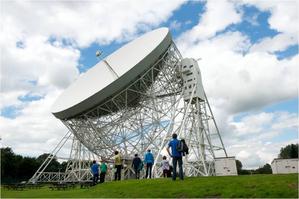
Big Telescopes: Gravity
astroEDU educational activity (links to astroEDU website) Description: Observing what gravity is doing to the Universe
License: CC-BY-4.0 Creative Commons Attribution 4.0 International (CC BY 4.0) icons
Tags:
Experiment
Age Ranges:
12-14
, 14-16
Education Level:
Middle School
, Secondary
Areas of Learning:
Guided-discovery learning
, Interactive Lecture
, Modelling
Costs:
High Cost
Duration:
1 hour 30 mins
Group Size:
Group
Skills:
Analysing and interpreting data
, Asking questions
, Developing and using models
, Planning and carrying out investigations

Dark matter & dark energy (Part 2) – Understanding the nature of dark matter and dark energy
astroEDU educational activity (links to astroEDU website) Description: Let's investigate the nature of dark matter and energy with gravitational lensing!
License: CC-BY-4.0 Creative Commons Attribution 4.0 International (CC BY 4.0) icons
Tags:
Experiment
, Invisible
Age Ranges:
12-14
, 14-16
, 16-19
, 19+
Education Level:
Informal
, Middle School
Areas of Learning:
Guided-discovery learning
, Interactive Lecture
, Modelling
, Problem-solving
Costs:
Medium Cost
Duration:
45 mins
Group Size:
Group
Skills:
Constructing explanations
, Developing and using models
, Engaging in argument from evidence