Término del glosario: Atmósfera
Descripción: La atmósfera es una capa de gas que rodea un cuerpo celeste. Se mantiene gracias a la atracción gravitatoria del cuerpo celeste, por lo que es más densa en la superficie y se funde con el espacio interplanetario a gran altitud.
En los planetas con superficies sólidas o líquidas, el límite inferior de la atmósfera es claro. Las estrellas tienen interiores gaseosos, por lo que no tienen un límite inferior claro para sus atmósferas. Una atmósfera estelar se refiere normalmente a la capa gaseosa exterior de una estrella a través de la cual la luz del interior viaja hacia el espacio.
El campo magnético de un planeta puede proteger su atmósfera de una rápida disipación en el espacio a causa del viento solar o estelar. En el caso de la Tierra, también protege a todos los organismos de los daños genéticos debidos a los efectos nocivos del viento solar y los rayos cósmicos.
Términos relacionados:
Ver este término en otros idiomas
Estado del término y la definición: La definición original de este término en inglés ha sido aprobada por unastrónomo o astrónoma investigadora y un docente La traducción de este término y su definición aún están pendientes de aprobación
El Glosario multilingüe de la OAE es un proyecto de la Oficina de Astronomía para la Educación de la UAI (OAE) en colaboración con la Oficina de Divulgación de Astronomía de la UAI (OAO). Los términos y definiciones fueron seleccionados, redactados y revisados gracias al esfuerzo colectivo de la OAE, los Centros y Nodos de la OAE, los Coordinadores Nacionales de Educación Astronómica (NAECs) y otros voluntarios. Puedes encontrar una lista completa de créditos aquí. Todos los términos del glosario y sus definiciones se publican bajo la licencia Creative Commons CC BY-4.0 y deben atribuirse a la "IAU OAE".
Si detectas algún error de contenido o de traducción en este término del glosario o en ladefinición, ponte en contacto con nosotros.
En otros idiomas
- Árabe: الغلاف الجوي
- Alemán: Atmosphäre
- Inglés: Atmosphere
- Francés: Atmosphère
- Italiano: Atmosfera
- Coreano: 대기
- Portugués de Brasil: Atmosfera
- Chino simplificado: 大气层
- Chino tradicional: 大氣層
Contenidos relacionados

Moon and Earth's thin atmosphere
Pie de foto: Taken from the International Space Station (ISS), approximately 400 kilometers above the ground, the picture shows the Moon far in the background and Earth's thin atmosphere. It appears blue as light in this wavelength is scattered more than in others by the gases in the upper layers. The photo was taken in March 2015 by a crew member. Clearly visible is the vanishingly small layer of gases compared to Earth's dimensions. There is no clear border between the atmosphere and space; it is a smooth transition with no sharp edges. The thickness to the upper limit of the stratosphere, roughly 50 kilometers, does not even amount to one percent of Earth's radius. Above 600 kilometers, particles reaching the critical escape velocity can leave into space. The total mass of the atmosphere is around 300 times less than that of all oceans combined or one million times less than Earth's total mass.
Crédito: Earth Science and Remote Sensing Unit, NASA Johnson Space Center
enlace de crédito
License: PD Dominio público íconos
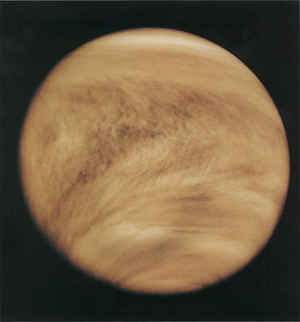
Atmosphere of Venus
Pie de foto: This image of Venus was captured in ultraviolet light by the Pioneer Venus Orbiter and highlights features of the planet’s thick atmosphere that are not visible in ordinary light. Venus has a dense, cloudy atmosphere composed mainly of carbon dioxide. In ultraviolet wavelengths, patterns in the upper cloud layers become visible, revealing swirling structures and bright and dark bands caused by differences in the composition and motion of the atmosphere. These ultraviolet features help scientists map wind patterns, atmospheric circulation, and cloud dynamics high above Venus’s surface.
Unlike Earth’s atmosphere, which is relatively transparent in visible light, Venus’s atmosphere is so thick that no direct view of the surface is possible from space without special instruments. The extreme pressure and temperature near Venus’s surface are consequences of this dense gaseous envelope, making Venus a dramatic example of how different planetary atmospheres can be. This image demonstrates how observing a planet’s atmosphere in different wavelengths, such as ultraviolet, reveals details about its structure and behaviour.
Crédito: NASA
enlace de crédito
License: PD Dominio público íconos
Actividades relacionadas
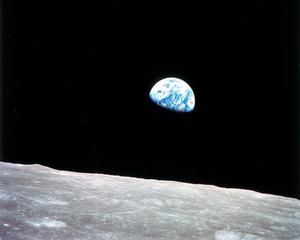
Blue Marble in Empty Space
astroEDU educational activity (links to astroEDU website) Description: Students are taken on a virtual journey to outer space to experience that we live on a tiny planet that floats in a vast and empty space.
License: CC-BY-4.0 Creative Commons Reconocimiento 4.0 Internacional (CC BY 4.0) íconos
Etiquetas:
Life
, Hands-on
, Model
, Scales
, Distances
, ISS
Rango de edades:
6-8
, 8-10
Nivel educativo:
Primaria
, Secondary
Áreas de aprendizaje:
Clase interactiva
, Modelización
Costos:
Bajo coste
Duración:
30 minutos
Tamaño del grupo:
Grupo
Competencias:
Plantear preguntas
, Comunicar información
, Desarrollar y utilizar modelos
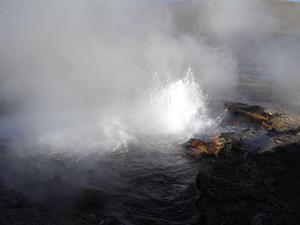
Fizzy Balloons – CO2 in School
astroEDU educational activity (links to astroEDU website) Description: Investigate the properties of carbon dioxide with this fun demonstration.
License: CC-BY-4.0 Creative Commons Reconocimiento 4.0 Internacional (CC BY 4.0) íconos
Etiquetas:
Life
, Hands-on
, Chemistry
, Earth Science
, Carbon Dioxide
Rango de edades:
8-10
, 10-12
Nivel educativo:
Primaria
, Secondary
Áreas de aprendizaje:
Clase interactiva
, Experimento científico tradicional
Costos:
Coste medio
Duración:
2 horas
Tamaño del grupo:
Grupo
Competencias:
Analizar e interpretar datos
, Plantear preguntas
, Elaborar explicaciones
, Participar en debates basados en pruebas
, Planificar y llevar a cabo investigaciones
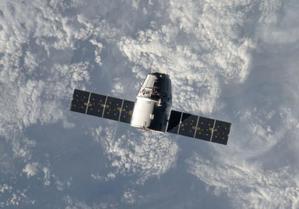
Investigating the Atmosphere – Air Takes Up Space
astroEDU educational activity (links to astroEDU website) Description: Air takes up space even though you cannot see it.
License: CC-BY-4.0 Creative Commons Reconocimiento 4.0 Internacional (CC BY 4.0) íconos
Etiquetas:
Geography
, Mathematics
, Air
Rango de edades:
6-8
, 8-10
Nivel educativo:
Primaria
Áreas de aprendizaje:
Modelización
, Aprendizaje basado en la investigación estructurada
Costos:
Bajo coste
Duración:
1 hora
Tamaño del grupo:
Grupo
Competencias:
Analizar e interpretar datos
, Plantear preguntas
, Comunicar información
, Elaborar explicaciones
, Planificar y llevar a cabo investigaciones
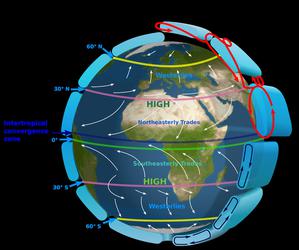
The Intertropical Convergence Zone
astroEDU educational activity (links to astroEDU website) Description: The air circulation system: how are winds created?
License: CC-BY-4.0 Creative Commons Reconocimiento 4.0 Internacional (CC BY 4.0) íconos
Etiquetas:
Climate
, Updraft
, Convection
, Winds
Rango de edades:
12-14
, 14-16
Nivel educativo:
Educación secundaria
Áreas de aprendizaje:
Grupos de discusión
, Modelización
, Aprendizaje basado en la investigación estructurada
Costos:
Coste medio
Duración:
1 hora
Tamaño del grupo:
Grupo
Competencias:
Comunicar información
, Elaborar explicaciones
, Desarrollar y utilizar modelos
, Participar en debates basados en pruebas
, Planificar y llevar a cabo investigaciones

Lightning on other planets
astroEDU educational activity (links to astroEDU website) Description: A hands-on, Inquiry exploration of how lightning happens on Earth and other planets
License: CC-BY-4.0 Creative Commons Reconocimiento 4.0 Internacional (CC BY 4.0) íconos
Rango de edades:
14-16
, 16-19
Nivel educativo:
Secondary
Áreas de aprendizaje:
Actividad lúdica
, Modelización
, Basado en la observación
, Aprendizaje basado en la investigación estructurada
Costos:
Bajo coste
Duración:
2 horas
Tamaño del grupo:
Grupo
Competencias:
Plantear preguntas
, Comunicar información
, Elaborar explicaciones
, Desarrollar y utilizar modelos
, Participar en debates basados en pruebas
, Planificar y llevar a cabo investigaciones