Glossary term: 대기
Description: 대기는 천체를 둘러싼 기체층으로, 천체의 중력에 의해 붙잡혀 있습니다. 그래서 표면 가까이에서 가장 밀도가 높고, 위로 갈수록 점점 옅어져서 결국은 행성 사이의 우주 공간과 이어집니다.
행성처럼 고체나 액체 표면이 있는 천체에서는 대기의 아랫부분 경계가 뚜렷합니다. 하지만 별은 내부가 모두 기체로 되어 있어서 대기와 별의 표면을 구분하기가 어렵습니다. 그래서 보통 항성 대기라고 하면, 별의 가장 바깥쪽 기체층을 가리키며, 이 층을 통해 별 안에서 만들어진 빛이 우주로 빠져나갑니다.
또한 행성의 자기장은 대기가 태양풍이나 항성풍에 의해 우주로 날아가 버리는 것을 막아줍니다. 예를 들어 지구의 자기장은 태양풍과 우주선으로부터 생물을 보호하여, 유해한 영향으로 생길 수 있는 유전적 손상을 막아줍니다.
Related Terms:
See this term in other languages
Term and definition status: The original definition of this term in English have been approved by a research astronomer and a teacher The translation of this term and its definition is still awaiting approval
The OAE Multilingual Glossary is a project of the IAU Office of Astronomy for Education (OAE) in collaboration with the IAU Office of Astronomy Outreach (OAO). The terms and definitions were chosen, written and reviewed by a collective effort from the OAE, the OAE Centers and Nodes, the OAE National Astronomy Education Coordinators (NAECs) and other volunteers. You can find a full list of credits here. All glossary terms and their definitions are released under a Creative Commons CC BY-4.0 license and should be credited to "IAU OAE".
If you notice a factual or translation error in this glossary term or definition then please get in touch.
In Other Languages
- 아랍어: الغلاف الجوي
- 독일어: Atmosphäre
- 영어: Atmosphere
- 스페인어: Atmósfera
- 프랑스어: Atmosphère
- 이탈리아어: Atmosfera
- 브라질 포르투갈어: Atmosfera
- 중국어 간체: 大气层
- 중국어 번체: 大氣層
Related Media

Moon and Earth's thin atmosphere
Caption: Taken from the International Space Station (ISS), approximately 400 kilometers above the ground, the picture shows the Moon far in the background and Earth's thin atmosphere. It appears blue as light in this wavelength is scattered more than in others by the gases in the upper layers. The photo was taken in March 2015 by a crew member. Clearly visible is the vanishingly small layer of gases compared to Earth's dimensions. There is no clear border between the atmosphere and space; it is a smooth transition with no sharp edges. The thickness to the upper limit of the stratosphere, roughly 50 kilometers, does not even amount to one percent of Earth's radius. Above 600 kilometers, particles reaching the critical escape velocity can leave into space. The total mass of the atmosphere is around 300 times less than that of all oceans combined or one million times less than Earth's total mass.
Credit: Earth Science and Remote Sensing Unit, NASA Johnson Space Center
credit link
License: PD Public Domain icons
Atmosphere of Venus
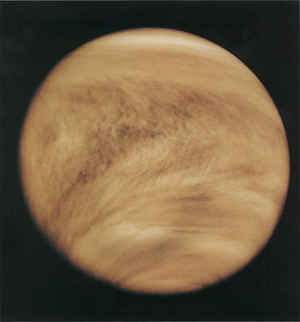
Caption: This image of Venus was captured in ultraviolet light by the Pioneer Venus Orbiter and highlights features of the planet’s thick atmosphere that are not visible in ordinary light. Venus has a dense, cloudy atmosphere composed mainly of carbon dioxide. In ultraviolet wavelengths, patterns in the upper cloud layers become visible, revealing swirling structures and bright and dark bands caused by differences in the composition and motion of the atmosphere. These ultraviolet features help scientists map wind patterns, atmospheric circulation, and cloud dynamics high above Venus’s surface.
Unlike Earth’s atmosphere, which is relatively transparent in visible light, Venus’s atmosphere is so thick that no direct view of the surface is possible from space without special instruments. The extreme pressure and temperature near Venus’s surface are consequences of this dense gaseous envelope, making Venus a dramatic example of how different planetary atmospheres can be. This image demonstrates how observing a planet’s atmosphere in different wavelengths, such as ultraviolet, reveals details about its structure and behaviour.
Credit: NASA
credit link
License: PD Public Domain icons
Related Activities
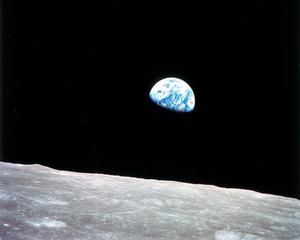
Blue Marble in Empty Space
astroEDU educational activity (links to astroEDU website) Description: Students are taken on a virtual journey to outer space to experience that we live on a tiny planet that floats in a vast and empty space.
License: CC-BY-4.0 Creative Commons 저작자표시 4.0 국제 (CC BY 4.0) icons
Tags:
Life
, Hands-on
, Model
, Scales
, Distances
, ISS
Age Ranges:
6-8
, 8-10
Education Level:
Primary
, Secondary
Areas of Learning:
Interactive Lecture
, Modelling
Costs:
Low Cost
Duration:
30 mins
Group Size:
Group
Skills:
Asking questions
, Communicating information
, Developing and using models
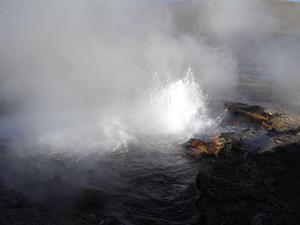
Fizzy Balloons – CO2 in School
astroEDU educational activity (links to astroEDU website) Description: Investigate the properties of carbon dioxide with this fun demonstration.
License: CC-BY-4.0 Creative Commons 저작자표시 4.0 국제 (CC BY 4.0) icons
Tags:
Life
, Hands-on
, Chemistry
, Earth Science
, Carbon Dioxide
Age Ranges:
8-10
, 10-12
Education Level:
Primary
, Secondary
Areas of Learning:
Interactive Lecture
, Traditional Science Experiment
Costs:
Medium Cost
Duration:
2 hours
Group Size:
Group
Skills:
Analysing and interpreting data
, Asking questions
, Constructing explanations
, Engaging in argument from evidence
, Planning and carrying out investigations
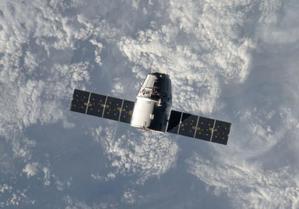
Investigating the Atmosphere – Air Takes Up Space
astroEDU educational activity (links to astroEDU website) Description: Air takes up space even though you cannot see it.
License: CC-BY-4.0 Creative Commons 저작자표시 4.0 국제 (CC BY 4.0) icons
Tags:
Geography
, Mathematics
, Air
Age Ranges:
6-8
, 8-10
Education Level:
Primary
Areas of Learning:
Modelling
, Structured-inquiry learning
Costs:
Low Cost
Duration:
1 hour
Group Size:
Group
Skills:
Analysing and interpreting data
, Asking questions
, Communicating information
, Constructing explanations
, Planning and carrying out investigations
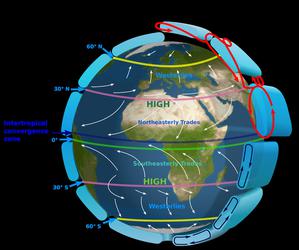
The Intertropical Convergence Zone
astroEDU educational activity (links to astroEDU website) Description: The air circulation system: how are winds created?
License: CC-BY-4.0 Creative Commons 저작자표시 4.0 국제 (CC BY 4.0) icons
Tags:
Climate
, Updraft
, Convection
, Winds
Age Ranges:
12-14
, 14-16
Education Level:
Middle School
Areas of Learning:
Discussion Groups
, Modelling
, Structured-inquiry learning
Costs:
Medium Cost
Duration:
1 hour
Group Size:
Group
Skills:
Communicating information
, Constructing explanations
, Developing and using models
, Engaging in argument from evidence
, Planning and carrying out investigations

Lightning on other planets
astroEDU educational activity (links to astroEDU website) Description: A hands-on, Inquiry exploration of how lightning happens on Earth and other planets
License: CC-BY-4.0 Creative Commons 저작자표시 4.0 국제 (CC BY 4.0) icons
Age Ranges:
14-16
, 16-19
Education Level:
Secondary
Areas of Learning:
Fun activity
, Modelling
, Observation based
, Structured-inquiry learning
Costs:
Low Cost
Duration:
2 hours
Group Size:
Group
Skills:
Asking questions
, Communicating information
, Constructing explanations
, Developing and using models
, Engaging in argument from evidence
, Planning and carrying out investigations