Glossar-Begriff: Raum
Beschreibung: In der Astronomie wird der Begriff des "Raumes" für zwei unterschiedliche Dinge verwendet: einerseits als "Weltraum", der alles, was es jenseits der Erde gibt, bezeichnet. Andererseits bezeichnet der Raum die drei Dimensionen der Länge, Breite und Tiefe, in denen alle Dinge existieren (im Gegensatz zur Zeit, die manchmal als vierte Dimension betrachtet wird).
Ähnliche Begriffe:
Dieser Begriff in anderen Sprachen
Begriffs- und Definitionsstatus Die Originaldefinition dieses Begriffes auf Englisch wurden von einer*einem forschenden Astronom*in und einer Lehrkraft bestätigt Die Übersetzung dieses Begriffs und seiner Definition warten auf Prüfung und Bestätigung
Der mehrsprachige OAE-Glossar ist ein Projekt des IAU Office of Astronomy for Education (OAE) als Bildungsbüro der Internationalen Astronomischen Union in Zusammenarbeit mit dem IAU Office of Astronomy Outreach (OAO). Die Begriffe und Definitionen wurden gewählt, geschrieben und geprüft durch einen kollektiven Aufwand des OAE, des OAE Zentren und Knotenpunkte, des OAE National Astronomy Education Coordinators (NAECs, Nationale Koordinatoren für astronomische Bildungsarbeit) und anderen Freiwilligen. Die volle Liste an Mitarbeitenden ist hier. Alle Glossar-Begriffe und ihre Definitionen sind unter einer Creative Commons CC BY-4.0 Lizenz veröffentlicht und sollten "IAU OAE" zugeschrieben werden.
Wenn dir ein inhaltlicher oder Übersetzungsfehler in diesem Glossarbegriff oder dieser Definition auffallen, bitte kontaktiere uns.
Ähnliche Medien

The Horsehead Nebula
Unterschrift: This image shows the Horsehead Nebula, located at a distance of about 1,300 light-years from Earth in the Orion constellation, one of the most iconic examples of a dark nebula. A dark nebula is a dense cloud of interstellar dust and cold gas that absorbs and scatters visible light, preventing background stars and glowing gas from reaching our eyes. This false-color image combines data captured through multiple narrowband filters, each isolating light from different elements in the nebula. The dark, horse-shaped silhouette appears sharply outlined against the luminous nebula behind it, where energetic radiation from nearby young stars causes the gas to glow. The uneven distribution of visible stars in this image is not random: regions rich in dust in the lower part of this image appear almost empty, while clearer areas reveal many background stars. The dust acts like a cosmic curtain, hiding stars that lie behind it while allowing stars in front of the cloud to remain visible. Studying such regions helps astronomers understand how nebulae serve as environments where new stars can form.
Bild: T.A.Rector (NOIRLab/NSF/AURA) and Hubble Heritage Team (STScI/AURA/NASA)
Quellenlink
License: CC-BY-4.0 Creative Commons Namensnennung 4.0 International (CC BY 4.0) Symbole
Ähnliche Aktivitäten
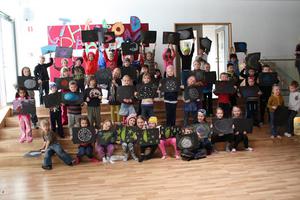
Deadly Moons
astroEDU educational activity (links to astroEDU website) Description: Through art and science, children learn about moons of our solar system.
License: CC-BY-4.0 Creative Commons Namensnennung 4.0 International (CC BY 4.0) Symbole
Schlagworte
Art
, Creativity
, Hands-on
, Drawing
Altersgruppen:
6-8
, 8-10
, 10-12
Bildungsniveau:
Primary
, Secundaria
Lernbereiche:
Fine Art focussed
, Structured-inquiry learning
Kosten:
High Cost
Dauer:
1 hour
Gruppengröße:
Group
Fähigkeiten:
Asking questions
, Communicating information
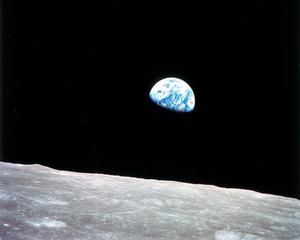
Blue Marble in Empty Space
astroEDU educational activity (links to astroEDU website) Description: Students are taken on a virtual journey to outer space to experience that we live on a tiny planet that floats in a vast and empty space.
License: CC-BY-4.0 Creative Commons Namensnennung 4.0 International (CC BY 4.0) Symbole
Schlagworte
Life
, Hands-on
, Model
, Scales
, Distances
, ISS
Altersgruppen:
6-8
, 8-10
Bildungsniveau:
Primary
, Secundaria
Lernbereiche:
Interactive Lecture
, Modelling
Kosten:
Low Cost
Dauer:
30 mins
Gruppengröße:
Group
Fähigkeiten:
Asking questions
, Communicating information
, Developing and using models