This page describes an image Atmosphere of Venus
Baixar arquivo ( imagem 8.09 MB)
Legenda da imagem:
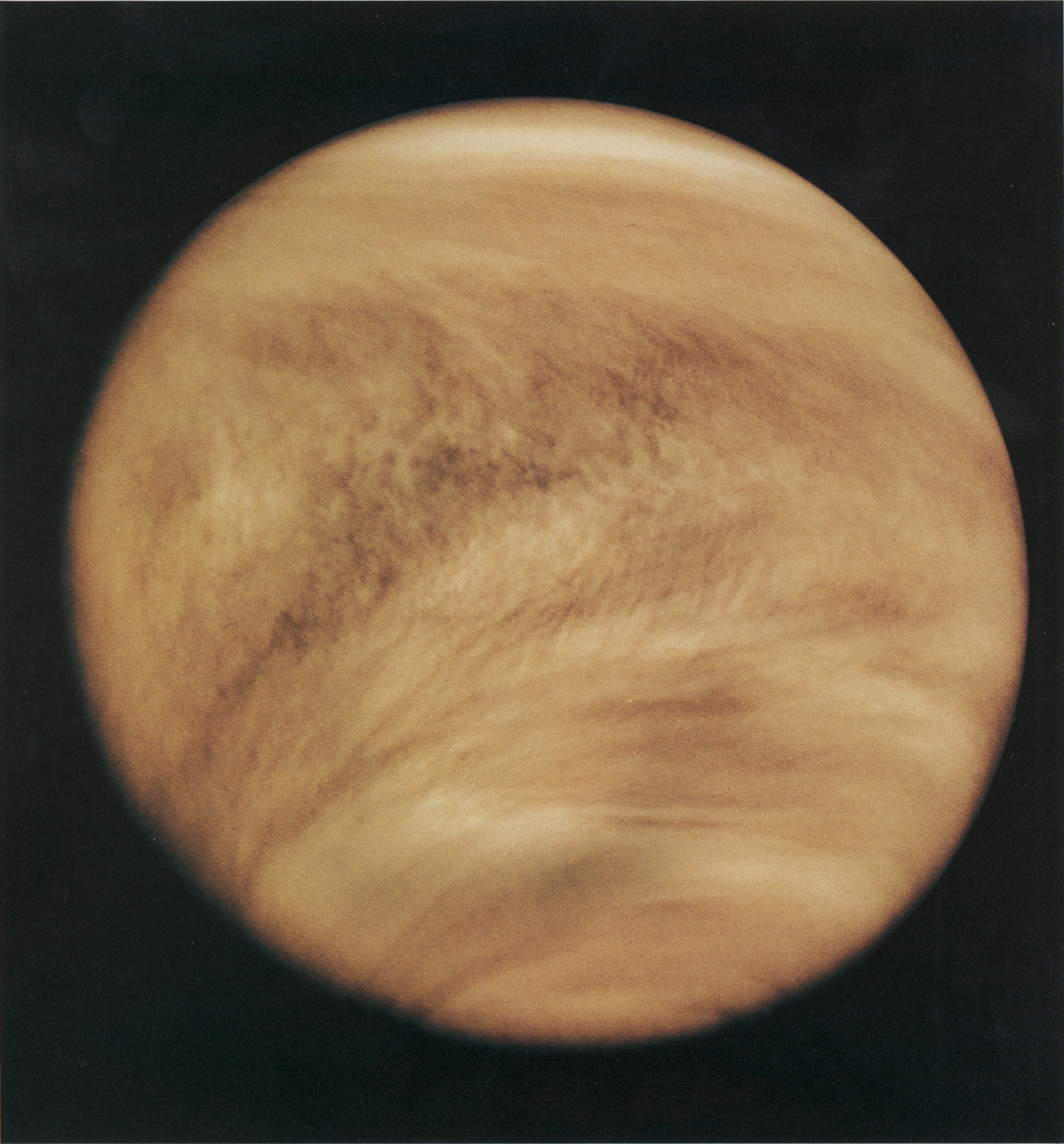
This image of Venus was captured in ultraviolet light by the Pioneer Venus Orbiter and highlights features of the planet’s thick atmosphere that are not visible in ordinary light. Venus has a dense, cloudy atmosphere composed mainly of carbon dioxide. In ultraviolet wavelengths, patterns in the upper cloud layers become visible, revealing swirling structures and bright and dark bands caused by differences in the composition and motion of the atmosphere. These ultraviolet features help scientists map wind patterns, atmospheric circulation, and cloud dynamics high above Venus’s surface.
Unlike Earth’s atmosphere, which is relatively transparent in visible light, Venus’s atmosphere is so thick that no direct view of the surface is possible from space without special instruments. The extreme pressure and temperature near Venus’s surface are consequences of this dense gaseous envelope, making Venus a dramatic example of how different planetary atmospheres can be. This image demonstrates how observing a planet’s atmosphere in different wavelengths, such as ultraviolet, reveals details about its structure and behaviour.
Role até as legendas em outros idiomas
Crédito da imagem: NASA Link do crédito
Termos relacionados do glossário:
Atmosfera
, Vênus
Licença da imagem: Public Domain Public Domain ícones
As legendas dos arquivos de mídia apresentadas no site da OAE foram escritas, traduzidas e revisadas por meio de um esforço coletivo da OAE, dos Centros e Nós da OAE, dos Coordenadores Nacionais de Educação em Astronomia (NAECs) da OAE e de outros voluntários. Você pode encontrar uma lista completa dos créditos do nosso projeto de tradução aqui. Todas as legendas dos arquivos de mídia são disponibilizadas sob uma licença Creative Commons CC BY-4.0 e devem ser creditadas à "IAU OAE". Os próprios arquivos de mídia podem ter licenças diferentes (veja acima) e devem ser creditados conforme indicado acima em "crédito".
Se você notar algum erro factual nesta legenda ou algum erro em qualquer uma de suas traduções, por favor entre em contato.
Legendas em diferentes idiomas:
Legenda da imagem: Dieses Bild der Venus wurde vom Pioneer Venus Orbiter im ultravioletten Licht aufgenommen und zeigt Merkmale der dichten Atmosphäre des Planeten, die im normalen Licht unsichtbar sind. Die Venus besitzt eine dichte, wolkenreiche Atmosphäre, die hauptsächlich aus Kohlenstoffdioxid besteht. Im ultravioletten Wellenlängenbereich werden Muster in den oberen Wolkenschichten sichtbar, die verwirbelte Strukturen sowie helle und dunkle Bänder offenbaren, die durch Unterschiede in der Zusammensetzung und Bewegung der Atmosphäre verursacht werden. Diese Merkmale im Ultravioletten helfen Wissenschaftlern dabei, Windmuster, atmosphärische Zirkulationen und Wolkendynamiken hoch über der Oberfläche der Venus zu kartieren.
Im Gegensatz zur Erdatmosphäre, die im sichtbaren Licht relativ transparent ist, ist die Atmosphäre der Venus so dicht, dass ohne spezielle Instrumente kein direkter Blick auf die Oberfläche aus dem Weltraum möglich ist. Der extreme Druck und die extremen Temperaturen in der Nähe der Venusoberfläche sind Folgen dieser dichten Gashülle, was die Venus zu einem eindrucksvollen Beispiel dafür macht, wie unterschiedlich planetare Atmosphären sein können. Dieses Bild veranschaulicht, wie die Beobachtung der Atmosphäre eines Planeten in verschiedenen Wellenlängen, beispielsweise im Ultraviolettbereich, Details über dessen Struktur und Verhalten offenbart.
Crédito da imagem: NASA
Termos relacionados do glossário: Atmosphäre , Venus (Planet) Status da tradução da legenda: Ainda não aprovado por um revisor
Tradutores da legenda: Simon Kraus
Legenda da imagem: This image of Venus was captured in ultraviolet light by the Pioneer Venus Orbiter and highlights features of the planet’s thick atmosphere that are not visible in ordinary light. Venus has a dense, cloudy atmosphere composed mainly of carbon dioxide. In ultraviolet wavelengths, patterns in the upper cloud layers become visible, revealing swirling structures and bright and dark bands caused by differences in the composition and motion of the atmosphere. These ultraviolet features help scientists map wind patterns, atmospheric circulation, and cloud dynamics high above Venus’s surface.
Unlike Earth’s atmosphere, which is relatively transparent in visible light, Venus’s atmosphere is so thick that no direct view of the surface is possible from space without special instruments. The extreme pressure and temperature near Venus’s surface are consequences of this dense gaseous envelope, making Venus a dramatic example of how different planetary atmospheres can be. This image demonstrates how observing a planet’s atmosphere in different wavelengths, such as ultraviolet, reveals details about its structure and behaviour.
Crédito da imagem: NASA
Termos relacionados do glossário: Atmosphere , Venus
Legenda da imagem: Questa immagine di Venere è stata ripresa nella luce ultravioletta dalla sonda Pioneer Venus Orbiter e mette in evidenza caratteristiche della densa atmosfera del pianeta che non sono visibili alla luce normale. Venere ha un'atmosfera densa e nuvolosa, composta principalmente da anidride carbonica. Nelle lunghezze d'onda ultraviolette, diventano visibili i motivi negli strati superiori delle nuvole, rivelando strutture vorticose e bande chiare e scure causate dalle differenze nella composizione e nel movimento dell'atmosfera. Queste caratteristiche ultraviolette aiutano gli scienziati a mappare i modelli dei venti, la circolazione atmosferica e la dinamica delle nuvole in alto al di sopra la superficie di Venere.
A differenza dell'atmosfera terrestre, che è relativamente trasparente alla luce visibile, l'atmosfera di Venere è così densa che non è possibile avere una visione diretta della superficie dallo spazio senza strumenti speciali. L'estrema pressione e temperatura vicino alla superficie di Venere sono conseguenze di questo denso involucro gassoso, cosicchè Venere è un esempio eclatante di quanto possano essere diverse le atmosfere planetarie. Questa immagine dimostra come l'osservazione dell'atmosfera di un pianeta in diverse lunghezze d'onda, come l'ultravioletto, riveli dettagli sulla sua struttura e sul suo comportamento.
Crédito da imagem: NASA (Agenzia spaziale statunitense)
Termos relacionados do glossário: Atmosfera , Venere (pianeta) Status da tradução da legenda: Ainda não aprovado por um revisor
Tradutores da legenda: Giuliana Giobbi