Termo do glossário: Culminação
Descrição: Em astronomia, a culminação refere-se ao momento em que um objeto celeste passa pelo meridiano local do observador. Quando um objeto celeste no céu cruza o meridiano, ele está em seu ponto mais alto ou mais baixo no céu.
Da perspectiva do observador, a esfera celeste parece girar em torno da Terra. Isso significa que os objetos celestes no céu seguem um caminho circular ao longo do dia. A maioria dos objetos nasce no leste, move-se mais alto no céu até cruzar o meridiano e, em seguida, move-se mais baixo no céu para se pôr no oeste. Objetos circumpolares são objetos que estão próximos o suficiente de um dos polos celestes para que um observador possa ver sua trajetória circular completa em um dia sideral (um pouco menos de 24 horas). Em todos os casos, o ponto mais alto no céu que um objeto celeste atinge é quando ele cruza o meridiano. O instante em que ele atinge esse ponto mais alto é chamado de culminação superior. Doze horas (siderais) depois, quando o objeto está em seu ponto mais baixo no céu (geralmente abaixo do horizonte), esse instante é chamado de culminação inferior.
Como a culminação é o momento em que um objeto celeste cruza o meridiano local do observador, ele é frequentemente chamado de trânsito meridiano ou passagem meridiana. O ângulo horário no céu é definido em relação ao meridiano local do observador, portanto, por definição, a culminação superior ocorre em um ângulo horário de zero e a culminação inferior ocorre em um ângulo horário de 12 horas.
Termos relacionados:
Ver este termo em outros idiomas
Status do termo e da definição: A definição original deste termo em inglês foi aprovada por um astrônomo(a) pesquisador(a) e um(a) professor(a) A tradução deste termo e de sua definição ainda aguarda aprovação
O Glossário Multilíngue da OAE é um projeto do Escritório da IAU de Astronomia para a Educação (OAE) em colaboração com o Escritório da IAU para Divulgação da Astronomia (OAO). Os termos e definições foram selecionados, escritos e revisados por meio de um esforço coletivo da OAE, dos Centros e Nós da OAE, dos Coordenadores Nacionais de Educação em Astronomia (NAECs) da OAE e de outros voluntários. Você pode encontrar uma lista completa dos créditos aqui. Todos os termos do glossário e suas definições são disponibilizados sob uma licença Creative Commons CC BY-4.0 e devem ser creditados à "IAU OAE".
Se você notar algum erro factual ou de tradução neste termo do glossário ou em sua definição, por favor entre em contato.
Em outros idiomas
- Árabe: الذروة
- Alemão: Kulmination
- Inglês: Culmination
- Espanhol: Culminación
- Francês: Culmination
- Italiano: Culmine
- Coreano: 남중
- Chinês Simplificado: 中天
- Chinês Tradicional: 中天
Mídia relacionada
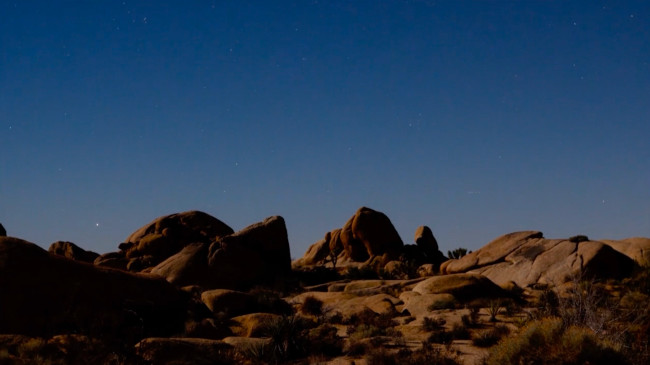
The Culmination of Canopus
Legenda: Honourable mention in the 2022 IAU OAE Astrophotography Contest, category Time lapses of celestial patterns.
This time-lapse video was shot in January 2018 from the Joshua Tree National Park, USA, and follows the path of Canopus, the second-brightest star in the night sky, as it moves from left to right, almost touching the horizon. The landscape is illuminated by the Moon.
Canopus is associated with the rudder of the ancient Argo constellation, the Ship, nowadays split into the three modern constellations Vela, Puppis and Carina, the last of which contains Canopus.
Owing to its brightness, Canopus has caught the attention of several cultures around the world throughout history. For instance, the Navajo people of North America named the star as the Coyote, and say that the coyote took part in the creation of the Universe. The Kalapalo people of Brazil associated Canopus with a duck, with other bright stars making up the body parts of the animal. The appearance of Canopus in the sky indicates the coming of the rainy season.
Crédito: Fabrizio Melandri/IAU OAE
License: CC-BY-4.0 Creative Commons Attribution 4.0 International (CC BY 4.0) ícones