Termo do glossário: Órbita
Descrição: Uma órbita é a trajetória de um objeto em movimento em um sistema em torno do centro de massa desse sistema, causada pela força gravitacional mútua entre os objetos do sistema. Para sistemas como o Sistema Solar, onde o corpo central é muito mais massivo do que os outros corpos, esse centro de massa fica dentro ou próximo ao objeto mais massivo (no caso do Sistema Solar, o Sol). Em um sistema estelar binário, o centro de massa em torno do qual as estrelas orbitam geralmente fica entre as duas estrelas. As órbitas são tipicamente elípticas, com o centro de massa do sistema localizado em um dos focos da elipse. O tamanho e a forma da órbita são definidos pelo semieixo maior e pela excentricidade da elipse. Órbitas mais excêntricas têm maior elipticidade. A maioria dos planetas do Sistema Solar possui excentricidades orbitais muito próximas de zero, por exemplo, Vênus (0,007) e Terra (0,017). As exceções são Mercúrio (0,206) e o planeta anão Plutão (0,244).
Termos relacionados:
Ver este termo em outros idiomas
Status do termo e da definição: A definição original deste termo em inglês foi aprovada por um astrônomo(a) pesquisador(a) e um(a) professor(a) A tradução deste termo e de sua definição ainda aguarda aprovação
O Glossário Multilíngue da OAE é um projeto do Escritório da IAU de Astronomia para a Educação (OAE) em colaboração com o Escritório da IAU para Divulgação da Astronomia (OAO). Os termos e definições foram selecionados, escritos e revisados por meio de um esforço coletivo da OAE, dos Centros e Nós da OAE, dos Coordenadores Nacionais de Educação em Astronomia (NAECs) da OAE e de outros voluntários. Você pode encontrar uma lista completa dos créditos aqui. Todos os termos do glossário e suas definições são disponibilizados sob uma licença Creative Commons CC BY-4.0 e devem ser creditados à "IAU OAE".
Se você notar algum erro factual ou de tradução neste termo do glossário ou em sua definição, por favor entre em contato.
Em outros idiomas
- Árabe: المدار
- Alemão: Umlaufbahn
- Inglês: Orbit
- Espanhol: Órbita
- Francês: Orbite
- Hindi: कक्षा
- Italiano: Orbita
- Marathi: कक्षा (ऑर्बिट)
- Chinês Simplificado: 轨道
- Chinês Tradicional: 軌道
Mídia relacionada
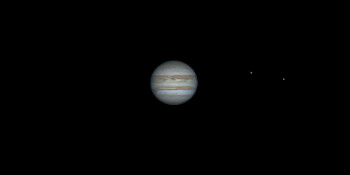
Jupiter's Rotation, by Vishal Sharma, India
Legenda: Third place in the 2021 IAU OAE Astrophotography Contest, category Galilean moons: Jupiter’s Rotation, by Vishal Sharma, India.
This time-lapse beautifully shows the rotation of Jupiter and the passage of two Galilean moons on the right side of the frame. Jupiter completes one rotation in just under 10 hours and we see as the Great Red Spot makes its way from left to right. The two moons travel a noticeable fraction of their orbit in this short time. This image was taken in 2020 in the North of India.
Crédito: Vishal Sharma/IAU OAE
License: CC-BY-4.0 Creative Commons Attribution 4.0 International (CC BY 4.0) ícones
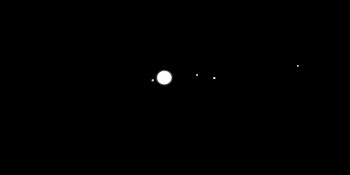
Jupiter Moons Movie2, by Nicolas Hurez, Paul-Antoine Matrangolo, and Carl Pennypacker, United States of America
Legenda: Second place in the 2021 IAU OAE Astrophotography Contest, category Galilean moons.
This sequence shows the orbit of the four Galilean moons around the planet Jupiter. Almost two entire orbits of the innermost moon, Io, can be seen, with the other moons (Europa and Ganymede, but in particular Callisto) being further away, orbiting noticeably slower. The images were obtained in 2018 with the Las Cumbres Global Observatory at different locations on Earth, allowing a continuous sequence of images over approximately half a week without gaps during the day. With clear skies and over the course of several nights, the motion of the Galilean moons can also be observed with binoculars (ideally steady your elbows on a surface).
Crédito: Nicolas Hurez, Paul-Antoine Matrangolo and Carl Pennypacker/IAU OAE
License: CC-BY-4.0 Creative Commons Attribution 4.0 International (CC BY 4.0) ícones
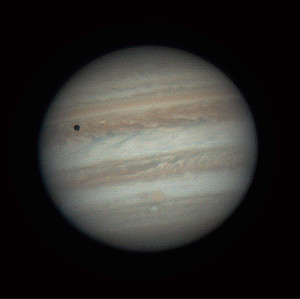
Jupiter, Io and its shadow, by Ralf Burkart, Germany
Legenda: First place in the 2021 IAU OAE Astrophotography Contest, category Galilean moons.
This time-lapse of Jupiter taken in 2017 from Germany beautifully illustrates the transit of one of the Galilean moons, Io, in front of Jupiter. As this is simply a moon casting a shadow on a planet it is equivalent to a lunar eclipse on Earth observed from further away. While the shadow of the moon is clearly visible from the beginning, it might be difficult to spot the moon itself against the background of the beautiful atmospheric bands of Jupiter the first time the video is seen. Watching it repeatedly allows appreciating the rapid motion and rotation in this fantastic observation.
Crédito: Ralf Burkart/IAU OAE
License: CC-BY-4.0 Creative Commons Attribution 4.0 International (CC BY 4.0) ícones
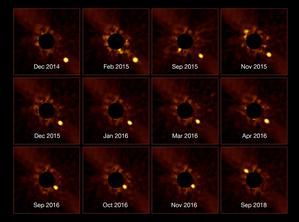
A órbita de beta Pictoris b
Legenda: Esta série de imagens mostra o movimento orbital do planeta extrassolar (exoplaneta) beta Pictoris b. O planeta é o ponto brilhante em cada imagem. A estrela hospedeira do planeta está escondida atrás do círculo preto no centro de cada imagem. Isso é feito para remover a estrela hospedeira, muito mais brilhante, que de outra forma ofuscaria a luz do planeta. A órbita do planeta é vista de perfil. Observar a órbita dessa perspectiva faz parecer que o planeta se move ao longo de uma linha reta. Entre fevereiro de 2015 e novembro de 2016, beta Pictoris b parece se aproximar cada vez mais de sua estrela hospedeira. O planeta então se aproximou tanto da estrela que não foi visto por quase dois anos, depois reaparecendo do outro lado da estrela.
Crédito: Consórcio ESO/Lagrange/SPHERE
link do crédito
License: CC-BY-4.0 Creative Commons Attribution 4.0 International (CC BY 4.0) ícones
Atividades relacionadas
Measure the Solar Diameter
astroEDU educational activity (links to astroEDU website) Description: Hands-on activity to measure the Sun by using household materials.
License: CC-BY-4.0 Creative Commons Attribution 4.0 International (CC BY 4.0) ícones
Tags:
Hands-on
, Scales
, Observing
, Measurement
Faixas etárias:
12-14
, 14-16
, 16-19
, 19+
Nível de ensino:
Ensino fundamental
Áreas de aprendizagem:
Aprendizagem por investigação estruturada
Custos:
Baixo custo
Tamanho do grupo:
Grupo
Habilidades:
Comunicar informações
, Construir explicações
, Usar matemática e pensamento computacional
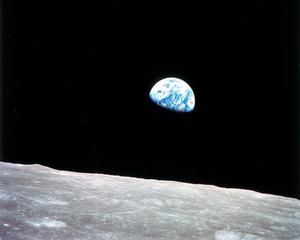
Blue Marble in Empty Space
astroEDU educational activity (links to astroEDU website) Description: Students are taken on a virtual journey to outer space to experience that we live on a tiny planet that floats in a vast and empty space.
License: CC-BY-4.0 Creative Commons Attribution 4.0 International (CC BY 4.0) ícones
Tags:
Life
, Hands-on
, Model
, Scales
, Distances
, ISS
Faixas etárias:
6-8
, 8-10
Nível de ensino:
Básico
, Médio
Áreas de aprendizagem:
Aula interativa
, Modelagem
Custos:
Baixo custo
Duração:
30 mins
Tamanho do grupo:
Grupo
Habilidades:
Fazer perguntas
, Comunicar informações
, Desenvolver e usar modelos
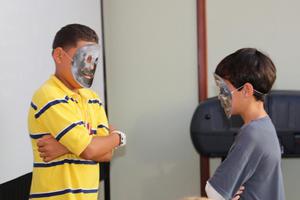
Lunar Day
astroEDU educational activity (links to astroEDU website) Description: Through a fun-learning activity, understand why moon always keeps the same face towards Earth.
License: CC-BY-4.0 Creative Commons Attribution 4.0 International (CC BY 4.0) ícones
Tags:
Lunar day
Faixas etárias:
4-6
, 6-8
Nível de ensino:
Básico
, Médio
Áreas de aprendizagem:
Modelagem
, Com foco em simulação
Custos:
Gratuito
Duração:
30 mins
Tamanho do grupo:
Grupo
Habilidades:
Analisar e interpretar dados
, Fazer perguntas
, Comunicar informações
, Construir explicações
, Desenvolver e usar modelos
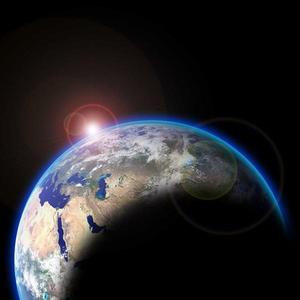
Day and Night in the World
astroEDU educational activity (links to astroEDU website) Description: Compare diurnal and nocturnal animals and experiment with day and night.
License: CC-BY-4.0 Creative Commons Attribution 4.0 International (CC BY 4.0) ícones
Tags:
Life
, Model
, Animals
, Day and night
Faixas etárias:
6-8
, 8-10
Nível de ensino:
Básico
Áreas de aprendizagem:
Aula interativa
, Modelagem
, Aprendizagem por investigação estruturada
Custos:
Baixo custo
Duração:
1 hour
Tamanho do grupo:
Grupo
Habilidades:
Fazer perguntas
, Construir explicações
, Desenvolver e usar modelos
, Planejar e realizar pesquisas
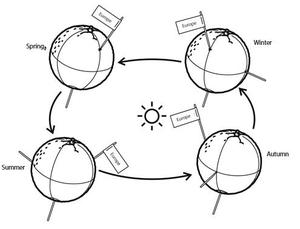
Seasons Around the World
astroEDU educational activity (links to astroEDU website) Description: Demonstrate the seasons on Earth using a model.
License: CC-BY-4.0 Creative Commons Attribution 4.0 International (CC BY 4.0) ícones
Tags:
Hands-on
, Model
Faixas etárias:
6-8
, 8-10
, 10-12
Nível de ensino:
Ensino fundamental
, Básico
Áreas de aprendizagem:
Modelagem
, Aprendizagem por investigação estruturada
Custos:
Custo médio
Duração:
45 mins
Tamanho do grupo:
Grupo
Habilidades:
Analisar e interpretar dados
, Fazer perguntas
, Construir explicações
, Desenvolver e usar modelos
, Planejar e realizar pesquisas