Termo do glossário: Asteroide
Descrição: Um asteroide é um pequeno corpo que orbita ao redor do Sol, de outra estrela ou de um remanescente estelar. Os asteroides são corpos sólidos de diversas composições: alguns são ricos em carbono, outros contêm mais material rochoso (silicatos) e outros ainda são compostos principalmente por metais.
A maioria dos asteroides consiste em aglomerados de detritos mantidos juntos pela gravidade, com formas irregulares e acidentadas. Alguns asteroides possuem luas – outros pequenos asteróides que orbitam ao seu redor.
Os asteroides são menores do que os planetas anões (que possuem massa suficiente para que a gravidade lhes confira uma forma quase redonda). São também maiores do que os meteoroides; o limite mínimo de tamanho de um asteroide é comumente estabelecido entre um e 10 metros de diâmetro. Se o aquecimento pelo Sol ou por uma estrela fizer com que o pequeno corpo emita gás e poeira, o corpo é um cometa e não um asteróide (embora a distinção nem sempre seja clara).
Historicamente, o nome “asteroide” era dado a qualquer corpo astronômico que orbitasse o Sol e fosse pequeno demais para ser distinguido com um telescópio. Como eles apareciam como pontos semelhantes a estrelas quando observados pelo telescópio, foram chamados de “asteroides”, em referência à palavra grega que significa “semelhante a uma estrela”.
Termos relacionados:
- Cinturão de asteroides
- Família de asteroides
- Coma cometária
- Cometa
- Cauda de cometa
- Planeta anão
- Objetos próximos à Terra
- Sistema solar
- Troianos
- Corpo menor do Sistema Solar
Ver este termo em outros idiomas
Status do termo e da definição: A definição original deste termo em inglês foi aprovada por um astrônomo(a) pesquisador(a) e um(a) professor(a) A tradução deste termo e de sua definição ainda aguarda aprovação
O Glossário Multilíngue da OAE é um projeto do Escritório da IAU de Astronomia para a Educação(OAE) em colaboração com o Escritório da IAU para Divulgação da Astronomia (OAO). Os termos e definições foram selecionados, escritos e revisados por meio de um esforço coletivo da OAE, dos Centros e Nós da OAE, dos Coordenadores Nacionais de Educação em Astronomia (NAECs) da OAE e de outros voluntários. Você pode encontrar uma lista completa dos créditos aqui. Todos os termos do glossário e suas definições são disponibilizados sob uma licença Creative Commons CC BY-4.0 e devem ser creditados à "IAU OAE".
Se você notar algum erro factual ou de tradução neste termo do glossário ou em sua definição, por favor entre em contato.
Mídia relacionada
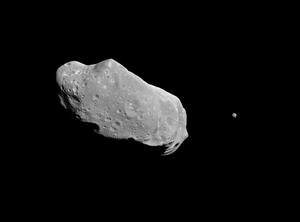
Ida e Dactyl
Legenda: Esta imagem do asteroide Ida com seu satélite Dactyl foi tirada pela sonda espacial Galileo em agosto de 1993 a uma distância de 10.870 quilômetros (6.755 milhas). Ida é um asteroide irregular e repleto de crateras localizado no cinturão principal de asteroides entre Marte e Júpiter. Esta imagem é a prova de que asteróides como o Ida, com 56 km de diâmetro, podem possuir suas próprias luas.
Crédito: NASA/JPL
link do crédito
License: PD Domínio Público ícones
Atividades relacionadas
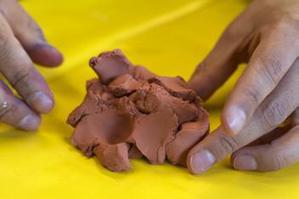
Creating Asteroids
astroEDU educational activity (links to astroEDU website) Description: Have fun, building asteroids using clay!
License: CC-BY-4.0 Creative Commons Attribution 4.0 International (CC BY 4.0) ícones
Tags:
Hands-on
, Model
Faixas etárias:
4-6
, 6-8
, 8-10
Nível de ensino:
Pré-escola
, Básico
Áreas de aprendizagem:
Modelagem
, Aprendizagem por investigação estruturada
Custos:
Custo médio
Duração:
1 hour 30 mins
Tamanho do grupo:
Grupo
Habilidades:
Comunicar informações
, Desenvolver e usar modelos
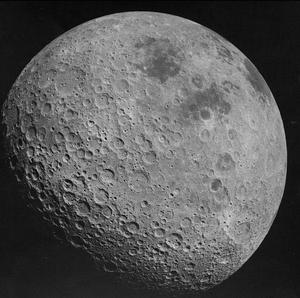
Impact Craters
astroEDU educational activity (links to astroEDU website) Description: A literal Earth-Shattering experiment
License: CC-BY-4.0 Creative Commons Attribution 4.0 International (CC BY 4.0) ícones
Tags:
History
, Impact
, Experiment
Faixas etárias:
10-12
, 12-14
, 14-16
Nível de ensino:
Ensino fundamental
, Básico
, Médio
Áreas de aprendizagem:
Aprendizagem por descoberta guiada
, Modelagem
, Experimento científico tradicional
Custos:
Baixo custo
Duração:
1 hour
Tamanho do grupo:
Grupo
Habilidades:
Analisar e interpretar dados
, Fazer perguntas
, Construir explicações
, Engajar-se em argumentação com base em evidências
, Usar matemática e pensamento computacional
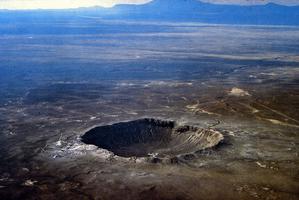
Meteoroids, Meteors and Meteorites
astroEDU educational activity (links to astroEDU website) Description: Unveiling the mystery of "shooting stars": meteors, meteorites and meteroids
License: CC-BY-4.0 Creative Commons Attribution 4.0 International (CC BY 4.0) ícones
Tags:
Geology
Faixas etárias:
6-8
, 8-10
, 10-12
, 12-14
Nível de ensino:
Ensino fundamental
, Básico
Áreas de aprendizagem:
Aula interativa
Custos:
Baixo custo
Duração:
1 hour 30 mins
Tamanho do grupo:
Grupo
Habilidades:
Analisar e interpretar dados
, Fazer perguntas
, Comunicar informações
, Engajar-se em argumentação com base em evidências

Asteroid miners
astroEDU educational activity (links to astroEDU website) Description: Develop a scientific plan for mining asteroids and extracting space resources!
License: CC-BY-4.0 Creative Commons Attribution 4.0 International (CC BY 4.0) ícones
Faixas etárias:
14-16
, 16-19
Nível de ensino:
Médio
Áreas de aprendizagem:
Aprendizagem por descoberta guiada
, Baseado em observação
, Resolução de problemas
, Aprendizagem baseada em projetos
, Aprendizagem por investigação estruturada
, Baseado em tecnologia
Custos:
Gratuito
Duração:
3-6 hours
Habilidades:
Analisar e interpretar dados
, Fazer perguntas
, Engajar-se em argumentação com base em evidências
, Planejar e realizar pesquisas