This page describes an image Opposition and Conjunction

Baixar arquivo ( imagem 251.82 kB)
Baixar arquivo PDF (PDF file 148.69 kB)
Also available in black and white
Baixar arquivo ( imagem 109.06 kB)
Baixar arquivo PDF (PDF file 173.49 kB)
Legenda do diagrama:
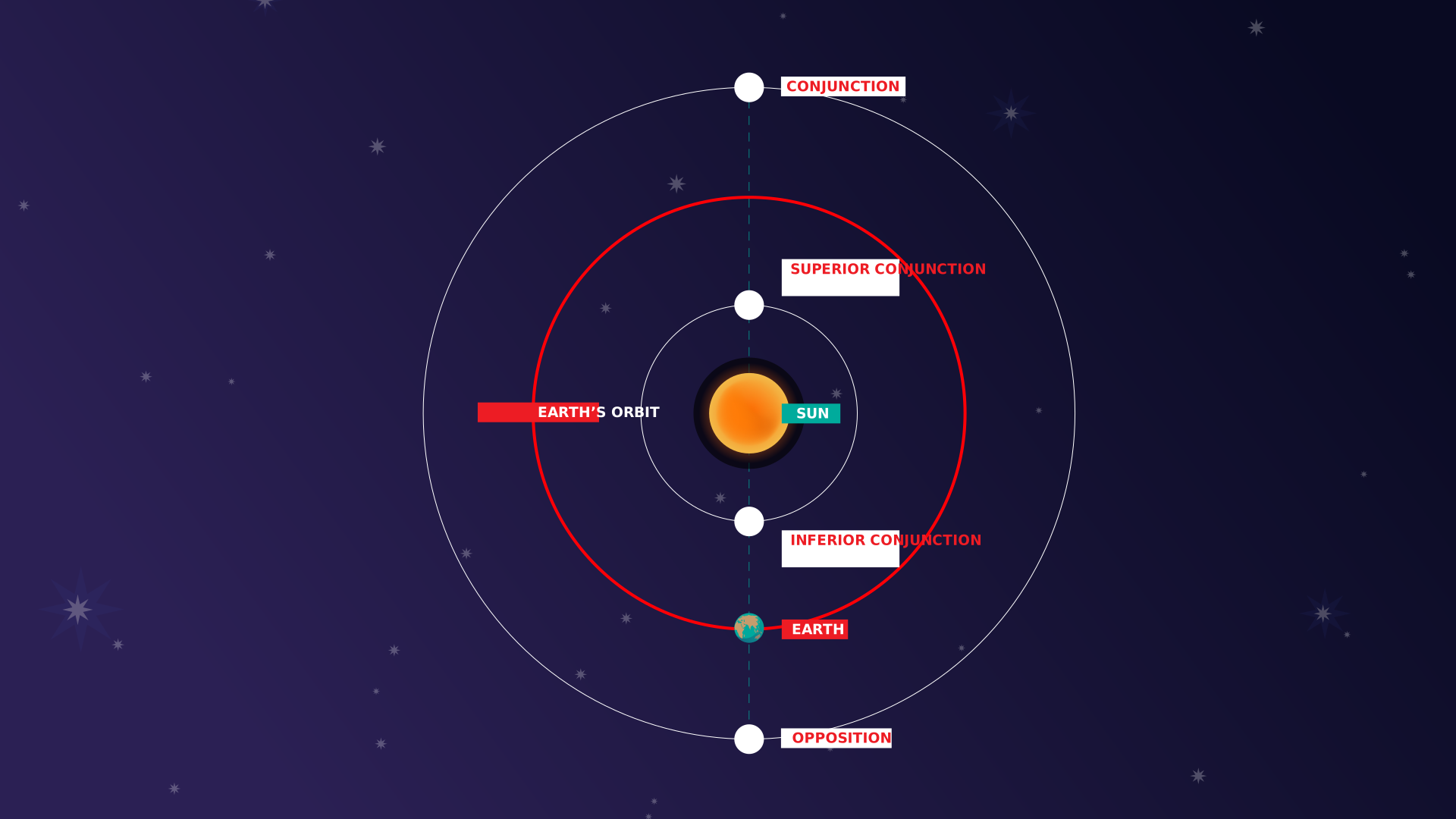
This diagram shows the Earth's orbit around the Sun and the orbits of two other planets, one orbiting the Sun outside the Earth's orbit and one orbiting the Sun inside the Earth's orbit. At different times in the orbits of both of these planets, their positions appear to line up with the Earth and the Sun. At these points each planet would appear close to the Sun when viewed from Earth. When this happens each planet is said to be in conjunction with the Sun.
For the planet that orbits the Sun within the Earth's orbit it can be in conjunction with the Sun twice in its orbit, once when it is between the Sun and the Earth and once when it is on the other side of the Sun from the Earth. When the planet is in conjunction between the the Sun and Earth it is said to be in inferior conjunction and when it is in conjunction on the far side of the Sun from the Earth it is said to be in superior conjunction.
For the planet orbiting the Sun outside the Earth's orbit, it can sometimes be on the other side of the sky. At this point the Earth lies between the planet and the Sun. The planet in this case is said to be in opposition.
Opposition and conjunction are not just limited to planets and other types of solar system objects such as dwarf planets, comets and asteroids can also be in opposition and conjunction. However only those objects that have an orbit that takes them outside the Earth's orbit can be in opposition.
Conjunction is also used to refer to alignments in the sky between planets in the Solar System. For example when Jupiter and Venus appear very close on the sky when viewed from Earth they are said to be in conjunction with each other.
Crédito do diagrama: Aneta Margraf/IAU OAE.
Status da tradução dos diagramas: Ainda não aprovado por um revisor
Licença do diagrama: Creative Commons Atribuição 4.0 Internacional (CC BY 4.0) Creative Commons Atribuição 4.0 Internacional (CC BY 4.0) ícones
Termos relacionados do glossário:
Conjunção
, Oposição
Categorias
Astronomia a Olho Nu
, Astronomia Observacional
, Sistema Solar
Quer criar sua própria tradução ou versão deste diagrama? Então
baixe a versão SVG
deste diagrama em inglês (128.98 kB). Você pode editá-la usando
programas como o Inkscape (gratuito) ou o Adobe Illustrator
(proprietário). Apenas lembre-se de creditar adequadamente o autor do original.
Also available in black and white ( imagem 128.98 kB).
Você também pode criar sua própria versão ou tradução deste diagrama adicionando texto a uma versão
deste diagrama sem texto. Basta baixar um dos arquivos abaixo:
Baixar arquivo sem texto ( imagem 231.72 kB)
Baixar arquivo PDF sem texto (arquivo PDF 130.39 kB)
Also available in black and white:
Baixar arquivo sem texto ( imagem 87.72 kB)
Baixar arquivo PDF sem texto (arquivo PDF 155.07 kB)
Em outros idiomas
Inglês: Opposition and ConjunctionItaliano: Opposizione e Congiunzione
Alemão: Opposition und Konjunktion
As legendas dos diagramas apresentadas no site da OAE foram escritas, traduzidas e revisadas por meio de um esforço coletivo da OAE, dos Centros e Nós da OAE, dos Coordenadores Nacionais de Educação em Astronomia (NAECs) da OAE e de outros voluntários. Você pode encontrar a lista completa de créditos do nosso projeto de tradução aqui. Todas as legendas de arquivos de mídia são publicadas sob uma licença Creative Commons CC BY-4.0 e devem ser creditadas à "IAU OAE". Os próprios arquivos de mídia podem ter licenças diferentes (veja acima) e devem ser creditados conforme indicado acima em "crédito".
Se você notar algum erro neste diagrama ou em sua legenda, por favor entre em contato.