تنزيل الملف ( صورة 251.82 kB)
تنزيل ملف PDF (PDF file 148.69 kB)
Also available in black and white
تنزيل الملف ( صورة 109.06 kB)
تنزيل ملف PDF (PDF file 173.49 kB)
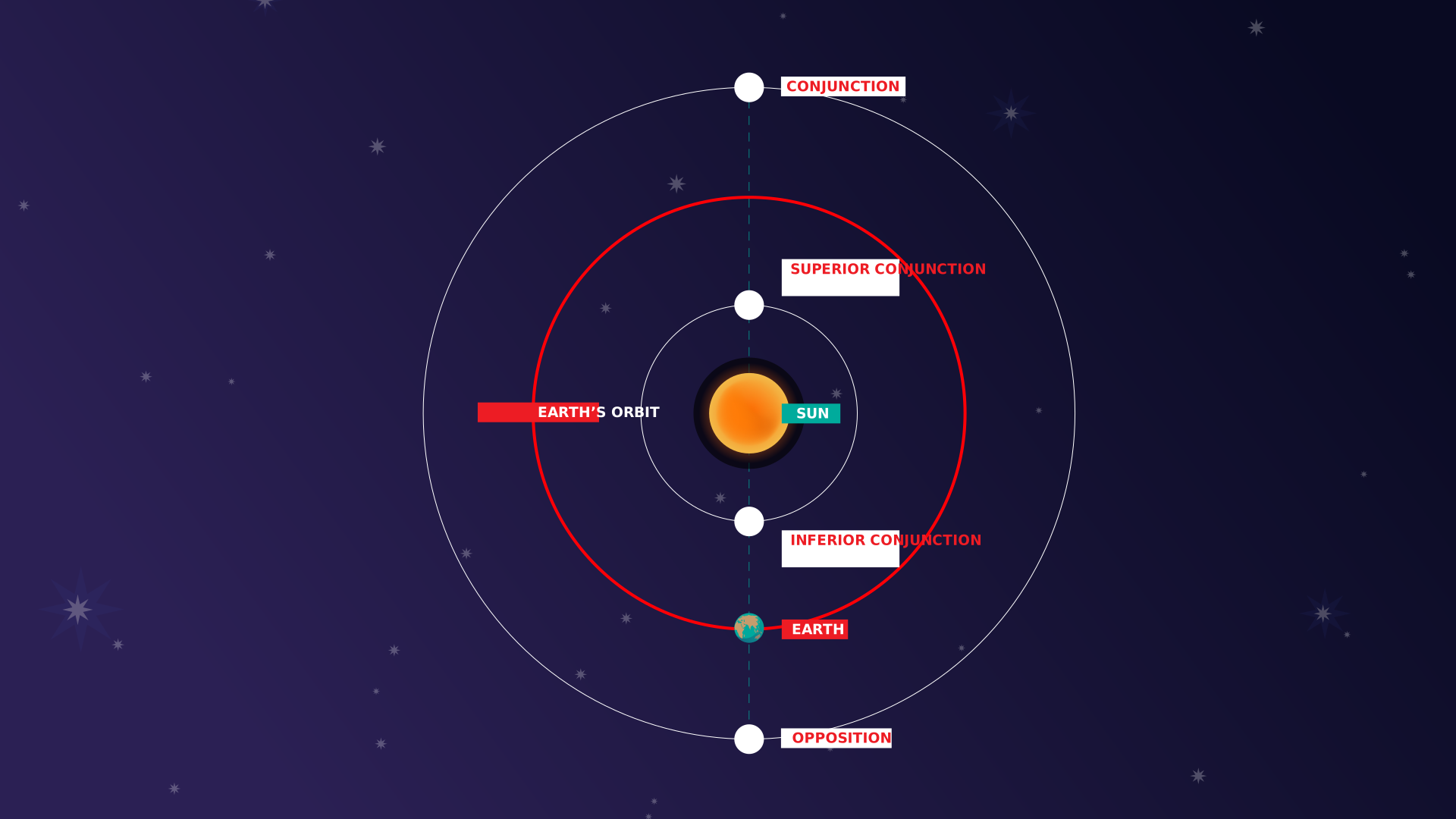
شرح الرسم التوضيحي:
This diagram shows the Earth's orbit around the Sun and the orbits of two other planets, one orbiting the Sun outside the Earth's orbit and one orbiting the Sun inside the Earth's orbit. At different times in the orbits of both of these planets, their positions appear to line up with the Earth and the Sun. At these points each planet would appear close to the Sun when viewed from Earth. When this happens each planet is said to be in conjunction with the Sun.
For the planet that orbits the Sun within the Earth's orbit it can be in conjunction with the Sun twice in its orbit, once when it is between the Sun and the Earth and once when it is on the other side of the Sun from the Earth. When the planet is in conjunction between the the Sun and Earth it is said to be in inferior conjunction and when it is in conjunction on the far side of the Sun from the Earth it is said to be in superior conjunction.
For the planet orbiting the Sun outside the Earth's orbit, it can sometimes be on the other side of the sky. At this point the Earth lies between the planet and the Sun. The planet in this case is said to be in opposition.
Opposition and conjunction are not just limited to planets and other types of solar system objects such as dwarf planets, comets and asteroids can also be in opposition and conjunction. However only those objects that have an orbit that takes them outside the Earth's orbit can be in opposition.
Conjunction is also used to refer to alignments in the sky between planets in the Solar System. For example when Jupiter and Venus appear very close on the sky when viewed from Earth they are said to be in conjunction with each other.
مصدر الرسم التوضيحي: Aneta Margraf/IAU OAE.
حالة ترجمة الرسم التوضيحي: لم تتم الموافقة من قبل مُراجع بعد
ترخيص الرسم التوضيحي: المشاع الإبداعي نَسب المُصنَّف 4.0 دولي (CC BY 4.0) المشاع الإبداعي نَسب المُصنَّف 4.0 دولي (CC BY 4.0) أيقونات
مصطلحات معجم ذات صلة:
الاقتران
, المقابلة الفلكية
فئات:
علم الفلك بالعين المجردة
, علم الفلك الرصدي
, النظام الشمسي
Want to make your own translation or version of this diagram? Then
download the SVG
version of this diagram in English (128.98 kB). You can edit this using
software like Inkscape (free) or Adobe Illustrator
(proprietary). Just remember to credit the author of the original appropriately.
Also available in black and white ( صورة 128.98 kB).
You can also make your own version or translation of this diagram by adding adding text to a version of
this diagram with no text. Just download one of the following files:
Download Text-Free File ( صورة 231.72 kB)
Download Text-Free PDF File (PDF file 130.39 kB)
Also available in black and white:
Download Text-Free File ( صورة 87.72 kB)
Download Text-Free PDF File (PDF file 155.07 kB)