Término del glosario: Noche
Descripción: La noche es un periodo de oscuridad en el que el Sol se encuentra por debajo del horizonte. La noche se extiende desde la puesta del sol hasta el amanecer. En la mayor parte de la Tierra, cada día de 24 horas tiene una noche. Sin embargo, al norte del círculo polar ártico y al sur del círculo polar antártico, hay periodos de oscuridad en torno al solsticio de invierno en los que la noche polar puede durar meses. En estas zonas no hay noche en torno al solsticio de verano.
El periodo en el que el Sol se encuentra justo por debajo del horizonte se denomina crepúsculo. Durante el crepúsculo, el Sol sigue iluminando parte del cielo. El crepúsculo se divide en tres periodos iguales: crepúsculo civil, crepúsculo náutico y crepúsculo astronómico. Durante el crepúsculo civil —cuando el Sol se encuentra entre cero y seis grados por debajo del horizonte— el cielo es relativamente brillante, por lo que a menudo no se requiere iluminación artificial, como el alumbrado público. El crepúsculo náutico —cuando el Sol se encuentra entre seis y doce grados por debajo del horizonte— permite ver estrellas brillantes y el cielo es lo suficientemente luminoso como para distinguir el horizonte incluso en una noche sin luna. Esto permite a los marineros navegar utilizando la navegación astronómica. El crepúsculo astronómico se produce cuando el Sol se encuentra entre doce y dieciocho grados por debajo del horizonte.
Términos relacionados:
- Grado
- Horizonte
- Solsticio
- Sol
- Día
- Círculo Polar Ártico
- Círculo Polar Antártico
- Día polar
- Noche polar
Ver este término en otros idiomas
Estado del término y la definición: La definición original de este término en inglés ha sido aprobada por unastrónomo o astrónoma investigadora y un docente La traducción de este término y su definición aún están pendientes de aprobación
El Glosario multilingüe de la OAE es un proyecto de la Oficina de Astronomía para la Educación de la UAI (OAE) en colaboración con la Oficina de Divulgación de Astronomía de la UAI (OAO). Los términos y definiciones fueron seleccionados, redactados y revisados gracias al esfuerzo colectivo de la OAE, los Centros y Nodos de la OAE, los Coordinadores Nacionales de Educación Astronómica (NAECs) y otros voluntarios. Puedes encontrar una lista completa de créditos aquí. Todos los términos del glosario y sus definiciones se publican bajo la licencia Creative Commons CC BY-4.0 y deben atribuirse a la "IAU OAE".
Si detectas algún error de contenido o de traducción en este término del glosario o en ladefinición, ponte en contacto con nosotros.
Contenidos relacionados

ISS' view of nightly Japan
Pie de foto: This nighttime photograph of Earth was taken from the International Space Station (ISS) by astronaut Scott Kelly in 2015 during Expedition 44. It captures the nation of Japan lit up after dark, with bright city lights tracing urban centers, major roadways, and densely populated regions. The view from orbit at night highlights how human activity shows up as patterns of light on Earth’s surface, with well-lit areas contrasting sharply against the surrounding darkness of rural regions and open water.
Photographs like this highlight what “night” looks like from space — not just a lack of sunlight, but also a time when artificial light reveals the rhythms of human life across the globe. From hundreds of kilometers above the planet, the night side of Earth appears as a tapestry of glowing clusters and dark spaces, offering insight into population distribution, infrastructure, and how cities remain active long after sunset. The ISS’s low orbit allows astronauts to capture these detailed views of Earth after dark, helping us appreciate both natural and human elements of nighttime on our planet.
Crédito: NASA
enlace de crédito
License: PD Dominio público íconos
Actividades relacionadas
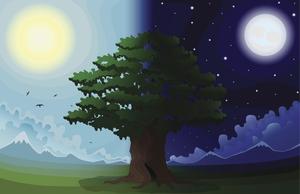
Why Do We Have Day and Night?
astroEDU educational activity (links to astroEDU website) Description: Explore day and night of Earth.
License: CC-BY-4.0 Creative Commons Reconocimiento 4.0 Internacional (CC BY 4.0) íconos
Etiquetas:
Tilt
Rango de edades:
6-8
, 8-10
, 10-12
Nivel educativo:
Primaria
, Secondary
Áreas de aprendizaje:
Modelización
, Centrado en la simulación
, Aprendizaje basado en la investigación estructurada
Costos:
Bajo coste
Duración:
1 hora y 30 minutos
Tamaño del grupo:
Grupo
Competencias:
Plantear preguntas
, Comunicar información
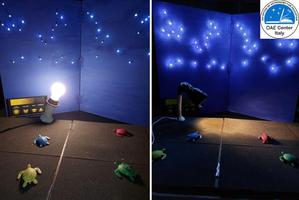
Let there be light… but not too much!
astroEDU educational activity (links to astroEDU website) Description: Build a model to learn what light pollution is and what its effects are.
License: CC-BY-4.0 Creative Commons Reconocimiento 4.0 Internacional (CC BY 4.0) íconos
Etiquetas:
Pollution
, sky observation
, lighting source
Rango de edades:
6-8
, 8-10
, 10-12
Nivel educativo:
Educación secundaria
, Primaria
Áreas de aprendizaje:
Grupos de discusión
, Modelización
, Basado en la observación
, Aprendizaje basado en proyectos
Costos:
Coste medio
Duración:
2 horas
Tamaño del grupo:
Grupo
Competencias:
Plantear preguntas
, Desarrollar y utilizar modelos
, Participar en debates basados en pruebas