Término del glosario: Contaminación lumínica
Descripción: La contaminación lumínica es la presencia de iluminación artificial excesiva o inadecuada (emitida en una dirección por encima del horizonte), como las farolas, que provoca el aumento del brillo del cielo nocturno. Esto es inadecuado, ya que dificulta la observación de estrellas, planetas y otros objetos astronómicos, y altera los ecosistemas y muchos ciclos naturales que afectan a los seres vivos. Además, la contaminación lumínica supone también un uso ineficiente de los fondos y los recursos.
Términos relacionados:
Ver este término en otros idiomas
Estado del término y la definición: La definición original de este término en inglés ha sido aprobada por unastrónomo o astrónoma investigadora y un docente La traducción de este término y su definición aún están pendientes de aprobación
El Glosario multilingüe de la OAE es un proyecto de la Oficina de Astronomía para la Educación de la UAI (OAE) en colaboración con la Oficina de Divulgación de Astronomía de la UAI (OAO). Los términos y definiciones fueron seleccionados, redactados y revisados gracias al esfuerzo colectivo de la OAE, los Centros y Nodos de la OAE, los Coordinadores Nacionales de Educación Astronómica (NAECs) y otros voluntarios. Puedes encontrar una lista completa de créditos aquí. Todos los términos del glosario y sus definiciones se publican bajo la licencia Creative Commons CC BY-4.0 y deben atribuirse a la "IAU OAE".
Si detectas algún error de contenido o de traducción en este término del glosario o en ladefinición, ponte en contacto con nosotros.
En otros idiomas
- Árabe: التلوث الضوئي
- Alemán: Lichtverschmutzung
- Inglés: Light Pollution
- Francés: Pollution lumineuse
- Italiano: Inquinamento luminoso
- Japonés: 光害 (enlace externo)
- Coreano: 광공해
- Portugués de Brasil: Poluição luminosa
- Chino simplificado: 光污染
- Chino tradicional: 光汙染
Contenidos relacionados
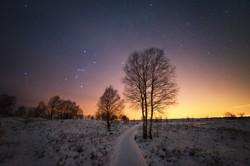
Starry Night over Eifel national park, by Dong Han, China
Pie de foto: First place in the 2021 IAU OAE Astrophotography Contest, category Light pollution.
Light pollution results from the excess of artificial light produced by human endeavours mainly as a side effect of industrialisation. This kind of pollution is usually most noticeable around well populated areas associated with intense human activities, such as street lighting, lights from the transportation system, buildings and houses. But it can also come from other places, such as ships and oil platforms in the sea. This image taken in a national park in Belgium in 2018 shows the detrimental effect of light pollution on the most precious resource that connects all humans together – the night sky.
Crédito: Dong Han/IAU OAE
License: CC-BY-4.0 Creative Commons Reconocimiento 4.0 Internacional (CC BY 4.0) íconos
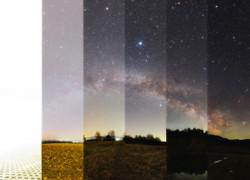
Real Light Pollution Panorama, by Tomáš Slovinský, Slovakia
Pie de foto: Second place in the 2021 IAU OAE Astrophotography Contest, category Light pollution.
This composite image taken in Slovakia in 2020 illustrates the effect due to artificial illumination of light polluted areas. The higher the level of light pollution, the less we can observe in the sky, notice how the number of stars visible even to a sensitive digital camera decreases from right to left. Light pollution not only affects the visibility of objects in the night sky, but also significantly impacts ecosystems, negatively affecting many animals, such as migratory night birds, which may encounter difficulties to find the direction to where they should migrate to, or the sea turtles, which may be confused by the lights from coastal cities located near the beaches where they are supposed to spawn. Light pollution can also negatively impact some human health. Therefore, it is important to preserve the dark and quiet night sky for the benefit of the entire planet and all the diverse life it supports.
Crédito: Tomáš Slovinský/IAU OAE
License: CC-BY-4.0 Creative Commons Reconocimiento 4.0 Internacional (CC BY 4.0) íconos
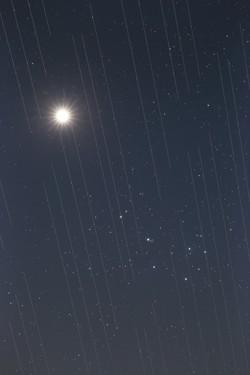
Satellite swarm versus night sky beauty, by Torsten Hansen, Germany
Pie de foto: Third place in the 2021 IAU OAE Astrophotography Contest, category Light pollution.
This image of Venus and the Pleiades also shows the tracks of the Starlink satellites. These satellites which are located at an altitude of approximately 550 kilometres, are part of an ever-growing constellation of satellites aimed to provide worldwide internet access. The reflective surfaces of the satellites, coupled with the fact that they are orbiting around the Earth, means that astronomical observations which require very long exposures capture “tracks” of the satellites in their images. Astronomical images used for scientific research are not usable because the measurements and data will contain these “tracks”. Because the number of satellites is expected to grow, it is likely that in the near future there will be no place on Earth where these satellites will not be visible crossing the sky. This is a new type of light pollution that seems to be an upcoming problem we will have to deal with, as these satellites might prevent optimal observation of the sky.
Crédito: Torsten Hansen/IAU OAE
License: CC-BY-4.0 Creative Commons Reconocimiento 4.0 Internacional (CC BY 4.0) íconos
Actividades relacionadas
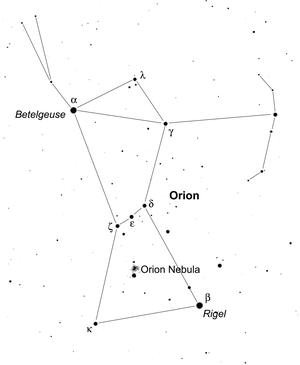
How Light Pollution Affects the Stars: Magnitude Readers
astroEDU educational activity (links to astroEDU website) Description: Build a Magnitude Reader to explore the magnitude of stars.
License: CC-BY-4.0 Creative Commons Reconocimiento 4.0 Internacional (CC BY 4.0) íconos
Etiquetas:
Hands-on
, Dark skies
, ecology
Rango de edades:
10-12
, 12-14
, 14-16
, 16-19
Nivel educativo:
Educación secundaria
Áreas de aprendizaje:
Modelización
, Basado en la observación
Costos:
Coste medio
Duración:
1 hora
Tamaño del grupo:
Grupo
Competencias:
Plantear preguntas
, Planificar y llevar a cabo investigaciones
Globe at Night Activity Guide
astroEDU educational activity (links to astroEDU website) Description: Learn to observe and record the faintest visible stars to measure the light pollution.
License: CC-BY-4.0 Creative Commons Reconocimiento 4.0 Internacional (CC BY 4.0) íconos
Etiquetas:
Hands-on
, Dark skies
, ecology
, Citizen science
Rango de edades:
4-6
, 6-8
, 8-10
, 10-12
, 12-14
, 14-16
, 16-19
, 19+
Nivel educativo:
Educación no forma
, Educación secundaria
, Otros
, Primaria
, Secondary
, Universitario
Áreas de aprendizaje:
Basado en la observación
, Aprendizaje basado en proyectos
Costos:
Bajo coste
Tamaño del grupo:
Grupo
Competencias:
Comunicar información
, Planificar y llevar a cabo investigaciones
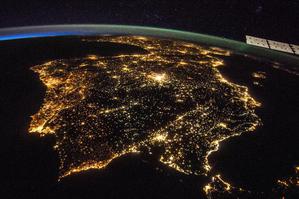
How Many Stars Can You See at Night?
astroEDU educational activity (links to astroEDU website) Description: Investigate the effects of light pollution on night sky observation.
License: CC-BY-4.0 Creative Commons Reconocimiento 4.0 Internacional (CC BY 4.0) íconos
Etiquetas:
Software
, ecology
, Observation of sky
, Pollution
, Constellations
, stellarium
Rango de edades:
12-14
Nivel educativo:
Educación secundaria
Áreas de aprendizaje:
Basado en la observación
, Aprendizaje basado en la investigación estructurada
Costos:
Bajo coste
Duración:
45 minutos
Tamaño del grupo:
Grupo
Competencias:
Analizar e interpretar datos
, Comunicar información
, Planificar y llevar a cabo investigaciones
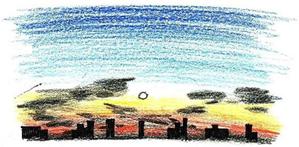
Evening Sky Watching for Students
astroEDU educational activity (links to astroEDU website) Description: Let's observe the evening sky with the naked eye
License: CC-BY-4.0 Creative Commons Reconocimiento 4.0 Internacional (CC BY 4.0) íconos
Etiquetas:
Art
, Observation of sky
, Sky watching
, Motion of star
Rango de edades:
4-6
, 6-8
Nivel educativo:
Educación infantil
, Primaria
Áreas de aprendizaje:
Grupos de discusión
, Basado en la observación
, Aprendizaje basado en la investigación estructurada
Costos:
Gratis
Duración:
30 minutos
Tamaño del grupo:
Grupo
Competencias:
Plantear preguntas
, Comunicar información
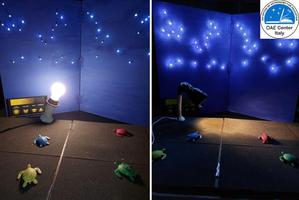
Let there be light… but not too much!
astroEDU educational activity (links to astroEDU website) Description: Build a model to learn what light pollution is and what its effects are.
License: CC-BY-4.0 Creative Commons Reconocimiento 4.0 Internacional (CC BY 4.0) íconos
Etiquetas:
Pollution
, sky observation
, lighting source
Rango de edades:
6-8
, 8-10
, 10-12
Nivel educativo:
Educación secundaria
, Primaria
Áreas de aprendizaje:
Grupos de discusión
, Modelización
, Basado en la observación
, Aprendizaje basado en proyectos
Costos:
Coste medio
Duración:
2 horas
Tamaño del grupo:
Grupo
Competencias:
Plantear preguntas
, Desarrollar y utilizar modelos
, Participar en debates basados en pruebas