Glossar-Begriff: Rotation
Beschreibung: Rotation ist die Bewegung eines Objekts um eine gedachte Linie, die als Drehachse oder Rotationsachse bezeichnet wird. Während sich das Objekt dreht, behält jeder seiner verschiedenen Teile genau den gleichen Abstand zur Rotationsachse bei. Im Allgemeinen drehen sich Sterne (einschließlich der Sonne), Planeten, Monde oder Asteroiden um eine feste Rotationsachse. Die Erde dreht sich um die Erdachse: eine gedachte gerade Linie, die durch den Nord- und den Südpol der Erde verläuft. Die Erdrotation sorgt für das wechselnde Bild des Nachthimmels, das jeder Beobachter auf der Erdoberfläche sieht, mit immer neuen Sternen, die am östlichen Horizont auf- und am westlichen Horizont untergehen. Die Tatsache, dass sich die Sonne tagsüber über den Himmel zu bewegen scheint, im Osten aufsteigt und im Westen untergeht, ist ebenfalls eine Folge der Erdrotation.
Ähnliche Begriffe:
Dieser Begriff in anderen Sprachen
Begriffs- und Definitionsstatus Die Originaldefinition dieses Begriffes auf Englisch wurden von einem forschenden Astronom und einer Lehrkraft bestätigt Die Übersetzung dieses Begriffs und seiner Definition warten auf Prüfung und Bestätigung
The OAE Multilingual Glossary is a project of the IAU Office of Astronomy for Education (OAE) in collaboration with the IAU Office of Astronomy Outreach (OAO). The terms and definitions were chosen, written and reviewed by a collective effort from the OAE, the OAE Centers and Nodes, the OAE National Astronomy Education Coordinators (NAECs) and other volunteers. You can find a full list of credits here. All glossary terms and their definitions are released under a Creative Commons CC BY-4.0 license and should be credited to "IAU OAE".
Wenn dir ein inhaltlicher oder Übersetzungsfehler in diesem Glossarbegriff oder dieser Definition auffallen, bitte kontaktiere uns.
Ähnliche Medien
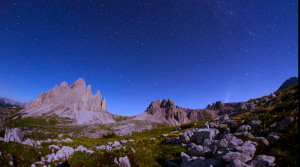
Großer Wagen und Komet Neowise C2020 F3
Unterschrift: Dieser Zeitraffer dokumentiert die Flugbahn des ikonischen Großen Wagens in drei Bildern, die im Juli 2020 aufgenommen wurden. Diese visuelle Odyssee wurde von drei Orten in Italien aus aufgenommen: Tre Cime di Lavaredo Auronzo di Cadore, Monte Rite, Cibiana di Cadore und Casera Razzo, Vigo di Cadore. Sie zeigt die fesselnde Reise des Großen Wagens mit zusätzlichen Sternenspuren, die eine himmlische Leinwand zeichnen. Sie verfolgt nicht nur den Weg dieses berühmten Asterismus, sondern zeigt auch das seltene Erscheinen des Kometen Neowise C/2020 F3, ein außergewöhnliches Ereignis, das im Juli 2020 unseren Himmel zierte.
Bild: Giorgia Hofer/IAU OAE (CC BY 4.0)
License: CC-BY-4.0 Creative Commons Namensnennung 4.0 International (CC BY 4.0) Symbole
Ähnliche Aktivitäten

Why Do We Have Day and Night?
astroEDU educational activity (links to astroEDU website) Description: Explore day and night of Earth.
License: CC-BY-4.0 Creative Commons Namensnennung 4.0 International (CC BY 4.0) Symbole
Schlagworte
Tilt
Altersgruppen:
6-8
, 8-10
, 10-12
Bildungsniveau:
Primary
, Secundaria
Lernbereiche:
Modelling
, Simulation focussed
, Structured-inquiry learning
Kosten:
Low Cost
Dauer:
1 hour 30 mins
Gruppengröße:
Group
Fähigkeiten:
Asking questions
, Communicating information

Day and Night in the World
astroEDU educational activity (links to astroEDU website) Description: Compare diurnal and nocturnal animals and experiment with day and night.
License: CC-BY-4.0 Creative Commons Namensnennung 4.0 International (CC BY 4.0) Symbole
Schlagworte
Life
, Model
, Animals
, Day and night
Altersgruppen:
6-8
, 8-10
Bildungsniveau:
Primary
Lernbereiche:
Interactive Lecture
, Modelling
, Structured-inquiry learning
Kosten:
Low Cost
Dauer:
1 hour
Gruppengröße:
Group
Fähigkeiten:
Asking questions
, Constructing explanations
, Developing and using models
, Planning and carrying out investigations
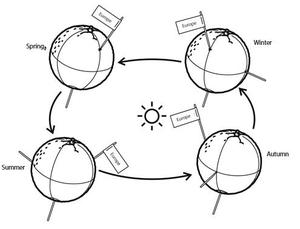
Seasons Around the World
astroEDU educational activity (links to astroEDU website) Description: Demonstrate the seasons on Earth using a model.
License: CC-BY-4.0 Creative Commons Namensnennung 4.0 International (CC BY 4.0) Symbole
Schlagworte
Hands-on
, Model
Altersgruppen:
6-8
, 8-10
, 10-12
Bildungsniveau:
Middle School
, Primary
Lernbereiche:
Modelling
, Structured-inquiry learning
Kosten:
Medium Cost
Dauer:
45 mins
Gruppengröße:
Group
Fähigkeiten:
Analysing and interpreting data
, Asking questions
, Constructing explanations
, Developing and using models
, Planning and carrying out investigations
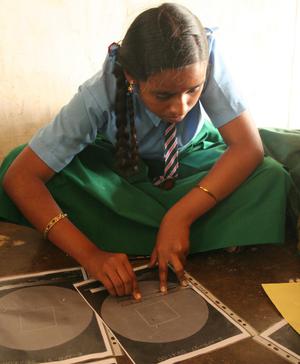
Measure the Sun's Rotation Period
astroEDU educational activity (links to astroEDU website) Description: Find out the Sun’s rotation period, applying the simple equation of average speed to a real astronomical case.
License: CC-BY-4.0 Creative Commons Namensnennung 4.0 International (CC BY 4.0) Symbole
Schlagworte
Hands-on
, History
, Experiment
, Galileo
, average speed
Altersgruppen:
16-19
Bildungsniveau:
Secundaria
Lernbereiche:
Structured-inquiry learning
Kosten:
Low Cost
Dauer:
1 hour 30 mins
Gruppengröße:
Group
Fähigkeiten:
Analysing and interpreting data
, Engaging in argument from evidence
, Planning and carrying out investigations
, Using mathematics and computational thinking
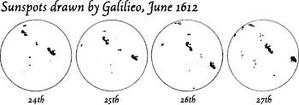
Is the Sun rotating? Follow the sunspots!
astroEDU educational activity (links to astroEDU website) Description: Like a "modern" Galileo, use true astronomical satellite observations to discover if the Sun (and other celestial objects) are rotating!
License: CC-BY-4.0 Creative Commons Namensnennung 4.0 International (CC BY 4.0) Symbole
Schlagworte
Hands-on
, History
, Experiment
, Galileo
Altersgruppen:
12-14
, 14-16
, 16-19
Bildungsniveau:
Middle School
, Secundaria
Lernbereiche:
Structured-inquiry learning
Kosten:
Low Cost
Dauer:
1 hour
Gruppengröße:
Group
Fähigkeiten:
Analysing and interpreting data
, Planning and carrying out investigations