Glossary term: 晝夜平分點
Description: 晝夜平分點(春分和秋分)是太陽在其年度黃道運行中穿越天球赤道的時刻。該詞源自拉丁語“aequinoctium”,其中“aequus”意為“相等”,“nox”(屬格形式為“noctis”)意為“夜晚”。在晝夜平分點這一天,不僅僅是接近赤道的區域,全球的晝夜長度大致相等。對於地球上的觀察者,太陽在這一天從正東方升起,沿著天球赤道的路徑運行,最後在正西方落下。每年有兩次晝夜平分點,春分大約在3月20日,秋分在9月23日。在3月的春分,太陽看起來開始向北半球移動;而在9月的秋分,太陽看起來則向南半球移動。
Related Terms:
See this term in other languages
Term and definition status: The original definition of this term in English have been approved by a research astronomer and a teacher The translation of this term and its definition is still awaiting approval
This is an automated transliteration of the simplified Chinese translation of this term
The OAE Multilingual Glossary is a project of the IAU Office of Astronomy for Education (OAE) in collaboration with the IAU Office of Astronomy Outreach (OAO). The terms and definitions were chosen, written and reviewed by a collective effort from the OAE, the OAE Centers and Nodes, the OAE National Astronomy Education Coordinators (NAECs) and other volunteers. You can find a full list of credits here. All glossary terms and their definitions are released under a Creative Commons CC BY-4.0 license and should be credited to "IAU OAE".
If you notice a factual or translation error in this glossary term or definition then please get in touch.
In Other Languages
- 阿拉伯語: الاعتدال
- 德語: Tagundnachtgleiche
- 英語: Equinox
- 西班牙語: Equinoccio
- 法語: Equinoxe
- 義大利語: Equinozio
- 日語: 分点 (external link)
- 巴西葡萄牙語: Equinócio
- 簡體中文: 昼夜平分点
Related Media
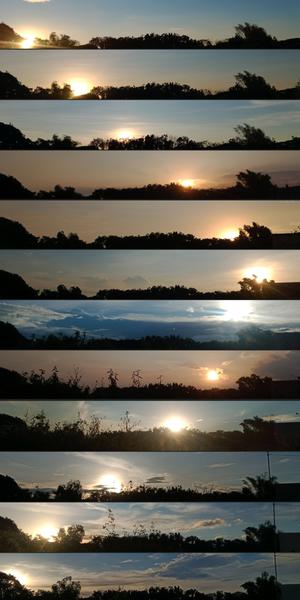
每月日落的地方
Caption: 這組圖片是在菲律賓布拉干省的聖拉斐爾用智能手機拍攝的,它捕捉到了地球軸向傾斜和環繞太陽運行所導致的日落位置在一年中的變化。從 2022 年 1 月到 12 月,每張圖片都反映了黃昏時分背景和太陽位置的變化。在十月,可以觀察到樹葉的變化和一根電線桿的出現。這組作品是地球與太陽之間的天體舞蹈以及地面自然景觀變化的視覺見證。
Credit: John Paul Pile/IAU OAE (CC BY 4.0)
License: CC-BY-4.0 Creative Commons 姓名標示 4.0 國際 (CC BY 4.0) icons
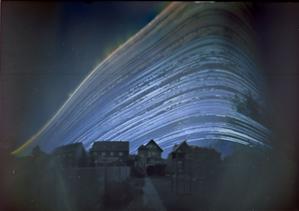
太陽的軌跡
Caption: 這幅令人陶醉的圖片於 2018 年 6 月 21 日至 2018 年 12 月 21 日期間在德國拍攝,是藝術與科學的詩意融合,展現了大自然的韻律和時間的流逝。它合併了六個月內每天不同時間段拍攝的圖片。每條曲線都追蹤了太陽在特定一天內穿越天空的路徑(或弧線)。在這裡,太陽劃過的弧線被投影扭曲,使其看起來像一條曲線。每天劃過天空的弧線位置隨著太陽在天空中的季節性移動而變化。這幅圖片是用一個咖啡罐製成的簡易針孔攝像機拍攝的,它展示了太陽在六個月時間裡的旅程,以及日弧從夏季較高位置(太陽在天空中的位置較高)逐漸移動到冬至最低位置的過程。太陽路徑上的間隙代表太陽被雲層遮擋的日子或時段。這幅圖片生動地表現了四季的變化,展示了太陽在天空中隨著白天變短或變長而舞動的軌跡。
Credit: Frank Niessen/IAU OAE (CC BY 4.0)
License: CC-BY-4.0 Creative Commons 姓名標示 4.0 國際 (CC BY 4.0) icons
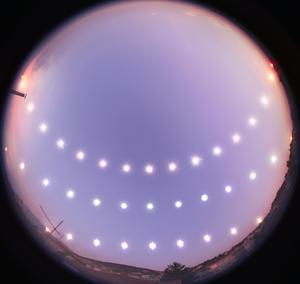
日至和日分
Caption: 這張引人入勝的照片記錄了在2007年12月21日至2008年6月20日期間,太陽在土耳其布爾薩的冬至(下)、春分(中)以及夏至(上)在天空中運動的軌跡。攝影師使用魚眼鏡頭,在這三天中以固定的時間間隔拍攝太陽從日出到日落的位置,生動展示了一年中晝夜長短的變化。太陽每日在天空中的運行軌跡、正午高度、日出和日落的位置,以及白晝的長度,均由地球自轉軸與其繞太陽軌道的傾斜角度決定。這一系列照片拍攝於布爾薩的一座屋頂,當地的地形偶爾會遮擋地平線,為畫面增添了獨特的地域特徵。照片中的方向以北朝上、以南朝下,這組視覺日記成為中北緯地區居民欣賞太陽運行軌跡變化的精彩呈現。
Credit: 通奇·特澤爾/國際天文學聯合會教育辦公室 (CC BY 4.0)
License: CC-BY-4.0 Creative Commons 姓名標示 4.0 國際 (CC BY 4.0) icons
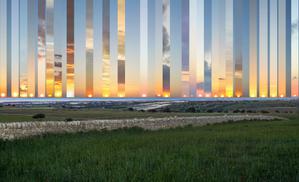
西落幅度
Caption: 這張合成照片拍攝于意大利西西里島的 Gatto Corvino 村,展示了從2016年到2017年冬至到夏至期間,太陽在海面上不同位置的落日景象。中心框為正西方。隨著地球繞太陽公轉,太陽的落下(和升起)位置從夏季的正西(東)方向偏北,變化到冬季的正西(東)方向偏南。在春分和秋分時,白晝和黑夜的長度相等,太陽從正東方升起,正西方落下。太陽在地平線上位置的變化是由於地球繞太陽運行時的自轉軸傾斜。在地球的溫帶地區,夏至和冬至時,正午太陽在地平線以上的高度角分別達到最高和最低值。
Credit: Marcella Giulia Pace/IAU OAE (CC BY 4.0)
License: CC-BY-4.0 Creative Commons 姓名標示 4.0 國際 (CC BY 4.0) icons
Related Diagrams
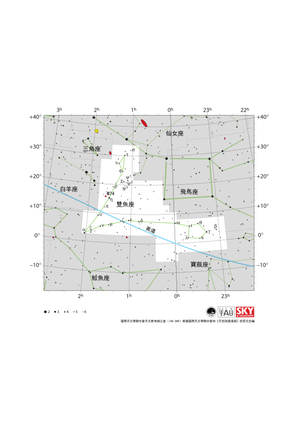
雙魚座星圖
Caption: 雙魚座及其明亮恆星與周邊星座示意圖。從頂部開始沿順時針方向,雙魚座周邊的星座依次為:仙女座、飛馬座、寶瓶座、鯨魚座、白羊座和三角座。雙魚座位於黃道上。從地球看來,太陽以一年為週期在天球上移動,所經過的路徑稱為黃道,在圖中以藍色實線標注。太陽在每年三月中旬到四月中旬位於雙魚座。因此,春分時太陽位於雙魚座——黃道在這裡與天赤道相交,而太陽在春分時的位置即為赤道坐標系中赤經坐標的原點。太陽系中的其他行星也經常出現在雙魚座。
雙魚座橫跨天赤道,因此在地球上的任何地方,一年中的某些時候都能看到它。在地球南北兩極,雙魚座的某些部分可能不可見。雙魚座在北半球的秋季和南半球的春季夜晚最適宜觀測。
宏偉的螺旋星系M74在圖中以紅色小圓圈標注。
該圖的縱軸為赤緯,橫軸為赤經,方向為上北下南左東右西。圖中標注的恆星大小對應其視星等——衡量天體視亮度的標準,較大的圓點代表著較亮的恆星。圖中的希臘字母標注著星座中最亮的恆星。這些恆星按亮度排序,最亮的一般被標記為α星,第二亮的一般為β星,等等,不過這種字母排序並不總是和實際亮度排序完全一致。圖中虛線標注的是國際天文學聯合會劃定的星座邊界,綠色實線則是一種常見的星座形象連線。需要注意的是,在實際觀測時,這些邊界與連線都不會出現在天空中。
Credit: 國際天文學聯合會天文教育辦公室(IAU OAE)根據國際天文學聯合會和《天空與望遠鏡》的原文改編
License: CC-BY-4.0 Creative Commons 姓名標示 4.0 國際 (CC BY 4.0) icons

Solstices and Equinoxes
Caption: This diagram demonstrates the relative positions of the Earth and Sun at the two solstices and two equinoxes. The Earth’s rotation axis is tilted by 23.4° from the axis of its orbit. This means that for half the Earth’s annual orbit around the Sun, the Southern Hemisphere is tilted towards the Sun and the Northern Hemisphere is tilted away from the Sun. During this time the Sun appears to lie below the celestial equator. Due to this at any particular point in the Southern Hemisphere the Sun will appear to be higher above the horizon at a particular time of day and the days will be longer. Conversely during this time, the Sun appears lower in the sky at any particular point in the day in the Northern Hemisphere and the days are shorter.
This effect is most pronounced in late December when the Sun appears at its most southerly point in the sky, corresponding to the longest day of the year in the Southern Hemisphere. This normally occurs on the 21st or 22nd of December (UTC), depending on when the most recent leap year was, but can very occasionally occur on the 20th or 23rd of December. This event is known as the December solstice. As the Sun’s rays hit the Southern Hemisphere at a more perpendicular angle during this time, the Southern Hemisphere is typically warmer in this time of year than at other times of year. This is often referred to as summer in temperate and antarctic regions of the Southern Hemisphere and thus the December solstice is known as the summer solstice. South of the Antarctic Circle at this time the Sun never sets and a Polar Day can last several months. Conversely in the Northern Hemisphere, the Sun’s rays hit the Earth at a more grazing angle than at other times of year so it is colder and this solstice is known as the winter solstice. North of the Arctic Circle the Sun never rises during this time and the Polar Night can last several months.
As the year progresses the Earth moves in its orbit and the tilt of the Earth’s axis moves so it appears more side-on to the Sun. From the perspective of an observer on Earth this means that the Sun moves north in the sky, eventually reaching the celestial equator in late March, This usually occurs on the 20th of March (UTC) but can sometimes occur on the 19th or 21st of March. During this time all places on Earth will experience night and day that is approximately 12 hours long. The Sun’s rays now hit the Southern hemisphere at a more shallow angle than they did in December and hit the Northern Hemisphere at a more perpendicular angle. This means that the Northen Hemisphere will have warmed since December and the Southern Hemisphere cooled. This leads to the March equinox being referred to as the autumn equinox in the Southern Hemisphere and the spring or vernal equinox in the Northern Hemisphere.
As the year progresses further the Sun moves further north on the sky, the Northern Hemisphere days lengthen and the Southern Hemisphere days shorten. By June the Earth’s orbit has progressed to the point where the Northern Hemisphere points towards the Sun and the Southern Hemisphere away from the Sun. At one point between the 20th and 22nd of June (UTC) the Sun reaches its most northerly point in the sky, this is known as June solstice. It is now summer in northern temperate and artic regions so this is known as the summer solstice in the Northern Hemisphere and the winter solstice in the Southern Hemisphere. This is the longest day of the year in the Northern Hemisphere and the shortest day of the year in the Southern Hemisphere. During this time regions north of the Arctic Circle experience a long Polar Day and regions south of the Antarctic Circle experience polar night.
The year progresses further and the Earth moves in its orbit so that the tilt of the Earth’s axis again appears side-on for the Sun. The Sun moves south in the sky and again crosses the celestial equator between the 21st and 24th of September (UTC). At this time all places on the Earth experience equal lengths of day and night. This is known as the September equinox, also called the spring or vernal equinox in the Southern Hemisphere and the autumn equinox in the Northern Hemisphere.
Note the sizes of the Earth, Sun and the Earth’s orbit around the Sun are not to scale in this diagram.
Credit: Maria Cristina Fortuna/IAU OAE
License: CC-BY-4.0 Creative Commons 姓名標示 4.0 國際 (CC BY 4.0) icons