Glossary term: 관측
Description: 천체 관측은 별, 행성, 은하 같은 천체에서 오는 빛(전자기 복사)이나 입자, 중력파를 수집하거나 측정하는 활동을 말합니다. 예전에는 눈으로 직접 하늘을 보는 것이 천체 관측이었지만, 1600년대 초 망원경이 발명된 이후에는 관측 능력이 크게 향상되었습니다. 오늘날에는 망원경뿐 아니라 카메라, 분광기, 감지기 등 다양한 정밀 장비가 사용됩니다. 카메라로 촬영한 가공되지 않은 원본 이미지(raw 이미지)처럼, 관측을 통해 얻은 자료를 관측 데이터라고 합니다.
이 데이터에는 천체 자체의 정보뿐만 아니라, 천체와 관측자 사이의 성간 물질(별과 별 사이의 물질)이나 은하 간 물질에 대한 정보도 포함되어 있습니다. 하지만 카메라나 기기의 성능과 특성, 예를 들어 센서의 감도가 부분마다 다르다거나, 대기에서 생기는 산란광 같은 외부 요인(오염 신호) 때문에 데이터가 왜곡되기도 합니다. 그래서 천문학자들은 이런 영향을 제거하고 정확한 정보를 얻기 위해 ‘데이터 전처리’ 과정을 거칩니다.
관측의 결과로 만들어지는 대표적인 자료는 이미지(사진), 스펙트럼(빛의 파장에 따른 밝기 분포), 그리고 시계열 데이터(시간에 따라 변하는 밝기나 신호를 기록한 자료)입니다. 예를 들어, 펄서나 변광성 같은 천체는 일정한 주기로 변하는 데이터를 통해 분석할 수 있습니다. 이런 자료들은 천체 사이의 각도, 관측 시각, 밝기(겉보기 등급) 등 다양한 물리량을 측정하는 데 사용됩니다.
천체 관측은 실험실에서 물질을 직접 다루는 실험과는 다릅니다. 화학자가 두가지 화학물질을 혼합하는 것과 같은 방식으로 천체 자체와 상호작용할 수 없습니다. 천문학자는 천체를 직접 조작할 수 없기 때문에, 관측을 통해 얻은 자연 신호를 해석하는 방식으로 연구합니다. 다만, 운석 분석이나 탐사선을 보내는 행성 탐사처럼, 직접적인 실험적 연구로 관측을 보완할 수도 있습니다.
Related Terms:
See this term in other languages
Term and definition status: The original definition of this term in English have been approved by a research astronomer and a teacher The translation of this term and its definition is still awaiting approval
The OAE Multilingual Glossary is a project of the IAU Office of Astronomy for Education (OAE) in collaboration with the IAU Office of Astronomy Outreach (OAO). The terms and definitions were chosen, written and reviewed by a collective effort from the OAE, the OAE Centers and Nodes, the OAE National Astronomy Education Coordinators (NAECs) and other volunteers. You can find a full list of credits here. All glossary terms and their definitions are released under a Creative Commons CC BY-4.0 license and should be credited to "IAU OAE".
If you notice a factual or translation error in this glossary term or definition then please get in touch.
In Other Languages
- 아랍어: الرصد الفلكي
- 독일어: Beobachtung
- 영어: Observation
- 스페인어: Observación
- 프랑스어: Observation
- 이탈리아어: Osservazione
- 브라질 포르투갈어: Observação
- 중국어 간체: 观测
- 중국어 번체: 觀測
Related Media
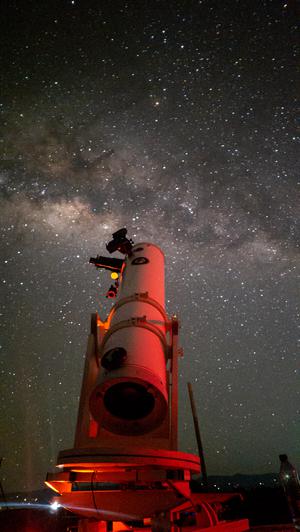
Learning Nights
Caption: Honorable mention in the 2023 IAU OAE Astrophotography Contest, category of Still images taken exclusively with smartphones/mobile devices.
Beneath the sprawling expanse of the night sky over Colombia's Tatacoa Desert, a telescope finds its alignment with the majestic galactic core, while a smartphone captures this cosmic encounter. This snapshot, taken on 9 June 2023 during an astronomy camp, epitomises the accessible beauty of celestial marvels. It showcases the mesmerising grandeur of the night sky, inviting both the casual stargazer and the passionate astronomer alike. The splendour of the Milky Way, elegantly captured through a mobile device, seamlessly bridges the gap between sophisticated equipment and the pure, profound joy of observing the stars.
Credit: Juan Pablo Botero Londoño/IAU OAE (CC BY 4.0)
License: CC-BY-4.0 Creative Commons 저작자표시 4.0 국제 (CC BY 4.0) icons
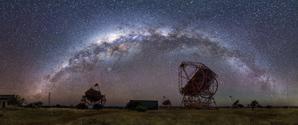
Milky Way Over H.E.S.S Observatory
Caption: Honorable mention in the 2023 IAU OAE Astrophotography Contest, category of Still images taken exclusively with smartphones/mobile devices.
The darkness of the skies at H.E.S.S Observatory reveal the seemingly innumerable stars that make up the Milky Way galaxy, making it challenging to discern the constellations as seen taken with a smartphone from Namibia in June 2023. The stars Alpha and Beta Centauri are visible bottom left of the image just about the tower. The orange-hued star visible just above and to the right of the left H.E.S.S telescope is Antares, a red-giant star that is part of the constellation Scorpius.
Credit: Jianfeng Dai/IAU OAE (CC BY 4.0)
License: CC-BY-4.0 Creative Commons 저작자표시 4.0 국제 (CC BY 4.0) icons
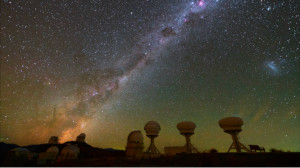
Southern Sky Over La Silla
Caption: First place winner in the 2023 IAU OAE Astrophotography Contest, category of Time-lapses of rotation of Big Dipper or Southern Cross.
This video shows the Milky Way’s sprawling brilliance across the celestial expanse. Among the stars’ grand theatre, the Southern Cross constellation claims its place in the scene, distinguished by its distinctive cross shape as seen in the top of this video and slightly to the right just over the Milky Way, slowly disappearing as the video progresses. This celestial marker, a prominent feature in the southern hemisphere, holds cultural and navigational significance, having served as a navigational guidepost for centuries. Accompanying the Milky Way’s grandeur are the two Magellanic clouds, celestial companions seen dancing in the distant sky. The Carina Nebula adds its ethereal glow to the cosmic panorama, painting a radiant hue against the darkness. In the midst of this celestial ballet, a gentle green hue envelops the atmosphere, a phenomenon known as airglow, adding a touch of subtle luminescence to the night sky. The terrestrial also makes an appearance, with planes flying overhead and vehicles driving between observatory buildings. This time-lapse, taken from the La Silla Observatory in Chile, is a window to the captivating dance of stars, offering a glimpse into the awe-inspiring beauty of our galaxy and the celestial landmarks that grace the southern sky.
Credit: José Rodrigues/IAU OAE (CC BY 4.0)
License: CC-BY-4.0 Creative Commons 저작자표시 4.0 국제 (CC BY 4.0) icons
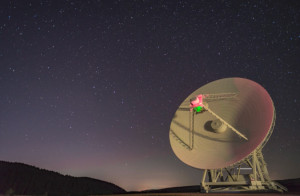
The Big Dipper with the Sardinia Radio Telescope SRT
Caption: Honorable mention in the 2023 IAU OAE Astrophotography Contest, category of Time-lapses of rotation of Big Dipper or Southern Cross.
This time-lapse captures the movement of the stars alongside the majestic 64-metre Sardinia Radio Telescope (SRT) from the National Institute of Astrophysics (INAF), with special attention to the renowned Big Dipper against the backdrop of the celestial sphere. The camera pans as the famous asterism sinks in the sky while planes fly past and the radio telescope rotates. The harmonious interplay between the stellar pathways and the colossal dish of the radio telescope creates a mesmerising visual ode to the cosmic ballet taken in September 2019.
Credit: Antonio Finazzi/IAU OAE (CC BY 4.0)
License: CC-BY-4.0 Creative Commons 저작자표시 4.0 국제 (CC BY 4.0) icons
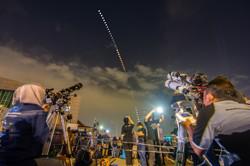
The Eclipse Between Us, by Muhammad Rayhan, Indonesia
Caption: Second place in the 2021 IAU OAE Astrophotography Contest, category Total lunar eclipse.
Total lunar eclipses belong to the rather spectacular celestial events and can be observed easily with and without a telescope. Here we see the stages of the total lunar eclipse of 31.1.2018 photographed in Indonesia: starting with the entry of the full moon disk into Earth's round umbra, the totality as Blood Moon, and the beginning of the Moon's exit from Earth's umbra until moonset.
Credit: Muhammad Rayhan/IAU OAE
License: CC-BY-4.0 Creative Commons 저작자표시 4.0 국제 (CC BY 4.0) icons
Related Activities

Build a Safe Sun Viewer
astroEDU educational activity (links to astroEDU website) Description: Build a safe Sun viewer using cheap household items and learn why it is dangerous to look directly at the Sun, even briefly.
License: CC-BY-4.0 Creative Commons 저작자표시 4.0 국제 (CC BY 4.0) icons
Tags:
Hands-on
, Safety
Age Ranges:
6-8
, 8-10
, 10-12
Education Level:
Primary
, Secondary
Areas of Learning:
Modelling
, Observation based
Costs:
Low Cost
Group Size:
Group
Skills:
Planning and carrying out investigations
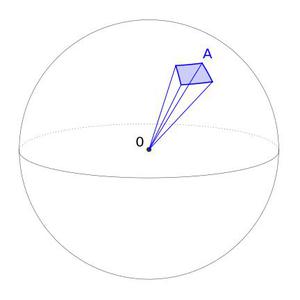
Street Lights as Standard Candles
astroEDU educational activity (links to astroEDU website) Description: Understand astronomical distances using street lights
License: CC-BY-4.0 Creative Commons 저작자표시 4.0 국제 (CC BY 4.0) icons
Tags:
Hands-on
, Distances
, Distance measurements
, Inverse square law
Age Ranges:
14-16
, 16-19
, 19+
Education Level:
Informal
, Secondary
, University
Areas of Learning:
Modelling
, Simulation focussed
, Technology-based
Costs:
Low Cost
Duration:
3 hours
Group Size:
Group
Skills:
Analysing and interpreting data
, Constructing explanations
, Developing and using models
, Planning and carrying out investigations
, Using mathematics and computational thinking
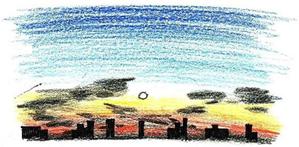
Evening Sky Watching for Students
astroEDU educational activity (links to astroEDU website) Description: Let's observe the evening sky with the naked eye
License: CC-BY-4.0 Creative Commons 저작자표시 4.0 국제 (CC BY 4.0) icons
Tags:
Art
, Observation of sky
, Sky watching
, Motion of star
Age Ranges:
4-6
, 6-8
Education Level:
Pre-school
, Primary
Areas of Learning:
Discussion Groups
, Observation based
, Structured-inquiry learning
Costs:
Free
Duration:
30 mins
Group Size:
Group
Skills:
Asking questions
, Communicating information