Glossary term: 메시에천체
Description: 메시에 천체는 1781년 프랑스의 천문학자 샤를 메시에(Charles Messier)와 그의 동료 피에르 메샹(Pierre Méchain)이 처음으로 분류한 110개의 천체 목록에 포함된 천체를 말합니다. 메시에와 메샹은 당시 혜성을 찾는 관측을 하고 있었습니다. 그런데 혜성과 비슷하게 흐릿하고 확장된 모습으로 보이지만 움직이지 않는 천체들을 여러 개 발견했습니다. 이들은 이런 천체 때문에 혜성과 혼동하여 시간을 낭비하지 않기 위해, 이 천체들을 따로 정리한 목록을 만들었습니다. 이렇게 만들어진 목록이 바로 메시에목록(Messier Catalogue)입니다. 메시에와 메샹이 관측한 이 천체들은 태양계 바깥의 흐릿한 천체들로, 그 당시에는 모두 '성운’(nebula)이라고 불렸습니다. 하지만 현대 천문학에서는 이들이 성단, 은하, 성운 등 서로 다른 종류의 천체라는 것이 밝혀졌습니다.
현재 카탈로그에는 55개의 성단, 39개의 은하, 11개의 실제 성운, 5개의 성단 그룹이 포함되어 있습니다. 이 천체들은 아마추어 천문학자들이 가장 즐겨 관측하는 대상 중 하나입니다. 흥미롭게도, 혜성을 찾던 메시에에게는 방해물에 불과했던 천체들이 오늘날에는 천문학의 보물로 여겨지고 있습니다.
메시에 천체는 보통 ‘M’이라는 문자와 함께 번호로 표시됩니다. 예를 들어, 나선 은하 메시에 101은 흔히 M101로 불립니다.
Related Terms:
See this term in other languages
Term and definition status: The original definition of this term in English have been approved by a research astronomer and a teacher The translation of this term and its definition is still awaiting approval
The OAE Multilingual Glossary is a project of the IAU Office of Astronomy for Education (OAE) in collaboration with the IAU Office of Astronomy Outreach (OAO). The terms and definitions were chosen, written and reviewed by a collective effort from the OAE, the OAE Centers and Nodes, the OAE National Astronomy Education Coordinators (NAECs) and other volunteers. You can find a full list of credits here. All glossary terms and their definitions are released under a Creative Commons CC BY-4.0 license and should be credited to "IAU OAE".
If you notice a factual or translation error in this glossary term or definition then please get in touch.
In Other Languages
- 아랍어: جرم مسييه
- 독일어: Messier-Objekt
- 영어: Messier Object
- 스페인어: Objeto Messier
- 프랑스어: Objet Messier
- 이탈리아어: Oggetto Messier
- 일본어: メシエカタログ (external link)
- 마라티어: मेसियर ऑब्जेक्ट
- 브라질 포르투갈어: Objeto Messier
- 중국어 간체: 梅西耶天体
- 중국어 번체: 梅西耶天體
Related Media
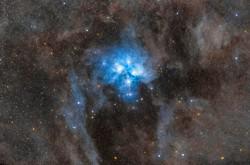
The Pleiades M45 with Majestic Dust
Caption: Honourable mention in the 2022 IAU OAE Astrophotography Contest, category Still images of celestial patterns.
Taken in Dar Eid in Saint Catherine/Sinai, Egypt, in October 2021, this image shows the Pleiades, an open cluster also known as The Seven Sisters.
The Pleiades are located in the north-western part of the constellation Taurus, the Bull. This constellation originates from ancient Babylonian or even Sumerian belief, where it was designated the Bull of Heaven, a mighty creature owned by the sky god. In Late Babylonian times, the Pleiades were called The Bristle at the hunchback of The Bull. In China, the asterism is also called The Hair, but this does not necessarily imply any relationship between the East Asian and West Asian names of this asterism, although exchange is hypothesised with the establishment of the Silk Road.
In ancient Babylonian texts the term The Hair does not appear. Instead, the Pleiades are only called The Star Cluster in Sumerian, and the Sumerian term was used in later languages as a loanword. The Sumerian and early Babylonian religion associated all constellations with specific deities, including gods, demons, messengers of gods. The Star Cluster was associated with a deity of the Netherworld that was called The Seven and was considered an ensemble of seven speaking weapons or strongly armed gods. The later Greek name of the Seven Sisters might possibly have sprung from an intercultural misunderstanding of this older religious association, since, in fact, seven stars are not seen in this cluster.
The star cluster of the Pleiades is really prominent in the sky, and thus was used for several cultural purposes, such as determining the calendar and the spring equinox. However, its significance is frequently overstated in cultural astronomy. As the tradition of representing it with seven dots originates from an ancient Sumerian belief, we should be careful about interpreting any group of seven dots on cave walls and archaeological sites across Europe, Asia and America from the Stone Age onwards as a representation of the Pleiades.
Modern astrophysics has found that the star cluster of the Pleiades is extraordinarily young, so there was certainly not an additional star in ancient times. Furthermore, we know that the bright stars are only the core region of an open star cluster that consists of hundreds of stars scattered over an area of the sky which exceeds the bright core by one or two of its diameters in any direction. The photograph does not even show the whole cluster. The group is thought to be about 400 light-years away from Earth, which is relatively close in astronomical terms.
Credit: Mohamed Usama/IAU OAE
License: CC-BY-4.0 Creative Commons 저작자표시 4.0 국제 (CC BY 4.0) icons

A visible light image of the Andromeda Galaxy
Caption: The Andromeda Galaxy viewed in visible light. Like our Milky Way, Andromeda is a barred spiral galaxy. Here we can see its bright core and spiral disk. The glow from the stars in the disk is interrupted by lanes of dust that form part of its spiral structure.
Andromeda is the largest galaxy in the Local Group of galaxies that includes the Milky Way.
To the left of the core and just above the disk we see the dwarf galaxy M32 and to the right and below the disk we see the dwarf galaxy M110. These are both satellite galaxies of the Andromeda Galaxy.
Credit: Torben Hansen
credit link
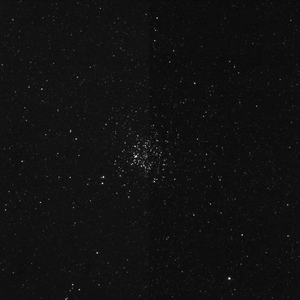
The Wild Duck Open Cluster
Caption: This image shows the Wild Duck Cluster (also known as Messier 11 or M11), a bright grouping of stars that forms what astronomers call an open cluster in our Milky Way galaxy. Open clusters are collections of stars that were born from the same giant cloud of gas and dust and are still loosely held together by gravity. Most open clusters will slowly fall apart over hundreds of millions of years are they orbit through the galaxy. In this view, hundreds of stars appear close together against the dark background of space, with many shining at different brightnesses depending on their size and temperature.
The Wild Duck Cluster lies about 6,000 light-years from Earth and is around 300 million years old. Because the stars in an open cluster share a common origin, astronomers can use them as laboratories for testing theories on stellar evolution and behaviour.
Credit: NASA/JPL
credit link
License: PD Public Domain icons






.jpg)
