This page describes an image Eclissi lunare parziale nel sud del Portogallo
Scarica File ( immagine 662.30 kB)
Didascalia:
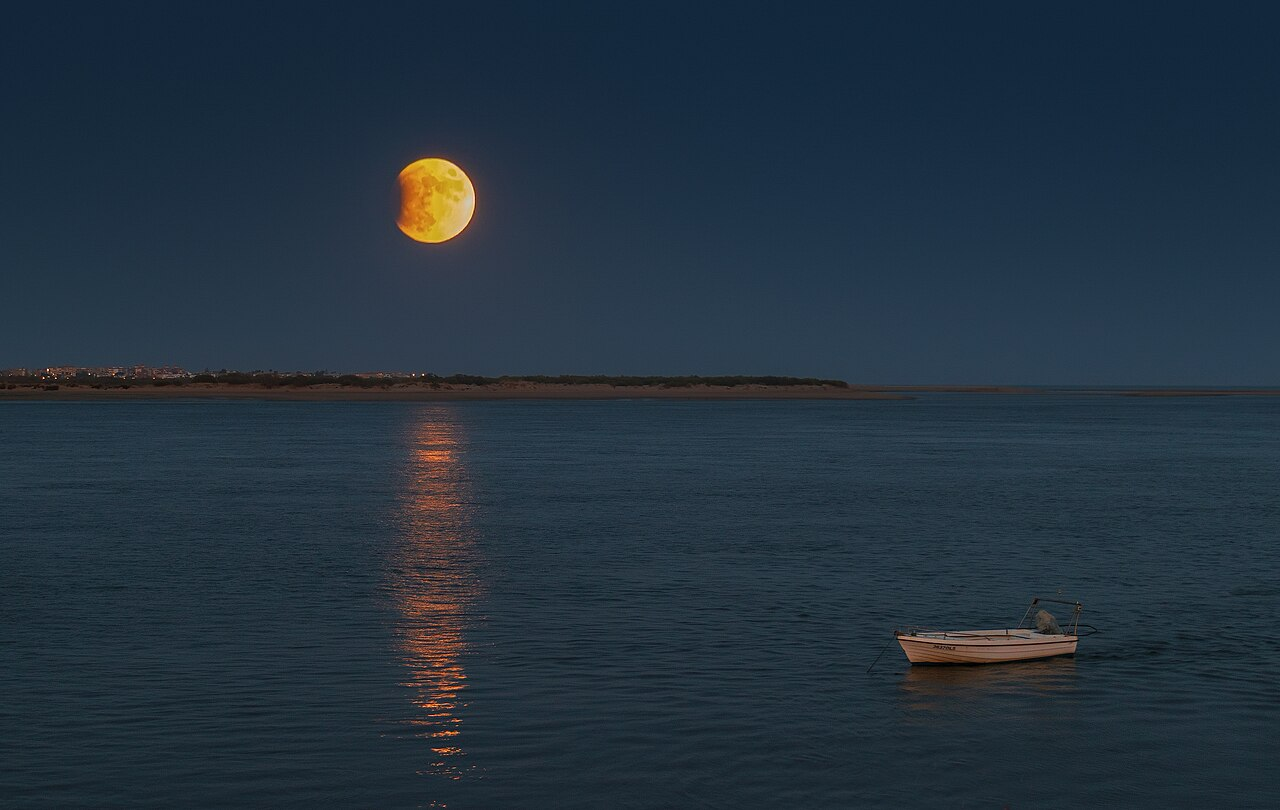
L'immagine mostra un'eclissi lunare parziale avvenuta il 16 luglio 2019, ripresa nel sud del Portogallo. Un'eclissi lunare si verifica durante la lfase di una piena, quindi senza l'eclissi vedremmo il disco lunare completo. L'ombra curva della Terra è chiaramente visibile sul lato sinistro del disco lunare. Il resto della superficie lunare assume un colore arancione intenso a causa di ciò. Questo perché durante un’eclissi lunare la Terra si trova tra la Luna e il Sole. Mentre la parte solida della Terra crea l’ombra che vediamo sul lato sinistro della Luna, la luce solare filtra anche attraverso l’atmosfera terrestre. Questa diffonde la luce blu del Sole, lasciando passare la maggior parte di quella rossa: è lo stesso processo che trasforma il sole della sera in un tramonto splendido e colorato.
Didascalie in altre lingue
Crediti per l'immagine:
ToryYu1989 Link per i Crediti
Stato di traduzione della didascalia: Non ancora approvato da un revisore
Traduttori della didascalia: Giuliana Giobbi
Termini di glossario connessi:
Eclissi
, Eclissi lunare parziale
Licenza per l'immagine: CC0 1.0 Universal (CC0 1.0) Donazione al Pubblico Dominio CC0 1.0 Universal (CC0 1.0) Donazione al Pubblico Dominio icone
Le didascalie di file multimediali presentate sul sito web OAE sono state scritte,Tradotte e riviste tramit Sun impegno collettivo dell'OAE, dei Centri e Nodi OAE, iCoordinatori Nazionali per la Didattica dell'Astronomia e altri volontari. Trovatel'elenco completo dei crediti per il nostro progetto di traduzione. Tutte le didascaliedei file multimediali sono pubblicate sotto Creative Commons CC BY-4.0 licenza di traduzione, e dovrebbero essereaccreditate all'IAU OAE.I file multimediali stessi possono avere licenze diverse (vedi sopra) eDovrebbero essere accreditate come specificato al paragrafo "crediti"
Se noti un errore di fatto in questa didascalia o un errore in una delle sue traduzioni, per favore contattaci.
Didascalie in lingue diverse:
Didascalia: Das Bild zeigt eine partielle Mondfinsternis vom 16. Juli 2019, aufgenommen im Süden Portugals. Eine Mondfinsternis kann nur bei Vollmond stattfinden. Ohne die Finsternis würden wir also die gesamte beleuchtete Mondscheibe sehen. Der gekrümmte Erdschatten ist auf der linken Seite der Mondscheibe deutlich zu erkennen. Die übrige Oberfläche des Mondes ist in ein tiefes Orange getaucht. Dies liegt daran, dass sich die Erde bei einer Mondfinsternis zwischen Mond und Sonne befindet. Während der feste Teil der Erde den Schatten erzeugt, den wir auf der linken Seite des Mondes sehen, scheint das Sonnenlicht gleichzeitig durch die Erdatmosphäre. Dabei wird das blaue Sonnenlicht gestreut, während das rote Sonnenlicht größtenteils durchgelassen wird. Es ist derselbe Prozess, der für die prachtvollen Farben des Sonnenuntergangs sorgt.
Crediti per l'immagine: ToryYu1989
Termini di glossario connessi: Eklipse , Partielle Mondfinsternis Stato di traduzione della didascalia: Non ancora approvato da un revisore
Traduttori della didascalia: Simon Kraus
Didascalia: The image shows a partial lunar eclipse from the 16th of July 2019, taken in southern Portugal. A lunar eclipse happens at full moon so without the eclipse we would see the full lunar disk. Earth’s curved shadow is clearly visible on the left side of the lunar disk. The remaining surface of the Moon is dipped into a deep orange color due. This is because at a lunar eclipse the Earth is positioned between the Moon and the Sun. While the solid part of the Earth creates the shadow we see on the left side of the Moon, sunlight also shines through Earth’s atmosphere. This scatters blue sunlight allowing most red sunlight through, the same process which turns the evening sun into a beautiful and colorful sunset.
Crediti per l'immagine: ToryYu1989
Termini di glossario connessi: Eclipse , Partial Lunar Eclipse