This page describes an image Iron Meteorite
Descargar archivo ( imagen 4.51 MB)
Pie de foto:
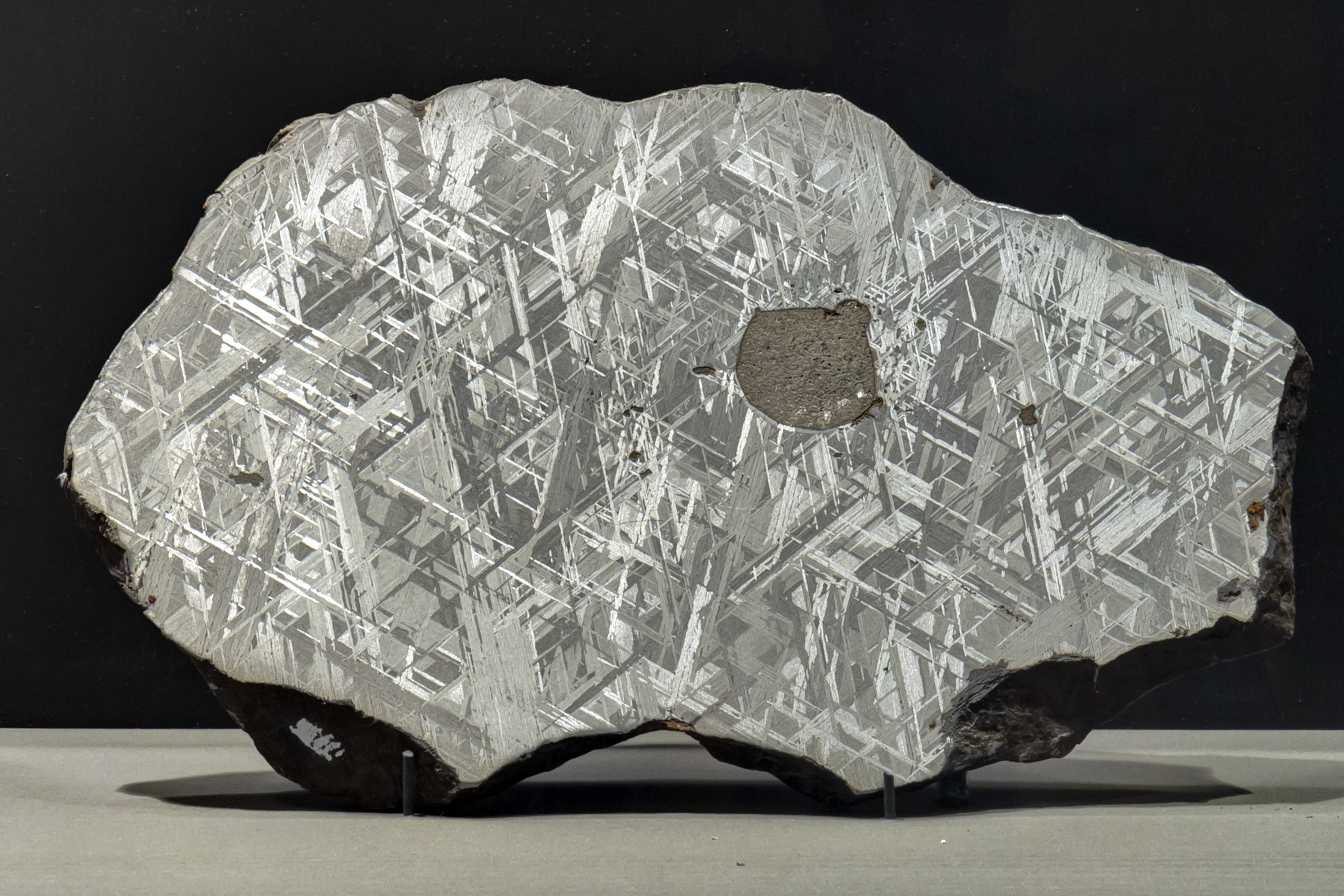
This iron meteorite was originally found in Harriman, Tennessee, USA and is now held in the collection of the Smithsonian Natural History Museum, Washington DC, USA. The total mass of the meteorite was about 30kg. Here we see the interior after the meteorite was cut into pieces.
Iron meteorites are largely composed of an iron-nickel. They also often have a crystalline structure which manifests here as a series of crossing shiny straight lines known as a Widmanstätten pattern. This is thought to have formed as the meteoroid (the object that would eventually fall through the Earth's atmosphere as a meteor and land on the ground as a meteorite) cooled very slowly in the vacuum of space in the early solar system. This led to the growth of this crystalline structure.
Desplázate hasta los subtítulos en otros idiomas
Crédito de la imagen: Chuck Sutherland Enlace del crédito
Términos relacionados del glosario:
Estrella fugaz
, Meteorito
, Meteorito ferroso
Categorías:
El planeta Tierra
, Sistema Solar
Licencia de la imagen: Dominio público Dominio público íconos
Las descripciones de los archivos multimedia que aparecen en la página web de la OAE han sido redactadas, traducidas y revisadas gracias al esfuerzo conjunto de la OAE y los Centros y Nodos de la OAE, los Coordinadores Nacionales de Educación Astronómica (NAECs) y otros voluntarios. Puedes consultar la lista completa de los créditos de nuestro proyecto de traducción aquí. Todos los pies de foto de los archivos multimedia se publican bajo una Creative Commons CC BY-4.0 licencia y deben atribuirse a la "IAU OAE". Los propios archivos multimedia pueden tener diferentes licencias (véase más arriba) y deben citarse tal y como se indica en "credit".
Pies de foto en diferentes idiomas:
Pie de foto: Dieser Eisenmeteorit wurde ursprünglich in Harriman, Tennessee, USA, gefunden und befindet sich heute in der Sammlung des Smithsonian Natural History Museum, Washington DC, USA. Die Gesamtmasse des Meteoriten betrug etwa 30 kg. Hier sehen wir das Innere, nachdem der Meteorit in Stücke geschnitten wurde.
Eisenmeteoriten bestehen größtenteils aus einer Eisen-Nickel-Legierung. Sie weisen auch oft eine kristalline Struktur auf, die sich hier als eine Reihe sich kreuzender glänzender gerader Linien zeigt, die als Widmanstätten-Muster bekannt sind. Man nimmt an, dass sich dieses Muster bildete, als der Meteoroid (das Objekt, das schließlich als Meteor durch die Erdatmosphäre fiel und als Meteorit auf der Erde landete) im Vakuum des Weltraums in der Frühzeit des Sonnensystems sehr langsam abkühlte. Dies führte zum Wachstum der sichtbaren kristallinen Struktur.
Crédito de la imagen: Chuck Sutherland
Términos relacionados del glosario: Eisenmeteoriten , Meteoriten , Sternschnuppe Estado de la traducción de los subtítulos: Aún no ha sido aprobado por un revisor o revisora
Traductores de las leyendas: Emma Krojanski
Pie de foto: This iron meteorite was originally found in Harriman, Tennessee, USA and is now held in the collection of the Smithsonian Natural History Museum, Washington DC, USA. The total mass of the meteorite was about 30kg. Here we see the interior after the meteorite was cut into pieces.
Iron meteorites are largely composed of an iron-nickel. They also often have a crystalline structure which manifests here as a series of crossing shiny straight lines known as a Widmanstätten pattern. This is thought to have formed as the meteoroid (the object that would eventually fall through the Earth's atmosphere as a meteor and land on the ground as a meteorite) cooled very slowly in the vacuum of space in the early solar system. This led to the growth of this crystalline structure.
Crédito de la imagen: Chuck Sutherland
Términos relacionados del glosario: Iron Meteorite , Meteorite , Shooting Star
Pie de foto: Questo meteorite di ferro è stato trovato originariamente a Harriman, nel Tennessee (USA), ed è ora conservato nella collezione dello Smithsonian Natural History Museum, a Washington DC (USA). La massa totale del meteorite era di circa 30 kg. Qui vediamo l'interno dopo che il meteorite è stato tagliato in pezzi.
I meteoriti di ferro sono composti in gran parte da ferro-nichel. Spesso presentano anche una struttura cristallina, che qui si manifesta con una serie di linee rette lucide che si incrociano, note come motivo Widmanstätten. Si pensa che si sia formato quando il meteoroide (l'oggetto che alla fine attraverserà l'atmosfera terrestre come meteora e atterrerà al suolo come meteorite) si è raffreddato molto lentamente nel vuoto dello spazio nel primo sistema solare. Ciò ha portato alla crescita di questa struttura cristallina.
Crédito de la imagen: Chuck Sutherland
Términos relacionados del glosario: Meteorite , Meteoriti di ferro , Stella cadente Estado de la traducción de los subtítulos: Aún no ha sido aprobado por un revisor o revisora
Traductores de las leyendas: Giuliana Giobbi