Loading...
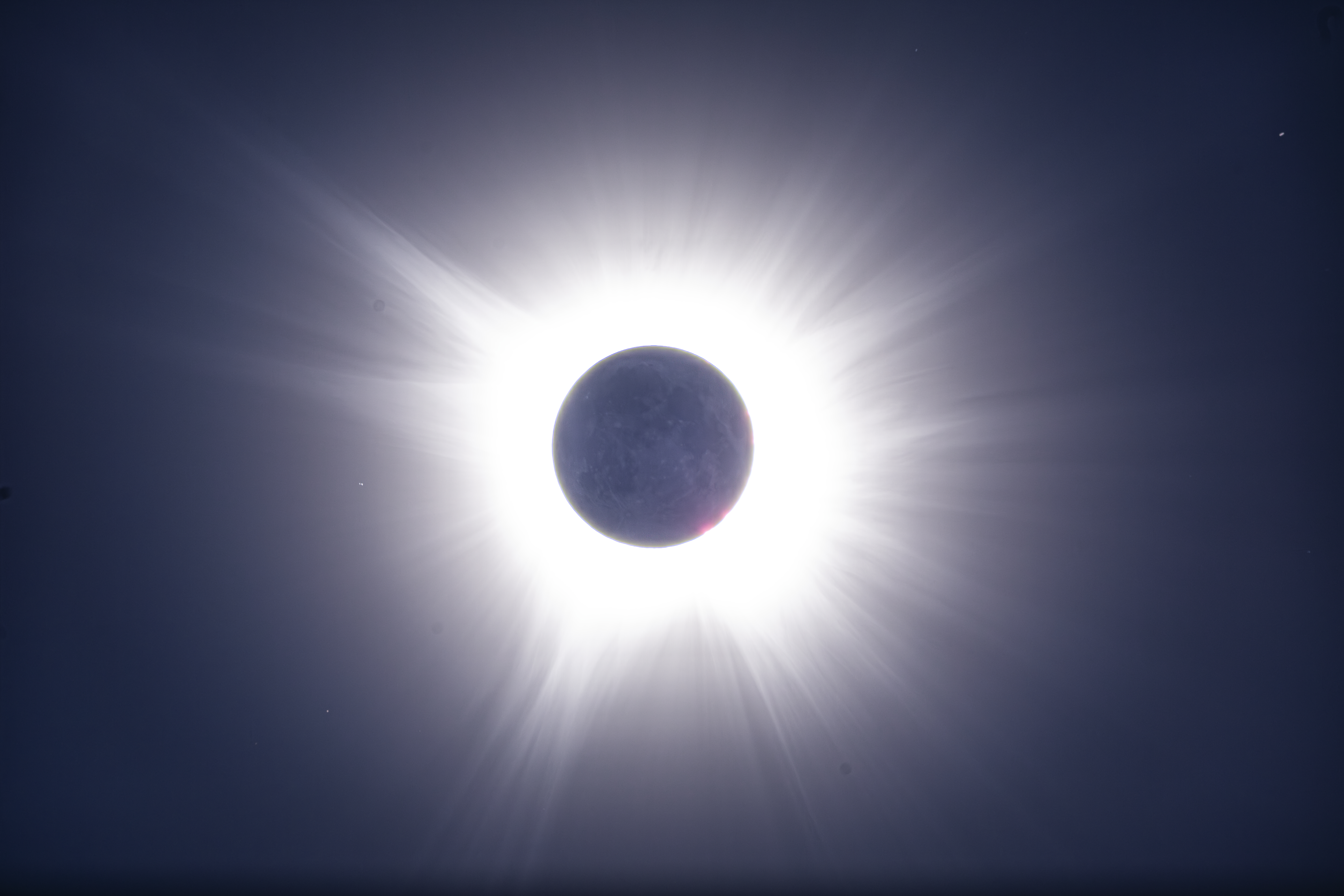
This page describes an image Moon covering the Sun
شرح الصورة:
Moon covering the Sun during the total solar eclipse of April 8th, 2024. The solar corona is also visible at totality. Image taken in Arkansas, USA. This image was processed using a Larson-Sekanina-style technique. Multiple exposures ranging from 1/500 second to 4 seconds were stacked and combined with a rotational gradient filter to reveal fine structural detail across the corona's extreme brightness range. This is done because the inner corona saturates at longer exposures, while the outer corona and the Moon are only visible at those same longer exposures.
انتقل إلى الشروح بلغات أخرى
مصدر الصورة: Carolin Liefke
شروح بلغات مختلفة:
الإنجليزيّة
شرح الصورة: Moon covering the Sun during the total solar eclipse of April 8th, 2024. The solar corona is also visible at totality. Image taken in Arkansas, USA. This image was processed using a Larson-Sekanina-style technique. Multiple exposures ranging from 1/500 second to 4 seconds were stacked and combined with a rotational gradient filter to reveal fine structural detail across the corona's extreme brightness range. This is done because the inner corona saturates at longer exposures, while the outer corona and the Moon are only visible at those same longer exposures.
مصدر الصورة: Carolin Liefke
شرح الصورة: Moon covering the Sun during the total solar eclipse of April 8th, 2024. The solar corona is also visible at totality. Image taken in Arkansas, USA. This image was processed using a Larson-Sekanina-style technique. Multiple exposures ranging from 1/500 second to 4 seconds were stacked and combined with a rotational gradient filter to reveal fine structural detail across the corona's extreme brightness range. This is done because the inner corona saturates at longer exposures, while the outer corona and the Moon are only visible at those same longer exposures.
مصدر الصورة: Carolin Liefke