Loading...

مصطلح في المعجم: المرصد

الوصف: المرصد هو موقع أو مبنى مخصص للأرصاد الفلكية. وعادةً ما تُجرى عمليات الرصد البصري والأشعة تحت الحمراء باستخدام تلسكوبات موضوعة في قباب لحمايتها أثناء الطقس السيئ. غالبًا ما توضع التلسكوبات الراديوية وبعض التلسكوبات تحت الحمراء في الخارج. تُنصب المراصد الفلكية الحديثة الأرضية أو البصرية أو تحت الحمراء أو تحت الحمراء أو تحت المليمترية على قمم الجبال فوق أكبر قدر ممكن من الغلاف الجوي للأرض. وتحتوي هذه المراصد على أجهزة متخصصة مثل التلسكوبات والكاميرات والمطيافات.
الموقع المرتفع أقل ضرورة للمراصد الفلكية الراديوية ومراصد الأشعة الكونية. ويمكن دراسة الأجزاء الأخرى من الطيف الكهرومغناطيسي (أشعة جاما والأشعة السينية والأشعة فوق البنفسجية والأشعة تحت الحمراء ذات الطول الموجي الأطول) باستخدام تلسكوبات فضائية محددة يشار إليها أحيانًا بالمراصد أيضًا. ويمكن الجمع بين عمليات الرصد الخاصة بالتلسكوبات الراديوية في مواقع مختلفة معاً. وغالباً ما يُشار إلى هذه المواقع المتعددة مجتمعةً على أنها مرصد واحد.

مصطلحات ذات صلة:


اطّلع على هذا المصطلح بلغات أخرى

حالة المصطلح والتعريف: تمت الموافقة على التعريف الأصلي لهذا المصطلح باللغة الإنجليزية من قبل فلكي باحث ومعلم
ترجمة هذا المصطلح وتعريفه ما تزال بانتظار الموافقة

The OAE Multilingual Glossary is a project of the IAU Office of Astronomy for Education (OAE) in collaboration with the IAU Office of Astronomy Outreach (OAO). The terms and definitions were chosen, written and reviewed by a collective effort from the OAE, the OAE Centers and Nodes, the OAE National Astronomy Education Coordinators (NAECs) and other volunteers. You can find a full list of credits here. All glossary terms and their definitions are released under a Creative Commons CC BY-4.0 license and should be credited to "IAU OAE".

If you notice a factual or translation error in this glossary term or definition then please get in touch.

بلغات أخرى

وسائط ذات صلة


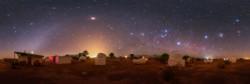
A group of observatories in-front of a dark sky. An arc of light curves from the bottom left. Several stars are visible.

Chilean observatories at home office, by Robert Barsa, Slovakia

الشرح: Third place in the 2021 IAU OAE Astrophotography Contest, category Wide star fields. This rich panoramic image shows a range of constellations, deep sky objects and planets. The brightest point of light with a pale reddish hue (left of center) is the planet Mars. In the bottom far left of the image, located just above the sloped roof of the building are two points of light appearing very close to each other, these are the planets Jupiter (brighter) and Saturn. To the far right of the image the two fuzzy cloud-like objects are the Large and Small Magellanic Clouds. These are satellite dwarf galaxies of the Milky Way located at a distance of approximately 160,000 and 200,000 light years, respectively. The Andromeda Galaxy, which is located at an approximate distance of 2.5 million light years, appears in this image as a small, angled smudge between Mars and the brightest glow on the horizon (closer to the horizon). The bright glow is not from the Sun or the Moon, but the city lights of San Pedro de Atacama. Prominent constellations include: Orion – identified by the three stars forming Orion’s Belt; Taurus – a small triangle shaped collection of stars to the left of Orion and identified by the pale orange star (Aldebaran) at the vertex of the triangle; Canis Major – to the bottom right of Orion, identified by the bright star Sirius (the brightest star in the night sky) and three stars in the shape of a triangle just above the observatory dome in the foreground; Pegasus – identified by the trapezium shape diagonally below Mars. Other constellations include Andromeda, Perseus and Aries. Diverse cultures around the world have their own names and rich stories associated with these constellations and many others. To the top right of Orion’s Belt is an angled line of stars (Orion’s Sword) within which is a pinkish smudge (looks like a fuzzy star when observed with the unaided eye) that is the Orion Nebula – a stellar nursery located 1500 light years from Earth – where stars are formed. To the left of Taurus is a compact fuzzy smudge, and that is the Pleiades star cluster. The variation in the colour of stars is the result of temperature of the stars, for example, the red orange star to the bottom left of Orion’s Belt is the red giant star Betelgeuse. Cooler stars appear redder, compared to the higher temperature white and bluish stars. The colours in the image are enhanced because of the higher sensitivity of the digital camera compared to the human eye.
المصدر: Robert Barsa/IAU OAE

License: CC-BY-4.0 المشاع الإبداعي نَسب المُصنَّف 4.0 دولي (CC BY 4.0) أيقونات
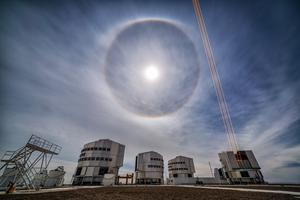

قباب التلسكوب الأربعة لـ VLT. قبة واحدة مفتوحة وتطلق أشعة الليزر. في السماء ، يحيط القمر حلقة من الضوء.

تلسكوب ESO الكبير جدًا (VLT) في مرصد بارانال وهالة القمر
الشرح: التلسكوب الكبير جدًا الموجود في سيرو بارانال في تشيلي يتكون من أربعة تلسكوبات عاكسة لكل منها مرآة أساسية بقطر 8.2 متر.. في هذه الصورة قبة احد التلسكوبات فتوحة وينطلق منها أشعة الليزر في السماء.حيث تخلق هذه الليزرات نجومًا صناعية في السماء يمكن استخدامها لضبط بصريات التلسكوب لإزالة التأثير الضبابي للغلاف الجوي للأرض. تُعرف هذه العملية بالبصريات التكيفية. فى الصورة ايضا يبدو القمر فى السماء ويظهر محاط بهالة لامعة.ويحدث هذا بسبب انعكاس الضوء من القمر داخل بلورات الجليد العالقة في الغلاف الجوي للأرض.
المصدر: خوان كارلوس مونيوز ماتيوس / ESO رابط المصدر

المشاع الإبداعي نَسب المُصنَّف 4.0 دولي (CC BY 4.0) أيقونات CC-BY-4.0 :License


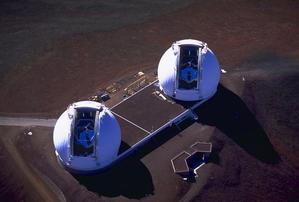
صورة  من  الاعلى لتلسكوبات كيك وترى  القباب مفتوحة ويمكن رؤية مرايا التلسكوبات بالداخل.

تلسكوبات كيك 1و2

الشرح: تلسكوبات كيك توجد على قمة جبال موناكى في جزيرة هاواي. تلسكوبات كيك 1و2 وهم عبارة عن تلسكوبين قطر المرايا الرئيسية لكل منهما 10متر.
المصدر: حقوق الصورة محفوظة لمختبر الدفع النفاث التابع ل ناسا رابط المصدر

الملكية العامة أيقونات PD :License


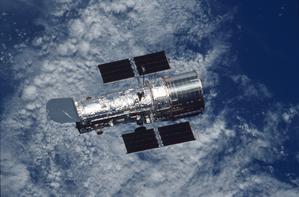
تلسكوب هابل الفضائي ذو اللون الفضي مع المحيط الأزرق والسحب البيضاء للأرض تظهر تحته.

تلسكوب هابل الفضائي فوق الكرة الأرضية
الشرح: صورة تُظهر تلسكوب هابل الفضائي التابع لناسا/وكالة الفضاء الأوروبية يدور حول الأرض. تم التقاط هذه الصورة بواسطة رواد فضاء من على متن المكوك الفضاء كولومبيا، مباشرة بعد مهمة الصيانة 3B إلى التلسكوب الفضائي نفسه. يحتوي التلسكوب على فتحة تسمح بدخول الضوء (تظهر الفتحة على يسار المشاهد). ينتقل الضوء عبر اجهزة التلسكوب البصرية إلى الكاميرات واجهزة قياس الطيف الموجودة في الانتفاخ في الطرف الآخر من التلسكوب (على يمين المشاهد). ثم يتم إرسال البيانات من هذه الأدوات إلى الأرض باستخدام هوائي. المستطيلات السوداء على جانبي المرصد هي الألواح الشمسية التي تزوده بالطاقة.
المصدر: حقوق الصورة تعود الى: وكالة ناسا الفضائية/وكالة الفضاء الاوربية رابط المصدر

المشاع الإبداعي نَسب المُصنَّف 4.0 دولي (CC BY 4.0) أيقونات CC-BY-4.0 :License


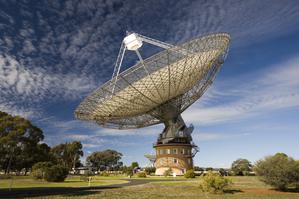
Panorama of the Parks Radio Telescope with blue sky and few thin clouds. The telescope looks like a giant satellite dish.

Parkes Radio Telescope

الشرح: The 64m Radio Telescope at Parkes Observatory (New South Wales, Australia) is fully operantional since 1963 and continuously upgraded since. Also called "The Dish", it is run by the Commonwealth Scientific and Industrial Research Organisation (CSIRO). The telescope can be pointed at a part of the sky. The radio waves from this part of the sky are then reflected and focussed by the giant dish to a receiver at the focal point. The data from this receiver can then be analysed by astronomers.
المصدر: David McClenaghan/CSIRO رابط المصدر

License: CC-BY-3.0 المشاع الإبداعي نَسب المُصنَّف 3.0 غير موطَّنة أيقونات