Astronomy Education In Schools In Practice (Secondary Schools)
Parallel Session
7th Shaw-IAU Workshop on Astronomy for Education
Session timeblocks
Tuesday Nov. 18, 2025
UTC: 5:30 p.m. -
7 p.m.
America/New_York:
12:30 p.m.-
2 p.m.
Friday Nov. 21, 2025
repeated:
UTC: 12:30 p.m. -
2 p.m.
America/New_York:
7:30 a.m.-
9 a.m.
Chair

Eduardo Monfardini Penteado
Share on:


This session will focus on practical applications of astronomy education in secondary school classrooms, highlighting successful classroom strategies and innovative teaching techniques that engage students at both primary and secondary levels.
Schedule
-
Naming an asteroid to learn beyond astronomy: A replicable proposal from classroom to community
Tuesday Nov. 18, 2025
UTC: 5:30 p.m. - 5:40 p.m. America/New_York: 12:30 p.m.- 12:40 p.m.Friday Nov. 21, 2025
UTC: 12:30 p.m. - 12:40 p.m. America/New_York: 7:30 a.m.- 7:40 a.m.This proposal presents an educational innovation in astronomy secondary education, based on the process of naming an asteroid through the IAU. The initiative originated at a public high school in Montevideo, Uruguay, where students themselves conceived, planned, and executed the entire process, resulting in the successful naming of asteroid (20054) Lágrimaríos, in honor of the renowned Afro-Uruguayan singer and activist. Through project-based learning, students combined astronomical content with technological tools, argumentative writing, and collaborative work. The experience (adaptable and replicable) integrated science and culture, fostering meaningful connections between students and their institutional and social communities.
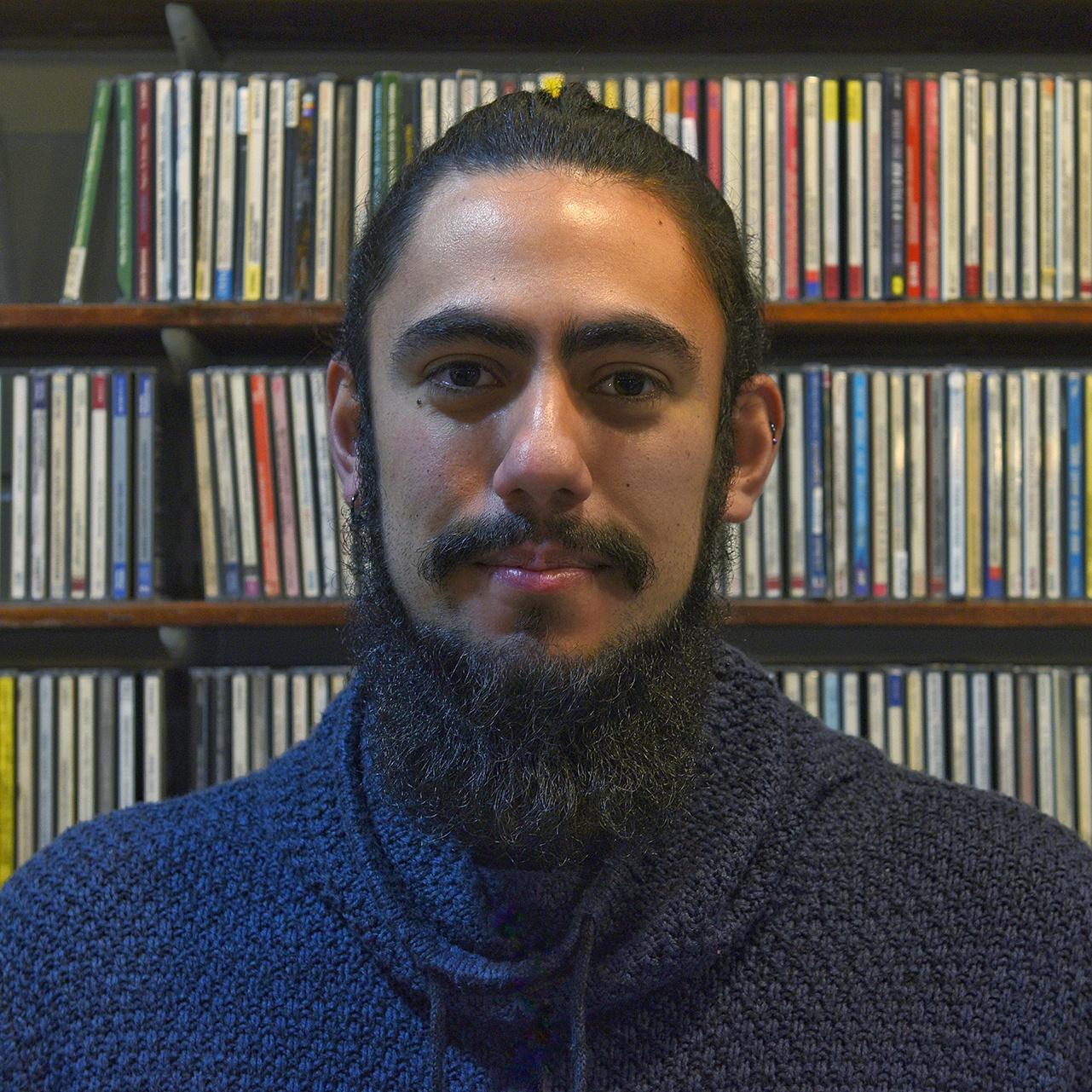
Daniel Fernández González (National Administration of Public Education (DGES-ANEP) & Los Molinos Astronomical Observatory (Ministry of Education and Culture))
For more information about this talk click here
-
A Space Exploration Experience in Schools, a STEAM Approach in Αstronomy Education
Tuesday Nov. 18, 2025
UTC: 5:40 p.m. - 5:50 p.m. America/New_York: 12:40 p.m.- 12:50 p.m.Friday Nov. 21, 2025
UTC: 12:40 p.m. - 12:50 p.m. America/New_York: 7:40 a.m.- 7:50 a.m.This presentation introduces a STEAM-based space education model implemented at Arsakeio, Greece’s oldest educational institution, engaging 150 students. Drawing on NASA’s Artemis resources, the program explored lunar landings, deep space hazards, and communications, supported by additional content to deepen understanding of the Artemis mission and its technologies. Aimed at Generation Z learners, it combined collaborative, project-based learning with the development of life skills such as creativity, critical thinking, adaptability, and teamwork. Students participated in original activities like a space gardening module simulating sustainability in space and the TardisINschool project blending astronomy, science fiction, and data exploration.
Margarita Metaxa
For more information about this talk click here
-
Exploring Solar Activity Through Classroom Exercises Using Recent Sun Data
Tuesday Nov. 18, 2025
UTC: 5:50 p.m. - 6 p.m. America/New_York: 12:50 p.m.- 1 p.m.Friday Nov. 21, 2025
UTC: 12:50 p.m. - 1 p.m. America/New_York: 7:50 a.m.- 8 a.m.The Sun and its activity were selected as key themes this year. I developed four classroom exercises for middle and high school students focusing on sunspots, solar rotation velocity, and Coronal Mass Ejection (CME) speeds. These activities use the JHelioviewer visualization software and are based on the analysis of recent solar data. The exercises were implemented in three middle school classes and complemented with outdoor solar-related activities. In this talk, I will discuss the strengths and limitations of these exercises and the qualitative feedback from students and teachers. A scientific paper describing the activities is currently in preparation.
Dunja Fabjan (University of Ljubljana and Zavod Cosmolab)
For more information about this talk click here
-
Manayantra: Using a traditional astronomy instrument as a teaching aid
Tuesday Nov. 18, 2025
UTC: 6 p.m. - 6:10 p.m. America/New_York: 1 p.m.- 1:10 p.m.Friday Nov. 21, 2025
UTC: 1 p.m. - 1:10 p.m. America/New_York: 8 a.m.- 8:10 a.m.As a part of a special research summer school for school students at the Indian Institute of Astrophysics, a team of students constructed a Manayantra, a traditional Indian instrument for measuring angles in the sky, dating back two centuries. This talk will discuss how it was made, calibrated, and used for measurements during the project by the students. It will also explore how incorporating such traditional instruments from centuries ago, which are easily made, can be used as pedagogical tools to expose students to hands-on astronomical practices and link them with modern astronomy. Such projects are also an excellent method of learning about the history of astronomy and how scientific knowledge was produced in the pre-telescopic era.
Shubha B.S (Indian Institute of Astrophysics)
For more information about this talk click here
-
Bringing Galaxy Photometry into Classrooms: A Hands-On Approach Using RGB LEDs and Consumer Cameras
Tuesday Nov. 18, 2025
UTC: 6:10 p.m. - 6:20 p.m. America/New_York: 1:10 p.m.- 1:20 p.m.Friday Nov. 21, 2025
UTC: 1:10 p.m. - 1:20 p.m. America/New_York: 8:10 a.m.- 8:20 a.m.We present a hands-on classroom activity simulating galaxy photometry with RGB LEDs (blue=starburst, red=quiescent, white=star-forming) behind diffusers, using consumer cameras and colour filters. Students capture filtered images, analyse them in ImageJ, measure colour indices, and create false-colour composites. By comparing their results to models, they learn how astronomers use colours to determine galaxy types and star formation histories. This approach demonstrates photometric techniques while connecting LED measurements to real galaxy evolution concepts. The activity bridges theory and observation, with natural extensions to professional datasets like SDSS. Designed for secondary schools, it makes authentic astronomy accessible through everyday materials and open-source tools.
Jana Bogdanoska (Ss Cyril and Methodius University in Skopje)
For more information about this talk click here
-
Euclid mission goes to school!
Tuesday Nov. 18, 2025
UTC: 6:20 p.m. - 6:30 p.m. America/New_York: 1:20 p.m.- 1:30 p.m.Friday Nov. 21, 2025
UTC: 1:20 p.m. - 1:30 p.m. America/New_York: 8:20 a.m.- 8:30 a.m.Cosmology, the study of billions of galaxies, dark matter and dark energy, offers goals that captivate the public but are hard to explain. These topics aren’t part of the Italian school curriculum, so middle and high school students aren’t prepared for them. We developed educational resources for Italian schools to explain basic cosmological concepts through hands-on experiments. They support both researchers visiting classes and teachers, using the appeal of the Euclid mission. The initiative is funded by ASI via the ESERO Italia programme, a joint ASI-ESA effort that trains teachers and inspires students towards scientific careers through STEM activities and events, all set within the fascinating context of space.
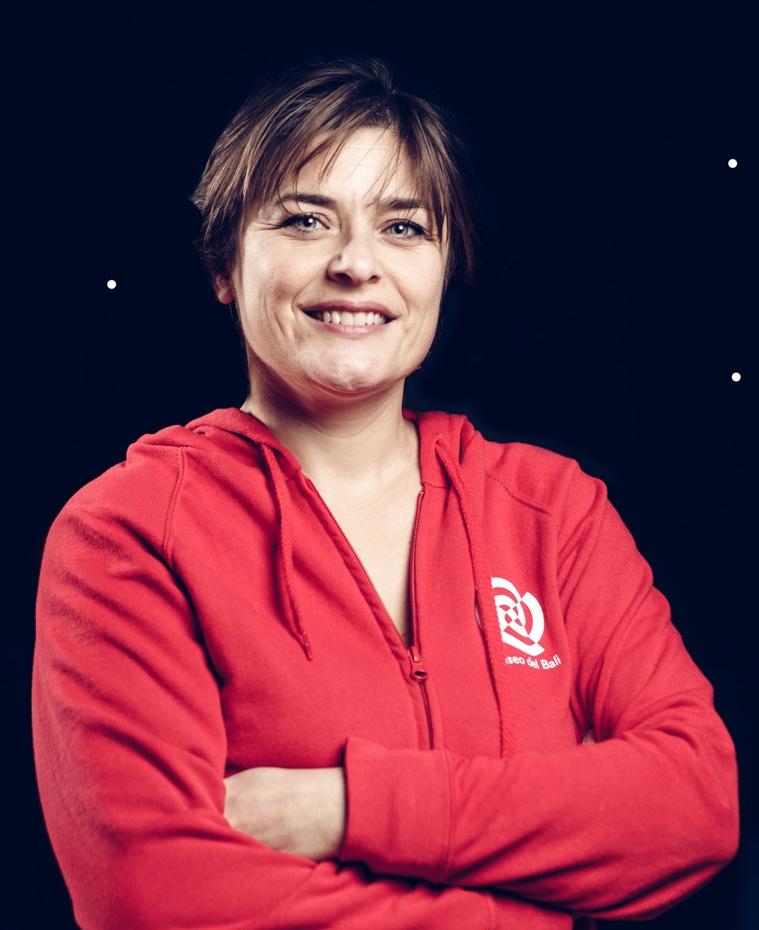
Francesca Cavallotti (Museo del Balì, Ufficio ESERO Italia)
For more information about this talk click here
-
Discussion Panel: Astronomy Education in Practice (Secondary Schools)
Tuesday Nov. 18, 2025UTC: 6:30 p.m. - 7 p.m. America/New_York: 1:30 p.m.- 2 p.m.
Friday Nov. 21, 2025
UTC: 1:30 p.m. - 2 p.m. America/New_York: 8:30 a.m.- 9 a.m.Chair:
Eduardo Monfardini Penteado
Panel: Daniel Fernández González
(National Administration of Public Education (DGES-ANEP) & Los Molinos Astronomical Observatory (Ministry of Education and Culture)), Margarita Metaxa , Dunja Fabjan
(University of Ljubljana), Shubha B.S
(Indian Institute of Astrophysics), Jana Bogdanoska
(Ss Cyril and Methodius University in Skopje), Francesca Cavallotti
(Museo del Balì, Ufficio ESERO Italia)
Posters
-
AstroClases legacy: An astronomy curriculum for high-school students in Peru
Victor Vera (Seminario Permanente de Astronomía y Ciencias Espaciales, Universidad Nacional Mayor de San Marcos)
AstroClases was founded by three young Peruvian astronomers during the COVID-19 pandemic to address the needs of secondary school students, particularly those from underserved areas. With financial support from the OAD-IAU this was a part of the project called: "Ask An Astronomer". Over the years, we have gathered significant insights, refined our methodology, and developed a comprehensive astronomy curriculum tailored to the Peruvian school system and its unique needs. Today, AstroClases have made a substantial impact on STEM education in our country. In this presentation, we will showcase our best practices, the educational resources we have created, and the goals we have achieved.
-
ASTRONOMY CURRICULUM FOR LOWER SECONDARY SCHOOL LEVEL
Felicia Calmuc (PALATUL COPIILOR CRAIOVA)
After the astronomy curriculum for primary level, the one for lower secondary level has been recently approved by the Romanian Ministry of Education. Therefore, teachers interested in astronomy education from all over Romania are preparing to implement it in their schools under the direct coordination of the Romanian NAEC and national inspector for Mathematics and Astronomy at the Ministry of Education, Elisabeta Ana Naghi. There will be a Romanian session as part of the 7th Shaw IAU Workshop, session dedicated to teacher training regarding the implementing of astronomy curriculum for secondary level and numerous Romanian educators from the field of astronomy education are expected to take part in it.
-
Astronomy in the Classroom: Bringing the Universe to Public Schools in Ecuador
Daysi Quinatoa Bringing astronomy education to Ecuadorian public schools with classroom visits. (Observatorio Astronómico de Quito)
Our initiative, Astronomía en el Aula (Astronomy in the Classroom), brings astronomy education to Ecuadorian public schools through interactive visits, hands-on activities, and telescope observations. Starting in Quito, the program has expanded with support from local educators and the Ministry of Education. We introduce basic astronomy concepts, foster curiosity, and give many students their first view of the sky. By integrating astronomy into curricula, we aim to inspire future scientists and promote equity and inclusion in STEM.
-
Calculating the Habitable Zone: Astrophysics for School Students.
Victor Vera (Seminario Permanente de Astronomía y Ciencias Espaciales, Universidad Nacional Mayor de San Marcos)
Using data on the luminosity of stars from astrophysical catalogues, along with foundational concepts of theoretical astrophysics and radiative transfer at a secondary school level, we have developed a lesson to inspire students to pursue their passion for science. We show them how to search for habitable worlds and explain how a planet, which we assume emits radiation as an ideal black body, can support liquid water after absorbing energy from its host star. By considering the different spectral classes of stars, we guide students in determining the habitable zone.
-
CNAO Development and its Implications for Astronomy Education in Secondary Schools
Fang Yuanyuan (Beijing Planetarium)
The Chinese National Astronomy Olympiad is a major nationwide initiative in youth astronomy education, offering a platform for enthusiasts and educators to exchange ideas and engage in scientific exploration. Using participation data from 2003 to 2025, this report outlines the competition’s development, current status, and key challenges. Based on a 2023 questionnaire survey of national finalists, we analyze its role in astronomy popularization. The Olympiad aligns closely with the current landscape of youth astronomy education, contributing to science education reform, resource enrichment, and the cultivation of outstanding secondary school astronomy talent.
-
Cosmos in the Classroom: Creative Pathways for Teaching Astronomy in Schools
Ruban K (M.Sc. Physics Student, Bharathidasan University)
This poster presents an interdisciplinary approach to astronomy education, combining simulation-based learning, storytelling, and visual art to introduce core astronomical concepts at the secondary school level. Drawing from practical outreach activities and hands-on workshops, it illustrates how low-cost digital tools and analog activities such as, planet motion simulations, constellation art, and narrative-based science communication can be used to demystify complex topics like stellar evolution, the cosmic scale, and gravity. The model encourages creativity and critical thinking, making astronomy both accessible and inspiring for young learners, especially in under-resourced school environments.
-
Democratising the Cosmos: How TASS is Making Astronomy Reach Underprivileged Students & Rural
balakrishnan srikumar
The Tamil Nadu Astronomy and Science Society (TASS) is breaking barriers by democratising astronomy education for underprivileged students and rural communities. In a first-of-its-kind initiative, TASS has introduced structured astronomy classes in Tamil Nadu’s government model schools, equipping them with telescopes, activity kits, and visits by trained educators. Its "Astronomy at Doorstep" campaign brings stargazing to 5000+ villages individual events 2 M reach, engaging rural and urban underprivileged. Key achievements include low/no -cost hands-on and live celestial observations. By making astronomy accessible beyond urban elites, TASS fosters scientific curiosity in marginalised groups, proving that the universe belongs to everyone.
-
DID MAN REALLY GO TO THE MOON? A DISCUSSION ABOUT HUMAN MISSIONS TO THE MOON BASED ON ASTROPHOTOGRAP
Aline Tiara Mota (Federal Institute of Southern Minas Gerais - Três Corações campus)
This paper discusses two arguments widely used by supporters of conspiracy theories about the space missions that took man to the Moon. The first claims that the images produced at the time are of high quality, which would not be possible at the time. The second claims that the photos taken on the Moon do not show any star, implying the images were taken in a studio. To demonstrate that these claims have no scientific basis, we developed activities for middle school classes to discuss the technology of the trips and how cameras work. These activities can be applied using the Science, Technology, Engineering, Arts and Mathematics (STEAM) methodology. Students are expected to understand the historical context and how such claims can be disproved through astrophotographs.
-
Dissecting Cultural differences in Learning: How to promote engagement in lecture-based environment
Matipon Tangmatitham (National Astronomical Research Institute of Thailand (NARIT))
We often assume that teaching materials can simply be translated from one language to the next. However, this couldn't be further from the truth, as learning comes with deep cultural aspects to it. Here, we attempt to discuss the challenges behind adapting one learning culture into another. Classrooms in certain regions tend to be much more one-directional and allow for less engagements. Implementing engaging activities in this environment comes with tremendous challenge and a lot of adaptations are required to deliver a successful engagement. In this talk, the author attempts to share upon his experiences and discusses some of the "hacks" in which we can slowly get students to become more familiar with "active" learning style in the classroom culture that are not accustomed to one.
-
Educational interfaces of astronomy: sky observation within the “Tatu-do bem” outreach project
Newton Figueiredo (Universidade Federal de Itajubá)
The “tatu-do bem” (the good armadillo) outreach project is a space for the exchange of knowledge between the university and society, integrating professionals to promote comprehensive health, valuing real-life contacts, expanding the sense of belonging, implementing behaviors that strengthen group coexistence and contribute to quality of life. In this context, we held a sky observation session in which students observed constellations, planets, the Moon and some satellites. Since the armadillo digs its own paths with strength and determination, “tatu-do bem” means recognizing someone who is healthy and well, building their journey with courage and good choices. This sky observation activity was an opportunity for participants to connect themselves to the universe and to their own health.
-
Fostering Interest in Astronomy Education Through Co-Curricular Activities: An Experience in Malaysi
Raihana Abdul Wahab (Universiti Malaya)
School co-curricular activities are effective avenues for fostering students' interest in astronomy. Often, teachers and school resources are fully occupied with delivering the required curriculum, leaving little time or insufficient knowledge to develop astronomy-related programs. To address these challenges, this project has been initiated to support teachers by providing resources and training with assistance from qualified astronomers. A module called "Modul Celik Falak" has been created in Bahasa Malaysia, featuring five main activities related to astronomy. The project has received positive feedback from participating teachers and students, highlighting that astronomy offers an engaging way to explore scientific concepts beyond the standard curriculum.
-
Galactic archaeology in school biology: teaching with real data from frontier astrophysics.
Alarcón Barraza Jocelyn (Augustinian School of El Bosque, CIRAS, YEMS, University of Santiago de Chile (USACH))
A didactic sequence on galactic archaeology was implemented in a high school biology class using real astrophysics data. Students explored the life cycles of stars and their chemical evolution, drawing parallels with biological evolution. In Class 1, "From the Cosmos to Life," they used a tool called "Star in a Box" to simulate stellar evolution. In Class 2, "Discovering Cosmic Fossils," they analyzed metallicity data to understand the age and evolution of stars. Results showed students recognized that stellar evolution depends on mass and that chemical elements are formed in stars. They linked cosmic and biological evolution, shifting their perception of biology’s connection to astronomy. The project aims to inspire interdisciplinary teaching strategies and expand its use among educators.
-
Integrating Astronomy into Everyday STEAM Lessons
Reja Thapa (Nepal Astronomical Society, Saraswati Niketan Secondary School)
Half a decade ago, my astronomy journey began as a NASO mentee. The scarce chances I once faced now drive me to embed astronomy in daily teaching. This paper shows how limits spark innovation, outlining classroom tactics that turn NASO tools—sundials, planispheres, telescopes—into bridges among astronomy, physics, maths and wider STEAM outreach. Students map shadows, model orbits and gather data to tackle quantitative tasks. Evidence of stronger engagement and understanding proves that simple, low-cost, student-led actions can close learning gaps and ignite deeper curiosity. By converting personal constraints into creative energy, teachers can build dynamic, inclusive lessons that widen each learner’s sense of possibility.
-
Investigative Experiments for Teaching Astronomy in Basic Education
Ana Cecília Soja (Instituto Federal Fluminense - Campus Bom Jesus do Itabapoana)
Astronomical observations have driven major scientific revolutions, yet astronomy experiments remains insufficiently explored in basic education. This study investigates whether inquiry-based experiments can enhance the teaching of astronomy in secondary level. Two key experiments were used: (1) measuring the speed of light through Io’s occultation and (2) empirically deriving Kepler’s Laws. Both were conducted using the Stellarium sky simulation software. Activities were tested with small student groups, and learning outcomes were assessed through diagnostic evaluations. Results suggest these methods enhance learning, especially among high-performing students.
-
Lighting the Path to the Stars: Astronomy Outreach Initiatives by Space Education Research Lab
Yawar Abbas (Research Associate at National Center of GIS & Space Applications, Institute of Space Technology, Islamabad)
Astronomy and space science remain largely absent from Pakistan’s national curricula, limiting public engagement with these vital STEM fields. To address this, the Space Education Research Lab (SERL) of the National Center of GIS and Space Applications at the Institute of Space Technology (IST), Islamabad, was established to promote scientific curiosity and enhance astronomy literacy. SERL’s inclusive outreach model aligns with HEC Vision 2025, IAU’s Astronomy for Development framework, and UN SDGs 4 and 5. Through bilingual resources, astronomy camps, teacher training, internships, school visits, summer camps, and public stargazing, SERL promotes nationwide awareness. This talk presents SERL’s achievements and model as a scalable approach for astronomy education in developing countries.
-
Practical Astronomy Education for Secondary Students through Outreach Activities & Citizen Science
Abdullah Mohamed Aathil (University of Jaffna)
Astronomy inspires scientific curiosity among students. In Sri Lanka, where many schools lack advanced resources, we developed a practical, inclusive model for secondary astronomy education. It combines hands-on activities, citizen science projects like SciStarter and Zooniverse, and cultural relevance through local star lore. Activities include night sky observations, interactive models, and crafts such as star wheels and sundials, helping students grasp abstract concepts. This approach empowers students to contribute to real research, boosts participation in astronomy clubs, and increases interest in STEM. Our low-cost, adaptable model offers effective strategies for diverse educational settings.
-
Results of the First Astronomical Science Writing Contest for High-school Students Worldwide
William H. Waller (Endicott College, The Galactic Inquirer, IAU/OAE/US-NAEC)
Herein, I discuss results of the first astronomical science writing contest for high-school students worldwide. The contest was hosted by The Galactic Inquirer – a free online journal on diverse topics in astronomy and space exploration. Our partners included the American Astronomical Society – America’s largest organization of astronomers, the IAU’s Office of Astronomy for Education, the Slooh remote telescopes service, and volunteers from the Gloucester Area Astronomy Club. The key result is that everything worked – albeit on a small scale. To scale-up the program, it will be necessary to develop more robust mechanisms for widespread promotions, greater numbers of qualified reviewers, more prizes, and the funding to support these efforts. All input in these regards is most welcome.
-
Teaching Image Stacking in Radio Astronomy with Low-Cost Classroom Tools
Carlos Alberto Pereira da Silva (Brazilian Educational Radioastronomy Group)
This educational activity introduces high school students to the concept of image stacking, a common technique in radio astronomy used to improve observational results by combining multiple images of the same object. The workshop simulates this process through a hands-on activity involving image colorization, using accessible school resources such as colored pencils, cell phones, scanners, and a computer. Students individually color observed images based on a reference image. These are then digitized and processed using Python, producing a final stacked image that approximates the original reference.
-
The Penn State Inservice Workshops in Astronomy (PSIWA)
Niel Brandt (Penn State University)
The PSIWA, now operating for 20+ years, are week-long summer workshops for Pennsylvania high-school physics and Earth/space science teachers aimed at helping them teach their students about galaxies, black holes, cosmology, stars, and other topics. They serve as a high-leverage method of improving understanding of astronomy; each of the attending teachers will teach hundreds of students. Teachers from diverse, under-served school districts are specifically recruited with scholarship funds. The PSIWA programs include lectures on subject material, discussions of pedagogical approaches, hands-on activities, nighttime observing, and guest presentations. I will describe the accomplishments of the PSIWA, their future prospects, and broader lessons learned.