This page describes an image The Wild Duck Open Cluster
Descargar archivo ( imagen 472.01 kB)
Pie de foto:
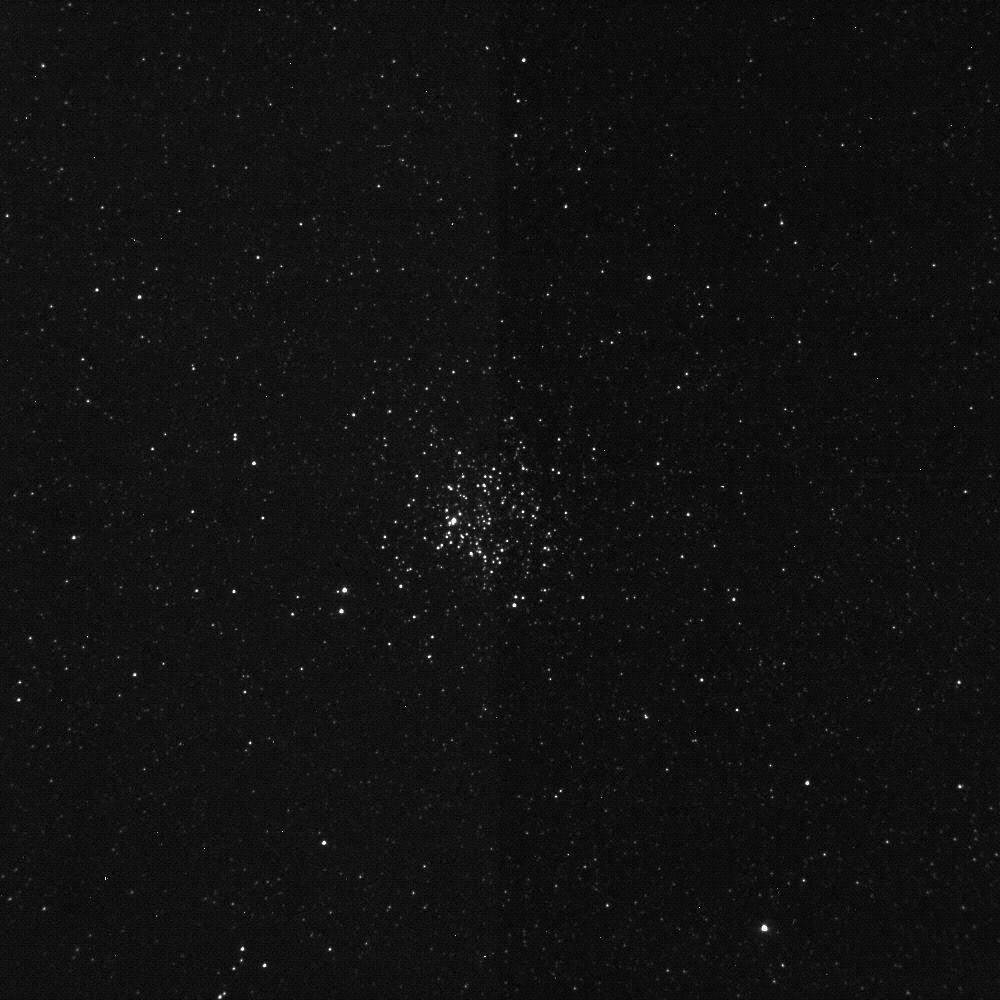
This image shows the Wild Duck Cluster (also known as Messier 11 or M11), a bright grouping of stars that forms what astronomers call an open cluster in our Milky Way galaxy. Open clusters are collections of stars that were born from the same giant cloud of gas and dust and are still loosely held together by gravity. Most open clusters will slowly fall apart over hundreds of millions of years are they orbit through the galaxy. In this view, hundreds of stars appear close together against the dark background of space, with many shining at different brightnesses depending on their size and temperature.
The Wild Duck Cluster lies about 6,000 light-years from Earth and is around 300 million years old. Because the stars in an open cluster share a common origin, astronomers can use them as laboratories for testing theories on stellar evolution and behaviour.
Desplázate hasta los subtítulos en otros idiomas
Crédito de la imagen: NASA/JPL Enlace del crédito
Términos relacionados del glosario:
Cúmulo abierto
, Objeto Messier
Licencia de la imagen: Dominio público Dominio público íconos
Las descripciones de los archivos multimedia que aparecen en la página web de la OAE han sido redactadas, traducidas y revisadas gracias al esfuerzo conjunto de la OAE y los Centros y Nodos de la OAE, los Coordinadores Nacionales de Educación Astronómica (NAECs) y otros voluntarios. Puedes consultar la lista completa de los créditos de nuestro proyecto de traducción aquí. Todos los pies de foto de los archivos multimedia se publican bajo una Creative Commons CC BY-4.0 licencia y deben atribuirse a la "IAU OAE". Los propios archivos multimedia pueden tener diferentes licencias (véase más arriba) y deben citarse tal y como se indica en "credit".
Pies de foto en diferentes idiomas:
Pie de foto: Dieses Bild zeigt den Wildentenhaufen (auch bekannt als Messier 11 oder M11), eine helle Sternengruppe, die in unserer Milchstraße das bildet, was Astronomen als offenen Sternhaufen bezeichnen. Offene Sternhaufen sind Ansammlungen von Sternen, die aus derselben riesigen Gas- und Staubwolke entstanden sind und noch immer lose durch die Schwerkraft zusammengehalten werden. Die meisten offenen Sternhaufen lösen sich im Laufe von Hunderten Millionen Jahren langsam auf, während sie durch die Galaxie wandern. Auf dieser Aufnahme erscheinen Hunderte von Sternen dicht beieinander vor dem dunklen Hintergrund des Weltraums, wobei viele unterschiedlich hell leuchten, je nach Größe und Temperatur.
Der Wildentenhaufen liegt etwa 6.000 Lichtjahre von der Erde entfernt und ist rund 300 Millionen Jahre alt. Da die Sterne in einem offenen Sternhaufen einen gemeinsamen Ursprung haben, können Astronomen sie als Labor nutzen, um Theorien zur Sternentwicklung und zum Verhalten von Sternen zu überprüfen.
Crédito de la imagen: NASA/JPL
Términos relacionados del glosario: Messier-Objekt , Offener Sternhaufen Estado de la traducción de los subtítulos: Aún no ha sido aprobado por un revisor o revisora
Traductores de las leyendas: Simon Kraus
Pie de foto: This image shows the Wild Duck Cluster (also known as Messier 11 or M11), a bright grouping of stars that forms what astronomers call an open cluster in our Milky Way galaxy. Open clusters are collections of stars that were born from the same giant cloud of gas and dust and are still loosely held together by gravity. Most open clusters will slowly fall apart over hundreds of millions of years are they orbit through the galaxy. In this view, hundreds of stars appear close together against the dark background of space, with many shining at different brightnesses depending on their size and temperature.
The Wild Duck Cluster lies about 6,000 light-years from Earth and is around 300 million years old. Because the stars in an open cluster share a common origin, astronomers can use them as laboratories for testing theories on stellar evolution and behaviour.
Crédito de la imagen: NASA/JPL
Términos relacionados del glosario: Messier Object , Open Cluster
Pie de foto: Questa immagine mostra l’Ammasso dell’Anatra Selvatica (noto anche come Messier 11 o M11), un brillante gruppo di stelle che forma ciò che gli astronomi definiscono un ammasso aperto nella nostra galassia, la Via Lattea. Gli ammassi aperti sono gruppi di stelle nate dalla stessa gigantesca nube di gas e polvere e ancora tenute insieme a stento dalla forza di gravità. La maggior parte degli ammassi aperti si disgregherà lentamente nel corso di centinaia di milioni di anni mentre orbitano attraverso la galassia. In questa immagine, centinaia di stelle appaiono ravvicinate sullo sfondo scuro dello spazio, molte delle quali brillano con intensità diverse a seconda delle loro dimensioni e temperatura.
L’ammasso dell’Anatra Selvatica si trova a circa 6.000 anni luce dalla Terra e ha circa 300 milioni di anni. Poiché le stelle di un ammasso aperto condividono un’origine comune, gli astronomi possono utilizzarle come laboratori per verificare le teorie sull’evoluzione e sul comportamento stellare.
Crédito de la imagen: NASA/JPL
Términos relacionados del glosario: Ammasso aperto , Oggetto Messier Estado de la traducción de los subtítulos: Aún no ha sido aprobado por un revisor o revisora
Traductores de las leyendas: Giuliana Giobbi