This page describes an image Lunar Phase Northern Hemisphere
Descargar archivo ( imagen 1.26 MB)
Descargar archivo PDF (PDF file 416.48 kB)
Also available in black and white
Descargar archivo ( imagen 160.02 kB)
Descargar archivo PDF (PDF file 422.82 kB)
Pie de foto del diagrama:
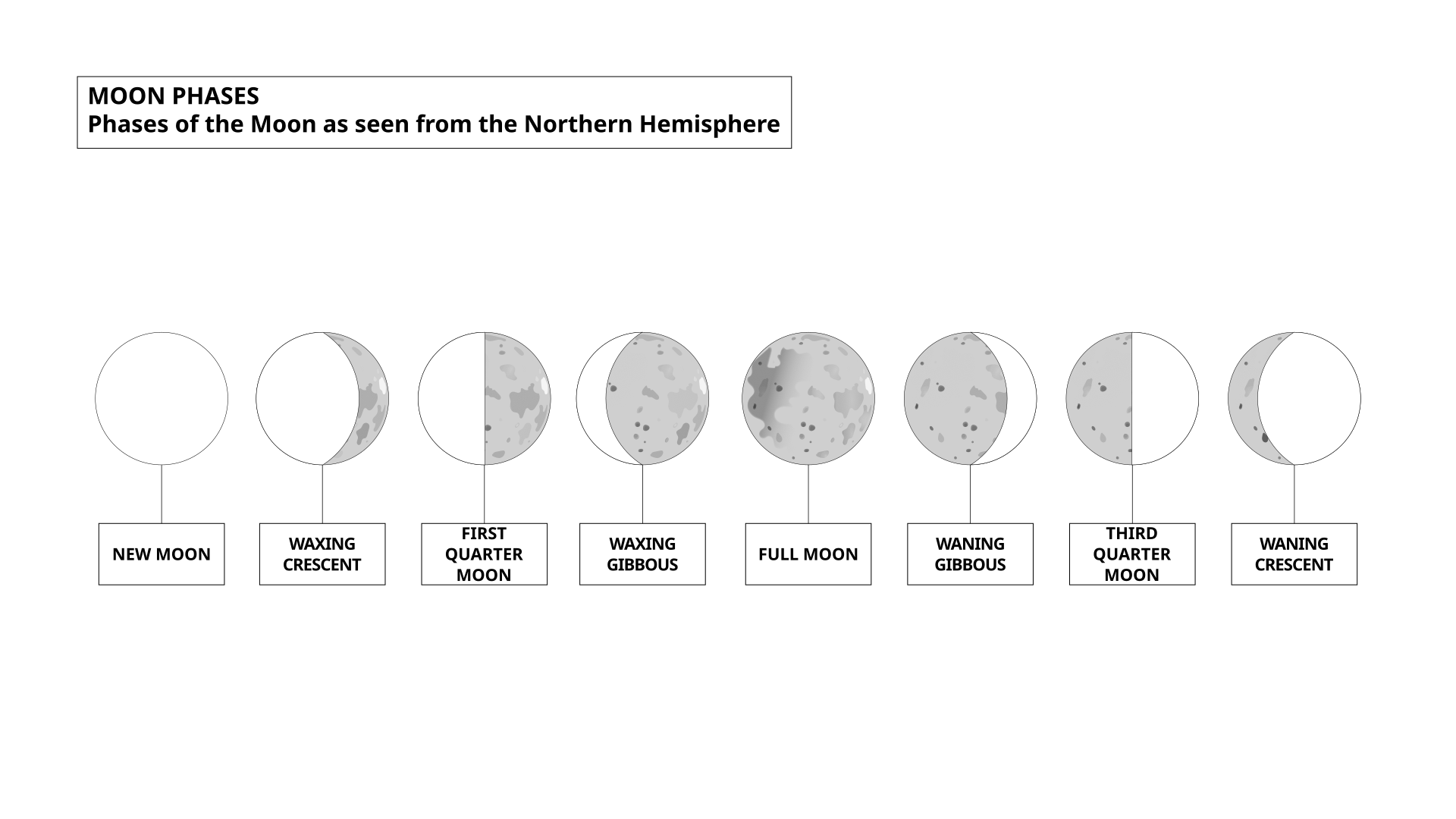
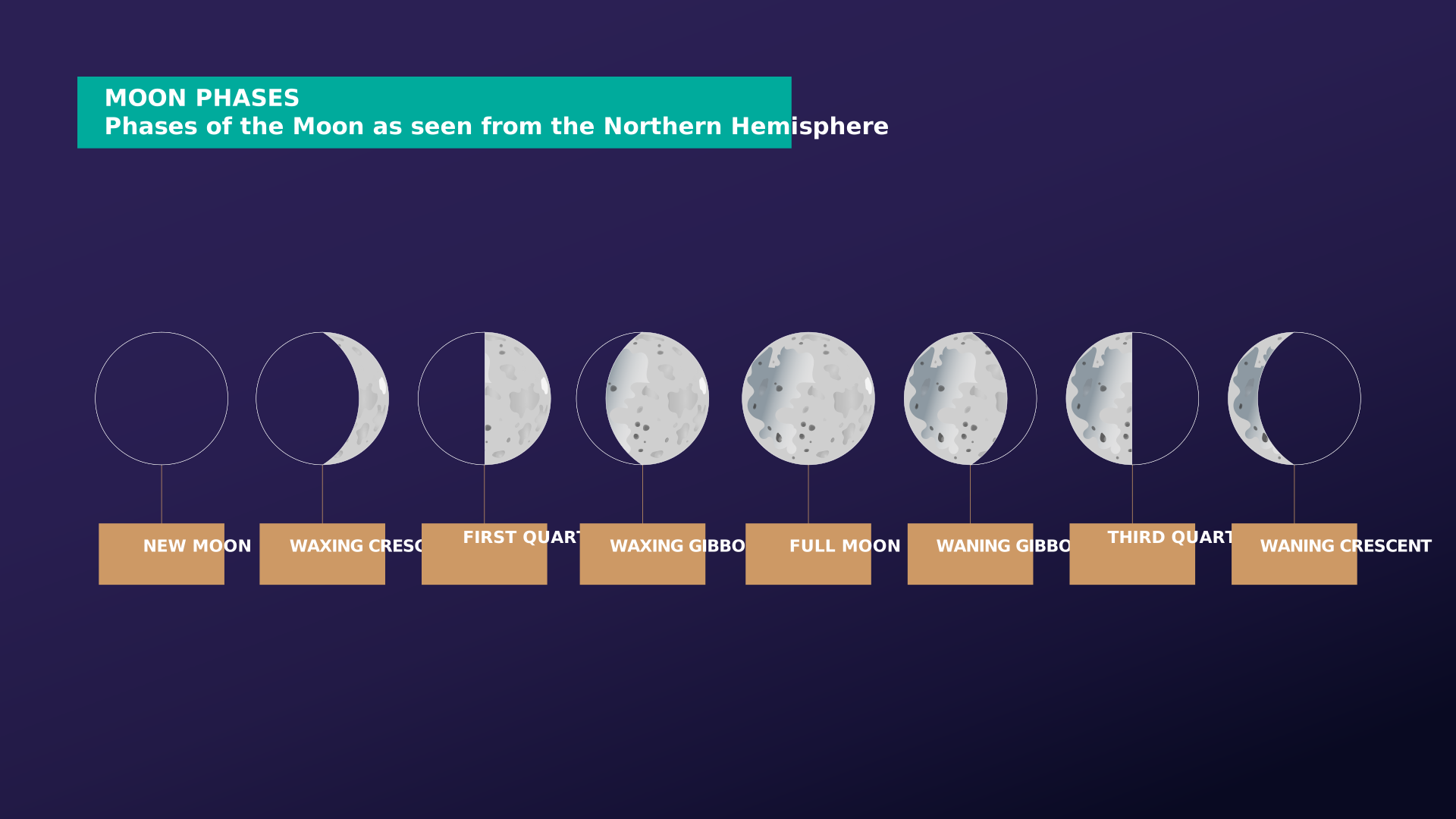
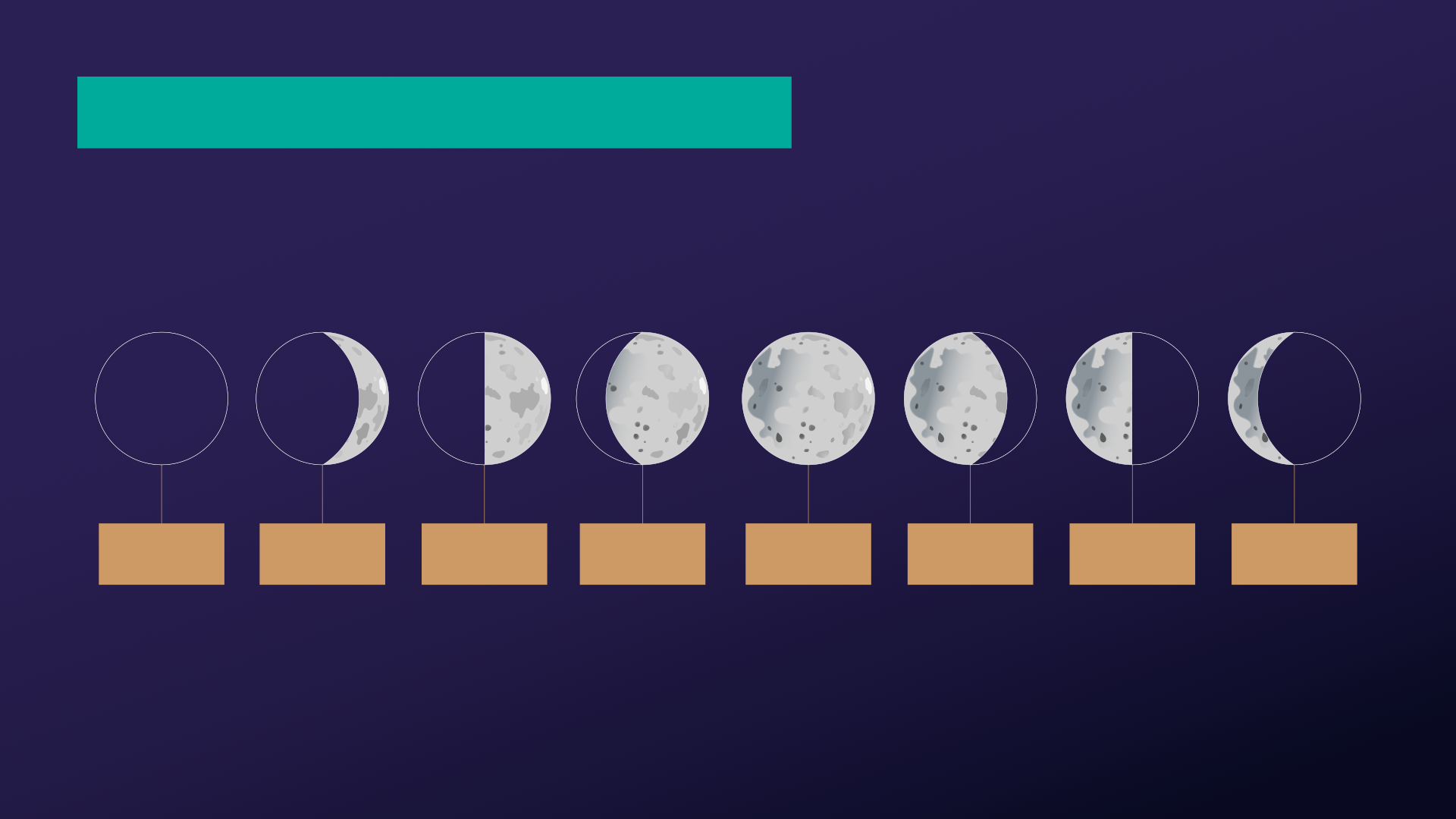
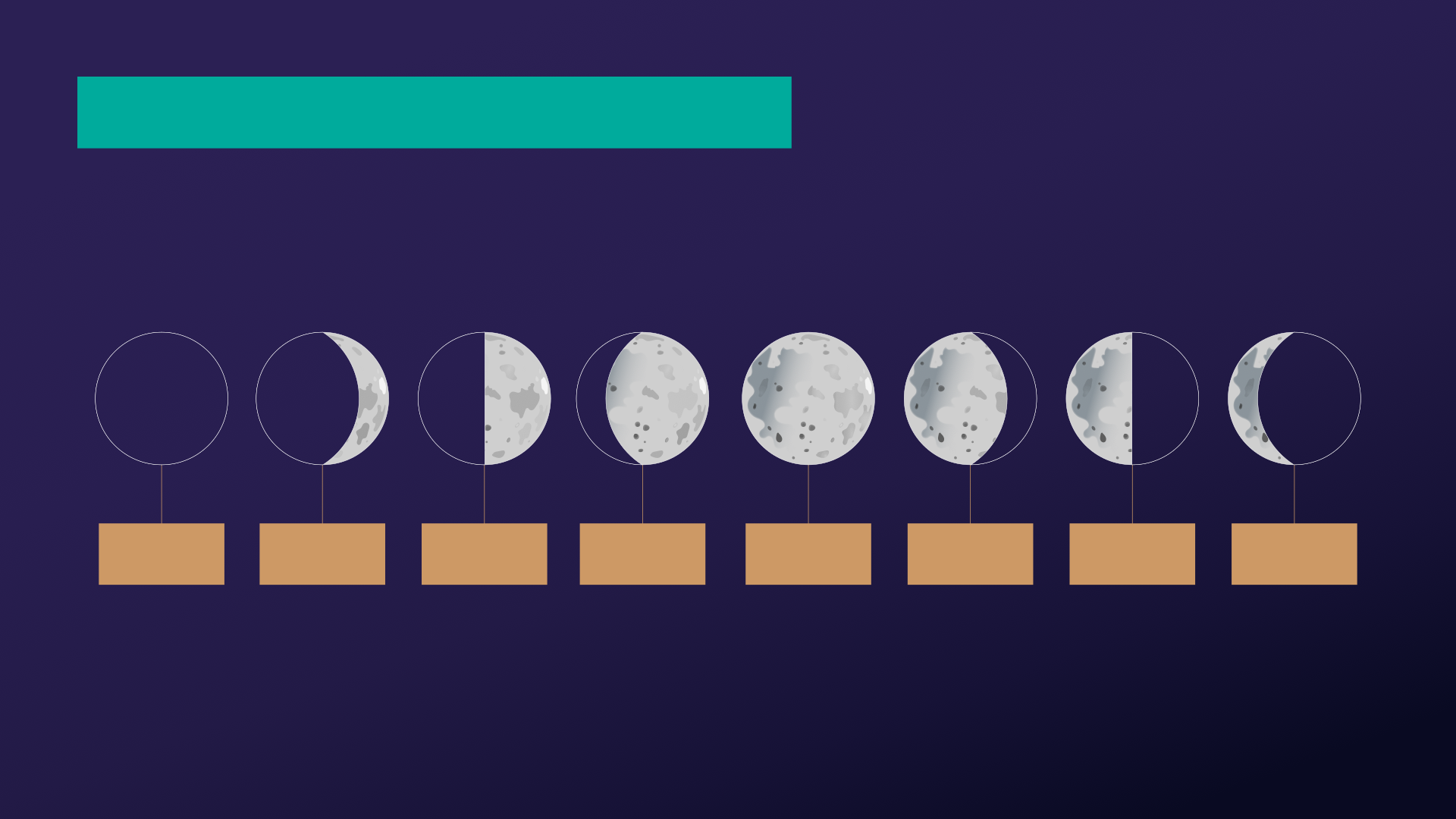
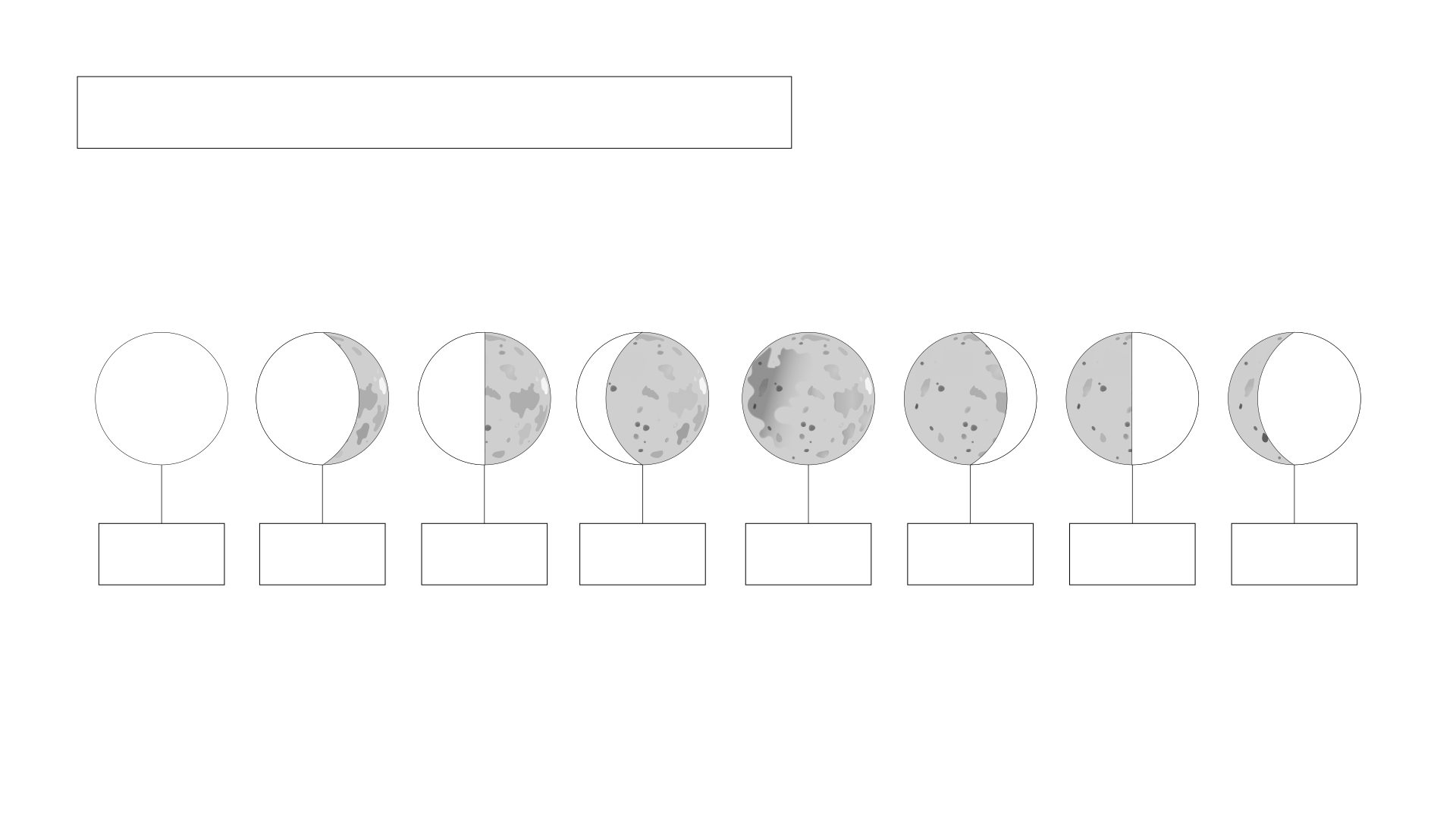
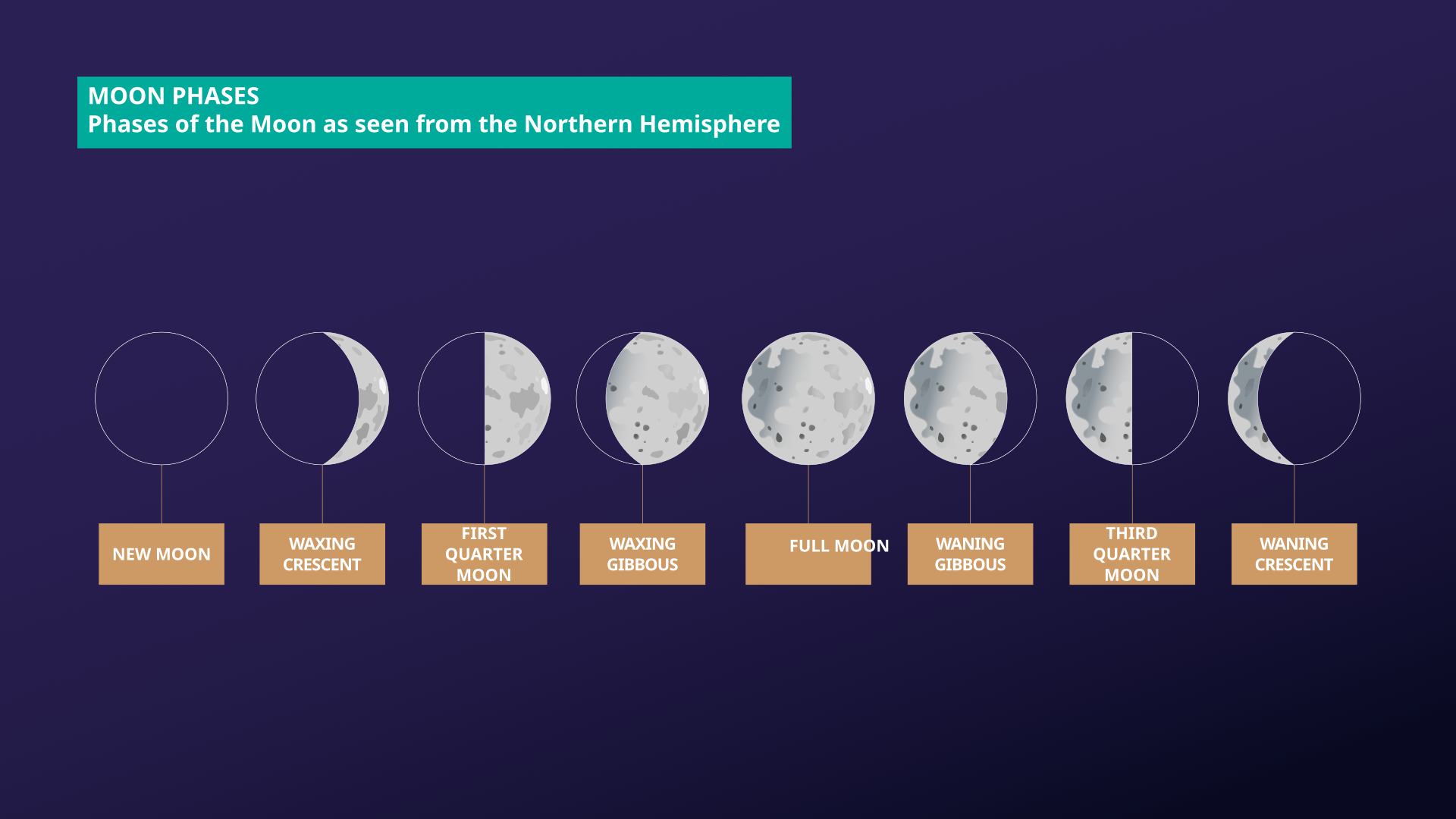
The phases of the Moon when viewed from the Northern Hemisphere. Here north is up and east is left. The Moon orbits the Earth every 29.5 days. It is tidally locked to the Earth meaning its rotation period is the same as its orbital period and the same side of the Moon always faces the Earth. At any particular time, half of the Moon is illuminated by the Sun and half is in shadow. Over the course of the Moon’s orbit around the Earth every part of the Moon is illuminated for half of the orbit and is in shadow for the other half of the orbit.
When the Moon sits between the Earth and the Sun its illuminated half faces away from the Earth and we only see the half that is in shadow. This phase of the Moon is known as new moon. As the Moon moves in its orbit, a small but growing sliver of the illuminated half of the Moon begins to be seen from the Earth. This illuminated sliver appears on the western side of the Moon’s face when viewed from Earth. This phase is known as waxing crescent moon. By a quarter of the way through the Moon’s orbit around the Earth the Moon appears 90° away from the Sun and half of the Moon’s illuminated half points toward the Earth. This phase is known as first quarter moon. As the orbit continues more than half of the Moon seen from Earth is now illuminated with a dark crescent. This phase is known as waxing gibbous moon. Once we reach the halfway point in the Moon’s orbit round the Earth the Moon is now on the opposite side of the Earth from the Sun and we see all of the Moon’s illuminated half. As the whole of the side of the Moon that faces the Earth is now illuminated this is referred to as full moon.
For the remaining half of the Moon’s orbit the half of the moon that faces the Earth begins to move into shadow. Hence the illuminated portion of the Moon that we see from Earth begins to shrink or wane. The western edge of the face of the Moon when viewed from Earth begins to appear dark and this grows through subsequent phases. The phases are repeated in reverse order: waning gibbous, third quarter, waning crescent and finally back to new moon.
Note the surface features of the Moon are illustrative and do not accurately represent the Moon’s true surface.
Crédito del diagrama Aneta Margraf/IAU OAE.
Estado de la traducción del diagrama: Aún no ha sido aprobado por un revisor o revisora
Licencia del diagrama: Creative Commons Reconocimiento 4.0 Internacional (CC BY 4.0) Creative Commons Reconocimiento 4.0 Internacional (CC BY 4.0) íconos
Términos relacionados del glosario:
Cuarto creciente
, Cuarto de luna
, Fase lunar
, Luna creciente
, Luna gibosa
, Luna gibosa creciente
, Luna llena
, Luna menguante
, Luna menguante gibosa
, Luna nueva
Categorías:
Astronomía a simple vista
¿Quieres hacer tu propia traducción o versión de este diagrama? Entonces
descarga la versión SVG
de este diagrama en inglés (501.99 kB). Puedes editarla utilizando
programas como Inkscape (gratuito) o Adobe Illustrator
(de pago). Solo recuerda citar al autor del original de forma adecuada.
Also available in black and white ( imagen 501.99 kB).
También puedes crear tu propia versión o traducción de este diagrama añadiendotexto a una versión de
este diagrama sin texto. Solo tienes que descargar uno de los siguientes archivos:
Descargar archivo sin texto( imagen 1.21 MB)
Descargar archivo PDF sin texto (Archivo PDF 1.21 MB)
Also available in black and white:
Descargar archivo sin texto ( imagen 105.62 kB)
Descargar archivo PDF sin texto (PDF file 417.26 kB)
En otros idiomas
Inglés: Lunar Phase Northern HemisphereItaliano: Fasi lunari nell'emisfero settentrionale
Alemán: Mondphasen auf der Nordhalbkugel
Los pies de foto de los diagramas que aparecen en la página web de la OAE fueron redactados, traducidos y revisados gracias al esfuerzo colectivo de la OAE, los Centros y Nodos de la OAE, los Coordinadores Nacionales de Education Astronómica (NAECs) de la OAE y otros voluntarios. Una lista completa de créditos para nuestro proyecto de traducción puede encontrarse aquí. Todos los pies de foto de los archivos multimedia se publican bajo una licencia Creative Commons CC BY-4.0 license y deben atribuirse a la "IAU OAE" como fuente. Los propios archivos multimedia pueden tener diferentes licencias (véase más arriba) y deben citarse tal y como se indica más arriba en "credit".
Si detectas algún error en este diagrama o en su pie de foto, por favor get contáctanos.