Glossar-Begriff: Pluto
Beschreibung: Pluto ist einer der Himmelskörper in unserem Sonnensystem. Er befindet sich im Kuiper-Gürtel jenseits der Umlaufbahn des Neptun. Früher war Pluto als neunter Planet des Sonnensystems bekannt, aber 2006 wurde er der Kategorie Zwergplanet zugeordnet. Entdeckt wurde er 1930 von Clyde Tombaugh. Plutos durchschnittliche Entfernung von der Sonne beträgt 6 Milliarden Kilometer (km), und sein Radius ist 1185 km (kleiner als der des Erdmondes). Ein Jahr auf Pluto entspricht 247,9 Erdjahren und sein Tag entspricht 6,4 Erdtagen.
Die NASA-Mission New Horizon war die erste Raumsonde, die 2015 an Pluto vorbeiflog. Sie lieferte den ersten genauen Blick auf seine Oberfläche und seine Atmosphäre. Die Oberfläche des Pluto ist so kalt, dass nur sehr wenig Wasserstoff in gasförmiger Form existieren kann. Das bisschen Atmosphäre, das Pluto hat, besteht hauptsächlich aus Stickstoff. Auf der Oberfläche befinden sich große Ebenen aus gefrorenem Stickstoff. Seine Atmosphäre erstreckt sich bis zu einer Entfernung von 1600 km. Pluto besteht zu 70 % aus Gestein und zu 30 % aus Eis. Er hat fünf bekannte Monde: Charon, Styx, Nix, Kerberos und Hydra.
Ähnliche Begriffe:
Dieser Begriff in anderen Sprachen
Begriffs- und Definitionsstatus Die Originaldefinition dieses Begriffes auf Englisch wurden von einem forschenden Astronom und einer Lehrkraft bestätigt Die Übersetzung dieses Begriffs und seiner Definition warten auf Prüfung und Bestätigung
The OAE Multilingual Glossary is a project of the IAU Office of Astronomy for Education (OAE) in collaboration with the IAU Office of Astronomy Outreach (OAO). The terms and definitions were chosen, written and reviewed by a collective effort from the OAE, the OAE Centers and Nodes, the OAE National Astronomy Education Coordinators (NAECs) and other volunteers. You can find a full list of credits here. All glossary terms and their definitions are released under a Creative Commons CC BY-4.0 license and should be credited to "IAU OAE".
Wenn dir ein inhaltlicher oder Übersetzungsfehler in diesem Glossarbegriff oder dieser Definition auffallen, bitte kontaktiere uns.
Ähnliche Medien
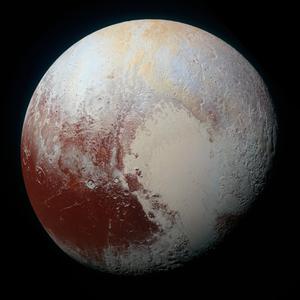
Pluto
Unterschrift: Die NASA-Raumsonde New Horizons hat diese hochauflösende, verbesserte Farbansicht des Zwergplaneten Pluto im Juli 2015 aufgenommen. Das Bild kombiniert Blau-, Rot- und Infrarotbilder, die von der Ralph/Multispectral Visual Imaging Camera (MVIC) aufgenommen wurden. Plutos Oberfläche erscheint in dieser Ansicht in einem Regenbogen aus blassen Blautönen, Gelbtönen, Orangetönen und tiefen Rottönen. Das Bild löst Details und Farben in einem Maßstab von nur 1,3 Kilometern auf.
Bild: NASA/Johns Hopkins University Applied Physics Laboratory/Southwest Research Institute
Quellenlink
License: PD Gemeinfrei Symbole
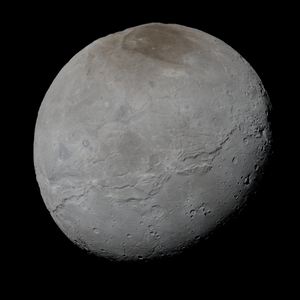
Detailansicht von Charon, einem Mond des Pluto
Unterschrift: Charon ist der größte natürliche Mond des Zwergplaneten Pluto. Diese detaillierte Aufnahme wurde 2015 von der NASA-Sonde „New Horizons“ während ihrer historischen Mission durch das äußere Sonnensystem aufgenommen. Die Oberfläche von Charon zeigt eine faszinierende Mischung aus hellen und dunklen Regionen, darunter riesige Schluchten, weite Ebenen und Einschlagkrater. Mit einem Durchmesser von etwa 1.200 Kilometern hat Charon mehr als die Hälfte des Durchmessers von Pluto und ist damit im Vergleich zu seinem Mutterkörper ungewöhnlich groß. Die Masse von Charon beträgt etwa 12 % der Masse von Pluto.
Da Pluto und Charon eine so ähnliche Masse haben, liegt der Massenschwerpunkt des Systems (der Punkt, um den sowohl Pluto als auch Charon kreisen) nicht innerhalb von Pluto, sondern zwischen Pluto und Charon. Dies steht im Gegensatz zu Systemen wie der Erde und ihrem Mond, bei denen der Massenschwerpunkt innerhalb des größeren Körpers liegt, in diesem Fall der Erde. Wissenschaftler vermuten, dass sich das Pluto-Charon-System möglicherweise durch eine Kollision zweier Objekte gebildet hat, die sich anschließend trennten und begannen, einander zu umkreisen. Durch die Untersuchung von Charon und den kleineren Monden, die Pluto umkreisen, gewinnen Astronomen Einblicke in die Entstehung von Monden und die Entwicklung weit entfernte Eiskörper über Milliarden von Jahren hinweg.
Bild: NASA/Labor für Angewandte Physik der Johns-Hopkins-Universität/Southwest Research Institute/Alex Parker
Quellenlink
License: PD Gemeinfrei Symbole
Ähnliche Aktivitäten
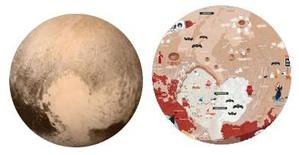
Children's Planetary Maps: Pluto & Charon
astroEDU educational activity (links to astroEDU website) Description: Learn about our furthest neighbors
License: CC-BY-4.0 Creative Commons Namensnennung 4.0 International (CC BY 4.0) Symbole
Schlagworte
Maps
, Planetary cartography
, Spatial thinking
, Charon
Altersgruppen:
6-8
, 8-10
, 10-12
, 12-14
Bildungsniveau:
Middle School
, Primary
, Secundaria
Lernbereiche:
Structured-inquiry learning
Kosten:
Low Cost
Dauer:
2 hours
Gruppengröße:
Group
Fähigkeiten:
Analysing and interpreting data
, Asking questions
, Communicating information
, Constructing explanations
, Developing and using models
, Engaging in argument from evidence
, Planning and carrying out investigations

Unterwegs im inneren Sonnensystem
astroEDU educational activity (links to astroEDU website) Description: Planetenwege stellen eine weit verbreitete (siehe: https://de.wikipedia.org/wiki/Planetenweg) Variante eines Maßstabsmodells zu Teilen des Sonnensystems dar. Ihr Zweck besteht vor allem darin, die Ausmaße und Abstände der beteiligten Himmelskörper den Wegbeschreitern eindrucksvoll zu verdeutlichen. Zudem sollen sie etwas über die betrachteten verschiedenartigen Sonnensystemobjekte erfahren. Da es sich im vorliegenden Beispiel nicht nur um Planeten handelt, wird der Terminus Sonnensystemweg verwendet. Der vorliegende WIS-Beitrag soll die Idee dieser besonderen Maßstabsmodelle etwas ausleuchten. Er soll anregen zum Nutzen oder gar Anlegen eines Sonnensystemwegs im Umkreis der Schule. Es werden Möglichkeiten aufgezeigt, die Wegstationen abwechslungsreich zu gestalten und die Schüler zu aktivieren (mögliche Beteiligung der Schüler mittels der Methode „Lernen durch Lehren“). Die mit Schulmitteln einfach zu bewerkstelligende Beobachtung von Sonnensystemobjekten (vor allem Planeten) kann durch die Begehung des Sonnensystemwegs sehr passend eingeleitet oder ergänzt werden.
Altersgruppen: 10-12 , 12-14 , 14-16 , 16-19 Bildungsniveau: Middle School , Secundaria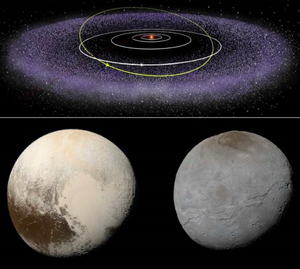
Krater zählen auf Pluto und Charon
astroEDU educational activity (links to astroEDU website) Description: Auch nach Jahren eifriger Forschung gibt der Kuipergürtel den Wissenschaftlern noch viele Rätsel auf. So stellt sich etwa die Frage: Wie viele Objekte in dieser eisigen Region am Rande des Sonnensystems lassen sich anteilig einzelnen Gruppen mit bestimmten Durchmessern zuordnen? Eine Möglichkeit, etwas darüber herauszufinden, ist die Untersuchung von Einschlagkratern auf transneptunischen Objekten (TNOs), also auf Himmelskörpern, die jenseits der Neptunbahn um die Sonne kreisen und die sich im Bereich des Kuipergürtels aufhalten. Dank der NASA-Raumsonde „New Horizons“, die am 14. Juli 2015 an Pluto und seinen fünf Monden, Charon, Hydra, Kerberos, Nix und Styx, vorbeiflog, gibt es nun erstmals hochaufgelöste Bilder des Zwergplaneten und seines größten Mondes Charon (Abb. 1), die eine eingehende Untersuchung der Oberflächenstrukturen der beiden Himmelskörper – und damit der Anzahl und Größe ihrer Einschlagkrater – erlauben. Dadurch wird auch eine statistische Betrachtung der auf Pluto und Charon vorkommenden Krater möglich. Das Ziel dieses WIS-Beitrages ist, dass die Schüler auf hochaufgelösten Bildern von Charon eine Krateranalyse durchführen und eine Kraterstatistik erstellen, um daraus wiederum die Größenverteilung der Impaktoren bzw. die Größenverteilung der Objekte im Kuipergürtel abzuleiten.
Altersgruppen: 14-16 , 16-19 Bildungsniveau: Secundaria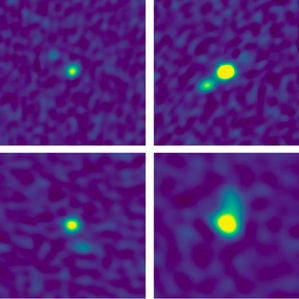
Von Eismonden zu runden Planeten
astroEDU educational activity (links to astroEDU website) Description: Eine jüngst vorgenommene genaue Beobachtung der Objekte Orcus und Eris samt jeweils einem Mond führt uns in die Welt der Kuipergürtelobjekte am Rande unseres Sonnensystems. Bei so vergleichsweise großer Entfernung lassen sich von der Erde aus nur mit großem Aufwand überhaupt Aufnahmen erstellen, in denen solche Objekte nicht nur als Punktquellen erscheinen — im Falle der neuen Beobachtungen mit dem ALMA-Observatorium in Chile. Die Beschränktheit der Beobachtungsdaten führt uns zu der Frage, welche Eigenschaften solcher und ähnlicher Himmelsobjekte man alleine auf Basis physikalischer Gesetze ableiten kann. Mithilfe eigener Experimente zu Eigenschaften von Eis und flüssigem Wasser leiten wir ein einfaches Kriterium her, ab welcher Größe Himmelsobjekte typischerweise eine runde Form aufweisen.
Altersgruppen: 14-16 , 16-19 Bildungsniveau: Secundaria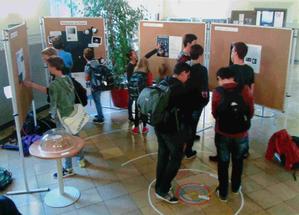
„Welcome to Pluto"
astroEDU educational activity (links to astroEDU website) Description: Im Artikel wird darüber berichtet, wie man im Rahmen einer Astronomiegemeinschaft eine aktuelle Thematik wie die Plutopassage der Raumsonde New Horizons im Rahmen einer spannenden Ausstellung in der Schulöffentlichkeit präsentieren kann. Eingegangen wird u.a. auf Fragen der Arbeitsverteilung, des Medieneinsatzes und des Designs.
Altersgruppen: 14-16 , 16-19 Bildungsniveau: Secundaria