Loading...
This page describes an image اكتشف أسرار السرعة في الفضاء!
شرح الصورة:
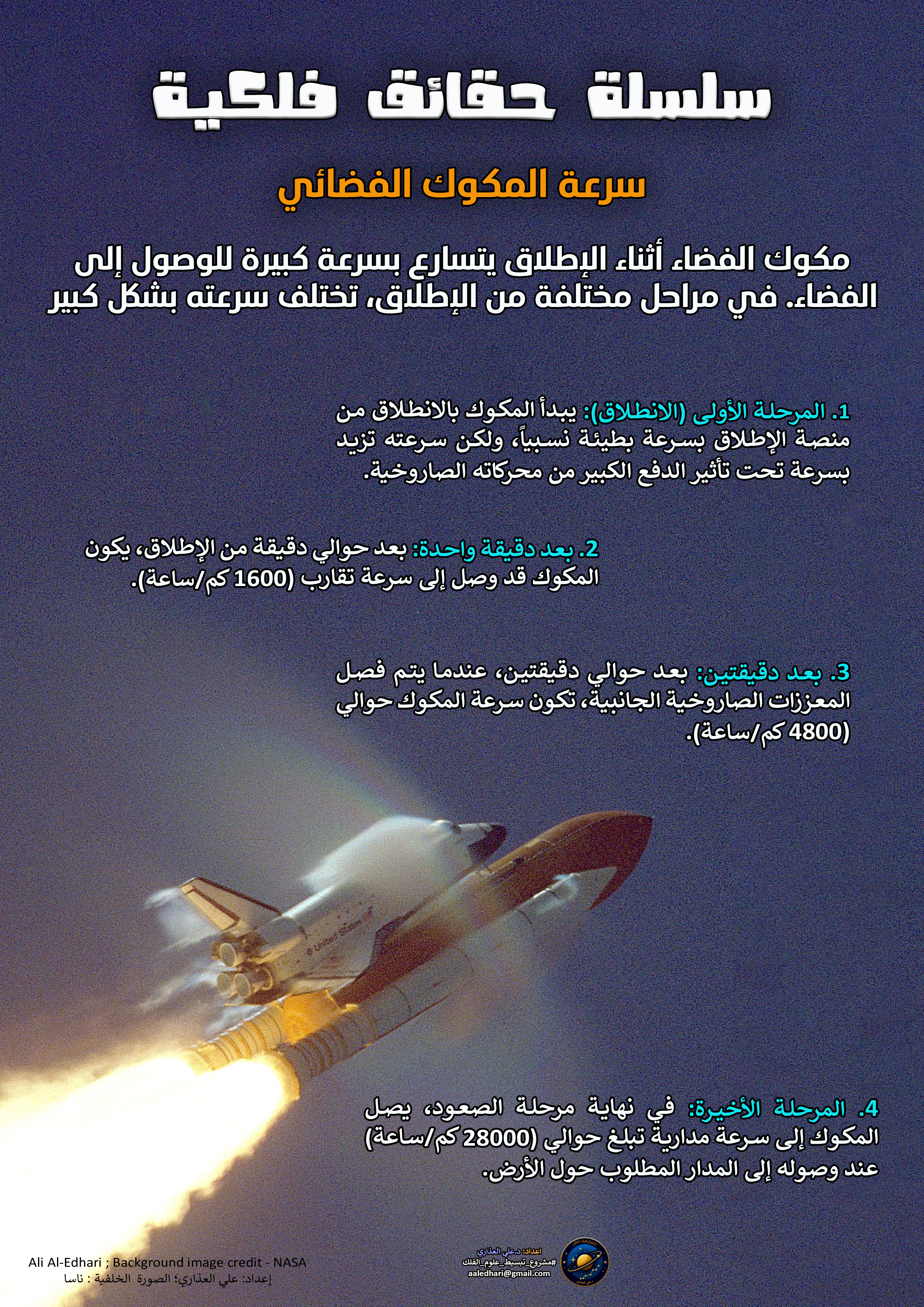
هل تساءلت يومًا كيف يصل مكوك الفضاء إلى مداره حول الأرض؟ الرحلة ليست مجرد صعود عمودي، بل هي سباق مع الزمن حيث تتزايد السرعة بشكل مذهل في كل مرحلة من مراحل الإطلاق. من لحظة الانطلاق البطيء إلى اختراق الغلاف الجوي بسرعة تفوق 28,000 كم/ساعة، كل خطوة محسوبة بدقة لتجاوز الجاذبية الأرضية والوصول إلى المدار.
عالم الفضاء مليء بالأرقام المدهشة والتحديات الهندسية، وما تراه في هذا الإنفوجرافيك ليس سوى لمحة عن العبقرية البشرية التي جعلت استكشاف الكون ممكنًا. هل أنت مستعد للغوص في هذا العالم المثير؟
انتقل إلى الشروح بلغات أخرى
مصدر الصورة:
إعداد: علي العذاري؛ خلفية الصورة: ناسا
حالة ترجمة الشرح: لم تتم الموافقة من قبل مُراجع بعد
تمّت كتابة وترجمة ومراجعة تسميات ملفات الوسائط المعروضة على موقع OAE من خلال جهد جماعي من قِبل OAE، ومراكز وعُقد OAE، والمنسقين الوطنيين لتعليم الفلك (NAECs)، ومتطوعين آخرين. يمكنك الاطلاع على القائمة الكاملة للجهات المشاركة في مشروع الترجمة هنا. تُنشر جميع تسميات ملفات الوسائط بموجب رخصة Creative Commons CC BY-4.0 ويجب نسبها إلى "IAU OAE". أما ملفات الوسائط نفسها فقد تخضع لتراخيص مختلفة (انظر أعلاه) ويجب نسبها كما هو موضح في قسم "الحقوق".
شروح بلغات مختلفة:
الإنجليزيّة
شرح الصورة: This infographic is part of the "Simplifying Astronomy for Arabic Speakers" project, aiming to present scientific concepts in a simple and accessible way. The design focuses on the speed of spacecraft during the various stages of their launch, illustrating how velocity changes as the spacecraft progresses to reach the desired orbit.
Details of the Stages:
Stage One (Launch):
The spacecraft begins its journey by launching from the launch pad with an increasing speed. The velocity in this stage is influenced by Earth's gravity and atmospheric resistance.
After One Minute:
The spacecraft reaches a speed of approximately 1,600 kilometers per hour (km/h), reflecting a rapid acceleration powered by its engines.
After Two and a Half Minutes:
The rocket boosters are jettisoned, allowing the spacecraft to reach a speed of about 4,800 km/h. At this point, the spacecraft becomes lighter, enabling it to accelerate more efficiently.
Final Stage:
By the end of the ascent phase, the spacecraft achieves its final speed of approximately 28,000 km/h, allowing it to enter the desired orbit around Earth.
Through educational designs like this, the project provides enthusiasts with an opportunity to understand the intricate details of space missions in an engaging and simplified manner.
مصدر الصورة: Ali Al-Edhari ; Background image credit - NASA
مصطلحات معجم ذات صلة: Rocket
شرح الصورة: This infographic is part of the "Simplifying Astronomy for Arabic Speakers" project, aiming to present scientific concepts in a simple and accessible way. The design focuses on the speed of spacecraft during the various stages of their launch, illustrating how velocity changes as the spacecraft progresses to reach the desired orbit.
Details of the Stages:
Stage One (Launch):
The spacecraft begins its journey by launching from the launch pad with an increasing speed. The velocity in this stage is influenced by Earth's gravity and atmospheric resistance.
After One Minute:
The spacecraft reaches a speed of approximately 1,600 kilometers per hour (km/h), reflecting a rapid acceleration powered by its engines.
After Two and a Half Minutes:
The rocket boosters are jettisoned, allowing the spacecraft to reach a speed of about 4,800 km/h. At this point, the spacecraft becomes lighter, enabling it to accelerate more efficiently.
Final Stage:
By the end of the ascent phase, the spacecraft achieves its final speed of approximately 28,000 km/h, allowing it to enter the desired orbit around Earth.
Through educational designs like this, the project provides enthusiasts with an opportunity to understand the intricate details of space missions in an engaging and simplified manner.
مصدر الصورة: Ali Al-Edhari ; Background image credit - NASA
مصطلحات معجم ذات صلة: Rocket