Launching Learning: Exploring The Impact Of Space Experiments In Science Classrooms
TalkAstronomy Education Research
7th Shaw-IAU Workshop
Tuesday Nov. 18, 2025
UTC: 10:05 a.m. - 10:15 a.m. America/New_York: 5:05 a.m.- 5:15 a.m.
Thursday Nov. 20, 2025
UTC: 7:05 p.m. - 7:15 p.m. America/New_York: 2:05 p.m.- 2:15 p.m.
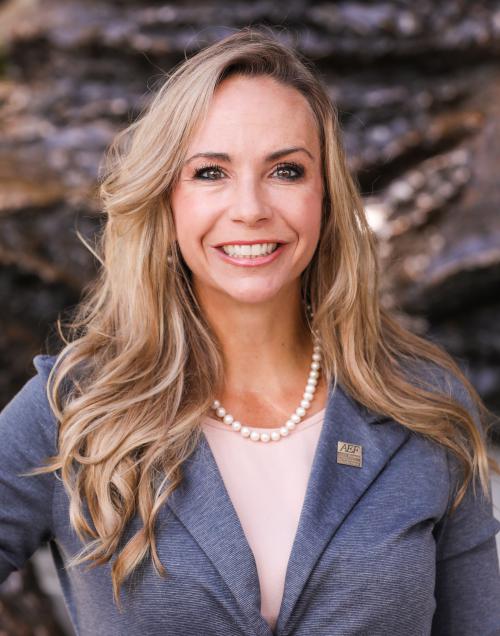
Christine Hirst Bernhardt (NOVA SySTEMic)


This study is the first to document how teachers integrate astronomy and space experiments into science instruction. Drawing on survey data (n=26) from experienced U.S. teachers, this research explores the astronomy resources used, perceived impact, and the barriers and opportunities of space-based learning. Preliminary findings indicate that space experiments foster interdisciplinary thinking, student engagement, and career connections. Teachers who used space experiments reported increased professional growth and fulfillment. Notable differences were observed between teachers who use space experiments and those who do not. This work begins to ground space-integrated instruction in the science education research literature.
About Christine Hirst Bernhardt
Christine Hirst Bernhardt is President-Elect of the National Earth Science Teachers Association, US NAEC and STEM Education Coordinator for NOVA SySTEMic. An expert in Earth and Space education, she has led national curriculum and professional development initiatives and was awarded the Albert Einstein Distinguished Educator Fellowship and ASP's Excellence in Astronomy Teaching Award. Her research centers educators in fostering students’ epistemic agency. Christine holds a Ph.D. in Science Education (UMD), two master’s degrees (Space Studies, UND; Science Education, CSUN), and flew on NASA’s SOFIA mission as an Education Ambassador. She serves on Cosmic Girls and NARST boards, and is an early-career researcher with NSF’s Astro-Accel project