Science Topic: James Webb Space Telescope, The First Two Years
Parallel Session
6th Shaw-IAU Workshop on Astronomy for Education
Session timeblocks
Tuesday Nov. 12, 2024
Assembly of Galaxies:
UTC: 3 p.m. -
4:30 p.m.
America/New_York:
10 a.m.-
11:30 a.m.
Exoplanets (part 2) and JWST in Outreach and Education:
UTC: 8 p.m. -
9:30 p.m.
America/New_York:
3 p.m.-
4:30 p.m.
Wednesday Nov. 13, 2024
Exoplanets (part 2) and JWST in Outreach and Education, repeated:
UTC: 1 p.m. -
2:30 p.m.
America/New_York:
8 a.m.-
9:30 a.m.
From Star and Planet Formation to Exoplanets (part 1):
UTC: 5:30 p.m. -
7 p.m.
America/New_York:
12:30 p.m.-
2 p.m.
Thursday Nov. 14, 2024
Assembly of Galaxies, repeated:
UTC: 10:30 a.m. -
noon
America/New_York:
5:30 a.m.-
7 a.m.
Friday Nov. 15, 2024
From Star and Planet Formation to Exoplanets (part 1), repeated:
UTC: 10:30 a.m. -
noon
America/New_York:
5:30 a.m.-
7 a.m.
Chair

Samantha Brown-Sevilla
Share on:


This session will delve into the remarkable scientific achievements made possible by the JWST, including star and galaxy formation, exoplanet characterization, and insights into the early universe. Experts will also discuss the telescope’s advanced technology and its educational impact.
Schedule
-
Two Years of Cosmic Exploration with JWST
Tuesday Nov. 12, 2024
UTC: 3 p.m. - 3:30 p.m. America/New_York: 10 a.m.- 10:30 a.m.Thursday Nov. 14, 2024
UTC: 10:30 a.m. - 11 a.m. America/New_York: 5:30 a.m.- 6 a.m.Since the summer of 2022, JWST has been fulfilling its promise of making revolutionary discoveries across all areas of astronomy. From studies of the early Universe to detailed analysis of solar system objects, JWST’s groundbreaking capabilities continue to open new windows to the cosmos, capturing the imagination and wonder of both the scientific community and the public. This presentation will review the most impactful and unexpected discoveries of the observatory to-date, and will look at what JWST’s future investigations may bring.

Macarena García Marín (ESA)
For more information about this talk click here
-
Blowing Bubbles in Galaxies: A Zoo of Bubbles from JWST
Tuesday Nov. 12, 2024
UTC: 3:30 p.m. - 3:45 p.m. America/New_York: 10:30 a.m.- 10:45 a.m.Thursday Nov. 14, 2024
UTC: 11 a.m. - 11:15 a.m. America/New_York: 6 a.m.- 6:15 a.m.JWST's view of nearby galaxies has already produced some of the telescope's most iconic and widely shared images. Because of JWST's ability to peer into the mid-infrared, these images reveal the beautiful and rich structure of the cool gas in interstellar space, resolved on scales never before available. Among the most eye-catching features are the ubiquitous voids of gas. The hundreds of voids in each galaxy are "bubbles" driven by the energy and momentum imparted as massive stars form and (spectacularly) die. Their connection between the gas structure, galaxy structure, and massive stars make these bubbles invaluable for a wide array of open questions in star formation and galaxy evolution, including: How do massive stars reshape the galaxies they form in? Do bubbles trigger star formation, cease star formation, or both? How are heavy elements produced in massive stars mixed back into the galaxy? Previously, we needed sharper observations to reveal these bubbles, and robustly identifying them has long been an algorithmic challenge. Now, with JWST, we finally have the data to trace huge populations of bubbles. Our pilot study visually identifying the bubbles in a single galaxy yielded ~1700 bubbles, sufficient to provide new constraints on the size distribution of these structures (Watkins et al., 2023). Next, with imaging of 80 galaxies (and counting!) from treasury surveys led by the Physics at High Angular resolution in Nearby GalaxieS (PHANGS) collaboration, we are developing BubbleZoo: an upcoming citizen science project on Zooniverse to catalog and characterize 100,000s of bubbles. In this talk, I will outline the BubbleZoo project, describe how this massive population of bubbles will shape the next generation of star formation models and simulations, and discuss the potential for future citizen science projects in the rich, complex, and rapidly advancing field of star formation.

Eric Koch (Center for Astrophysics | Harvard & Smithsonian)
For more information about this talk click here
-
JWST’s Look into First Galaxies and Black Holes
Tuesday Nov. 12, 2024
UTC: 3:45 p.m. - 4:05 p.m. America/New_York: 10:45 a.m.- 11:05 a.m.Thursday Nov. 14, 2024
UTC: 11:15 a.m. - 11:35 a.m. America/New_York: 6:15 a.m.- 6:35 a.m.The launch of JWST has opened a new window into the Universe, allowing us for the first time to observe the first galaxies and their black holes. Within the JWST Advanced Deep Extragalactic Survey (JADES) we focused on searching for these first galaxies and their black holes, as well as studying the galaxy population across the Cosmic epochs. In my talk I will focus on the discovery of the most distant galaxy (GS-z14) and the most distant black hole (GN-z11) as well as overview of the capabilities of JWST in connection of galaxy evolution.

Jan Scholtz (Kavli Institute for Cosmology, University of Cambridge)
For more information about this talk click here
-
Discussion Panel: JSWT - Assembly of Galaxies
Tuesday Nov. 12, 2024UTC: 4:05 p.m. - 4:30 p.m. America/New_York: 11:05 a.m.- 11:30 a.m.
Thursday Nov. 14, 2024
UTC: 11:35 a.m. - noon America/New_York: 6:35 a.m.- 7 a.m.Chair:
Samantha Brown-Sevilla
Panel: Macarena García Marín
(ESA), Eric Koch
(Center for Astrophysics | Harvard & Smithsonian), Jan Scholtz
(Kavli Institute for Cosmology, University of Cambridge) -
Exploring Distant Worlds with the James Webb Space Telescope
Tuesday Nov. 12, 2024
UTC: 8 p.m. - 8:20 p.m. America/New_York: 3 p.m.- 3:20 p.m.Wednesday Nov. 13, 2024
UTC: 1 p.m. - 1:20 p.m. America/New_York: 8 a.m.- 8:20 a.m.In this talk, I introduce some of the science the James Webb Space Telescope (JWST) is enabling for the field of extrasolar planets. In particular, the field of exoplanet science itself is introduced in the context of our own Solar System, as well as the big questions it might enable to answer and why JWST is a perfect observatory to perform studies of these objects. I exemplify JWST exoplanet science via two sets of science results: the detection of remnant planets around white dwarfs and the detection and characterization of exoplanet atmospheres around small planets. The techniques that enable these discoveries are introduced and discussed.

Néstor Espinoza (STScI)
For more information about this talk click here
-
JWST Universe
Tuesday Nov. 12, 2024
UTC: 8:20 p.m. - 8:35 p.m. America/New_York: 3:20 p.m.- 3:35 p.m.Wednesday Nov. 13, 2024
UTC: 1:20 p.m. - 1:35 p.m. America/New_York: 8:20 a.m.- 8:35 a.m.The JWST Universe Experience offers an innovative fusion of art and science through its photographic exhibition, immersive experience, and educational programme. Visitors are invited to explore the beauty of the cosmos through stunning images captured by the James Webb Space Telescope (JWST), presented as scientific marvels and artistic masterpieces. Interactive technologies and hands-on activities (including LEGO workshops) complement the visuals, making the Universe more accessible. Designed for all ages, the experience fosters a deep understanding of space exploration while inspiring curiosity about the mysteries of the cosmos.

Milena Ratajczak (University of Warsaw Astronomical Observatory)

Ola Birke
For more information about this talk click here
-
Webb: Bringing the Mission and Its Science to School Students and the General Public
Tuesday Nov. 12, 2024
UTC: 8:35 p.m. - 8:45 p.m. America/New_York: 3:35 p.m.- 3:45 p.m.Wednesday Nov. 13, 2024
UTC: 1:35 p.m. - 1:45 p.m. America/New_York: 8:35 a.m.- 8:45 a.m.The JWST captures the imagination of the world, inspiring all both young and old. From technological challenges and its ‘origami mirror’ to its powerful cameras looking deeper into the universe than ever before, JWST is fascinating on all levels. With the MIRI-instrument being built in the Netherlands, the mission also has special national interest. With this in mind, NOVA coordinated a number of activities bringing JWST and its science to a broad cross-section of the Dutch population. The activities included press events, live webcasts, educational webinars for school students and teachers and themed planetarium shows with expert guest speakers, taking place from prior to launch - summer 2024. In this talk we give an overview with particular focus on the content choices made.
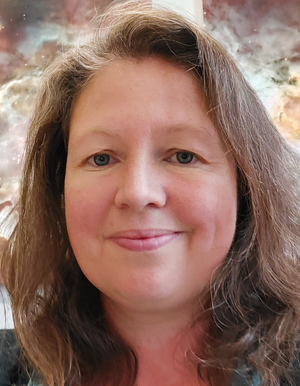
Joanna Holt (NOVA (Netherlands Research School for Astronomy) & AUAS (Amsterdam University of Applied Sciences))
Coauthors: Joris Hanse, Marieke Baan
For more information about this talk click here
-
The Golden Eye: JWST in Schools
Tuesday Nov. 12, 2024
UTC: 8:45 p.m. - 8:55 p.m. America/New_York: 3:45 p.m.- 3:55 p.m.Wednesday Nov. 13, 2024
UTC: 1:45 p.m. - 1:55 p.m. America/New_York: 8:45 a.m.- 8:55 a.m.The JWST has received alot of attention in social media and news and hence is a very appropriate tool to be used in schools and colleges for Astronomy Outreach and Education. I shall describe the many times I have used its images as well as press releases and published papers to explain important concepts in astronomy. Also, with the constant flow of ground breaking discoveries, it is very important to explain their importance in our understanding of astronomy. I will describe these examples in my talk.

Priya Shah Hasan (Maulana Azad National Urdu University, Hyderabad, India)
For more information about this talk click here
-
Discussion Panel: JWST in Outreach and Education
Tuesday Nov. 12, 2024UTC: 8:55 p.m. - 9:30 p.m. America/New_York: 3:55 p.m.- 4:30 p.m.
Wednesday Nov. 13, 2024
UTC: 1:55 p.m. - 2:30 p.m. America/New_York: 8:55 a.m.- 9:30 a.m.Chair:
Samantha Brown-Sevilla
Panel: Néstor Espinoza
(STScI), Milena Ratajczak
(University of Warsaw Astronomical Observatory), Ola Birke , Joanna Holt
(Netherlands Research School for Astronomy (NOVA)), Priya Shah Hasan
(Maulana Azad National Urdu University, Hyderabad) -
Creating the James Webb Space Telescope First Images
Wednesday Nov. 13, 2024
UTC: 5:30 p.m. - 6 p.m. America/New_York: 12:30 p.m.- 1 p.m.Friday Nov. 15, 2024
UTC: 10:30 a.m. - 11 a.m. America/New_York: 5:30 a.m.- 6 a.m.The first color images from the James Webb Space Telescope were designed with the understanding that a NASA/ESA/CSA flagship must explain its purpose and science to the public, and that to earn the opportunity to explain and educate, we must first inspire. I am presenting some of the history behind the creation of the first JWST color images, reasons behind their design, and how public outreach astronomy images are generally made.

Klaus Pontoppidan (NASA/JPL)
For more information about this talk click here
-
Webb: Probing the Material that Builds Planets
Wednesday Nov. 13, 2024
UTC: 6 p.m. - 6:25 p.m. America/New_York: 1 p.m.- 1:25 p.m.Friday Nov. 15, 2024
UTC: 11 a.m. - 11:25 a.m. America/New_York: 6 a.m.- 6:25 a.m.The James Webb Space Telescope (JWST, or Webb) is orders of magnitude more powerful than previous missions and will therefore push the boundaries of human knowledge even further. This talk will focus on the birth of new stars and characterizing the material that builds planets. What are the ingredients for possible life outside our solar system?

Ewine van Dishoeck (Leiden University)
For more information about this talk click here
-
Tracking Down the Cosmic Origins of Earth’s Water with JWST
Wednesday Nov. 13, 2024
UTC: 6:25 p.m. - 6:50 p.m. America/New_York: 1:25 p.m.- 1:50 p.m.Friday Nov. 15, 2024
UTC: 11:25 a.m. - 11:50 a.m. America/New_York: 6:25 a.m.- 6:50 a.m.Astronomers and geologists have long pondered how Earth became water-rich, with its oceans, glaciers and rain pouring from the sky. Water, which is made up of the first and third most common elements in the universe, is an easy molecule to form. However, the details of its delivery on rocky planets remain poorly understood. Thanks to the great power of the James Webb Space Telescope (JWST), it is now possible to study in detail the origins of water in the rocky planet-forming zone of disks, the birthplaces of planets. In this webinar, I will describe the fundamental properties of disks and present recent JWST results of PDS 70, a young protoplanetary system that hosts at least two giant planets. The much higher sensitivity of JWST compared to previous infrared space observatories revealed a water vapour reservoir in the rocky planet-forming zone of the system, indicating that rocky planets that may form there have access to a water reservoir. How much of that water will be incorporated into the cores of rocky planets? How much will be dispersed? I will conclude by discussing future prospects using JWST in tandem with other world-class observatories to continue tackling this fundamental question.

Giulia Perotti (Max-Planck Institute for Astronomy)
For more information about this talk click here
-
Discussion Panel: JWST - From Star and Planet Formation to Exoplanet Characterisation
Wednesday Nov. 13, 2024UTC: 6:50 p.m. - 7 p.m. America/New_York: 1:50 p.m.- 2 p.m.
Friday Nov. 15, 2024
UTC: 11:50 a.m. - noon America/New_York: 6:50 a.m.- 7 a.m.Chair:
Samantha Brown-Sevilla
Panel: Klaus Pontoppidan
(NASA/JPL), Ewine van Dishoeck
(Leiden University), Giulia Perotti
(Max-Planck Institute for Astronomy)
Posters
-
In praise of raw data: sustainable printing techniques to engage students with astronomical images
Melanie King (Canterbury Christ Church University / Royal College of Art)
Telescopes return almost daily images of celestial bodies that communicate science through colours, shapes and structures, contributing to our collective imagination of the Universe. The goal of this project is to bring back the “material” aspect of astronomical observations by exploring images from James Webb Space Telescope, discovering the richness of raw data, from artefacts like cosmic rays and bad pixels to the actual scientific information about planets, stars, galaxies. Images will be printed using sustainable analogue photographic techniques, acknowledging the importance of using materials wisely on a planet with limited resources. Two formats are being developed: an advanced printing workshop for art students, and a basic version for secondary schools.
-
James Webb Telescope: Towards an expanded view of the universe
Somaya Saad (National Research Institute of Astronomy and Geophysics (NRIAG))
James Webb, the largest space telescope ever built, has traveled a million miles into space and is four times farther away than the moon to begin its work observing the formation of stars, planetary systems and exoplanets. Webb is designed to answer some of the biggest questions about the universe. Here we will review some of the first results of James Webb within two years of its launch. With its ability to capture the spectrum in the infrared range, James Webb can reveal a lot about the origin of the universe, the seeds of the first galaxies, the solar system and exoplanets and answer many related questions.