Astronomy Education In Schools In Practice (Primary Schools)
Parallel Session
7th Shaw-IAU Workshop on Astronomy for Education
Session timeblocks
Tuesday Nov. 18, 2025
UTC: 11 a.m. -
12:30 p.m.
America/New_York:
6 a.m.-
7:30 a.m.
Wednesday Nov. 19, 2025
repeated:
UTC: 9 p.m. -
10:30 p.m.
America/New_York:
4 p.m.-
5:30 p.m.
Chair

Eduardo Monfardini Penteado
Share on:


This session will focus on practical applications of astronomy education in primary school classrooms, highlighting successful classroom strategies and innovative teaching techniques that engage students at both primary and secondary levels.
Schedule
-
Implementing astronomy-related educational acitivities for primary-level pupils in Bratislava region
Tuesday Nov. 18, 2025
UTC: 11 a.m. - 11:15 a.m. America/New_York: 6 a.m.- 6:15 a.m.Wednesday Nov. 19, 2025
UTC: 9 p.m. - 9:15 p.m. America/New_York: 4 p.m.- 4:15 p.m.How can we teach astronomy to children aged six to ten? We have developed a hands-on astronomy program designed for primary schools named Hello Universe! By transforming classrooms into mini-universes, we offer interactive sessions that replace theory with experience. Through different methods, we bring astronomical phenomena within children’s reach. For each topic, a special set of materials is prepared. The activities are adaptable, ranging from one-off visits to full-year astronomy clubs. We will present our experience gained during implementation of the activities and describe our methodology. Our objective is to motivate teachers to consider broadening their classes with astronomy-related topics, which could have an impact on pupils’ interest in natural sciences in the future.

Ľubomíra Hujsová (NAEC Slovakia, Tempus Universum, Slovak Astronomical Society at the Slovak Academy of Sciences)
For more information about this talk click here
-
From Pasargad to the Night Sky: A Scalable Astronomy Teacher Training Programme in Iran
Tuesday Nov. 18, 2025
UTC: 11:15 a.m. - 11:25 a.m. America/New_York: 6:15 a.m.- 6:25 a.m.Wednesday Nov. 19, 2025
UTC: 9:15 p.m. - 9:25 p.m. America/New_York: 4:15 p.m.- 4:25 p.m.Lack of teacher training remains a key barrier to astronomy in Iranian primary schools. We organised a two-day OAE-funded workshop in Pasargad County, trained 20 teachers through hands-on lectures, low-cost instrument building, planetarium immersion and dark-sky observation. The programme fused compact content blocks (solar system, constellations, motions) with a building craft model of the Sun, Earth, and Moon system and planispheres, practised safe solar and stellar viewing. Post-course surveys indicated 66% efficacy gain and 83% intent to teach astronomy. Within twelve weeks, teachers reached 900 pupils, made astroEDU paper models and held multiple guided night-sky observations. We discuss cultural framing and pathways to replicate the model in underserved Iranian regions for scaling.
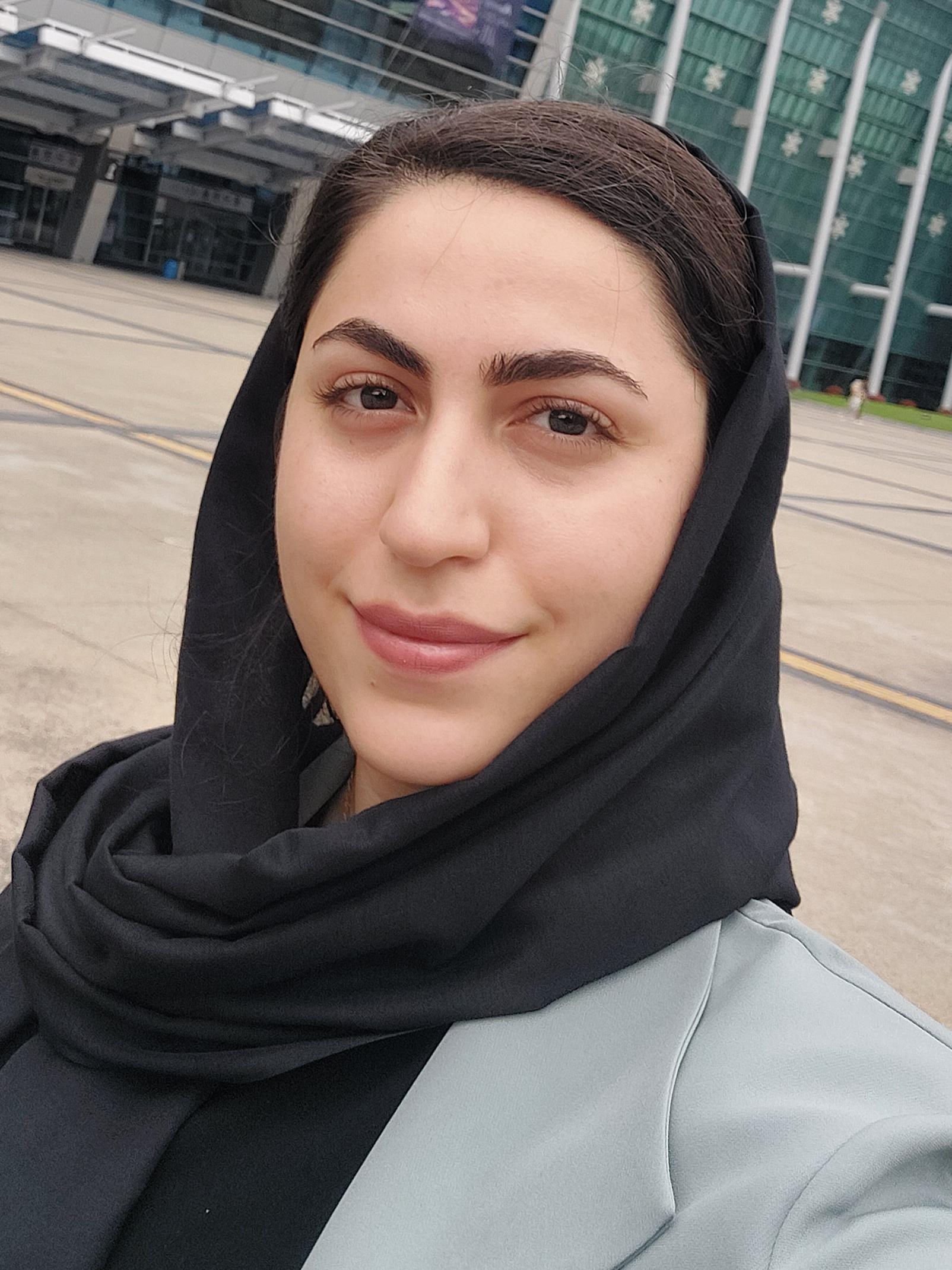
Maryam Papari (Director of Mehr observatory, NAEC for Iran)
For more information about this talk click here
-
Our horizon as a calendar: proposals for teacher training and teaching at the primary level
Tuesday Nov. 18, 2025
UTC: 11:25 a.m. - 11:35 a.m. America/New_York: 6:25 a.m.- 6:35 a.m.Wednesday Nov. 19, 2025
UTC: 9:25 p.m. - 9:35 p.m. America/New_York: 4:25 p.m.- 4:35 p.m.We present two teaching proposals about the Sun's movement designed from the analysis of the azimuths of its rises and sets along the real local horizon. The first, intended for teachers, proposes the resolution of problems around the pre-Inca monument “Thirteen Towers of Chanquillo”, along with journalistic notes that highlight the supposed astronomical orientation of constructions designed by a famous architect from Buenos Aires, Argentina. The second, intended for students in grades 4 and 7 at the primary level, develops a sequence aimed at the construction of a "horizon calendar" in the playground of the students' own school. We discuss the relationship between both proposals and their interdisciplinary potential from the perspective of teacher training and teaching practices.

Fernando Ariel Karaseur (Universidad del Centro de la Provincia de Buenos Aires)
For more information about this talk click here
-
EXPLORE: Bringing Mars Analog Astronaut Missions to Students Worldwide
Tuesday Nov. 18, 2025
UTC: 11:35 a.m. - 11:50 a.m. America/New_York: 6:35 a.m.- 6:50 a.m.Wednesday Nov. 19, 2025
UTC: 9:35 p.m. - 9:50 p.m. America/New_York: 4:35 p.m.- 4:50 p.m.EXPLORE, Expeditionary Program for Learning Opportunities in Analog Space Exploration, is a STEAM educational initiative that introduces students to the challenges and opportunities of future human missions to Mars. Coordinated by the Austrian Space Forum and in partnership with NUCLIO, COSPAR, the Lake Alqueva Observatory, and Ellinogermaniki Agogi, the project familiarizes students in Europe with hands-on physical toolkits and two analog astronaut missions. In addition, virtual toolkits allow schools and teachers worldwide to participate remotely, bringing analog mission concepts into classrooms and integrating interdisciplinary learning. These resources also help teachers understand the science behind each activity and prepare to guide students through analog astronaut mission tasks. This talk will highlight the experience of over 200 Iranian students from the Kargahe Setare Project, who joined the EXPLORE project virtually. We will explore how these virtual toolkits can be implemented globally, supporting STEAM education and inspiring curiosity about human space exploration. By combining hands-on and virtual approaches, the EXPLORE project encourages students to explore, learn, and engage with space science regardless of geographic boundaries. Its educational structure demonstrates that participation is accessible to diverse communities, making it a source of inspiration for the next generation of space explorers.
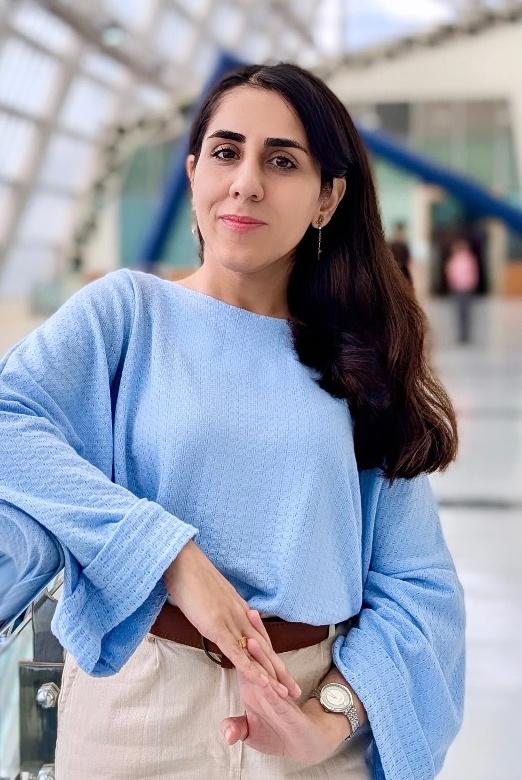
Shahrzad Mirsoltani (Director of the Kargahe Setare Project, Explore Project team member)
For more information about this talk click here
-
The TIDE Approach to Science Education: Iterative Pathways of Tinkering and Inquiry
Tuesday Nov. 18, 2025
UTC: 11:50 a.m. - 12:05 p.m. America/New_York: 6:50 a.m.- 7:05 a.m.Wednesday Nov. 19, 2025
UTC: 9:50 p.m. - 10:05 p.m. America/New_York: 4:50 p.m.- 5:05 p.m.The Officina della Luce is an educational initiative co-designed with teachers to bring tinkering practices into formal school contexts. The project combines playful exploration with structured reflection, engaging both teachers and students in authentic processes of scientific inquiry. Teachers first take part in professional development sessions, where they experience tinkering activities themselves and reflect on how to integrate them into classroom practice. Students then explore phenomena, in this case light and shadow, reflection, and colour mixing, through playful, hands-on sessions. Each playful phase is followed by a reflection stage, where students’ research questions are elicited and guide the next steps. This creates an iterative cycle: playful tinkering sessions generate new inquiries, which in turn lead to further playful experimentation and reflection. Preliminary results show that this iterative process helps students formulate authentic scientific questions while fostering autonomy, persistence, and creativity. Teachers reported that the activities enriched classroom dynamics and offered opportunities to connect spontaneous exploration with core physics concepts. This contribution will share both methodological insights and classroom examples from Officina della Luce, providing teachers with tools and inspiration to bring iterative cycles of tinkering and reflection into their science teaching.
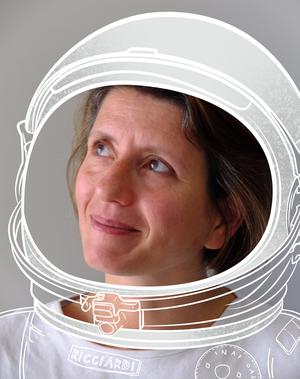
Sara Ricciardi (Istituto Nazionale di Astrofisica - Osservatorio di Astrofisica e Scienza dello Spazio)
For more information about this talk click here
-
Discussion Panel: Astronomy Education in Practice (Primary Schools)
Chair:
Eduardo Monfardini Penteado
Panel: Fernando Ariel Karaseur , Shahrzad Mirsoltani
(Astronomy Educator and Director of Kargahe Setare Project), Ľubomíra Hujsová
(Deutsche Schule Bratislava - DSB Observatorium), Maryam Papari
(Director of Mehr Observatory), Sara Ricciardi
(INAF OAS/Game Science Research Center)
Posters
-
Improving teachers' confidence in astronomy education in primary schools with STEAM perspectives
Tomita Akihiko (Wakayama University)
STEAM education is one of the buzzwords, however, it can be found in the classic practices. To look for elements of STEAM in the reports that have not specifically focused on STEAM education, I have looked for the elements and found them in the classroom records of primary schools in various subjects. Primary school teachers are generally said to be not so confident at science class, especially in astronomy. The teachers can confidently create lessons in astronomy, which they felt weak in, with the confidence that they were already practitioners of STEAM education. The above is based on discussions with primary school teachers in the Wakayama area and is the situation in Japan. It is likely that similar situations exist in other countries, and I would like to discuss on this point.
-
Inclusive Astronomy for Orphaned Children
Deepti Gautam (Student)
Access to astronomy education is limited in orphanages, restricting opportunities for children to engage with space science. To bridge this gap, an outreach initiative was created that uses storytelling, interactive games, and hands-on models to introduce astronomical concepts in an engaging and accessible way. This approach fosters curiosity, builds confidence, and promotes inclusivity, encouraging children to recognize that science and the universe are open to everyone, regardless of their background or environment.
-
Inspiring resources and events in extracurricular astronomy activities
Jokin Ivo (Municipal center for extracurricular activities)
The report will share projects and resources to support extracurricular astronomy education, as well as some ideas for organizing and holding events to promote astronomy. As a member of the Board of the European Association for Astronomy Education (EAAE) and coordinator of the International Children's Animation Competition "Our Beautiful Universe", the results of this competition and the opportunities for participation will be presented.
-
Knowledge-rich Indian astronomy heritage approach to teaching Earth’s shape & day-night cycle
Venkateswaran Thathamangalam Viswanathan (Visiting Professor, Indian Institute of Science Education and Research, Mohali)
This paper proposes a 'knowledge-rich' curricular approach to teach the shape of the Earth and the day/night cycle at the upper primary level, drawing from classical Indian astronomy's historical developments, arguments, and theoretical frameworks. The approach prioritises academic knowledge as central to schooling, ensures equitable access for all social groups, and fosters rational thinking in modern pluralist societies. Integrating concepts, content, and competencies cohesively overcomes the tendencies of pitting 'skills' vs. 'concepts', fragmented content delivery, and excessive focus on pedagogy over subject matter. The framework leverages episodes from classical Indian astronomy to make science education rigorous and culturally relevant.
-
Starry Sky Classroom : Innovative Practice in Primary School Astronomy Education
Zhu GeYa
The "Nebula Society" at Zhongguancun Second Primary School promotes interest-driven astronomy education through engaging methods like "Mr. Black Hole," Messier Object Relay, Star Chart Competitions, and "Nebula Blind Box." With 17 years of experience, the club emphasizes immersive learning and interactive platforms, proving that hands-on exploration inspires children's passion for the stars more effectively than traditional teaching.
-
STEM+A@Astronomy: Engaging Science Classroom through Engineering Design and Scientific Inquiry
Exodus Chun-Long Sit (Chair of IAU-NAEC & Co-NOC Hong Kong, Starrix, Hong Kong)
This session explores practical applications of astronomy education in primary classrooms, emphasizing innovative teaching strategies that actively engage students. The STEM+A@Astronomy project integrates engineering design cycles and scientific inquiry to enhance astronomical literacy and creative problem-solving skills. Through hands-on, experiential learning focused on night sky observation, space science, and planetary science, students develop curiosity and motivation. This interdisciplinary approach is adaptable beyond specialized astronomy courses, offering modular lessons that enrich primary education. By connecting astronomy to real-world contexts, STEM+A@Astronomy provides an immersive learning experience that inspires students both inside and outside the classroom.