Glossar-Begriff: Exoplanet
Beschreibung: Ein Exoplanet oder extrasolarer Planet ist ein Planet, der sich außerhalb des Sonnensystems befindet. Bereits seit dem 16. Jahrhundert wurde angenommen, dass es Planeten außerhalb des Sonnensystems geben sollte. Im 19. Jahrhundert begannen Beobachtungen, um diese Exoplaneten zu finden. Die ersten bestätigten Exoplaneten wurden in den 1990er Jahren entdeckt. Der erste nachgewiesene Exoplanet in einer Umlaufbahn um einen Hauptreihenstern war der Exoplanet Dimidium, der - durch indirekte Beobachtungen - am Haute-Provence-Observatorium (Frankreich) entdeckt wurde. Dieser Exoplanet umkreist den Stern 51 Pegasi, einen gelben Unterriesen, und wurde 1995 entdeckt. Seitdem sind Tausende von Exoplaneten nachgewiesen worden.
Ähnliche Begriffe:
Dieser Begriff in anderen Sprachen
Begriffs- und Definitionsstatus Die Originaldefinition dieses Begriffes auf Englisch wurden von einem forschenden Astronom und einer Lehrkraft bestätigt Die Übersetzung dieses Begriffs und seiner Definition warten auf Prüfung und Bestätigung
The OAE Multilingual Glossary is a project of the IAU Office of Astronomy for Education (OAE) in collaboration with the IAU Office of Astronomy Outreach (OAO). The terms and definitions were chosen, written and reviewed by a collective effort from the OAE, the OAE Centers and Nodes, the OAE National Astronomy Education Coordinators (NAECs) and other volunteers. You can find a full list of credits here. All glossary terms and their definitions are released under a Creative Commons CC BY-4.0 license and should be credited to "IAU OAE".
Wenn dir ein inhaltlicher oder Übersetzungsfehler in diesem Glossarbegriff oder dieser Definition auffallen, bitte kontaktiere uns.
Auf anderen Sprachen
- Arabisch: الكوكب الخارجي
- Englisch: Exoplanet
- Spanisch: Exoplaneta
- Französisch: Exoplanète
- Italienisch: Esopianeta
- Japanisch: 太陽系外惑星 (externer Link)
- Brasilianisches Portugiesisch: Exoplaneta
- Vereinfachtes Chinesisch: 系外行星
- Traditionelles Chinesisch: 系外行星
Ähnliche Medien
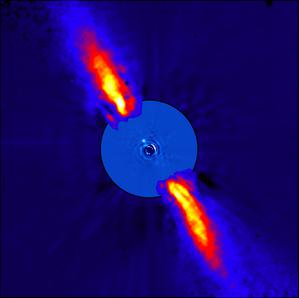
beta Pictoris b
Unterschrift: Dieses Kompositorium aus zwei Bildern zeigt den Planeten beta Pictoris b und eine Scheibe aus Material, die beide den jungen Stern beta Pictoris umkreisen. Beide sind im Infrarotlicht aufgenommen. Das innere Bild war eine der ersten Aufnahmen eines Planeten, der einen anderen Stern umkreist (ein Exoplanet). Dieses Bild wurde mit einer Technik namens adaptive Optik aufgenommen, die den Unschärfeeffekt der Erdatmosphäre, der das Licht eines Sterns streut, beseitigt. Das Licht des Sterns wird dann so stark gebündelt, dass es hinter einem Sperrkreis (hier in schwarz), dem so genannten Koronagraphen, verborgen werden kann. Die Wellen um diesen Kreis herum sind Artefakte des Abbildungsprozesses. Beta Pictoris b, ein Gasriese mit etwa der zwölffachen Masse des Jupiter, erscheint als Punkt oberhalb und links des schwarzen Kreises.
Das äußere Bild zeigt die thermische Emission der warmen Materialscheibe, die den jungen Stern Beta Pictoris umgibt. Da wir diese Scheibe von der Kante aus betrachten, erscheint sie als eine Linie. Diese Gas- und Staubscheibe lieferte das Material zur Bildung von beta Pictoris b.
Bild: ESO/A.-M. Lagrange et al.
Quellenlink
License: CC-BY-4.0 Creative Commons Namensnennung 4.0 International (CC BY 4.0) Symbole
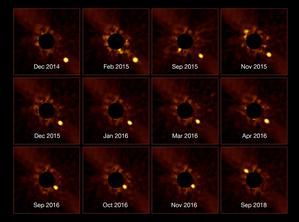
Die Umlaufbahn von Beta Pictoris b
Unterschrift: Diese Bilderserie zeigt die Umlaufbewegung des extrasolaren Planeten (Exoplaneten) Beta Pictoris b. Der Planet ist der helle Punkt in jedem Bild. Der Mutterstern des Planeten ist hinter dem schwarzen Kreis in der Mitte jedes Bildes verborgen. Dies geschieht, um den viel helleren Mutterstern auszublenden, der sonst das Licht des Planeten übertönen würde. Die Umlaufbahn des Planeten wird von der Seite betrachtet. Aus dieser Perspektive sieht es so aus, als bewege sich der Planet entlang einer geraden Linie.
Zwischen Februar 2015 und November 2016 scheint sich Beta Pictoris b immer näher an seinen Mutterstern heranzubewegen. Der Planet bewegte sich dann so nah an den Stern heran, dass er fast zwei Jahre lang nicht zu sehen war, bis er auf der anderen Seite des Sterns wieder auftauchte.
Bild: ESO/Lagrange/SPHERE-Konsortium
Quellenlink
License: CC-BY-4.0 Creative Commons Namensnennung 4.0 International (CC BY 4.0) Symbole
Ähnliche Diagramme

Maler-Sternbildkarte
Unterschrift: Das Sternbild Maler mit seinen hellen Sternen und den umliegenden Sternbildern. Pictor ist im Uhrzeigersinn von oben gehend umgeben von der Taube, Grabstichel, Schwertfisch, Fliegender Fisch, Schiffskiel und Hinterdeck des Schiffs. Maler zeichnet sich durch seinen zweithellsten Stern, Beta Pictoris, aus. Dieser junge Stern beherbergt eine große Scheibe aus staubigem Material, das bei der Planetenentstehung übrig geblieben ist, sowie zwei Planeten, von denen Beta Pictoris b einer der ersten Planeten war, der von Astronomen direkt abgebildet wurde.
Maler ist ein südliches Sternbild, und daher ist das gesamte Sternbild im Laufe des Jahres irgendwann von gesamten Südhalbkugel aus sichtbar. Das gesamte Sternbild ist auch von einigen äquatorialen Regionen der nördlichen Hemisphäre aus sichtbar, wobei Teile des Sternbilds auch in den übrigen nördlichen äquatorialen Regionen und einigen gemäßigten Zonen der nördlichen Hemisphäre zu sehen sind. Maler ist am besten im Winter der nördlichen Hemisphäre und im Sommer der südlichen Hemisphäre zu sehen.
Die y-Achse dieses Diagramms ist in Deklinationsgraden mit Norden nach oben und die x-Achse in Stunden der Rektaszension mit Osten nach links. Die Größe der hier markierten Sterne bezieht sich auf die scheinbare Helligkeit des Sterns. Je größer die Punkte, desto heller scheinen die Sterne die sie darstellen. Die griechischen Buchstaben kennzeichnen die hellsten Sterne des Sternbildes. Diese sind nach Helligkeit geordnet, wobei der hellste Stern mit Alpha, der zweithellste mit Beta usw. bezeichnet wird, obwohl diese Reihenfolge nicht immer genau eingehalten wird. Die gepunkteten Begrenzungslinien markieren die IAU-Grenzen der Sternbilder und die durchgezogenen grünen Linien markieren eine der üblichen Formen, die zur Darstellung der Sternbilder verwendet werden. Weder die Grenzen der Sternbilder noch die Linien, die die Sterne verbinden, sind so am Himmel sichtbar.
Bild: Angepasst vom IAU Office of Astronomy for Education nach dem Original der IAU und Sky & Telescope
License: CC-BY-4.0 Creative Commons Namensnennung 4.0 International (CC BY 4.0) Symbole
Ähnliche Aktivitäten
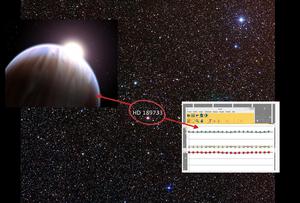
Can you find the exoplanet?
astroEDU educational activity (links to astroEDU website) Description: Find the exoplanet and determine its size using data from the Spitzer Space Telescope!
License: CC-BY-4.0 Creative Commons Namensnennung 4.0 International (CC BY 4.0) Symbole
Altersgruppen:
14-16
, 16-19
Bildungsniveau:
Secundaria
Lernbereiche:
Guided-discovery learning
, Modelling
, Observation based
, Problem-solving
, Structured-inquiry learning
, Technology-based
Kosten:
Free
Dauer:
3 hours
Fähigkeiten:
Analysing and interpreting data
, Asking questions
, Using mathematics and computational thinking
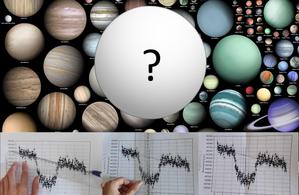
Measuring an exoplanet
astroEDU educational activity (links to astroEDU website) Description: Let's learn about exoplanets and how to measure their size!
License: CC-BY-4.0 Creative Commons Namensnennung 4.0 International (CC BY 4.0) Symbole
Altersgruppen:
12-14
, 14-16
Bildungsniveau:
Middle School
, Secundaria
Lernbereiche:
Observation based
, Problem-solving
Kosten:
Free
Dauer:
2 hours
Gruppengröße:
Group
Fähigkeiten:
Analysing and interpreting data
, Developing and using models
, Using mathematics and computational thinking
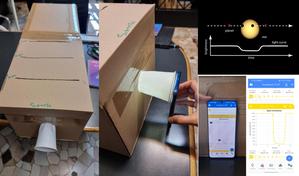
Exoplanet in a box
astroEDU educational activity (links to astroEDU website) Description: Build a "transit simulator" in a box using some very simple material and your cell phone!
License: CC-BY-4.0 Creative Commons Namensnennung 4.0 International (CC BY 4.0) Symbole
Altersgruppen:
14-16
, 16-19
Bildungsniveau:
Secundaria
, University
Lernbereiche:
Modelling
, Observation based
, Project-based learning
, Structured-inquiry learning
, Technology-based
Kosten:
Low Cost
Dauer:
3-6 hours
Gruppengröße:
Group
Fähigkeiten:
Analysing and interpreting data
, Asking questions
, Developing and using models
, Planning and carrying out investigations

Hunting for exoplanets with Arduino
astroEDU educational activity (links to astroEDU website) Description: Become a planet hunter with an Arduino kit and some simple components
License: CC-BY-4.0 Creative Commons Namensnennung 4.0 International (CC BY 4.0) Symbole
Altersgruppen:
14-16
, 16-19
, 19+
Bildungsniveau:
Secundaria
, University
Lernbereiche:
Modelling
, Observation based
, Simulation focussed
, Structured-inquiry learning
, Technology-based
Kosten:
Medium Cost
Dauer:
3 hours
Gruppengröße:
Group
Fähigkeiten:
Analysing and interpreting data
, Asking questions
, Developing and using models
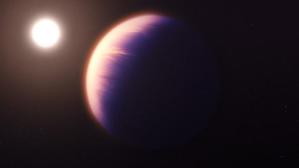
Woraus bestehen die Atmosphären von Exoplaneten?
astroEDU educational activity (links to astroEDU website) Description: Weit über 5000 Planeten sind heute bekannt, die andere Sterne als die Sonne umkreisen. Doch woraus bestehen sie? Woher wissen wir, dass sich eine nähere Untersuchung auch in Bezug auf den Nachweis von Lebensspuren auf diesen Planeten lohnt? Auf der Basis der Detektionsmethode mittels Planetentransit lässt sich mit der periodischen Lichtabschwächung des Zentralsterns abhängig vom beobachteten Spektralbereich ein Absorptionsspektrum der Atmosphäre ermitteln und daraus deren Zusammensetzung bestimmen.
Altersgruppen: 14-16 , 16-19 Bildungsniveau: Secundaria