بلغات أخرى
- الألمانيّة: Astronomie
- الإنجليزيّة: Astronomy
- الإسبانيّة: Astronomía
- الفرنسيّة: Astronomie
- الهندية: खगोल विज्ञान
- الإيطاليّة: Astronomia
- الكوريّة: 천문학
- المهاراتية: खगोलशास्त्र
- البرتغاليّة البرازيليّة: Astronomia
- الصينيّة المبسطة: 天文学
- الصينيّة التقليدية: 天文學
وسائط ذات صلة
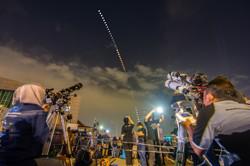
صورة بعنوان الخسوف بيننا، التقطها محمد ريحان، إندونيسيا
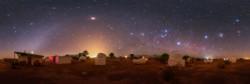
Chilean observatories at home office, by Robert Barsa, Slovakia
الشرح: Third place in the 2021 IAU OAE Astrophotography Contest, category Wide star fields.
This rich panoramic image shows a range of constellations, deep sky objects and planets. The brightest point of light with a pale reddish hue (left of center) is the planet Mars. In the bottom far left of the image, located just above the sloped roof of the building are two points of light appearing very close to each other, these are the planets Jupiter (brighter) and Saturn. To the far right of the image the two fuzzy cloud-like objects are the Large and Small Magellanic Clouds. These are satellite dwarf galaxies of the Milky Way located at a distance of approximately 160,000 and 200,000 light years, respectively. The Andromeda Galaxy, which is located at an approximate distance of 2.5 million light years, appears in this image as a small, angled smudge between Mars and the brightest glow on the horizon (closer to the horizon). The bright glow is not from the Sun or the Moon, but the city lights of San Pedro de Atacama.
Prominent constellations include: Orion – identified by the three stars forming Orion’s Belt; Taurus – a small triangle shaped collection of stars to the left of Orion and identified by the pale orange star (Aldebaran) at the vertex of the triangle; Canis Major – to the bottom right of Orion, identified by the bright star Sirius (the brightest star in the night sky) and three stars in the shape of a triangle just above the observatory dome in the foreground; Pegasus – identified by the trapezium shape diagonally below Mars. Other constellations include Andromeda, Perseus and Aries. Diverse cultures around the world have their own names and rich stories associated with these constellations and many others.
To the top right of Orion’s Belt is an angled line of stars (Orion’s Sword) within which is a pinkish smudge (looks like a fuzzy star when observed with the unaided eye) that is the Orion Nebula – a stellar nursery located 1500 light years from Earth – where stars are formed. To the left of Taurus is a compact fuzzy smudge, and that is the Pleiades star cluster. The variation in the colour of stars is the result of temperature of the stars, for example, the red orange star to the bottom left of Orion’s Belt is the red giant star Betelgeuse. Cooler stars appear redder, compared to the higher temperature white and bluish stars. The colours in the image are enhanced because of the higher sensitivity of the digital camera compared to the human eye.
المصدر: Robert Barsa/IAU OAE
License: CC-BY-4.0 المشاع الإبداعي نَسب المُصنَّف 4.0 دولي (CC BY 4.0) أيقونات
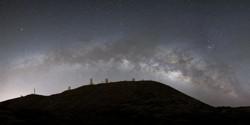
Teide Observatory
الشرح: Honourable mention in the 2022 IAU OAE Astrophotography Contest, category Still images of celestial patterns.
Taken in May 2022 in Teide National Park in Tenerife, Spain, this image shows the arc of the Milky Way galaxy crossing the sky, accompanied by prominent constellations over the professional telescopes located on the mountains of that island. While the telescopes and the people working with them may ignore the constellations, the photographer managed to catch the Milky Way in such a way that it almost matches the shape of the mountain.
The bright star in the top-left side of the image is Vega, one of the brightest stars in the night sky and located in the small constellation Lyra. Being a white star, it is the standard star astrophysicists use to define the colour scale. As it is also a relatively close star, only about 25 light-years away, with a relatively simple name, it frequently appears in modern science fiction, for example in Carl Sagan’s famous novel “Contact”, which was filmed in 1997 with Jodie Foster starring as a radio astronomer.
The bright star seen below the galaxy and on the left half of the image is Altair, also one of the brightest stars in the night sky and located in the constellation Aquila. Together with Deneb — a star in the constellation Cygnus (the Swan) that is not visible in this image — Altair and Vega form the Summer Triangle, a characteristic asterism of popular astronomy in the northern hemisphere, where these telescopes are located.
On the right side of the image we can see the constellation Scorpius. This is easily identified by its brightest star, Antares, the reddish star in the Scorpion’s heart. Below it, the whole body and tail of the Scorpion can be found and above it the celestial Scorpion's head is represented by three bright bluish stars. Below the tail and above the horizon, the constellation of Ara, the Altar, is half-visible, but like all the stars of Sagittarius in the Milky Way and the much fainter ones in Hercules and Ophiuchus above it, these constellations are more difficult to pinpoint in this photograph full of stars. The head of Ophiuchus is the relatively bright star in the middle between Vega and Antares. In addition to the huge size of this constellation, it is also important because it is the thirteenth one of the Zodiac, and the Sun spends roughly three weeks in Ophiuchus, after only five days in Scorpius. Furthermore, Ophiuchus represents the model for the mythological best doctor in the world, called Asklepios in Greek mythology, and Aesculab in Latin. His constellation praises all people working in medical professions, including nurses, pharmacists and doctors.
المصدر: Curd-Christian Tengeler/IAU OAE
License: CC-BY-4.0 المشاع الإبداعي نَسب المُصنَّف 4.0 دولي (CC BY 4.0) أيقونات
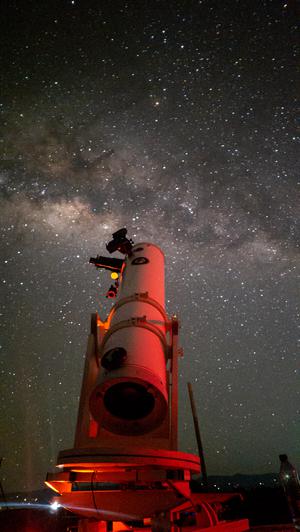
Learning Nights
الشرح: Honorable mention in the 2023 IAU OAE Astrophotography Contest, category of Still images taken exclusively with smartphones/mobile devices.
Beneath the sprawling expanse of the night sky over Colombia's Tatacoa Desert, a telescope finds its alignment with the majestic galactic core, while a smartphone captures this cosmic encounter. This snapshot, taken on 9 June 2023 during an astronomy camp, epitomises the accessible beauty of celestial marvels. It showcases the mesmerising grandeur of the night sky, inviting both the casual stargazer and the passionate astronomer alike. The splendour of the Milky Way, elegantly captured through a mobile device, seamlessly bridges the gap between sophisticated equipment and the pure, profound joy of observing the stars.
المصدر: Juan Pablo Botero Londoño/IAU OAE (CC BY 4.0)
License: CC-BY-4.0 المشاع الإبداعي نَسب المُصنَّف 4.0 دولي (CC BY 4.0) أيقونات
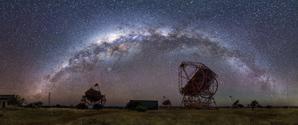
Milky Way Over H.E.S.S Observatory
الشرح: Honorable mention in the 2023 IAU OAE Astrophotography Contest, category of Still images taken exclusively with smartphones/mobile devices.
The darkness of the skies at H.E.S.S Observatory reveal the seemingly innumerable stars that make up the Milky Way galaxy, making it challenging to discern the constellations as seen taken with a smartphone from Namibia in June 2023. The stars Alpha and Beta Centauri are visible bottom left of the image just about the tower. The orange-hued star visible just above and to the right of the left H.E.S.S telescope is Antares, a red-giant star that is part of the constellation Scorpius.
المصدر: Jianfeng Dai/IAU OAE (CC BY 4.0)
License: CC-BY-4.0 المشاع الإبداعي نَسب المُصنَّف 4.0 دولي (CC BY 4.0) أيقونات
الأنشطة المرتبطة
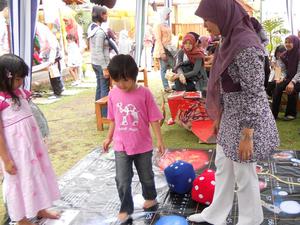
Snakes & Ladders Game
astroEDU educational activity (links to astroEDU website) Description: Learn astronomical topics through the classic snakes and ladders game.
License: CC-BY-4.0 المشاع الإبداعي نَسب المُصنَّف 4.0 دولي (CC BY 4.0) أيقونات
وسوم:
Game
, snakes and Ladders
الفئات العمرية:
6-8
, 8-10
, 10-12
, 12-14
, 14-16
المرحلة التعليمية:
المرحلة المتوسطة
, المرحلة الابتدائية
, المرحلة الثانوية
مجالات التعلم:
تعلم قائم على الألعاب
التكاليف:
تكلفة متوسطة
حجم المجموعة:
جماعي
المهارات:
طرح الأسئلة
, توصيل المعلومات
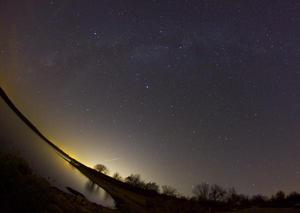
AstroPoetry Writing
astroEDU educational activity (links to astroEDU website) Description: An activity combining English and science to encourage students to think about the night sky to help them write a poem related to astronomy.
License: CC-BY-4.0 المشاع الإبداعي نَسب المُصنَّف 4.0 دولي (CC BY 4.0) أيقونات
وسوم:
Art
, Creativity
, Star-gazing
, Poetry
الفئات العمرية:
6-8
, 8-10
, 10-12
, 12-14
المرحلة التعليمية:
المرحلة المتوسطة
, المرحلة الابتدائية
, المرحلة الثانوية
مجالات التعلم:
يركز على الفنون الجميلة
, قائم على الملاحظة
التكاليف:
تكلفة منخفضة
المدة:
ساعة ونصف
حجم المجموعة:
فردي
المهارات:
توصيل المعلومات
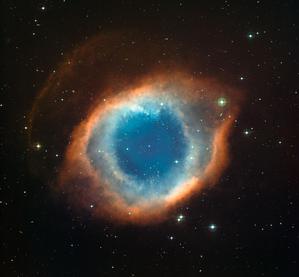
Create Your Own Astro-Music
astroEDU educational activity (links to astroEDU website) Description: Create your own music inspired by images of space.
License: CC-BY-4.0 المشاع الإبداعي نَسب المُصنَّف 4.0 دولي (CC BY 4.0) أيقونات
وسوم:
Art
, Creativity
, Music
الفئات العمرية:
8-10
, 10-12
, 12-14
, 14-16
, 16-19
المرحلة التعليمية:
غير رسمي
, المرحلة المتوسطة
, المرحلة الابتدائية
, المرحلة الثانوية
مجالات التعلم:
يركز على الفنون الجميلة
التكاليف:
تكلفة منخفضة
المدة:
ساعة واحدة
حجم المجموعة:
جماعي
المهارات:
توصيل المعلومات
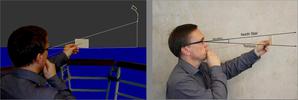
Navigating with the Kamal – Northern Hemisphere
astroEDU educational activity (links to astroEDU website) Description: How did Arabian sailors navigate at sea?
License: CC-BY-4.0 المشاع الإبداعي نَسب المُصنَّف 4.0 دولي (CC BY 4.0) أيقونات
وسوم:
History
, Geography
, Coordinates
, Celestial navigation
, Arabia
, Kamal
الفئات العمرية:
14-16
, 16-19
المرحلة التعليمية:
المرحلة المتوسطة
, المرحلة الثانوية
مجالات التعلم:
النمذجة
, تعلم منظم قائم على الاستقصاء
التكاليف:
تكلفة منخفضة
المدة:
ساعة ونصف
حجم المجموعة:
جماعي
المهارات:
تحليل البيانات وتفسيرها
, طرح الأسئلة
, توصيل المعلومات
, تطوير النماذج واستخدامها
, تخطيط وتنفيذ التحقيقات
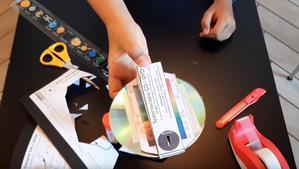
Hunting for spectra
astroEDU educational activity (links to astroEDU website) Description: Learn about light and spectra building a spectroscope with a CD!
License: CC-BY-4.0 المشاع الإبداعي نَسب المُصنَّف 4.0 دولي (CC BY 4.0) أيقونات
وسوم:
Hands-on
, Experiment
, prism
الفئات العمرية:
8-10
, 10-12
, 12-14
, 14-16
, 16-19
المرحلة التعليمية:
غير رسمي
, المرحلة المتوسطة
, المرحلة الابتدائية
, المرحلة الثانوية
مجالات التعلم:
تعلم استكشافي موجه
التكاليف:
تكلفة منخفضة
المدة:
ساعة واحدة
حجم المجموعة:
فردي
المهارات:
طرح الأسئلة
, صياغة التفسيرات
, تخطيط وتنفيذ التحقيقات