文档与资源 - 搜索结果
搜索结果
The Classical Nova GK Persei
图像
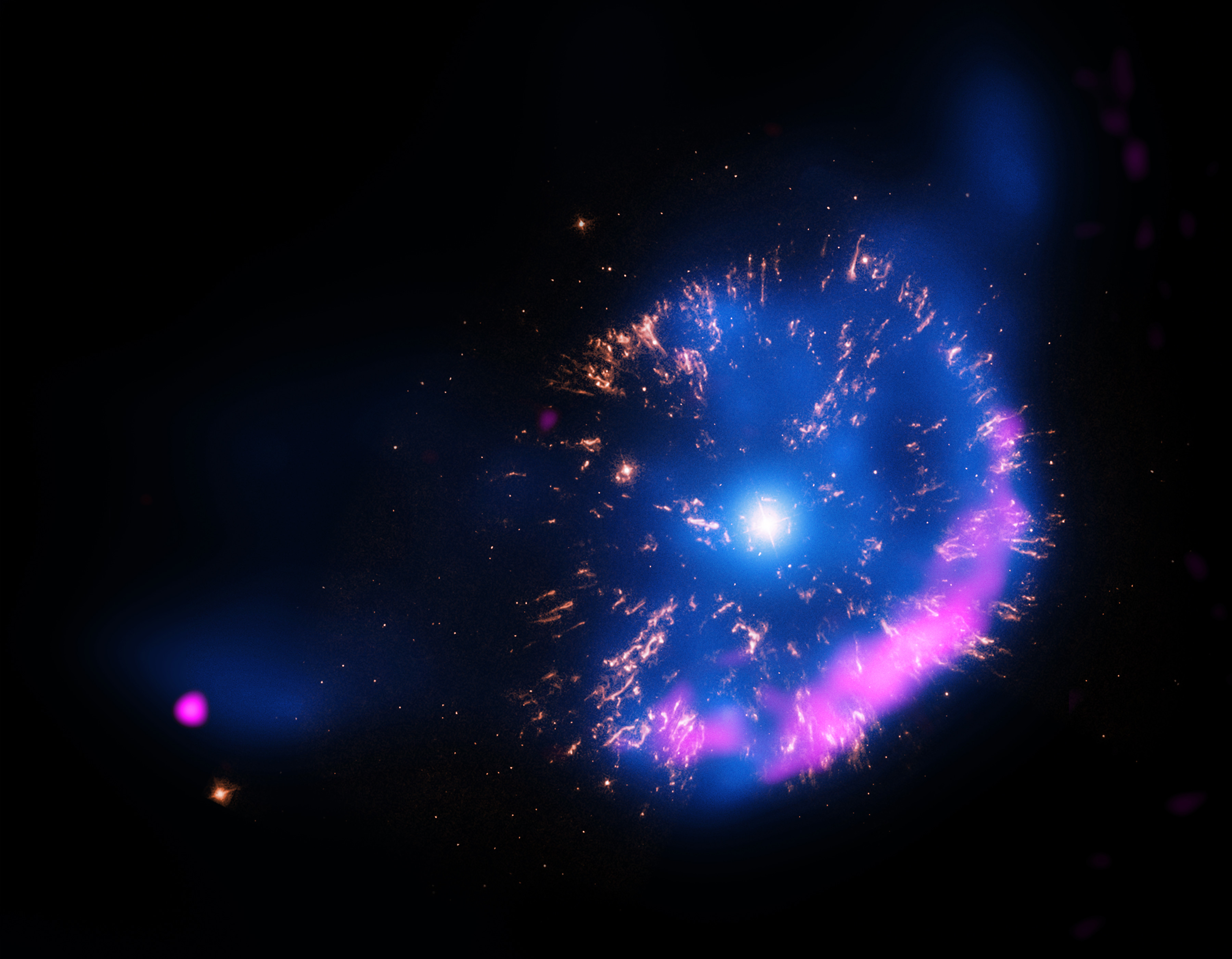
图注: This composite image shows the aftermath of a stellar explosion known as a nova, specifically the remnant of a classical nova called GK Persei. A nova occurs when a very dense star called a white dwarf pulls hydrogen-rich gas from a companion star in a binary system until the accumulated material ignites in a powerful thermonuclear explosion. This sudden release of energy sweeps material outward and produces bright X-ray, optical, and radio emission that can be studied long after the blast.
GK Persei was for a very short time in 1901 one of the brightest stars in the sky. Classical novae like GK Persei temporarily brighten dramatically — sometimes to thousands of times their usual luminosity — before fading over months or years as the expanding shell moves through space. In this image taken over 100 years since the nova's 1901 brightening, X-rays (shown in blue) reveal very hot gas left behind by the explosion, optical data (yellow) show clumps of matter ejected from the star’s surface, and radio information (pink) highlights high-energy electrons energized by the expanding nova shock wave. Studying novae helps scientists learn about how stars interact in binary systems and how powerful bursts of energy shape the material around them.
The nature of the pink blob in the lower left is not known.
来源: X-ray: NASA/CXC/RIKEN/D.Takei et al; Optical: NASA/STScI; Radio: NRAO/VLA
来源链接
词汇表:
新星
分类:
恒星
授权许可: 公共领域 公共领域 图标
文件
( 图像
5.84 MB)

Iron Meteorite
图像
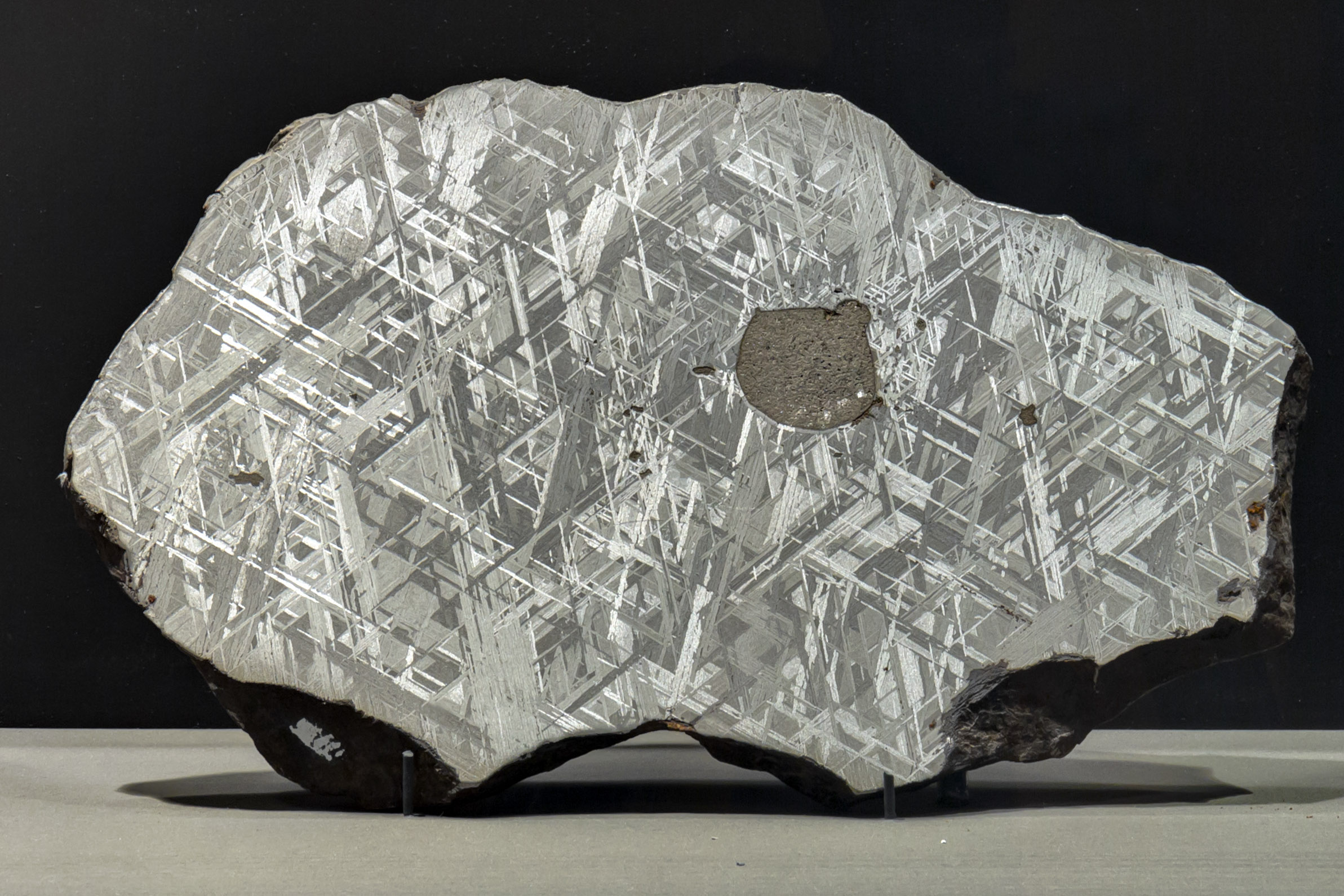
图注: This iron meteorite was originally found in Harriman, Tennessee, USA and is now held in the collection of the Smithsonian Natural History Museum, Washington DC, USA. The total mass of the meteorite was about 30kg. Here we see the interior after the meteorite was cut into pieces.
Iron meteorites are largely composed of an iron-nickel. They also often have a crystalline structure which manifests here as a series of crossing shiny straight lines known as a Widmanstätten pattern. This is thought to have formed as the meteoroid (the object that would eventually fall through the Earth's atmosphere as a meteor and land on the ground as a meteorite) cooled very slowly in the vacuum of space in the early solar system. This led to the growth of this crystalline structure.
来源: Chuck Sutherland
来源链接
词汇表:
铁陨石 , 陨石 , 流星
分类:
地球
, 太阳系
授权许可: 公共领域 公共领域 图标
文件
( 图像
4.51 MB)