HTTP 200 OK
Allow: GET, HEAD, OPTIONS
Content-Type: application/json
Vary: Accept
{
"count": 249,
"next": null,
"previous": "http://www.astro4edu.org/oae-api/multimedia/all/?format=api&page=2",
"results": [
{
"file_title": "Apparatus for determining the gravitional constant",
"file_type": "img",
"record_url": "https://astro4edu.org/resources/media/Is35Tq19o343/",
"file_url": "https://astro4edu.org/media/multimedia/apparatus-for-determining-the-gravitional-constant.png",
"file_additional_format_file": null,
"doi": null,
"credit_url": "https://royalsocietypublishing.org/doi/10.1098/rstl.1798.0022",
"license": "CC-BY-4.0",
"license_url": "https://creativecommons.org/licenses/by/4.0/deed.en",
"media_file_language": null,
"media_file_script": null,
"media_file_language_country": null,
"glossary_terms": [
133,
135
],
"categories": [
"Physics"
],
"category_ids": [
16
],
"big_ideas": [],
"big_ideas_subidea": [
"4.5"
],
"big_ideas_subidea_ids": [
30
],
"captions": [
{
"language_code": "en",
"file_title": "Apparatus for determining the gravitional constant",
"short_caption": "Apparatus for determining the gravitional constant",
"caption": "Observations of the motions of the planets around the Sun, or the Moon around the Earth, could not yield the gravitational constant, as in those cases, the mass of the central body is not initially known. Measuring the gravitational constant required a situation where the masses involved had been determined independent of measuring their gravitational attraction. The device shown here was built by John Michell (1724–1793), but Michell died before he could perform the experiment. Henry Cavendish (1731–1810) inherited the device, modified it so as to suppress external disturbances, and successfully completed the experiment. Cavendish's report to the Royal Society was under the title of \"Experiments to determine the density of the Earth\" as, from knowledge of the gravitational constant, the gravitational acceleration at Earth's surface and the Earth's radius, one can determine the Earth's mass and its mean density. From the modern perspective, what is now known as the \"Cavendish experiment\" is seen as a way of determining Newton's gravitational constant G.\r\n\r\nThe image shows a cross-section of the apparatus, which Cavendish had further isolated from environmental influences by putting it into a separate room and inside a wooden box. The devices allowing Cavendish to illuminate, observe and manipulate the experiment from the outside are pictured as well. The core of the experiment is a torsion balance using two small lead spheres. The restoring force of the torsion pendulum is deduced from its natural oscillation frequency in the absence of the large masses. The gravitational attraction of the small lead spheres to their larger counterparts can then be determined by measuring how far it makes the torsion pendulum masses deviate from their null position.\r\n\r\nThe image is a slightly modified (cropped, contrast and brightness adjusted) version of Fig. 1 in Cavendish's article in the Philosophical Transactions of the Royal Society, Volume 88 (December 1798), pp. 469–526 [DOI: 10.1098/rstl.1798.0022]. The permission of the Royal Society to publish this image under a CC BY licenses gratefully acknowledged.",
"alt_text": "Line drawing of a scientific apparatus with pairs of larger and smaller spherical masses suspended from balanced by strings",
"credit": "Henry Cavendish in Philosophical Transactions of the Royal Society, DOI: 10.1098/rstl.1798.0022"
},
{
"language_code": "it",
"file_title": "Apparecchio per la determinazione della costante gravitazionale",
"short_caption": "Apparecchio per la determinazione della costante gravitazionale",
"caption": "Le osservazioni dei moti dei pianeti intorno al Sole, o della Luna intorno alla Terra non possono fornire la costante gravitazionale, poiché in questi casi la massa del corpo centrale non è inizialmente nota. La misurazione della costante gravitazionale richiedeva una situazione in cui le masse coinvolte fossero state determinate indipendentemente dalla misurazione della loro attrazione gravitazionale. Il dispositivo qui mostrato fu costruito da John Michell (1724-1793), ma Michell morì prima di poter eseguire l'esperimento. Henry Cavendish (1731-1810) ereditò il dispositivo, lo modificò in modo da sopprimere le perturbazioni esterne, e completò con successo l'esperimento. La relazione di Cavendish alla Royal Society era intitolata \"Esperimenti per determinare la densità della Terra\", in quanto, dalla conoscenza della costante gravitazionale, dell'accelerazione gravitazionale sulla superficie terrestre e del raggio terrestre, è possibile determinare la massa della Terra e la sua densità media. Dal punto di vista moderno, quello che oggi è noto come \"esperimento di Cavendish\" è visto come un modo per determinare la costante gravitazionale G di Newton.\r\n\r\nL'immagine mostra una sezione trasversale dell'apparecchio, che Cavendish aveva ulteriormente isolato dalle influenze ambientali collocandolo in una stanza separata e all'interno di una scatola di legno. Sono raffigurati anche i dispositivi che hanno permesso a Cavendish di illuminare, osservare e modificare l'esperimento dall'esterno. Il cuore dell'esperimento è una bilancia di torsione che utilizza due piccole sfere di piombo. La forza di ripristino del pendolo di torsione è dedotta dalla sua frequenza di oscillazione naturale in assenza di grandi masse. L'attrazione gravitazionale delle piccole sfere di piombo verso le loro controparti più grandi può essere calcolaata misurando quanto fa deviare le masse del pendolo di torsione dalla loro posizione nulla.\r\n\r\nL'immagine è una versione leggermente modificata (ritagliata, regolata nel contrasto e nella luminosità) della Fig. 1 dell'articolo di Cavendish nelle Philosophical Transactions of the Royal Society, Volume 88 (dicembre 1798), pp. 469-526 [DOI: 10.1098/rstl.1798.0022]. Si ringrazia idella Royal Society per aver concesso di pubblicare questa immagine con licenza CC BY.",
"alt_text": "Disegno lineare di un apparecchio scientifico con coppie di masse sferiche più grandi e più piccole sospese in equilibrio da corde",
"credit": "Henry Cavendish in Philosophical Transactions of the Royal Society, DOI: 10.1098/rstl.1798.0022"
},
{
"language_code": "de",
"file_title": "Apparat zur Bestimmung der Gravitationskonstante",
"short_caption": "Apparat zur Bestimmung der Gravitationskonstante",
"caption": "Aus der Beobachtung der Bewegungen der Planeten um die Sonne oder des Mondes um die Erde konnte die Gravitationskonstante nicht ermittelt werden, da in diesen Fällen die Masse des Zentralkörpers zunächst nicht bekannt ist. Die Messung der Gravitationskonstante erforderte eine Situation, in der die beteiligten Massen unabhängig von der Messung ihrer Anziehungskraft bestimmt worden waren. Die hier gezeigte Vorrichtung wurde von John Michell (1724-1793) gebaut, doch Michell starb, bevor er das Experiment durchführen konnte. Henry Cavendish (1731-1810) erbte die Vorrichtung, modifizierte sie so, dass äußere Störungen unterdrückt wurden, und führte das Experiment erfolgreich durch. Cavendishs Bericht an die Royal Society trug den Titel \"Experimente zur Bestimmung der Dichte der Erde\", denn aus der Kenntnis der Gravitationskonstante, der Gravitationsbeschleunigung an der Erdoberfläche und des Erdradius lassen sich die Masse der Erde und ihre mittlere Dichte bestimmen. Aus heutiger Sicht wird das so genannte \"Cavendish-Experiment\" als eine Möglichkeit zur Bestimmung der Newtonschen Gravitationskonstante G angesehen.\r\n\r\nDas Bild zeigt einen Querschnitt der Apparatur, die Cavendish zusätzlich von Umwelteinflüssen isoliert hatte, indem er sie in einen separaten Raum und in eine Holzkiste stellte. Die Vorrichtungen, die es Cavendish ermöglichten, das Experiment von außen zu beleuchten, zu beobachten und zu manipulieren, sind ebenfalls abgebildet. Das Herzstück des Experiments ist eine Torsionswaage mit zwei kleinen Bleikugeln. Die Rückstellkraft des Torsionspendels wird aus seiner Eigenschwingungsfrequenz in Abwesenheit der großen Massen abgeleitet. Die Anziehungskraft der kleinen Bleikugeln auf ihre größeren Gegenstücke kann dann bestimmt werden, indem man misst, wie weit sie die Massen des Torsionspendels von ihrer Nullposition abweichen lässt.\r\n\r\nBei dem Bild handelt es sich um eine leicht veränderte (beschnittene, Kontrast und Helligkeit angepasste) Version von Abb. 1 in Cavendishs Artikel in den Philosophical Transactions of the Royal Society, Band 88 (Dezember 1798), S. 469-526 [DOI: 10.1098/rstl.1798.0022]. Wir danken der Royal Society für die Erlaubnis, dieses Bild unter einer CC BY-Lizenz zu veröffentlichen.",
"alt_text": "Strichzeichnung einer wissenschaftlichen Apparatur mit Paaren größerer und kleinerer runder Massen die an Schnüren ausbalanciert aufgehängt sind",
"credit": "Henry Cavendish in Philosophical Transactions of the Royal Society, DOI: 10.1098/rstl.1798.0022"
},
{
"language_code": "fr",
"file_title": "Appareil pour la détermination de la constante de gravitation",
"short_caption": "Appareil pour la détermination de la constante de gravitation",
"caption": "L'observation du mouvement des planètes autour du Soleil ou de la Lune autour de la Terre ne permet pas d'obtenir la constante gravitationnelle, car dans ces cas, la masse du corps central n'est pas connue au départ. Pour mesurer la constante gravitationnelle, il fallait que les masses en jeu aient été déterminées indépendamment de la mesure de leur attraction gravitationnelle. Le dispositif illustré ici a été construit par John Michell (1724-1793), mais celui-ci est décédé avant d'avoir pu réaliser l'expérience. Henry Cavendish (1731-1810) a hérité du dispositif, l'a modifié de manière à supprimer les perturbations externes et a réalisé l'expérience avec succès. Le rapport de Cavendish à la Royal Society s'intitulait \"Experiments to determine the density of the Earth\" (Expériences pour déterminer la densité de la Terre) car, à partir de la connaissance de la constante gravitationnelle, de l'accélération gravitationnelle à la surface de la Terre et du rayon de la Terre, on peut alors déterminer la masse de la Terre et sa densité moyenne. D'un point de vue moderne, ce que l'on appelle aujourd'hui \"l'expérience de Cavendish\" est considérée comme un moyen de déterminer la constante gravitationnelle G de Newton.\r\n\r\nL'image montre une coupe transversale de l'appareil, que Cavendish a isolé des influences environnementales en le plaçant dans une pièce séparée et à l'intérieur d'une boîte en bois. Les dispositifs permettant à Cavendish d'éclairer, d'observer et de manipuler l'expérience depuis l'extérieur sont également illustrés. Le cœur de l'expérience est une balance de torsion utilisant deux petites sphères de plomb. La force de rappel du pendule de torsion est déduite de sa fréquence d'oscillation naturelle en l'absence des grandes masses. L'attraction gravitationnelle des petites sphères de plomb sur leurs homologues plus grandes peut alors être déterminée en mesurant jusqu'où elle fait dévier les masses du pendule de torsion de leur position nulle.\r\n\r\nL'image est une version légèrement modifiée (recadrée, contraste et luminosité ajustés) de la figure 1 de l'article de Cavendish publié dans les Philosophical Transactions of the Royal Society, volume 88 (décembre 1798), pp. 469-526 [DOI : 10.1098/rstl.1798.0022]. Nous remercions la Royal Society d'avoir autorisé la publication de cette image sous licence CC BY.",
"alt_text": "Dessin au trait d'un appareil scientifique avec des paires de masses sphériques plus grandes et plus petites suspendues en équilibre par des cordes.",
"credit": "Henry Cavendish dans Philosophical Transactions of the Royal Society, DOI : 10.1098/rstl.1798.0022"
}
]
},
{
"file_title": "Halley's Comet",
"file_type": "img",
"record_url": "https://astro4edu.org/resources/media/5169Ir55Nv90/",
"file_url": "https://astro4edu.org/media/multimedia/halleys-comet.png",
"file_additional_format_file": null,
"doi": null,
"credit_url": "https://www.eso.org/public/germany/images/halley_gpo_1386002-cc/",
"license": "CC-BY-4.0",
"license_url": "https://creativecommons.org/licenses/by/4.0/deed.en",
"media_file_language": null,
"media_file_script": null,
"media_file_language_country": null,
"glossary_terms": [
13,
62,
64,
140,
244
],
"categories": [],
"category_ids": [],
"big_ideas": [],
"big_ideas_subidea": [
"7.2",
"7.9"
],
"big_ideas_subidea_ids": [
54,
61
],
"captions": [
{
"language_code": "en",
"file_title": "Halley's Comet",
"short_caption": "Halley's Comet",
"caption": "Halley’s Comet, is a well-known periodic comet, named after the English astronomer Edmond Halley. It has an orbital period of approximately 75 years and is visible from Earth with the naked eye when it passes through the inner solar system.\r\n\r\nThe image shows Halley’s Comet, officially designated 1P/Halley, with a tail of gas and dust streaming away from the Sun. It was taken from the La-Silla-Observatory in Chile in 1986 during Halley's Comet's last visit to the inner solar system. The stars in this image appear elongated or as lines of three different colored dots as image was created from three separate observations in different colors of light and the telescope was tracking the comet, which was moving very slightly compared to the background stars. Note that the comets tail does not point in exactly the same direction as the elongation of the stars. This shows us that the comet tail is not always behind the comet, but instead pointing away from the Sun. \r\n\r\nThe comet passes its perihelion (closest distance to the Sun) at a distance of around 0.59 astronomical units, right between the orbits of Mercury and Venus. Beyond Neptune, it reaches its aphelion (furthest distance from the Sun) at a distance of approximately 35 astronomical units. Halley's Comet reached aphelion in December 2023 and is now moving inwards again. It is expected to be seen with the naked eye from Earth again in mid-2061.",
"alt_text": "Halley's Comet with a bright tail of gas and dust pointing to the upper right. The stars in the image are elongated.",
"credit": "ESO"
},
{
"language_code": "it",
"file_title": "La cometa di Halley",
"short_caption": "La cometa di Halley",
"caption": "La Cometa di Halley è una nota cometa periodica che prende il nome dall'astronomo inglese Edmond Halley. Ha un periodo orbitale di circa 75 anni ed è visibile dalla Terra a occhio nudo quando attraversa il sistema solare interno.\r\n\r\nL'immagine mostra la Cometa di Halley, ufficialmente designata 1P/Halley, con una coda di gas e polvere che si allontana dal Sole. È stata scattata dall'Osservatorio di La-Silla in Cile nel 1986, durante l'ultima visita della cometa di Halley al sistema solare interno. Le stelle in questa immagine appaiono allungate, o come linee di tre punti di colore diverso, poiché l'immagine è stata creata da tre osservazioni separate in diversi colori di luce e il telescopio stava seguendo la cometa, che si muoveva molto leggermente rispetto alle stelle nello sfondo. Si noti che la coda della cometa non punta esattamente nella stessa direzione dell'allungamento delle stelle. Ciò dimostra che la coda della cometa non è sempre dietro la cometa, ma punta lontano dal Sole.\r\n\r\nLa cometa attraversa il suo perielio (distanza massima dal Sole) a una distanza di circa 0,59 unità astronomiche, proprio tra le orbite di Mercurio e Venere. Oltre Nettuno, raggiunge il suo afelio (distanza massima dal Sole) a una distanza di circa 35 unità astronomiche. La Cometa di Halley ha raggiunto l'afelio nel dicembre 2023 e ora si sta spostando nuovamente verso l'interno. Si prevede che sarà nuovamente visibile a occhio nudo dalla Terra a metà del 2061.",
"alt_text": "La Cometa di Halley con una coda luminosa di gas e polvere rivolta verso l'alto a destra. Le stelle nell'immagine sono allungate.",
"credit": "ESO"
},
{
"language_code": "de",
"file_title": "Halley'scher Komet",
"short_caption": "Halley'scher Komet",
"caption": "Der Halley'sche Komet ist ein bekannter periodischer Komet, benannt nach dem englischen Astronomen Edmond Halley. Er hat eine Umlaufzeit von etwa 75 Jahren und ist von der Erde aus mit bloßem Auge sichtbar, wenn er das innere Sonnensystem durchquert.\r\n\r\nDas Bild zeigt den Halleyschen Kometen, offiziell als 1P/Halley bezeichnet, mit einem Schweif aus Gas und Staub, der sich von der Sonne entfernt. Es wurde 1986 vom La-Silla-Observatorium in Chile während des letzten Besuchs des Halley'schen Kometen im inneren Sonnensystem aufgenommen. Die Sterne auf diesem Bild erscheinen länglich oder als Linien aus drei verschiedenfarbigen Punkten, da das Bild aus drei separaten Beobachtungen in verschiedenen Lichtfarben erstellt wurde und das Teleskop den Kometen verfolgte, der sich im Vergleich zu den Hintergrundsternen nur sehr leicht bewegte. Beachten Sie, dass der Kometenschweif nicht genau in die gleiche Richtung zeigt wie die Verlängerung der Sterne. Dies zeigt uns, dass der Kometenschweif nicht immer hinter dem Kometen liegt, sondern von der Sonne weg zeigt.\r\n\r\nDer Komet durchläuft sein Perihel (den geringsten Abstand zur Sonne) in einer Entfernung von etwa 0,59 Astronomischen Einheiten, genau zwischen den Bahnen von Merkur und Venus. Hinter Neptun erreicht er sein Aphel (die größte Entfernung von der Sonne) in einer Entfernung von etwa 35 Astronomischen Einheiten. Der Halley'sche Komet erreichte sein Aphel im Dezember 2023 und bewegt sich nun wieder nach innen. Er wird voraussichtlich Mitte 2061 von der Erde aus wieder mit bloßem Auge zu sehen sein.",
"alt_text": "Der Halleysche Komet mit einem hellen Schweif aus Gas und Staub, der nach rechts oben zeigt. Die Sterne im Bild sind langgestreckt.",
"credit": "ESO"
},
{
"language_code": "es",
"file_title": "El cometa Halley",
"short_caption": "Cometa Halley",
"caption": "El cometa Halley es un cometa periódico conocido que recibe su nombre del astrónomo inglés Edmond Halley. Tiene un período orbital de aproximadamente 75 años y es visible a simple vista desde la Tierra cuando atraviesa el sistema solar interior.\r\n\r\nLa imagen muestra el cometa Halley, llamado oficialmente 1P/Halley, con una cola de gas y polvo que se aleja del Sol. Fue tomada desde el Observatorio de La Silla, en Chile, en 1986, durante su última visita al sistema solar interior. Las estrellas en esta imagen aparecen elongadas o como líneas formadas por tres puntos de diferentes colores, ya que la imagen se creó a partir de tres observaciones independientes a diferentes frecuencias mientras el telescopio seguía el movimiento del cometa, que se desplazaba muy ligeramente en comparación con las estrellas del fondo. Obsérvese que la cola del cometa no apunta exactamente en la misma dirección que el alargamiento de las estrellas. Esto nos muestra que la cola del cometa no siempre se encuentra detrás de él, sino que apunta en dirección opuesta al Sol. \r\n\r\nEl cometa pasa por su perihelio (la distancia más cercana al Sol) a una distancia de alrededor de 0,59 unidades astronómicas, justo entre las órbitas de Mercurio y Venus. Más allá de Neptuno, alcanza su afelio (la distancia máxima del Sol) a una distancia de aproximadamente 35 unidades astronómicas. El cometa Halley alcanzó su afelio en diciembre de 2023 y ahora se está acercando de nuevo. Se espera que vuelva a ser visible a simple vista desde la Tierra a mediados de 2061.",
"alt_text": "El cometa Halley, con una cola brillante de gas y polvo que apunta hacia la parte superior derecha. Las estrellas de la imagen aparecen alargadas.",
"credit": "ESO"
}
]
},
{
"file_title": "Close-up view of a sunspot",
"file_type": "img",
"record_url": "https://astro4edu.org/resources/media/Y9557v73is44/",
"file_url": "https://astro4edu.org/media/multimedia/close-up-view-of-a-sunspot.png",
"file_additional_format_file": null,
"doi": null,
"credit_url": "https://nso.edu/telescopes/dkist/inouye-first-sunspot/",
"license": "CC-BY-4.0",
"license_url": "https://creativecommons.org/licenses/by/4.0/deed.en",
"media_file_language": null,
"media_file_script": null,
"media_file_language_country": null,
"glossary_terms": [
251,
342,
345,
446
],
"categories": [],
"category_ids": [],
"big_ideas": [],
"big_ideas_subidea": [
"8.4"
],
"big_ideas_subidea_ids": [
66
],
"captions": [
{
"language_code": "en",
"file_title": "Close-up view of a sunspot",
"short_caption": "Close-up view of a sunspot",
"caption": "This image of a sunspot was taken by the Daniel K Inouye Solar Telescope (DKIST), operated by the U.S. National Science Foundation. It was taken only in light with a wavelength of 530 nanometers, within the greenish-yellow part of the visible spectrum. \r\n\r\nThe picture reveals the detail of the spot's structure and the Sun’s photosphere. The dark central region, known as the umbra, is surrounded by a lighter area called the penumbra with radially elongated features stretching towards the umbra. Note that the umbra and penumbra here are not the same as the umbra and penumbra that occur during an eclipse. \r\n\r\nThe sunspot measures approximately 5000 kilometres in diameter, roughly equivalent to the east-west span of China. While the umbra appears black, it is actually hot and bright. It only appears dark because it is a few thousand kelvin cooler than the surrounding solar photosphere. Surrounding the sunspot, granulation patterns of plasma are visible on the photospheric surface of the Sun. ",
"alt_text": "A dark, roughly circular, black sunspot sends dark fingers out into the bright orange surroundings",
"credit": "NSO/NSF/AURA"
},
{
"language_code": "de",
"file_title": "Nahaufnahme eines Sonnenflecks",
"short_caption": "Nahaufnahme eines Sonnenflecks",
"caption": "Dieses Bild eines Sonnenflecks wurde mit dem Daniel K. Inouye Solar Telescope (DKIST) aufgenommen, das von der U.S. National Science Foundation betrieben wird. Es wurde nur in Licht mit einer Wellenlänge von 530 Nanometern aufgenommen, also im grünlich-gelben Bereich des sichtbaren Spektrums.\r\n\r\nDas Bild zeigt die Details der Struktur des Flecks und der Photosphäre der Sonne. Der dunkle zentrale Bereich, die so genannte Umbra (auch Kernschatten genannt), ist von einem helleren Bereich, der so genannten Penumbra (auch Halbschatten genannt), umgeben, der sich in radialer Richtung zur Umbra ausdehnt. Beachtet, dass der Kernschatten und der Halbschatten hier nicht mit dem Kernschatten und dem Halbschatten bei einer Sonnenfinsternis identisch sind.\r\n\r\nDer Sonnenfleck hat einen Durchmesser von etwa 5000 Kilometern, was in etwa der Ost-West-Ausdehnung Chinas entspricht. Während der Kernschatten schwarz erscheint, ist er in Wirklichkeit heiß und hell. Er erscheint nur deshalb so dunkel, weil er einige tausend Kelvin kälter ist als die umgebende Sonnenphotosphäre. Um den Sonnenfleck herum sind auf der photosphärischen Oberfläche der Sonne Granulationsmuster aus Plasma sichtbar.",
"alt_text": "Ein dunkler, annähernd kreisrunder, schwarzer Sonnenfleck sendet dunkle Finger in die leuchtend orange Umgebung aus",
"credit": "NSO/NSF/AURA"
},
{
"language_code": "it",
"file_title": "Vista ravvicinata di una macchia solare",
"short_caption": "Vista ravvicinata di una macchia solare",
"caption": "Questa immagine di una macchia solare è stata scattata dal Daniel K Inouye Solar Telescope (DKIST), gestito dalla National Science Foundation degli Stati Uniti. È stata scattata solo con una luce di lunghezza d'onda pari a 530 nanometri, nella parte giallo-verde dello spettro visibile.\r\n\r\nL'immagine rivela i dettagli della struttura della macchia e della fotosfera del Sole. La regione centrale scura, nota come umbra, è circondata da un'area più chiara, chiamata penombra, con caratteristiche radiali allungate che si estendono verso l'umbra. Si noti che l'ombra e la penombra qui riportate non corrispondono all'umbra e alla penumbra che si verificano durante un'eclissi.\r\n\r\nLa macchia solare ha un diametro di circa 5.000 chilometri, equivalente all'incirca alla distanza est-ovest della Cina. L'umbra sembra nera, ma in realtà è calda e luminosa. Appare scura solo perché è più fredda di qualche migliaio di Kelvin rispetto alla fotosfera solare circostante. Intorno alla macchia solare, sulla superficie fotosferica del Sole, sono visibili disegni di granulazione del plasma.",
"alt_text": "Una macchia solare scura, approssimativamente circolare e nera, allunga dita scure nell'area circostante arancione brillante.",
"credit": "NSO/NSF/AURA"
}
]
},
{
"file_title": "The Happy Face of Gravitational Lensing",
"file_type": "img",
"record_url": "https://astro4edu.org/resources/media/zb49sa63nw14/",
"file_url": "https://astro4edu.org/media/multimedia/the-happy-face-of-gravitational-lensing.png",
"file_additional_format_file": null,
"doi": null,
"credit_url": "https://commons.wikimedia.org/wiki/File:HST-Smiling-GalaxyClusterSDSS-J1038%2B4849-20150210.jpg",
"license": "PD",
"license_url": null,
"media_file_language": null,
"media_file_script": null,
"media_file_language_country": null,
"glossary_terms": [
134
],
"categories": [
"Cosmology",
"Galaxies"
],
"category_ids": [
9,
8
],
"big_ideas": [],
"big_ideas_subidea": [
"9.2"
],
"big_ideas_subidea_ids": [
74
],
"captions": [
{
"language_code": "en",
"file_title": "The Happy Face of Gravitational Lensing",
"short_caption": "The Happy Face of Gravitational Lensing",
"caption": "Captured by the NASA/ESA Hubble Space Telescope, this image showcases the galaxy cluster SDSS J1038+4849, affectionately dubbed the \"happy face\" cluster due to its striking resemblance to a smiling face. The two bright galaxies at the center resemble orange eyes, while the arcs surrounding them form the illusion of a smile. These arcs are actually a result of strong gravitational lensing, a phenomenon where the cluster's immense gravitational pull distorts and magnifies light from background objects. This particular case of gravitational lensing has produced an Einstein Ring, a ring-like structure formed by the precise alignment of the source, lens, and observer. By studying these gravitational lenses, astronomers gain insights into the properties of massive galaxies, allowing for a deeper understanding of the early Universe.",
"alt_text": "Hubble image of the \"happy face\" galaxy cluster with bright galaxies forming eyes and arcs due to gravitational lensing.",
"credit": "NASA/ESA"
},
{
"language_code": "it",
"file_title": "Il volto felice della lente gravitazionale",
"short_caption": "Il volto felice della lente gravitazionale",
"caption": "Catturata dal telescopio spaziale Hubble della NASA/ESA, questa immagine mostra l'ammasso di galassie SDSS J1038+4849, affettuosamente soprannominato \"faccia felice\" per la sua sorprendente somiglianza con un volto sorridente. Le due galassie luminose al centro assomigliano a occhi arancioni, mentre gli archi che le circondano danno l'illusione di un sorriso. Questi archi sono in realtà il risultato di una forte lente gravitazionale, un fenomeno in cui l'immensa attrazione gravitazionale dell'ammasso distorce e ingrandisce la luce degli oggetti di sfondo. Questo particolare caso di lente gravitazionale ha prodotto un Anello di Einstein, una struttura ad anello formata dall'allineamento preciso di sorgente, lente e osservatore. Studiando queste lenti gravitazionali, gli astronomi possono comprendere le proprietà delle galassie massicce, consentendo una comprensione più approfondita dell'Universo primordiale.",
"alt_text": "Immagine Hubble dell'ammasso di galassie \"faccia felice\" con galassie luminose che formano occhi e archi a causa della lente gravitazionale.",
"credit": "NASA/ESA"
},
{
"language_code": "de",
"file_title": "Das glückliche Gesicht des Gravitationslinsensystems",
"short_caption": "Das glückliche Gesicht des Gravitationslinsensystems",
"caption": "Dieses vom NASA/ESA Hubble-Weltraumteleskop aufgenommene Bild zeigt den Galaxienhaufen SDSS J1038+4849, der aufgrund seiner auffälligen Ähnlichkeit mit einem lächelnden Gesicht liebevoll als \"Happy Face\"-Haufen bezeichnet wird. Die beiden hellen Galaxien im Zentrum ähneln orangefarbenen Augen, während die sie umgebenden Bögen die Illusion eines Lächelns erzeugen. Diese Bögen sind in Wirklichkeit das Ergebnis starker Gravitationslinsen, ein Phänomen, bei dem die immense Anziehungskraft des Haufens das Licht von Hintergrundobjekten verzerrt und vergrößert. Dieser besondere Fall von Gravitationslinsenbildung hat einen Einstein-Ring hervorgebracht, eine ringförmige Struktur, die durch die präzise Ausrichtung von Quelle, Linse und Beobachter entsteht. Durch die Untersuchung dieser Gravitationslinsen erhalten die Astronomen Einblicke in die Eigenschaften massereicher Galaxien, was ein tieferes Verständnis des frühen Universums ermöglicht.",
"alt_text": "Hubble-Bild des \"Happy Face\"-Galaxienhaufens mit hellen Galaxien, die aufgrund von Gravitationslinsen Augen und Bögen bilden.",
"credit": "NASA/ESA"
},
{
"language_code": "pt-br",
"file_title": "O rosto feliz da lente gravitacional",
"short_caption": "O rosto feliz da lente gravitacional",
"caption": "Capturada pelo Telescópio Espacial Hubble da NASA/ESA, esta imagem mostra o aglomerado de galáxias SDSS J1038+4849, carinhosamente apelidado de aglomerado “rosto feliz” devido à sua impressionante semelhança com um rosto sorridente. As duas galáxias brilhantes no centro lembram olhos alaranjados, enquanto os arcos que as rodeiam criam a ilusão de um sorriso. Esses arcos são, na verdade, resultado de uma forte lente gravitacional, um fenômeno em que a imensa atração gravitacional do aglomerado distorce e amplia a luz dos objetos ao fundo. Esse caso específico de lente gravitacional produziu um Anel de Einstein, uma estrutura em forma de anel formada pelo alinhamento preciso entre a fonte, a lente e do observador. Ao estudar essas lentes gravitacionais, astrônomos obtêm informações sobre as propriedades das galáxias massivas, permitindo uma compreensão mais profunda do Universo primitivo.",
"alt_text": "Imagem do Hubble do aglomerado de galáxias “rosto feliz”, com galáxias brilhantes formando olhos e arcos devido ao efeito de lente gravitacional.",
"credit": "NASA/ESA"
}
]
},
{
"file_title": "The Crab Pulsar",
"file_type": "img",
"record_url": "https://astro4edu.org/resources/media/ed31OR3nF75/",
"file_url": "https://astro4edu.org/media/multimedia/the-crab-pulsar.png",
"file_additional_format_file": null,
"doi": null,
"credit_url": "https://noirlab.edu/public/images/iotw2043a/",
"license": "CC-BY-4.0",
"license_url": "https://creativecommons.org/licenses/by/4.0/deed.en",
"media_file_language": null,
"media_file_script": null,
"media_file_language_country": null,
"glossary_terms": [
214,
266,
337
],
"categories": [
"Milky Way and Interstellar Medium",
"Stars"
],
"category_ids": [
7,
2
],
"big_ideas": [],
"big_ideas_subidea": [
"8.7",
"8.8"
],
"big_ideas_subidea_ids": [
69,
70
],
"captions": [
{
"language_code": "en",
"file_title": "The Crab Pulsar",
"short_caption": "The Crab Pulsar",
"caption": "At the heart of the Crab Nebula, situated approximately 6,500 light-years away in the constellation of Taurus, lies the Crab Nebula Pulsar. This is remnant of a massive star that exploded at the end of its life. This happened several thousand years ago but the light from this explosion only reached the Earth in the year 1054. This celestial event was viewed by people across the world with many different societies noting it in their records.\r\n\r\nThe Crab Nebula Pulsar rotates about 30 times per second and emits light in many different wavelengths, including the visible spectrum. It is roughly one and a half times the mass of the sun but the force of the explosion that formed it crammed this mass into a tiny space, roughly ten kilometres in radius.\r\n\r\nThis image is a composite of several observations conducted by the Gemini North observatory in Hawaii, USA. The pulsar can be seen at the center. The observations that this image was created from were taken over a period of five years. Data from 2009 is shown in blue and data from 2014 is shown in red. Over this time material has flowed away from the pulsar resulting in this colored ripple effect. Again the colors do not show real colors in the image, the ripples show the positions of the shockwaves as they moved away from the pulsar and hit into the surrounding gas.",
"alt_text": "The pulsar appears as a bright spot in the center with a series of colored ripples moving away from it on two sides",
"credit": "International Gemini Observatory/NOIRLab/NSF/AUR, Jen Miller, Travis Rector, Mahdi Zamani & Davide de Martin"
},
{
"language_code": "de",
"file_title": "Der Krebspulsar",
"short_caption": "Der Krebspulsar",
"caption": "Im Herzen des Krebsnebels, der etwa 6.500 Lichtjahre entfernt im Sternbild Stier liegt, befindet sich der Krebsnebel-Pulsar. Er ist der Überrest eines massereichen Sterns, der am Ende seines Lebens explodierte. Dies geschah vor mehreren tausend Jahren, aber das Licht dieser Explosion erreichte die Erde erst im Jahr 1054. Dieses Himmelsereignis wurde von Menschen auf der ganzen Welt beobachtet und von vielen verschiedenen Gesellschaften in ihren Aufzeichnungen festgehalten.\r\n\r\nDer Krebsnebel-Pulsar rotiert etwa 30 Mal pro Sekunde und strahlt Licht in vielen verschiedenen Wellenlängen ab, darunter auch im sichtbaren Spektrum. Er hat etwa die anderthalbfache Masse der Sonne, aber die Kraft der Explosion, die ihn geformt hat, hat diese Masse auf einen winzigen Raum mit einem Radius von etwa zehn Kilometern gepresst.\r\n\r\nDieses Bild ist eine Zusammenstellung mehrerer Beobachtungen, die vom Gemini North Observatorium auf Hawaii (USA) durchgeführt wurden. Der Pulsar ist in der Mitte zu sehen. Die Beobachtungen, aus denen dieses Bild erstellt wurde, wurden über einen Zeitraum von fünf Jahren aufgenommen. Die Daten aus dem Jahr 2009 sind blau und die Daten aus dem Jahr 2014 sind rot dargestellt. In dieser Zeit ist Material vom Pulsar weggeflossen, was zu diesem farbigen Ripple-Effekt geführt hat. Auch hier zeigen die Farben keine echten Farben im Bild, sondern die Wellen zeigen die Positionen der Schockwellen, die sich vom Pulsar wegbewegen und auf das umgebende Gas treffen.",
"alt_text": "Der Pulsar erscheint als heller Fleck in der Mitte mit einer Reihe von farbigen Wellen, die sich auf zwei Seiten von ihm wegbewegen",
"credit": "Internationale Gemini-Sternwarte/NOIRLab/NSF/AUR, Jen Miller, Travis Rector, Mahdi Zamani & Davide de Martin"
},
{
"language_code": "it",
"file_title": "La pulsar del Granchio",
"short_caption": "La pulsar del Granchio",
"caption": "Nel cuore della Nebulosa del Granchio, situata a circa 6.500 anni luce di distanza nella costellazione del Toro, si trova la Pulsar della Nebulosa del Granchio. Si tratta del resto di una stella massiccia che è esplosa alla fine della sua vita. Ciò avvenne diverse migliaia di anni fa, ma la luce di questa esplosione raggiunse la Terra solo nell'anno 1054. Questo evento celeste è stato visto da persone di tutto il mondo e molte società diverse lo hanno annotato nei loro documenti.\r\n\r\nLa pulsar della Nebulosa del Granchio ruota circa 30 volte al secondo ed emette luce in diverse lunghezze d'onda, compreso lo spettro visibile. La sua massa è circa una volta e mezza quella del Sole, ma la forza dell'esplosione che l'ha formata l'ha stipata in uno spazio minuscolo, di circa dieci chilometri di raggio.\r\n\r\nIn questa immagine sono assemblate diverse osservazioni condotte dall'osservatorio Gemini North alle Hawaii, negli Stati Uniti. La pulsar è visibile al centro. Le osservazioni da cui è stata creata questa immagine sono state effettuate nell'arco di cinque anni. In blu sono riportati i dati del 2009 e in rosso quelli del 2014. In questo lasso di tempo il materiale si è allontanato dalla pulsar dando origine a questo effetto di increspatura colorata. Anche in questo caso i colori non mostrano i colori reali dell'immagine, ma le increspature mostrano le posizioni delle onde d'urto che si sono allontanate dalla pulsar e hanno colpito il gas circostante.",
"alt_text": "La pulsar appare come un punto luminoso al centro, con una serie di increspature colorate che si allontanano da essa su due lati.",
"credit": "Osservatorio Internazionale Gemini/NOIRLab/NSF/AUR, Jen Miller, Travis Rector, Mahdi Zamani & Davide de Martin"
},
{
"language_code": "zh-hant",
"file_title": "蟹狀星雲脈衝星",
"short_caption": "蟹狀星雲脈衝星",
"caption": "在距地球約6500光年、位於金牛座的蟹狀星雲中心,存在著蟹狀星雲脈衝星。它是一顆大質量恆星生命終結時爆發後留下的殘骸。雖然恆星爆炸發生於數千年前,但這次爆發產生的光芒直到公元1054年才抵達地球。這次天體事件曾被全球多地民眾觀測到,許多文明都在其歷史文獻中留下了相關記錄。\r\n\r\n蟹狀星雲脈衝星每秒約旋轉30周,並發射包括可見光在內的多波段光線。其質量約為太陽的1.5倍,但在它形成時的爆發產生了龐大力量,將如此巨大的質量壓縮在半徑僅約十公裡的極小的空間內。\r\n\r\n這張圖像由美國夏威夷雙子北座天文臺的多張觀測圖像合成而成,脈衝星清晰可見於畫面中央。構建圖像的觀測數據採集時間跨度達五年,其中2009年的數據以藍色標示,2014年的數據以紅色標示。在此期間,拋射物質持續遠離脈衝星,形成了圖中的彩色漣漪效果。需要說明的是,顏色並非真實色調,波紋顯示的是沖擊波遠離脈衝星並撞擊到周圍氣體時的位置。",
"alt_text": "脈衝星的中心是一個亮點,兩側有一系列彩色波紋向外移動",
"credit": "國際雙子座天文臺/NOIRLab/NSF/AUR、Jen Miller、Travis Rector、Mahdi Zamani 和 Davide de Martin"
},
{
"language_code": "zh-hans",
"file_title": "蟹状星云脉冲星",
"short_caption": "蟹状星云脉冲星",
"caption": "在距地球约6500光年、位于金牛座的蟹状星云中心,存在着蟹状星云脉冲星。它是一颗大质量恒星生命终结时爆发后留下的残骸。虽然恒星爆炸发生于数千年前,但这次爆发产生的光芒直到公元1054年才抵达地球。这次天体事件曾被全球多地民众观测到,许多文明都在其历史文献中留下了相关记录。\r\n\r\n蟹状星云脉冲星每秒约旋转30周,并发射包括可见光在内的多波段光线。其质量约为太阳的1.5倍,但在它形成时的爆发产生了庞大力量,将如此巨大的质量压缩在半径仅约十公里的极小的空间内。\r\n\r\n这张图像由美国夏威夷双子北座天文台的多张观测图像合成而成,脉冲星清晰可见于画面中央。构建图像的观测数据采集时间跨度达五年,其中2009年的数据以蓝色标示,2014年的数据以红色标示。在此期间,抛射物质持续远离脉冲星,形成了图中的彩色涟漪效果。需要说明的是,颜色并非真实色调,波纹显示的是冲击波远离脉冲星并撞击到周围气体时的位置。",
"alt_text": "脉冲星的中心是一个亮点,两侧有一系列彩色波纹向外移动",
"credit": "国际双子座天文台/NOIRLab/NSF/AUR、Jen Miller、Travis Rector、Mahdi Zamani 和 Davide de Martin"
}
]
},
{
"file_title": "The Crab Nebula",
"file_type": "img",
"record_url": "https://astro4edu.org/resources/media/DM18pJ69aR59/",
"file_url": "https://astro4edu.org/media/multimedia/the-crab-nebula.png",
"file_additional_format_file": null,
"doi": null,
"credit_url": "https://svs.gsfc.nasa.gov/30485#media_group_341941",
"license": "PD",
"license_url": null,
"media_file_language": null,
"media_file_script": null,
"media_file_language_country": null,
"glossary_terms": [
526
],
"categories": [
"Milky Way and Interstellar Medium",
"Stars"
],
"category_ids": [
7,
2
],
"big_ideas": [],
"big_ideas_subidea": [
"8.7",
"8.8",
"8.9"
],
"big_ideas_subidea_ids": [
69,
70,
71
],
"captions": [
{
"language_code": "en",
"file_title": "The Crab Nebula",
"short_caption": "The Crab Nebula",
"caption": "The Crab Nebula is situated 6500 light years away in the constellation Taurus. This is remnant of a supernova explosion caused by a massive star at the end of its life. This happened several thousand years ago but the light from this explosion only reached the Earth in the year 1054. This celestial event was viewed by people across the world with many different societies noting it in their records.\r\n\r\nThe force of the supernova explosion has pushed pushed the outer layers of the star out into the surrounding gas. Here we see this as the bubbly orange structure as the force of the explosions ploughs into the surrounding gas. At its heart lies the Crab Nebula Pulsar, a neutron star that is the remains of the exploded star. This neutron star has a strong magnetic field. Electrons in nebula dance in this magnetic field, emitting the diffuse blue light we see inside the orange bubble.",
"alt_text": "The Crab Nebula is a ragged orange bubble with a faint blue glow inside.",
"credit": "NASA, ESA, J. Hester and A. Loll (Arizona State University)"
},
{
"language_code": "it",
"file_title": "La Nebulosa del Granchio",
"short_caption": "La Nebulosa del Granchio",
"caption": "La Nebulosa del Granchio si trova a 6500 anni luce di distanza, nella costellazione del Toro. È il residuo dell'esplosione di una supernova, causata da una stella massiccia alla fine della sua vita. L'esplosione ebbe luogo diverse migliaia di anni fa, ma la luce di questa esplosione raggiunse la Terra solo nell'anno 1054. Questo evento celeste è stato visto da persone di tutto il mondo e molte società diverse lo hanno annotato nei loro documenti.\r\n\r\nLa forza dell'esplosione della supernova ha spinto gli strati esterni della stella verso il gas circostante. Qui vediamo la struttura arancione a bollicine, mentre la forza dell'esplosione si riversa sul gas circostante. Nel suo cuore si trova la Pulsar della Nebulosa del Granchio, una stella di neutroni che è il residuo della stella esplosa. Questa stella di neutroni ha un forte campo magnetico. Gli elettroni della nebulosa danzano in questo campo magnetico, emettendo la luce blu diffusa che vediamo all'interno della bolla arancione.",
"alt_text": "La Nebulosa del Granchio è una bolla arancione irregolare con un debole bagliore blu all'interno.",
"credit": "NASA, ESA, J. Hester e A. Loll (Arizona State University)"
},
{
"language_code": "de",
"file_title": "Der Krebsnebel",
"short_caption": "Der Krebsnebel",
"caption": "Der Krebsnebel befindet sich in 6500 Lichtjahren Entfernung im Sternbild Taurus. Er ist das Überbleibsel einer Supernova-Explosion, die von einem massereichen Stern am Ende seines Lebens verursacht wurde. Dies geschah vor mehreren tausend Jahren, aber das Licht dieser Explosion erreichte die Erde erst im Jahr 1054. Dieses Himmelsereignis wurde von Menschen auf der ganzen Welt beobachtet und von vielen verschiedenen Gesellschaften in ihren Aufzeichnungen festgehalten.\r\n\r\nDie Kraft der Supernova-Explosion hat die äußeren Schichten des Sterns in das umgebende Gas hinausgedrückt. Hier sehen wir die blasige orangefarbene Struktur, die durch die Kraft der Explosion in das umgebende Gas gedrückt wird. In seinem Herzen befindet sich der Krebsnebel-Pulsar, ein Neutronenstern, der aus den Überresten des explodierten Sterns besteht. Dieser Neutronenstern hat ein starkes Magnetfeld. Die Elektronen im Nebel tanzen in diesem Magnetfeld und strahlen das diffuse blaue Licht aus, das wir im Inneren der orangefarbenen Blase sehen.",
"alt_text": "Der Krebsnebel ist eine zerklüftete orangefarbene Blase mit einem schwachen blauen Leuchten im Inneren.",
"credit": "NASA, ESA, J. Hester und A. Loll (Arizona State University)"
},
{
"language_code": "pt-br",
"file_title": "A Nebulosa do Caranguejo",
"short_caption": "A Nebulosa do Caranguejo",
"caption": "A Nebulosa do Caranguejo está situada a 6500 anos-luz de distância, na constelação de Touro. Trata-se do remanescente de uma explosão de supernova causada por uma estrela massiva no final de sua vida. Isso aconteceu há vários milhares de anos, mas a luz dessa explosão só chegou à Terra no ano de 1054. Esse evento celeste foi visto por pessoas em todo o mundo, e várias sociedades diferentes registraram o fenômeno\r\n\r\nA força da explosão da supernova lançou as camadas externas da estrela para o gás circundante. Aqui vemos isso como uma estrutura laranja borbulhante, à medida que a força da explosão anaça atraveś do gás circundante. Em seu centro está o Pulsar da Nebulosa do Caranguejo, uma estrela de nêutrons que é o que restou da estrela que explodiu. Essa estrela de nêutrons possui um forte campo magnético. Os elétrons na nebulosa movem-se nesse campo magnético, emitindo a luz azul difusa que vemos dentro da bolha alaranjada.",
"alt_text": "A Nebulosa do Caranguejo é uma bolha irregular de cor laranja com um brilho azulado fraco no interior.",
"credit": "NASA, ESA, J. Hester e A. Loll (Universidade Estadual do Arizona)"
}
]
},
{
"file_title": "Iron Meteorite",
"file_type": "img",
"record_url": "https://astro4edu.org/resources/media/9j76AZ10iH86/",
"file_url": "https://astro4edu.org/media/multimedia/iron-meteorite.png",
"file_additional_format_file": null,
"doi": null,
"credit_url": "https://www.flickr.com/photos/9563286@N03/21770358081",
"license": "PD",
"license_url": null,
"media_file_language": null,
"media_file_script": null,
"media_file_language_country": null,
"glossary_terms": [
163,
196,
302
],
"categories": [
"Planet Earth",
"Solar System"
],
"category_ids": [
13,
1
],
"big_ideas": [],
"big_ideas_subidea": [
"3.7"
],
"big_ideas_subidea_ids": [
25
],
"captions": [
{
"language_code": "en",
"file_title": "Iron Meteorite",
"short_caption": "Iron Meteorite",
"caption": "This iron meteorite was originally found in Harriman, Tennessee, USA and is now held in the collection of the Smithsonian Natural History Museum, Washington DC, USA. The total mass of the meteorite was about 30kg. Here we see the interior after the meteorite was cut into pieces. \r\n\r\nIron meteorites are largely composed of an iron-nickel. They also often have a crystalline structure which manifests here as a series of crossing shiny straight lines known as a Widmanstätten pattern. This is thought to have formed as the meteoroid (the object that would eventually fall through the Earth's atmosphere as a meteor and land on the ground as a meteorite) cooled very slowly in the vacuum of space in the early solar system. This led to the growth of this crystalline structure.",
"alt_text": "A shiny silver cross-section of a meteorite with two sets of many parallel lines crossing each other",
"credit": "Chuck Sutherland"
},
{
"language_code": "de",
"file_title": "Eisenmeteorit",
"short_caption": "Eisenmeteorit",
"caption": "Dieser Eisenmeteorit wurde ursprünglich in Harriman, Tennessee, USA, gefunden und befindet sich heute in der Sammlung des Smithsonian Natural History Museum, Washington DC, USA. Die Gesamtmasse des Meteoriten betrug etwa 30 kg. Hier sehen wir das Innere, nachdem der Meteorit in Stücke geschnitten wurde.\r\n\r\nEisenmeteoriten bestehen größtenteils aus einer Eisen-Nickel-Legierung. Sie weisen auch oft eine kristalline Struktur auf, die sich hier als eine Reihe sich kreuzender glänzender gerader Linien zeigt, die als Widmanstätten-Muster bekannt sind. Man nimmt an, dass sich dieses Muster bildete, als der Meteoroid (das Objekt, das schließlich als Meteor durch die Erdatmosphäre fiel und als Meteorit auf der Erde landete) im Vakuum des Weltraums in der Frühzeit des Sonnensystems sehr langsam abkühlte. Dies führte zum Wachstum der sichtbaren kristallinen Struktur.",
"alt_text": "Ein silberglänzender Querschnitt eines Meteoriten mit zwei sich kreuzenden parallelen Linienreihen",
"credit": "Chuck Sutherland"
},
{
"language_code": "it",
"file_title": "Meteorite di ferro",
"short_caption": "Meteorite di ferro",
"caption": "Questo meteorite di ferro è stato trovato originariamente a Harriman, nel Tennessee (USA), ed è ora conservato nella collezione dello Smithsonian Natural History Museum, a Washington DC (USA). La massa totale del meteorite era di circa 30 kg. Qui vediamo l'interno dopo che il meteorite è stato tagliato in pezzi.\r\n\r\nI meteoriti di ferro sono composti in gran parte da ferro-nichel. Spesso presentano anche una struttura cristallina, che qui si manifesta con una serie di linee rette lucide che si incrociano, note come motivo Widmanstätten. Si pensa che si sia formato quando il meteoroide (l'oggetto che alla fine attraverserà l'atmosfera terrestre come meteora e atterrerà al suolo come meteorite) si è raffreddato molto lentamente nel vuoto dello spazio nel primo sistema solare. Ciò ha portato alla crescita di questa struttura cristallina.",
"alt_text": "Sezione trasversale argentata di un meteorite con due serie di linee parallele che si incrociano.",
"credit": "Chuck Sutherland"
}
]
},
{
"file_title": "Full Moon",
"file_type": "img",
"record_url": "https://astro4edu.org/resources/media/DU193X27jD17/",
"file_url": "https://astro4edu.org/media/multimedia/full-moon.png",
"file_additional_format_file": null,
"doi": null,
"credit_url": "https://www.flickr.com/photos/22018552@N08/9114265801",
"license": "CC-BY-2.0",
"license_url": "https://creativecommons.org/licenses/by/2.0/deed.en",
"media_file_language": null,
"media_file_script": null,
"media_file_language_country": null,
"glossary_terms": [
113,
182,
484
],
"categories": [
"Solar System"
],
"category_ids": [
1
],
"big_ideas": [],
"big_ideas_subidea": [
"2.3"
],
"big_ideas_subidea_ids": [
13
],
"captions": [
{
"language_code": "en",
"file_title": "Full Moon",
"short_caption": "Full Moon",
"caption": "The full moon imaged from the Southern Hemisphere (New Zealand). During this phase the moon's illuminated half is fully visible from Earth.",
"alt_text": "The moon appears as a large, bright disk. It has craters and light and dark patches. The lower half has more dark patches",
"credit": "Dave Young / dcysurfer"
},
{
"language_code": "it",
"file_title": "Luna piena",
"short_caption": "Luna piena",
"caption": "La luna piena ripresa dall'emisfero meridionale (Nuova Zelanda). Durante questa fase la metà illuminata della luna è completamente visibile dalla Terra.",
"alt_text": "La luna appare come un grande disco luminoso. Presenta crateri e macchie chiare e scure. La metà inferiore presenta più macchie scure",
"credit": "Dave Young / dcysurfer"
},
{
"language_code": "de",
"file_title": "Vollmond",
"short_caption": "Vollmond",
"caption": "Der Vollmond, aufgenommen von der südlichen Hemisphäre (Neuseeland). Während dieser Phase ist die beleuchtete Hälfte des Mondes von der Erde aus vollständig sichtbar.",
"alt_text": "Der Mond erscheint als eine große, helle Scheibe. Er hat Krater sowie helle und dunkle Flecken. Die untere Hälfte hat mehr dunkle Flecken",
"credit": "Dave Young / dcysurfer"
},
{
"language_code": "zh-hant",
"file_title": "滿月",
"short_caption": "滿月",
"caption": "在南半球(新西蘭)拍攝的滿月。在這一階段,從地球上完全可以看到月亮被照亮的一半。",
"alt_text": "月球呈現為一個明亮的大圓盤。它有環形山和明暗斑塊。下半部有相對更多的暗斑",
"credit": "Dave Young / dcysurfer"
},
{
"language_code": "zh-hans",
"file_title": "满月",
"short_caption": "满月",
"caption": "在南半球(新西兰)拍摄的满月。在这一阶段,从地球上完全可以看到月亮被照亮的一半。",
"alt_text": "月球呈现为一个明亮的大圆盘。它有环形山和明暗斑块。下半部有相对更多的暗斑",
"credit": "Dave Young / dcysurfer"
},
{
"language_code": "pt-br",
"file_title": "Lua Cheia",
"short_caption": "Lua Cheia",
"caption": "A lua cheia fotografada no Hemisfério Sul (Nova Zelândia). Durante esta fase, a metade iluminada da lua é totalmente visível da Terra.",
"alt_text": "A Lua aparece como um disco grande e brilhante. Apresenta crateras e manchas claras e escuras. A metade inferior tem mais manchas escuras.",
"credit": "Dave Young / dcysurfer"
},
{
"language_code": "es",
"file_title": "Luna llena",
"short_caption": "Luna llena",
"caption": "La luna llena fotografiada desde el hemisferio sur (Nueva Zelanda). Durante esta fase, la mitad iluminada de la Luna es completamente visible desde la Tierra.",
"alt_text": "La Luna se ve como un disco grande y brillante. Tiene cráteres y zonas claras y oscuras. La mitad inferior tiene más zonas oscuras",
"credit": "Dave Young / dcysurfer"
}
]
},
{
"file_title": "First quarter moon",
"file_type": "img",
"record_url": "https://astro4edu.org/resources/media/Kj70jJ82Ld41/",
"file_url": "https://astro4edu.org/media/multimedia/first-quarter-moon.png",
"file_additional_format_file": null,
"doi": null,
"credit_url": "https://www.flickr.com/photos/22018552@N08/3249499489",
"license": "CC-BY-2.0",
"license_url": "https://creativecommons.org/licenses/by/2.0/deed.en",
"media_file_language": null,
"media_file_script": null,
"media_file_language_country": null,
"glossary_terms": [
182,
267,
399
],
"categories": [
"Solar System"
],
"category_ids": [
1
],
"big_ideas": [],
"big_ideas_subidea": [
"2.3"
],
"big_ideas_subidea_ids": [
13
],
"captions": [
{
"language_code": "en",
"file_title": "First quarter moon",
"short_caption": "First quarter moon",
"caption": "The first quarter moon photographed from New Zealand. As half of the moon's illuminated half is visible, this is phase is popularly know as half moon.",
"alt_text": "The left half of the moon is bright and the right half is dark.",
"credit": "Dave Young / dcysurfer"
},
{
"language_code": "de",
"file_title": "Erster Viertelmond",
"short_caption": "Erster Viertelmond",
"caption": "Der erste Viertelmond, fotografiert von Neuseeland aus. Da die Hälfte der beleuchteten Hälfte des Mondes sichtbar ist, wird diese Phase im Volksmund als Halbmond bezeichnet.",
"alt_text": "Die linke Hälfte des Mondes ist hell und die rechte Hälfte dunkel.",
"credit": "Dave Young / dcysurfer"
},
{
"language_code": "it",
"file_title": "Primo quarto di luna",
"short_caption": "Primo quarto di luna",
"caption": "Il primo quarto di luna fotografato dalla Nuova Zelanda. Poiché è visibile la metà illuminata della luna, questa fase è nota come mezza luna.",
"alt_text": "La metà sinistra della luna è luminosa e la metà destra è scura.",
"credit": "Dave Young / dcysurfer"
}
]
},
{
"file_title": "First quarter moon",
"file_type": "img",
"record_url": "https://astro4edu.org/resources/media/PP80tA11sg12/",
"file_url": "https://astro4edu.org/media/multimedia/first-quarter-moon_D61ExjK.png",
"file_additional_format_file": null,
"doi": null,
"credit_url": "https://www.flickr.com/photos/97839409@N00/46331518041",
"license": "CC0",
"license_url": "https://creativecommons.org/publicdomain/zero/1.0/deed.en",
"media_file_language": null,
"media_file_script": null,
"media_file_language_country": null,
"glossary_terms": [
182,
267,
399
],
"categories": [
"Solar System"
],
"category_ids": [
1
],
"big_ideas": [],
"big_ideas_subidea": [
"2.3"
],
"big_ideas_subidea_ids": [
13
],
"captions": [
{
"language_code": "en",
"file_title": "First quarter moon",
"short_caption": "First quarter moon",
"caption": "The first quarter moon photographed from the Northern Hemisphere (USA). At this phase half of the moon's illuminated half is visible. This phase is popularly known as half moon.",
"alt_text": "The right half of the moon is bright and the left half of the moon is dark",
"credit": "Stephen Rahn"
},
{
"language_code": "it",
"file_title": "Primo quarto di luna",
"short_caption": "Primo quarto di luna",
"caption": "Il primo quarto di luna fotografato dall'emisfero settentrionale (USA). In questa fase è visibile la metà illuminata della luna. Questa fase è popolarmente conosciuta come mezza luna.",
"alt_text": "La metà destra della luna è luminosa e la metà sinistra della luna è scura",
"credit": "Stephen Rahn"
},
{
"language_code": "de",
"file_title": "Erster Viertelmond",
"short_caption": "Erster Viertelmond",
"caption": "Der erste Viertelmond, fotografiert von der nördlichen Hemisphäre aus (USA). In dieser Phase ist die Hälfte der beleuchteten Hälfte des Mondes sichtbar. Diese Phase ist im Volksmund als Halbmond bekannt.",
"alt_text": "Die rechte Hälfte des Mondes ist hell und die linke Hälfte des Mondes ist dunkel",
"credit": "Stephen Rahn"
}
]
},
{
"file_title": "Last quarter moon",
"file_type": "img",
"record_url": "https://astro4edu.org/resources/media/5Z26OD68Qm92/",
"file_url": "https://astro4edu.org/media/multimedia/last-quarter-moon.png",
"file_additional_format_file": null,
"doi": null,
"credit_url": "https://www.flickr.com/photos/97839409@N00/47478343891",
"license": "CC0",
"license_url": "https://creativecommons.org/publicdomain/zero/1.0/deed.en",
"media_file_language": null,
"media_file_script": null,
"media_file_language_country": null,
"glossary_terms": [
182,
267,
399
],
"categories": [
"Solar System"
],
"category_ids": [
1
],
"big_ideas": [],
"big_ideas_subidea": [
"2.3"
],
"big_ideas_subidea_ids": [
13
],
"captions": [
{
"language_code": "en",
"file_title": "Last quarter moon",
"short_caption": "Last quarter moon",
"caption": "This shows the last quarter moon photographed from the Northern Hemisphere (USA). During this phase half of the moon's illuminated half is visible. This phase is popularly known as half moon.",
"alt_text": "The moon appears as a disk. The left half of the moon is bright but the right half is dark.",
"credit": "Stephen Rahn"
},
{
"language_code": "it",
"file_title": "Ultimo quarto di luna",
"short_caption": "Ultimo quarto di luna",
"caption": "Ecco l'ultimo quarto di luna fotografato dall'emisfero settentrionale (USA). Durante questa fase è visibile la metà illuminata della luna. Questa fase è popolarmente conosciuta come mezza luna.",
"alt_text": "La luna appare come un disco. La metà sinistra della luna è luminosa, mentre la metà destra è scura.",
"credit": "Stephen Rahn"
},
{
"language_code": "de",
"file_title": "Letzter Viertelmond",
"short_caption": "Letzter Viertelmond",
"caption": "Dieses Bild zeigt den letzten Viertelmond, fotografiert von der nördlichen Hemisphäre (USA) aus. Während dieser Phase ist die Hälfte der beleuchteten Hälfte des Mondes sichtbar. Diese Phase ist im Volksmund als Halbmond bekannt.",
"alt_text": "Der Mond erscheint in Form einer Scheibe. Die linke Hälfte des Mondes ist hell, während die rechte Hälfte dunkel ist.",
"credit": "Stephen Rahn"
}
]
},
{
"file_title": "Waning gibbous to last quarter",
"file_type": "img",
"record_url": "https://astro4edu.org/resources/media/SC67jG88tF54/",
"file_url": "https://astro4edu.org/media/multimedia/waning-gibbous-to-last-quarter.png",
"file_additional_format_file": null,
"doi": null,
"credit_url": "https://www.flickr.com/photos/22018552@N08/5391926860",
"license": "CC-BY-2.0",
"license_url": "https://creativecommons.org/licenses/by/2.0/deed.en",
"media_file_language": null,
"media_file_script": null,
"media_file_language_country": null,
"glossary_terms": [
182,
267,
380,
399
],
"categories": [
"Solar System"
],
"category_ids": [
1
],
"big_ideas": [],
"big_ideas_subidea": [
"2.3"
],
"big_ideas_subidea_ids": [
13
],
"captions": [
{
"language_code": "en",
"file_title": "Waning gibbous to last quarter",
"short_caption": "Waning gibbous to last quarter",
"caption": "Three images of the moon from the waning gibbous phase (left) to the last quarter phase (right) taken from the Southern Hemisphere (New Zealand). The illuminated area visible appears to shrink as the images progress. \r\n\r\nIn the last phase visible here (the last quarter) only half of the moon's illuminated half is visible. This phase is popularly known as half moon.",
"alt_text": "3 images of the moon. The dark area on the left of each lunar image grows from a crescent to cover half the moon",
"credit": "Dave Young / dcysurfer"
},
{
"language_code": "it",
"file_title": "Luna gibbosa calante all'ultimo quarto",
"short_caption": "Luna gibbosa calante all'ultimo quarto",
"caption": "Tre immagini della luna dalla fase gibbosa calante (a sinistra) alla fase dell'ultimo quarto (a destra) riprese dall'emisfero meridionale (Nuova Zelanda). L'area illuminata visibile sembra ridursi con l'avanzare delle immagini.\r\n\r\nNell'ultima fase visibile qui (l'ultimo quarto) si vede solo metà della metà illuminata della luna. Questa fase è popolarmente nota come mezza luna.",
"alt_text": "3 immagini della luna. L'area scura a sinistra di ogni immagine lunare cresce da una falce fino a coprire metà della luna.",
"credit": "Dave Young / dcysurfer"
},
{
"language_code": "de",
"file_title": "Abnehmender Dreiviertelmond zum letzten Quartal",
"short_caption": "Abnehmender Dreiviertelmond zum letzten Quartal",
"caption": "Drei Bilder des Mondes von der abnehmenden Dreiviertelphase (links) bis zur letzten Viertelphase (rechts), aufgenommen von der südlichen Hemisphäre (Neuseeland). Der beleuchtete Bereich, der sichtbar ist, scheint mit dem Fortschreiten der Bilder zu schrumpfen.\r\n\r\nIn der letzten hier sichtbaren Phase (dem letzten Viertel) ist nur noch die Hälfte der beleuchteten Hälfte des Mondes sichtbar. Diese Phase ist im Volksmund als Halbmond bekannt.",
"alt_text": "3 Bilder des Mondes. Der dunkle Bereich auf der linken Seite jedes Mondbildes wächst von einer Mondsichel auf die Hälfte des Mondes",
"credit": "Dave Young / dcysurfer"
}
]
},
{
"file_title": "Waxing crescent moon",
"file_type": "img",
"record_url": "https://astro4edu.org/resources/media/Pg34TL6OO82/",
"file_url": "https://astro4edu.org/media/multimedia/waxing-crescent-moon.png",
"file_additional_format_file": null,
"doi": null,
"credit_url": "https://www.flickr.com/photos/astrostew/29468701335/",
"license": "CC-BY-2.0",
"license_url": "https://creativecommons.org/licenses/by/2.0/deed.en",
"media_file_language": null,
"media_file_script": null,
"media_file_language_country": null,
"glossary_terms": [
182,
383
],
"categories": [
"Solar System"
],
"category_ids": [
1
],
"big_ideas": [],
"big_ideas_subidea": [
"2.3"
],
"big_ideas_subidea_ids": [
13
],
"captions": [
{
"language_code": "en",
"file_title": "Waxing crescent moon",
"short_caption": "Waxing crescent moon",
"caption": "The waxing crescent moon photographed from the Southern Hemisphere (New Zealand). During this lunar phase most of the moon's illuminated half is not visible from the Earth so only a thin crescent of the moon appears light.",
"alt_text": "Most of the moon is dark, but a thin crescent on the left is light",
"credit": "Paul Stewart / astrostew"
},
{
"language_code": "it",
"file_title": "Luna crescente",
"short_caption": "Luna crescente",
"caption": "La luna crescente fotografata dall'emisfero meridionale (Nuova Zelanda). Durante questa fase lunare la maggior parte della metà illuminata della luna non è visibile dalla Terra, quindi solo una sottile falce di luna appare luminosa.",
"alt_text": "La maggior parte della luna è scura, ma una sottile mezzaluna sulla sinistra è chiara",
"credit": "Paul Stewart / astrostew"
},
{
"language_code": "de",
"file_title": "Wachsende Mondsichel",
"short_caption": "Wachsende Mondsichel",
"caption": "Die zunehmende Mondsichel, fotografiert von der südlichen Hemisphäre (Neuseeland) aus. Während dieser Mondphase ist der größte Teil der beleuchteten Hälfte des Mondes von der Erde aus nicht sichtbar, so dass nur eine dünne Mondsichel hell erscheint.",
"alt_text": "Der größte Teil des Mondes ist dunkel, aber eine dünne Mondsichel auf der linken Seite ist hell",
"credit": "Paul Stewart / astrostew"
},
{
"language_code": "fr",
"file_title": "Croissant de Lune",
"short_caption": "Croissant de Lune",
"caption": "Le croissant de Lune photographié depuis l'hémisphère Sud (Nouvelle-Zélande). Pendant cette phase lunaire, la majeure partie de la moitié éclairée de la Lune n'est pas visible depuis la Terre, de sorte que seul un mince croissant de Lune apparaît en lumière.",
"alt_text": "La majeure partie de la Lune est sombre, mais un mince croissant à gauche est illuminé.",
"credit": "Paul Stewart / astrostew"
}
]
},
{
"file_title": "Waxing Crescent Moon",
"file_type": "img",
"record_url": "https://astro4edu.org/resources/media/ET383F7Nh99/",
"file_url": "https://astro4edu.org/media/multimedia/waxing-crescent-moon_XVCQD3v.png",
"file_additional_format_file": null,
"doi": null,
"credit_url": "https://www.flickr.com/photos/97839409@N00/40617614663",
"license": "CC0",
"license_url": "https://creativecommons.org/publicdomain/zero/1.0/deed.en",
"media_file_language": null,
"media_file_script": null,
"media_file_language_country": null,
"glossary_terms": [
182,
383
],
"categories": [
"Solar System"
],
"category_ids": [
1
],
"big_ideas": [],
"big_ideas_subidea": [
"2.3"
],
"big_ideas_subidea_ids": [
13
],
"captions": [
{
"language_code": "en",
"file_title": "Waxing Crescent Moon",
"short_caption": "Waxing Crescent Moon",
"caption": "The waxing crescent moon viewed from the Northern Hemisphere (USA). In this phase, only a small fraction of the moon's illuminated half is visible, leading to its thin crescent shape.",
"alt_text": "The moon is mostly dark but a thin crescent on the right is illuminated.",
"credit": "Stephen Rahn"
},
{
"language_code": "it",
"file_title": "Falce di Luna crescente",
"short_caption": "Falce di Luna crescente",
"caption": "La luna crescente vista dall'emisfero settentrionale (USA). In questa fase, solo una piccola parte della metà illuminata della luna è visibile, il che porta alla sua sottile forma a mezzaluna.",
"alt_text": "La luna è per lo più scura, ma una sottile mezzaluna sulla destra è illuminata.",
"credit": "Stephen Rahn"
},
{
"language_code": "de",
"file_title": "Zunehmende Mondsichel",
"short_caption": "Zunehmende Mondsichel",
"caption": "Die zunehmende Mondsichel von der nördlichen Hemisphäre aus gesehen (USA). In dieser Phase ist nur ein kleiner Teil der beleuchteten Hälfte des Mondes sichtbar, was zu seiner dünnen Sichelform führt.",
"alt_text": "Der Mond ist größtenteils dunkel, aber eine dünne Mondsichel auf der rechten Seite ist beleuchtet.",
"credit": "Stephen Rahn"
}
]
},
{
"file_title": "Waning crescent moon",
"file_type": "img",
"record_url": "https://astro4edu.org/resources/media/8522cB58v638/",
"file_url": "https://astro4edu.org/media/multimedia/waning-crescent-moon.png",
"file_additional_format_file": null,
"doi": null,
"credit_url": "https://www.flickr.com/photos/97839409@N00/16834613551",
"license": "CC0",
"license_url": "https://creativecommons.org/publicdomain/zero/1.0/deed.en",
"media_file_language": null,
"media_file_script": null,
"media_file_language_country": null,
"glossary_terms": [
182,
379
],
"categories": [
"Solar System"
],
"category_ids": [
1
],
"big_ideas": [],
"big_ideas_subidea": [],
"big_ideas_subidea_ids": [],
"captions": [
{
"language_code": "en",
"file_title": "Waning crescent moon",
"short_caption": "Waning crescent moon",
"caption": "The waning crescent moon photographed from the Northern Hemisphere (USA). At this phase, most of the moon's illuminated half is not visible from Earth so only a thin, bright crescent appears.",
"alt_text": "The moon is mostly dark with only a thin bright crescent on the left is visible.",
"credit": "Stephen Rahn"
},
{
"language_code": "it",
"file_title": "Luna crescente calante",
"short_caption": "Luna crescente calante",
"caption": "La luna crescente calante fotografata dall'emisfero settentrionale (USA). In questa fase, la maggior parte della metà illuminata della luna non è visibile dalla Terra e quindi appare solo una sottile mezzaluna luminosa.",
"alt_text": "La luna è per lo più scura e si vede solo una sottile mezzaluna luminosa sulla sinistra.",
"credit": "Stephen Rahn"
},
{
"language_code": "de",
"file_title": "Abnehmende Mondsichel",
"short_caption": "Abnehmende Mondsichel",
"caption": "Die abnehmende Mondsichel, fotografiert von der nördlichen Hemisphäre aus (USA). In dieser Phase ist der größte Teil der beleuchteten Mondhälfte von der Erde aus nicht sichtbar, so dass nur eine dünne, helle Mondsichel erscheint.",
"alt_text": "Der Mond ist größtenteils dunkel, nur eine dünne helle Sichel auf der linken Seite ist sichtbar.",
"credit": "Stephen Rahn"
}
]
},
{
"file_title": "Sunset view with crescent Moon and Venus at Paranal",
"file_type": "img",
"record_url": "https://astro4edu.org/resources/media/Ug343x81Qk13/",
"file_url": "https://astro4edu.org/media/multimedia/sunset-view-with-crescent-moon-and-venus-at-paranal.png",
"file_additional_format_file": null,
"doi": null,
"credit_url": "https://www.eso.org/public/unitedkingdom/images/yb_at_moon_venus_cc/",
"license": "CC-BY-4.0",
"license_url": "https://creativecommons.org/licenses/by/4.0/deed.en",
"media_file_language": null,
"media_file_script": null,
"media_file_language_country": null,
"glossary_terms": [
182,
377,
383,
397
],
"categories": [
"Solar System",
"Telescopes, Instruments and Observatories"
],
"category_ids": [
1,
3
],
"big_ideas": [],
"big_ideas_subidea": [
"2.3",
"3.4"
],
"big_ideas_subidea_ids": [
13,
22
],
"captions": [
{
"language_code": "en",
"file_title": "Sunset view with crescent Moon and Venus at Paranal",
"short_caption": "Sunset view with crescent Moon and Venus at Paranal",
"caption": "The waxing crescent moon photographed at sunset from the Paranal observatory in Chile in the Southern Hemisphere. Here we see the moon with a thin sliver illuminated. This thin sliver is orientated towards the Sun which has just set. Below and to the left of the Moon we see the planet Venus. \r\n\r\nOne of the small Auxiliary Telescopes which are sometimes linked to the Very Large Telescope is shown in the foreground.",
"alt_text": "The Moon only has a sliver illuminated. This sliver faces the direction of the Sun that has just set. Venus is a bright dot.",
"credit": "ESO/Y. Beletsky"
},
{
"language_code": "it",
"file_title": "Vista del tramonto con Luna crescente e Venere al Paranal",
"short_caption": "Vista del tramonto con Luna crescente e Venere al Paranal",
"caption": "La luna crescente fotografata al tramonto dall'osservatorio del Paranal in Cile, nell'emisfero australe. Qui vediamo la luna con una sottile striscia illuminata. Questa sottile striscia è orientata verso il Sole che è appena tramontato. Sotto e a sinistra della Luna vediamo il pianeta Venere.\r\n\r\nIn primo piano si vede uno dei piccoli telescopi ausiliari che a volte sono collegati al Very Large Telescope.",
"alt_text": "La Luna è illuminata solo da un frammento. Questa scheggia è rivolta in direzione del Sole che è appena tramontato. Venere è un puntino luminoso.",
"credit": "ESO/Y. Beletsky"
},
{
"language_code": "de",
"file_title": "Blick auf den Sonnenuntergang mit Mondsichel und Venus am Paranal",
"short_caption": "Blick auf den Sonnenuntergang mit Mondsichel und Venus am Paranal",
"caption": "Die zunehmende Mondsichel, fotografiert bei Sonnenuntergang vom Paranal-Observatorium in Chile in der südlichen Hemisphäre. Hier sehen wir den Mond mit einem dünnen Streifen beleuchtet. Dieser dünne Streifen ist auf die Sonne ausgerichtet, die gerade untergegangen ist. Unterhalb und links des Mondes sehen wir den Planeten Venus.\r\n\r\nIm Vordergrund ist eines der kleinen Hilfsteleskope zu sehen, die manchmal mit dem Very Large Telescope verbunden sind.",
"alt_text": "Der Mond ist nur zu einem Bruchteil beleuchtet. Dieser Splitter zeigt in die Richtung der gerade untergegangenen Sonne. Die Venus ist ein heller Punkt",
"credit": "ESO/Y. Beletsky"
},
{
"language_code": "zh-hant",
"file_title": "帕拉納爾日落時新月和金星相伴的景象",
"short_caption": "帕拉納爾日落時新月和金星相伴的景象",
"caption": "在南半球智利的帕拉納爾天文臺拍攝到日落時分的新月。月面僅有一彎細長的明亮部分,這片亮面正對剛剛沉入地平線的太陽。月球左下方可見閃耀的金星。\r\n\r\n前景中展示的是天文臺使用的輔助望遠鏡之一,這些望遠鏡有時會與甚大望遠鏡(VLT)聯網協同觀測。。",
"alt_text": "月球一角被照亮,這一角朝向太陽剛剛落下的方向。金星則是一個亮點。",
"credit": "ESO/Y.貝列茨基"
},
{
"language_code": "zh-hans",
"file_title": "帕拉纳尔日落时新月和金星相伴的景象",
"short_caption": "帕拉纳尔日落时新月和金星相伴的景象",
"caption": "在南半球智利的帕拉纳尔天文台拍摄到日落时分的新月。月面仅有一弯细长的明亮部分,这片亮面正对刚刚沉入地平线的太阳。月球左下方可见闪耀的金星。\r\n\r\n前景中展示的是天文台使用的辅助望远镜之一,这些望远镜有时会与甚大望远镜(VLT)联网协同观测。。",
"alt_text": "月球一角被照亮,这一角朝向太阳刚刚落下的方向。金星则是一个亮点。",
"credit": "ESO/Y.贝列茨基"
},
{
"language_code": "pt-br",
"file_title": "Vista do pôr do sol com lua crescente e Vênus no Paranal",
"short_caption": "Vista do pôr do Sol com Lua crescente e Vênus no Paranal",
"caption": "A Lua em quarto crescente fotografada ao pôr do Sol a partir do observatório Paranal, no Chile, no Hemisfério Sul. Aqui vemos a Lua com uma estreita faixa iluminada. Essa fina faixa está orientada em direção ao Sol, que acaba de se pôr. Abaixo e à esquerda da Lua, vemos o planeta Vênus. \r\n\r\nUm dos pequenos telescópios auxiliares, que às vezes são conectados ao Very Large Telescope, é mostrado em primeiro plano.",
"alt_text": "A Lua tem apenas uma pequena parte iluminada. Essa parte está voltada para a direção do Sol, que acaba de se pôr. Vênus é um ponto brilhante.",
"credit": "ESO/Y. Beletsky"
}
]
},
{
"file_title": "Waxing gibbous moon",
"file_type": "img",
"record_url": "https://astro4edu.org/resources/media/Sl399K63Ui44/",
"file_url": "https://astro4edu.org/media/multimedia/waxing-gibbous-moon.png",
"file_additional_format_file": null,
"doi": null,
"credit_url": "https://commons.wikimedia.org/wiki/File:2012-10-25_20-41-01-waxing-gibbous-moon.jpg",
"license": "CC-BY-3.0",
"license_url": "https://creativecommons.org/licenses/by/3.0/deed.en",
"media_file_language": null,
"media_file_script": null,
"media_file_language_country": null,
"glossary_terms": [
182,
384,
398
],
"categories": [
"Solar System"
],
"category_ids": [
1
],
"big_ideas": [],
"big_ideas_subidea": [
"2.3"
],
"big_ideas_subidea_ids": [
13
],
"captions": [
{
"language_code": "en",
"file_title": "Waxing gibbous moon",
"short_caption": "Waxing gibbous moon",
"caption": "This image, taken from the Northern Hemisphere (France), shows the waxing gibbous Moon. During this lunar phase, we see most of the Moon's illuminated half with the unilluminated half only appearing as a dark crescent on the left. This phase comes after first quarter moon (sometimes called half moon) and before full moon.",
"alt_text": "The Moon is mostly illuminated but a thin crescent on the left side of the Moon is in darkness",
"credit": "Thomas Bresson"
},
{
"language_code": "it",
"file_title": "Luna gibbosa crescente",
"short_caption": "Luna gibbosa crescente",
"caption": "Questa immagine, ripresa dall'emisfero settentrionale (Francia), mostra la Luna gibbosa crescente. Durante questa fase lunare, vediamo la maggior parte della metà illuminata della Luna, mentre la metà non illuminata appare solo come uno spicchio scuro sulla sinistra. Questa fase viene dopo il primo quarto di luna (talvolta chiamato mezza luna) e prima della luna piena.",
"alt_text": "La Luna è in gran parte illuminata, ma una sottile fascia sul lato sinistro della Luna è in penombra.",
"credit": "Thomas Bresson"
},
{
"language_code": "de",
"file_title": "Wachsender Dreiviertelmond",
"short_caption": "Wachsender Dreiviertelmond",
"caption": "Dieses Bild, das von der nördlichen Hemisphäre (Frankreich) aus aufgenommen wurde, zeigt den zunehmenden Dreiviertelmond. Während dieser Mondphase sehen wir den größten Teil der beleuchteten Hälfte des Mondes, während die unbeleuchtete Hälfte nur als dunkle Sichel auf der linken Seite zu sehen ist. Diese Phase kommt nach dem ersten Viertelmond (manchmal auch Halbmond genannt) und vor dem Vollmond.",
"alt_text": "Der Mond ist größtenteils beleuchtet, aber eine dünne Mondsichel auf der linken Seite des Mondes ist im Dunkeln",
"credit": "Thomas Bresson"
},
{
"language_code": "fr",
"file_title": "Lune gibbeuse croissante",
"short_caption": "Lune gibbeuse croissante",
"caption": "Cette image, prise dans l'hémisphère Nord (France), montre la Lune gibbeuse croissante. Pendant cette phase lunaire, nous voyons la majeure partie de la moitié éclairée de la Lune, la moitié non éclairée n'apparaissant que sous la forme d'un croissant sombre sur la gauche. Cette phase vient après le premier quartier de Lune (parfois appelé demi-lune) et avant la pleine lune.",
"alt_text": "La Lune est principalement éclairée, mais un fin croissant sur le côté gauche de la Lune est dans l'obscurité.",
"credit": "Thomas Bresson"
}
]
},
{
"file_title": "Waxing Gibbous Moon",
"file_type": "img",
"record_url": "https://astro4edu.org/resources/media/Fq41Ok25W691/",
"file_url": "https://astro4edu.org/media/multimedia/waxing-gibbous-moon_K7Hmcxx.png",
"file_additional_format_file": null,
"doi": null,
"credit_url": "https://www.flickr.com/photos/22018552@N08/3779922157",
"license": "CC-BY-2.0",
"license_url": "https://creativecommons.org/licenses/by/2.0/deed.en",
"media_file_language": null,
"media_file_script": null,
"media_file_language_country": null,
"glossary_terms": [
182,
384
],
"categories": [
"Solar System"
],
"category_ids": [
1
],
"big_ideas": [],
"big_ideas_subidea": [
"2.3"
],
"big_ideas_subidea_ids": [
13
],
"captions": [
{
"language_code": "en",
"file_title": "Waxing Gibbous Moon",
"short_caption": "Waxing Gibbous Moon",
"caption": "This image, taken from the Southern Hemisphere (New Zealand), shows the waxing gibbous Moon. During this lunar phase, we see most of the Moon's illuminated half with the unilluminated half only appearing as a dark crescent on the right. This phase comes after first quarter moon (sometimes called half moon) and before full moon.",
"alt_text": "The Moon is mostly illuminated but a thin crescent on the right side of the Moon is in darkness",
"credit": "Dave Young / dcysurfer"
},
{
"language_code": "it",
"file_title": "Luna gibbosa crescente",
"short_caption": "Luna gibbosa crescente",
"caption": "Questa immagine, scattata dall'emisfero meridionale (Nuova Zelanda), mostra la Luna gibbosa crescente. Durante questa fase lunare, vediamo la maggior parte della metà illuminata della Luna, mentre la metà non illuminata appare solo come una fascia scura sulla destra. Questa fase viene dopo il primo quarto di luna (talvolta chiamato mezza luna) e prima della luna piena.",
"alt_text": "La Luna è per lo più illuminata, ma una sottile fascia sul lato destro della Luna è in penombra.",
"credit": "Dave Young / dcysurfer"
},
{
"language_code": "de",
"file_title": "Zunehmender Dreiviertelmond",
"short_caption": "Zunehmender Dreiviertelmond",
"caption": "Dieses Bild, das von der südlichen Hemisphäre (Neuseeland) aus aufgenommen wurde, zeigt den zunehmenden Dreiviertelmond. Während dieser Mondphase sehen wir den größten Teil der beleuchteten Hälfte des Mondes, während die unbeleuchtete Hälfte nur als dunkle Sichel auf der rechten Seite zu sehen ist. Diese Phase kommt nach dem ersten Viertelmond (umgangssprachlich auch Halbmond genannt) und vor dem Vollmond.",
"alt_text": "Der Mond ist größtenteils beleuchtet, aber eine dünne Mondsichel auf der rechten Seite des Mondes ist im Dunkeln",
"credit": "Dave Young / dcysurfer"
}
]
},
{
"file_title": "Waning gibbous moon",
"file_type": "img",
"record_url": "https://astro4edu.org/resources/media/sp76jW13ty13/",
"file_url": "https://astro4edu.org/media/multimedia/waning-gibbous-moon.png",
"file_additional_format_file": null,
"doi": null,
"credit_url": "https://www.flickr.com/photos/22018552@N08/4405815729",
"license": "CC-BY-2.0",
"license_url": "https://creativecommons.org/licenses/by/2.0/deed.en",
"media_file_language": null,
"media_file_script": null,
"media_file_language_country": null,
"glossary_terms": [
182,
380,
398
],
"categories": [
"Solar System"
],
"category_ids": [
1
],
"big_ideas": [],
"big_ideas_subidea": [
"2.3"
],
"big_ideas_subidea_ids": [
13
],
"captions": [
{
"language_code": "en",
"file_title": "Waning gibbous moon",
"short_caption": "Waning gibbous moon",
"caption": "This image, taken from the Southern Hemisphere (New Zealand), shows the waning gibbous Moon. During this lunar phase, we see most of the Moon's illuminated half with the unilluminated half only appearing as a dark crescent on the left. This phase comes after full moon and before last quarter moon (sometimes called half moon) .",
"alt_text": "The Moon is mostly illuminated but a thin crescent on the left side of the Moon is in darkness",
"credit": "Dave Young / dcysurfer"
},
{
"language_code": "it",
"file_title": "Luna gibbosa calante",
"short_caption": "Luna gibbosa calante",
"caption": "Questa immagine, scattata dall'emisfero meridionale (Nuova Zelanda), mostra la Luna gibbosa calante. Durante questa fase lunare, vediamo la maggior parte della metà illuminata della Luna, mentre la metà non illuminata appare solo come uno spicchio scuro sulla sinistra. Questa fase viene dopo il plenilunio e prima dell'ultimo quarto di luna (talvolta chiamata mezza luna).",
"alt_text": "La Luna è in gran parte illuminata, ma una sottile fascia sul lato sinistro della Luna è in penombra.",
"credit": "Dave Young / dcysurfer"
},
{
"language_code": "de",
"file_title": "Abnehmender Dreiviertelmond",
"short_caption": "Abnehmender Dreiviertelmond",
"caption": "Dieses Bild, das von der südlichen Hemisphäre (Neuseeland) aus aufgenommen wurde, zeigt den abnehmenden Dreiviertelmond. Während dieser Mondphase sehen wir den größten Teil der beleuchteten Hälfte des Mondes, während die unbeleuchtete Hälfte nur als dunkle Sichel auf der linken Seite zu sehen ist. Diese Phase kommt nach dem Vollmond und vor dem letzten Viertelmond (manchmal auch Halbmond genannt).",
"alt_text": "Der Mond ist größtenteils beleuchtet, aber eine dünne Mondsichel auf der linken Seite des Mondes ist im Dunkeln",
"credit": "Dave Young / dcysurfer"
},
{
"language_code": "fr",
"file_title": "Lune gibbeuse décroissante",
"short_caption": "Lune gibbeuse décroissante",
"caption": "Cette image, prise dans l'hémisphère Sud (Nouvelle-Zélande), montre la Lune gibbeuse décroissante. Pendant cette phase lunaire, nous voyons la majeure partie de la moitié éclairée de la Lune, la moitié non éclairée n'apparaissant que sous la forme d'un croissant sombre sur la gauche. Cette phase intervient après la pleine lune et avant le dernier quartier de lune (parfois appelé demi-lune).",
"alt_text": "La Lune est principalement éclairée, mais un fin croissant sur le côté gauche de la Lune est dans l'obscurité.",
"credit": "Dave Young / dcysurfer"
}
]
},
{
"file_title": "Waning gibbous moon",
"file_type": "img",
"record_url": "https://astro4edu.org/resources/media/U740xk90lb81/",
"file_url": "https://astro4edu.org/media/multimedia/waning-gibbous-moon_sdFwsXw.png",
"file_additional_format_file": null,
"doi": null,
"credit_url": "https://commons.wikimedia.org/wiki/File:2013-01-02_00-00-55-Waning-gibbous-moon.jpg",
"license": "CC-BY-3.0",
"license_url": "https://creativecommons.org/licenses/by/3.0/deed.en",
"media_file_language": null,
"media_file_script": null,
"media_file_language_country": null,
"glossary_terms": [
182,
380
],
"categories": [
"Solar System"
],
"category_ids": [
1
],
"big_ideas": [],
"big_ideas_subidea": [
"2.3"
],
"big_ideas_subidea_ids": [
13
],
"captions": [
{
"language_code": "en",
"file_title": "Waning gibbous moon",
"short_caption": "Waning gibbous moon",
"caption": "This image, taken from the Norther Hemisphere (France), shows the waning gibbous Moon. During this lunar phase, we see most of the Moon's illuminated half with the unilluminated half only appearing as a dark crescent on the right. This phase comes after full moon and before last quarter moon (sometimes called half moon) .",
"alt_text": "The Moon is mostly illuminated but a thin crescent on the right side of the Moon is in darkness",
"credit": "Thomas Bresson"
},
{
"language_code": "it",
"file_title": "Luna gibbosa calante",
"short_caption": "Luna gibbosa calante",
"caption": "Questa immagine, ripresa dall'emisfero settentrionale (Francia), mostra la Luna gibbosa calante. Durante questa fase lunare, vediamo la maggior parte della metà illuminata della Luna, mentre la metà non illuminata appare solo come una mezzaluna scura sulla destra. Questa fase viene dopo il plenilunio e prima dell'ultimo quarto di luna (talvolta chiamata mezza luna).",
"alt_text": "La Luna è per lo più illuminata, ma una sottile fascia sul lato destro della Luna è in penombra.",
"credit": "Thomas Bresson"
},
{
"language_code": "de",
"file_title": "Abnehmender Dreiviertelmond",
"short_caption": "Abnehmender Dreiviertelmond",
"caption": "Dieses Bild, das von der nördlichen Hemisphäre (Frankreich) aus aufgenommen wurde, zeigt den abnehmenden Dreiviertelmond. Während dieser Mondphase sehen wir den größten Teil der beleuchteten Hälfte des Mondes, während die unbeleuchtete Hälfte nur als dunkle Sichel auf der rechten Seite zu sehen ist. Diese Phase kommt nach dem Vollmond und vor dem letzten Viertelmond (manchmal auch Halbmond genannt).",
"alt_text": "Der Mond ist größtenteils beleuchtet, aber eine dünne Mondsichel auf der rechten Seite des Mondes ist im Dunkeln",
"credit": "Thomas Bresson"
},
{
"language_code": "he",
"file_title": "ירח מתמעט",
"short_caption": "ירח מתמעט",
"caption": "תמונה זו, שצולמה בחצי הכדור הצפוני (צרפת), מראה את הירח המלא ההולך ומתמעט. בשלב זה של הירח, אנו רואים את רוב החצי המואר של הירח, כאשר החצי הלא מואר נראה רק כסהר כהה בצד ימין. שלב זה מגיע לאחר הירח המלא ולפני הרבע האחרון (המכונה לעתים חצי ירח).",
"alt_text": "הירח מואר ברובו, אך חצי סהר דק בצד ימין של הירח נמצא בחשכה.",
"credit": "תומאס ברסון"
}
]
},
{
"file_title": "A binary brown dwarf system revealed",
"file_type": "img",
"record_url": "https://astro4edu.org/resources/media/b823rz84o85/",
"file_url": "https://astro4edu.org/media/multimedia/a-binary-brown-dwarf-system-revealed.png",
"file_additional_format_file": null,
"doi": null,
"credit_url": "https://commons.wikimedia.org/wiki/File:Two_Brown_Dwarfs_in_Our_Backyard.jpg",
"license": "PD",
"license_url": null,
"media_file_language": null,
"media_file_script": null,
"media_file_language_country": null,
"glossary_terms": [
40,
46,
284,
410
],
"categories": [],
"category_ids": [],
"big_ideas": [],
"big_ideas_subidea": [],
"big_ideas_subidea_ids": [],
"captions": [
{
"language_code": "en",
"file_title": "A binary brown dwarf system revealed",
"short_caption": "A binary brown dwarf system revealed",
"caption": "This image presents a nearby system of brown dwarfs, objects that fall between planets and stars in mass and do not sustain long-term nuclear fusion in their cores. Located about 6.5 light-years from Earth, this system (known as Luhman 16) is the third closest system to the Solar System after the Alpha Centauri system and Barnard's Star. It was initially observed as what seemed to be a single faint source of infrared light. Brown dwarfs are often difficult to study because of their low brightness, especially in visible light. However they shine brighter in infrared light due to their cooler effective temperatures.\r\n\r\nThe comparison highlights the importance of observational resolution. The image at the center, taken by NASA’s Wide-field Infrared Survey Explorer (WISE), shows the system as a single blurred object due to its lower resolution (WISE has a resolution of roughly 6 arcseconds). A highlighted zoomed-in view from the Gemini South Observatory in Chile reveals that this “single” source is actually a binary system of two brown dwarfs. The improved angular resolution (roughly 0.6 arcseconds) allows astronomers to separate the two objects clearly, demonstrating how higher-resolution observations uncover hidden structures in the universe. While the Gemini telescope is situated on the Earth and thus is affected by the blurring effects of the Earth's atmosphere, it has a substantially larger mirror than the WISE telescope (8m wide vs. 40cm wide) meaning it can achieve much higher resolutions.",
"alt_text": "Low-resolution view of a single object with a highlighted area showing a higher-resolution image revealing two brown dwarfs.",
"credit": "NASA/JPL/Gemini Observatory/AURA/NSF"
},
{
"language_code": "it",
"file_title": "Scoperto un sistema binario di nane brune",
"short_caption": "Scoperto un sistema binario di nane brune",
"caption": "Questa immagine mostra un sistema vicino di nane brune, oggetti che per massa si collocano a metà strada tra i pianeti e le stelle e che non mantengono una fusione nucleare a lungo termine nei loro nuclei. Situato a circa 6,5 anni luce dalla Terra, questo sistema (noto come Luhman 16) è il terzo sistema più vicino al Sistema Solare dopo il sistema di Alpha Centauri e la Stella di Barnard. Inizialmente è stato osservato come quella che sembrava essere una singola e debole fonte di luce infrarossa. Le nane brune sono spesso difficili da studiare a causa della loro scarsa luminosità, specialmente nella luce visibile. Tuttavia, brillano di più nella luce infrarossa grazie alle loro temperature effettive più fredde.\r\n\r\nIl confronto evidenzia l'importanza della risoluzione osservativa. L'immagine al centro, scattata dal Wide-field Infrared Survey Explorer (WISE) della NASA, mostra il sistema come un unico oggetto sfocato a causa della sua risoluzione inferiore (WISE ha una risoluzione di circa 6 secondi d'arco). Una vista ingrandita e evidenziata dall'Osservatorio Gemini Sud in Cile rivela che questa \"singola\" sorgente è in realtà un sistema binario di due nane brune. La risoluzione angolare migliorata (circa 0,6 secondi d'arco) permette agli astronomi di separare chiaramente i due oggetti, dimostrando come le osservazioni ad alta risoluzione rivelino strutture nascoste nell'universo. Sebbene il telescopio Gemini sia situato sulla Terra e sia quindi soggetto agli effetti di sfocatura dell'atmosfera terrestre, ha uno specchio sostanzialmente più grande rispetto al telescopio WISE (8 metri di diametro contro 40 centimetri), il che significa che può raggiungere risoluzioni molto più elevate.",
"alt_text": "Immagine a bassa risoluzione di un solo oggetto con un'area evidenziata che mostra un'immagine ad alta risoluzione in cui si vedono due nane brune.",
"credit": "NASA/JPL/Osservatorio Gemini/AURA/NSF"
}
]
},
{
"file_title": "Atmosphere of Venus",
"file_type": "img",
"record_url": "https://astro4edu.org/resources/media/X1819290jo90/",
"file_url": "https://astro4edu.org/media/multimedia/atmosphere-of-venus.png",
"file_additional_format_file": null,
"doi": null,
"credit_url": "https://en.wikipedia.org/wiki/File:Venuspioneeruv.jpg",
"license": "PD",
"license_url": null,
"media_file_language": null,
"media_file_script": null,
"media_file_language_country": null,
"glossary_terms": [
29,
377
],
"categories": [],
"category_ids": [],
"big_ideas": [],
"big_ideas_subidea": [
"7.3"
],
"big_ideas_subidea_ids": [
55
],
"captions": [
{
"language_code": "en",
"file_title": "Atmosphere of Venus",
"short_caption": "Atmosphere of Venus",
"caption": "This image of Venus was captured in ultraviolet light by the Pioneer Venus Orbiter and highlights features of the planet’s thick atmosphere that are not visible in ordinary light. Venus has a dense, cloudy atmosphere composed mainly of carbon dioxide. In ultraviolet wavelengths, patterns in the upper cloud layers become visible, revealing swirling structures and bright and dark bands caused by differences in the composition and motion of the atmosphere. These ultraviolet features help scientists map wind patterns, atmospheric circulation, and cloud dynamics high above Venus’s surface.\r\n\r\nUnlike Earth’s atmosphere, which is relatively transparent in visible light, Venus’s atmosphere is so thick that no direct view of the surface is possible from space without special instruments. The extreme pressure and temperature near Venus’s surface are consequences of this dense gaseous envelope, making Venus a dramatic example of how different planetary atmospheres can be. This image demonstrates how observing a planet’s atmosphere in different wavelengths, such as ultraviolet, reveals details about its structure and behaviour.",
"alt_text": "Venus as a circular disk against a dark background, with visible patterns and streaks in its atmosphere.",
"credit": "NASA"
},
{
"language_code": "it",
"file_title": "Atmosfera di Venere",
"short_caption": "Atmosfera di Venere",
"caption": "Questa immagine di Venere è stata ripresa nella luce ultravioletta dalla sonda Pioneer Venus Orbiter e mette in evidenza caratteristiche della densa atmosfera del pianeta che non sono visibili alla luce normale. Venere ha un'atmosfera densa e nuvolosa, composta principalmente da anidride carbonica. Nelle lunghezze d'onda ultraviolette, diventano visibili i motivi negli strati superiori delle nuvole, rivelando strutture vorticose e bande chiare e scure causate dalle differenze nella composizione e nel movimento dell'atmosfera. Queste caratteristiche ultraviolette aiutano gli scienziati a mappare i modelli dei venti, la circolazione atmosferica e la dinamica delle nuvole in alto al di sopra la superficie di Venere.\r\n\r\nA differenza dell'atmosfera terrestre, che è relativamente trasparente alla luce visibile, l'atmosfera di Venere è così densa che non è possibile avere una visione diretta della superficie dallo spazio senza strumenti speciali. L'estrema pressione e temperatura vicino alla superficie di Venere sono conseguenze di questo denso involucro gassoso, cosicchè Venere è un esempio eclatante di quanto possano essere diverse le atmosfere planetarie. Questa immagine dimostra come l'osservazione dell'atmosfera di un pianeta in diverse lunghezze d'onda, come l'ultravioletto, riveli dettagli sulla sua struttura e sul suo comportamento.",
"alt_text": "Venere come un disco circolare su uno sfondo scuro, con motivi e striature visibili nella sua atmosfera.",
"credit": "NASA (Agenzia spaziale statunitense)"
}
]
},
{
"file_title": "Annular Solar Eclipse",
"file_type": "img",
"record_url": "https://astro4edu.org/resources/media/8s68ju88OG5/",
"file_url": "https://astro4edu.org/media/multimedia/annular-solar-eclipse.png",
"file_additional_format_file": null,
"doi": null,
"credit_url": "https://commons.wikimedia.org/wiki/File:2023_Annual_Eclipse.jpg",
"license": "CC-BY-4.0",
"license_url": "https://creativecommons.org/licenses/by/4.0/deed.en",
"media_file_language": null,
"media_file_script": null,
"media_file_language_country": null,
"glossary_terms": [
9,
11,
91
],
"categories": [],
"category_ids": [],
"big_ideas": [],
"big_ideas_subidea": [
"2.4"
],
"big_ideas_subidea_ids": [
14
],
"captions": [
{
"language_code": "en",
"file_title": "Annular Solar Eclipse",
"short_caption": "Annular Solar Eclipse",
"caption": "This image captures an annular eclipse, a special type of solar eclipse that occurs when the Moon passes directly in front of the Sun but does not completely cover it. Because the Moon is near the farthest point in its orbit it has a smaller angular size than normal and is thus slightly smaller in the sky than the Sun. If an eclipse occurs in this situation, the Moon only blocks the central portion of the Sun's disk but leaves a bright ring, often called the “ring of fire”, visible around the Moon’s silhouette. An annular eclipse is different from a total solar eclipse in that observers see this luminous ring rather than the Sun being fully obscured.",
"alt_text": "Dark silhouette of the Moon surrounded by a thin, glowing ring of sunlight during an annular solar eclipse.",
"credit": "Wikipedia user - Dpickd1"
},
{
"language_code": "pt-br",
"file_title": "Eclipse solar anular",
"short_caption": "Eclipse solar anular",
"caption": "Esta imagem captura um eclipse anular, um tipo especial de eclipse solar que ocorre quando a Lua passa diretamente na frente do Sol, mas não o cobre completamente. Como a Lua está próxima do ponto mais distante de sua órbita, ela apresenta um tamanho angular menor do que o normal e, portanto, é ligeiramente menor no céu do que o Sol. Se ocorrer um eclipse nesta situação, a Lua bloqueia apenas a parte central do disco solar, deixando visível um anel brilhante, frequentemente chamado de “anel de fogo”, visível em torno da silhueta da Lua. Um eclipse anular difere de um eclipse solar total, pois os observadores veem este anel luminoso em vez do Sol totalmente encoberto.",
"alt_text": "Silhueta escura da Lua rodeada por um fino anel brilhante de luz solar durante um eclipse solar anular.",
"credit": "Usuário da Wikipedia - Dpickd1"
},
{
"language_code": "it",
"file_title": "Eclissi solare anulare",
"short_caption": "Eclissi solare anulare",
"caption": "Questa immagine ritrae un'eclissi anulare, un tipo particolare di eclissi solare che si verifica quando la Luna passa direttamente davanti al Sole senza coprirlo completamente. Poiché la Luna si trova vicino al punto più lontano della sua orbita, ha una dimensione angolare inferiore al normale e appare quindi leggermente più piccola del Sole nel cielo. Se in questa situazione si verifica un'eclissi, la Luna blocca solo la parte centrale del disco solare, lasciando visibile un anello luminoso, spesso chiamato \"anello di fuoco\", attorno alla sagoma della Luna. Un'eclissi anulare è diversa da un'eclissi solare totale in quanto gli osservatori vedono questo anello luminoso anziché il Sole completamente oscurato.",
"alt_text": "La sagoma scura della Luna circondata da un sottile anello luminoso di luce solare durante un'eclissi solare anulare.",
"credit": "Utente di Wikipedia - Dpickd1"
}
]
},
{
"file_title": "Twilight in the Philippines",
"file_type": "img",
"record_url": "https://astro4edu.org/resources/media/nh54o90xk61/",
"file_url": "https://astro4edu.org/media/multimedia/twilight-in-the-philippines.png",
"file_additional_format_file": null,
"doi": null,
"credit_url": "https://commons.wikimedia.org/wiki/File:El_Nido,_Twilight,_Palawan,_Philippines.jpg",
"license": "CC-BY-4.0",
"license_url": "https://creativecommons.org/licenses/by/4.0/deed.en",
"media_file_language": null,
"media_file_script": null,
"media_file_language_country": null,
"glossary_terms": [
509
],
"categories": [],
"category_ids": [],
"big_ideas": [],
"big_ideas_subidea": [
"2.1",
"3.5"
],
"big_ideas_subidea_ids": [
11,
23
],
"captions": [
{
"language_code": "en",
"file_title": "Twilight in the Philippines",
"short_caption": "Twilight in the Philippines",
"caption": "This photograph shows a coastal area in El Nido, Philippines during twilight, the period when the Sun is below the horizon but its light still illuminates the sky. The cliffs appear as dark silhouettes, while the sky displays residual light from the recently set Sun.\r\n\r\nTwilight is divided into civil, nautical, and astronomical stages, depending on how far the Sun is below the horizon. During this time, sunlight is scattered in Earth’s atmosphere, allowing the sky to remain partially bright even though the Sun itself is not visible.",
"alt_text": "A seascape with calm water, limestone cliffs in silhouette, and a red but fading light sky.",
"credit": "Vyacheslav Argenberg"
},
{
"language_code": "pt-br",
"file_title": "Crepúsculo nas Filipinas",
"short_caption": "Crepúsculo nas Filipinas",
"caption": "Esta fotografia mostra uma área costeira em El Nido, nas Filipinas, durante o crepúsculo, o período em que o Sol está abaixo do horizonte, mas sua luz ainda ilumina o céu. As falésias aparecem como silhuetas escuras, enquanto o céu exibe a luz residual do Sol que acabou de se pôr.\r\n\r\nO crepúsculo é dividido em fases civil, náutico e astronômico, dependendo de quão abaixo do horizonte o Sol se encontra. Durante esse período, a luz solar é espalhada na atmosfera da Terra, permitindo que o céu permaneça parcialmente iluminado, mesmo que o Sol não esteja visível.",
"alt_text": "Uma paisagem marítima com águas calmas, falésias calcárias em silhueta e um céu avermelhado, mas com luz fraca.",
"credit": "Vyacheslav Argenberg"
},
{
"language_code": "it",
"file_title": "Il crepuscolo nelle Filippine",
"short_caption": "Il crepuscolo nelle Filippine",
"caption": "Questa fotografia ritrae una zona costiera di El Nido, nelle Filippine, durante il crepuscolo, il periodo in cui il Sole è sotto l'orizzonte, ma la sua luce illumina ancora il cielo. Le scogliere appaiono come sagome scure, mentre il cielo riflette la luce residua del Sole appena tramontato.\r\n\r\nIl crepuscolo si divide in fasi civile, nautica e astronomica, a seconda di quanto il Sole si trova al di sotto dell'orizzonte. Durante questo periodo, la luce solare viene diffusa nell'atmosfera terrestre, consentendo al cielo di rimanere parzialmente luminoso anche se il Sole stesso non è visibile.",
"alt_text": "Un paesaggio marino con acque calme, scogliere calcaree che si stagliano contro l'orizzonte e un cielo rosso ma ormai sbiadito.",
"credit": "Vyacheslav Argenberg"
}
]
},
{
"file_title": "Detailed View of Charon, Moon of Pluto",
"file_type": "img",
"record_url": "https://astro4edu.org/resources/media/iT33032in40/",
"file_url": "https://astro4edu.org/media/multimedia/detailed-view-of-charon-moon-of-pluto.png",
"file_additional_format_file": null,
"doi": null,
"credit_url": "https://en.wikipedia.org/wiki/File:Charon_in_True_Color_-_High-Res.jpg",
"license": "PD",
"license_url": null,
"media_file_language": null,
"media_file_script": null,
"media_file_language_country": null,
"glossary_terms": [
204,
259
],
"categories": [],
"category_ids": [],
"big_ideas": [],
"big_ideas_subidea": [
"7.4",
"7.6"
],
"big_ideas_subidea_ids": [
56,
58
],
"captions": [
{
"language_code": "en",
"file_title": "Detailed View of Charon, Moon of Pluto",
"short_caption": "Detailed View of Charon, Moon of Pluto",
"caption": "Charon is the largest natural moon of the dwarf planet Pluto. This detailed image was taken by NASA’s New Horizons spacecraft in 2015 during its historic mission through the outer Solar System. Charon’s surface shows a fascinating mix of light and dark regions, including vast canyons, broad plains, and impact crater. With a diameter of about 1,200 kilometers, Charon is more than half the diameter of Pluto, making it unusually large compared to its parent body. Charon's mass is roughly 12% of that of Pluto.\r\n\r\nBecause Pluto and Charon are so close in mass, the center of mass of the system (the point both Pluto and Charon orbit) is not within Pluto but between Pluto and Charon. This is in contrast to systems like the Earth and its Moon where the center of mass lies within the larger body, the Earth in this case. Scientists think the Pluto-Charon system may have formed by a collision of two objects that then separated and began to orbit each other. By studying Charon and the smaller moons that circle Pluto, astronomers gain insight into how moons form and how distant icy bodies evolve over billions of years.",
"alt_text": "Pluto’s moon Charon is roughly spherical with craters and the reddish north polar region known as Mordor Macula.",
"credit": "NASA/Johns Hopkins University Applied Physics Laboratory/Southwest Research Institute/Alex Parker"
},
{
"language_code": "pt-br",
"file_title": "Vista detalhada de Caronte, lua de Plutão",
"short_caption": "Vista detalhada de Caronte, lua de Plutão",
"caption": "Caronte é a maior lua natural do planeta anão Plutão. Esta imagem detalhada foi obtida pela sonda New Horizons da NASA em 2015, durante sua histórica missão pelo Sistema Solar exterior. A superfície de Caronte apresenta uma mistura fascinante de regiões claras e escuras, incluindo vastos cânions, amplas planícies e crateras de impacto. Com um diâmetro de cerca de 1.200 quilômetros, Caronte tem mais da metade do diâmetro de Plutão, o que o torna excepcionalmente grande em comparação com seu corpo principal. A massa de Caronte é de aproximadamente 12% da massa de Plutão. Como Plutão e Caronte têm massas relativamente próximas, o centro de massa do sistema (o ponto em torno do qual tanto Plutão quanto Caronte orbitam) não está dentro de Plutão, mas entre Plutão e Caronte. Isso contrasta com sistemas como o da Terra e sua Lua, onde o centro de massa fica dentro do corpo maior, a Terra, neste caso. Os cientistas acreditam que o sistema Plutão-Caronte pode ter se formado por uma colisão de dois objetos que depois se separaram e começaram a orbitar um ao outro. Ao estudar Caronte e as luas menores que orbitam Plutão, astrônomos obtêm pistas sobre como as luas se formam e como corpos gelados distantes evoluem ao longo de bilhões de anos.",
"alt_text": "A lua de Plutão, Caronte, tem uma forma aproximadamente esférica, com crateras e a região polar norte avermelhada conhecida como Mordor Macula.",
"credit": "NASA/Laboratório de Física Aplicada da Universidade Johns Hopkins/Instituto de Pesquisa Southwest/Alex Parker"
},
{
"language_code": "it",
"file_title": "Vista dettagliata di Caronte, luna di Plutone",
"short_caption": "Vista dettagliata di Caronte, luna di Plutone",
"caption": "Caronte è il satellite naturale più grande del pianeta nano Plutone. Questa immagine dettagliata è stata scattata dalla sonda New Horizons della NASA nel 2015 durante la sua storica missione nel Sistema Solare esterno. La superficie di Caronte presenta un affascinante alternarsi di regioni chiare e scure, tra cui vasti canyon, ampie pianure e crateri da impatto. Con un diametro di circa 1.200 chilometri, Caronte misura più della metà del diametro di Plutone, il che lo rende insolitamente grande rispetto al pianeta. La massa di Caronte è pari a circa il 12% di quella di Plutone.\r\n\r\nPoiché Plutone e Caronte hanno masse molto simili, il centro di massa del sistema (il punto attorno al quale orbitano sia Plutone che Caronte) non si trova all'interno di Plutone, ma tra Plutone e Caronte. Ciò è in contrasto con sistemi come quello della Terra e della Luna, dove il centro di massa si trova all'interno del corpo più grande, in questo caso la Terra. Gli scienziati ritengono che il sistema Plutone-Caronte possa essersi formato dalla collisione di due oggetti che poi si sono separati e hanno iniziato a orbitare l'uno attorno all'altro. Studiando Caronte e le lune più piccole che orbitano attorno a Plutone, gli astronomi acquisiscono informazioni su come si formano le lune e su come i corpi ghiacciati lontani si evolvono nel corso di miliardi di anni.",
"alt_text": "La luna di Plutone, Caronte, ha una forma approssimativamente sferica, presenta crateri e una zona polare rossastra a nord nota come Mordor Macula.",
"credit": "NASA/Laboratorio di Fisica Applicata dell'Università Johns Hopkins/Southwest Research Institute/Alex Parker"
}
]
},
{
"file_title": "ISS view of nightly Japan",
"file_type": "img",
"record_url": "https://astro4edu.org/resources/media/oa60sl29tD10/",
"file_url": "https://astro4edu.org/media/multimedia/iss-view-of-nightly-japan.png",
"file_additional_format_file": null,
"doi": null,
"credit_url": "https://www.flickr.com/photos/nasa2explore/20882011641/",
"license": "PD",
"license_url": null,
"media_file_language": null,
"media_file_script": null,
"media_file_language_country": null,
"glossary_terms": [
89,
462
],
"categories": [],
"category_ids": [],
"big_ideas": [],
"big_ideas_subidea": [
"11.1"
],
"big_ideas_subidea_ids": [
91
],
"captions": [
{
"language_code": "en",
"file_title": "ISS' view of nightly Japan",
"short_caption": "ISS' view of nightly Japan",
"caption": "This nighttime photograph of Earth was taken from the International Space Station (ISS) by astronaut Scott Kelly in 2015 during Expedition 44. It captures the nation of Japan lit up after dark, with bright city lights tracing urban centers, major roadways, and densely populated regions. The view from orbit at night highlights how human activity shows up as patterns of light on Earth’s surface, with well-lit areas contrasting sharply against the surrounding darkness of rural regions and open water.\r\n\r\nPhotographs like this highlight what “night” looks like from space — not just a lack of sunlight, but also a time when artificial light reveals the rhythms of human life across the globe. From hundreds of kilometers above the planet, the night side of Earth appears as a tapestry of glowing clusters and dark spaces, offering insight into population distribution, infrastructure, and how cities remain active long after sunset. The ISS’s low orbit allows astronauts to capture these detailed views of Earth after dark, helping us appreciate both natural and human elements of nighttime on our planet.",
"alt_text": "Night view of Japan from the International Space Station with bright city lights and part of the spacecraft visible at in the left side.",
"credit": "NASA"
},
{
"language_code": "pt-br",
"file_title": "Vista do Japão à noite a partir da ISS",
"short_caption": "Vista do Japão à noite a partir da ISS",
"caption": "Esta fotografia noturna da Terra foi tirada da Estação Espacial Internacional (ISS) pelo astronauta Scott Kelly em 2015, durante a Expedição 44. Ela mostra o Japão iluminado após o anoitecer, com as luzes brilhantes das cidades delineando os centros urbanos, as principais rodovias e regiões densamente povoadas. A vista da órbita durante a noite destaca como a atividade humana se manifesta como padrões de luz na superfície da Terra, com áreas bem iluminadas contrastando fortemente com a escuridão circundante das regiões rurais e da região oceânica. Fotografias como esta mostram como é a “noite” vista do espaço — não apenas uma ausência de luz solar, mas também um momento em que a luz artificial revela os ritmos da vida humana em todo o planeta. A centenas de quilômetros acima do planeta, o lado noturno da Terra aparece como uma tapeçaria de aglomerados brilhantes e áreas escuras, oferecendo uma visão sobre a distribuição da população, a infraestrutura e como as cidades permanecem ativas muito tempo após o pôr do sol. A órbita baixa da ISS permite que os astronautas capturem essas imagens detalhadas da Terra após o anoitecer, ajudando-nos a apreciar tanto os elementos naturais quanto os humanos da noite em nosso planeta.",
"alt_text": "Vista noturna do Japão a partir da Estação Espacial Internacional, com as luzes brilhantes da cidade e parte da nave espacial visíve no lado esquerdo.",
"credit": "NASA"
},
{
"language_code": "it",
"file_title": "Il Giappone di notte visto dalla Stazione Spaziale Internazionale",
"short_caption": "Il Giappone di notte visto dalla Stazione Spaziale Internazionale",
"caption": "Questa fotografia notturna della Terra è stata scattata dalla Stazione Spaziale Internazionale (ISS) dall’astronauta Scott Kelly nel 2015, durante la Missione 44. L’immagine ritrae il Giappone illuminato dopo il tramonto, con le luci brillanti delle città che delineano i centri urbani, le principali arterie stradali e le regioni densamente popolate. La vista dall'orbita di notte mette in evidenza come l'attività umana si manifesti sotto forma di giochi di luce sulla superficie terrestre, con aree ben illuminate che contrastano nettamente con l'oscurità circostante delle regioni rurali e del mare aperto.\r\n\r\nFotografie come questa evidenziano l'aspetto della \"notte\" vista dallo spazio: non solo un'assenza di luce solare, ma anche un momento in cui la luce artificiale rivela i ritmi della vita umana in tutto il mondo. Da centinaia di chilometri sopra il pianeta, il lato notturno della Terra appare come un arazzo di amassi luminosi e spazi bui, offrendo una visione della distribuzione della popolazione, delle infrastrutture e di come le città rimangano attive a lungo dopo il tramonto. L'orbita bassa della ISS consente agli astronauti di catturare queste immagini dettagliate della Terra dopo il tramonto, aiutandoci ad apprezzare gli elementi naturali ed umani della notte sul nostro pianeta.",
"alt_text": "Vista notturna del Giappone dalla Stazione Spaziale Internazionale, con le luci brillanti della città parte del veicolo spaziale visibile a sinistra.",
"credit": "Agenzia spaziale statunitense"
}
]
},
{
"file_title": "The LDN 483 Dark Nebula",
"file_type": "img",
"record_url": "https://astro4edu.org/resources/media/98346s38n272/",
"file_url": "https://astro4edu.org/media/multimedia/the-ldn-483-dark-nebula.png",
"file_additional_format_file": null,
"doi": null,
"credit_url": "https://www.eso.org/public/images/eso1501a/",
"license": "CC-BY-4.0",
"license_url": "https://creativecommons.org/licenses/by/4.0/deed.en",
"media_file_language": null,
"media_file_script": null,
"media_file_language_country": null,
"glossary_terms": [
77,
450,
472
],
"categories": [],
"category_ids": [],
"big_ideas": [],
"big_ideas_subidea": [
"8.6"
],
"big_ideas_subidea_ids": [
68
],
"captions": [
{
"language_code": "en",
"file_title": "The LDN 483 Dark Nebula",
"short_caption": "The LDN 483 Dark Nebula",
"caption": "This image shows a dark molecular cloud known as LDN 483, captured by the Wide Field Imager on the MPG/ESO 2.2-metre telescope at the La Silla Observatory in Chile. At first glance, the patch of sky looks like a region where stars are missing, but the effect is due to interstellar extinction — dust and gas within LDN 483 absorb and scatter light from background stars, making them appear faint or invisible to telescopes that observe visible light. Interstellar extinction is the dimming of light from distant objects caused by dust and gas between the object and the observer, a common phenomenon in astronomy that must be accounted for when measuring stellar brightness and color.\r\n\r\nDark nebulae like LDN 483 are dense concentrations of interstellar matter located within our Milky Way Galaxy. This particular cloud lies about 700 light-years from Earth in the constellation Serpens and contains enough material to block most visible light from stars behind it. Because dust grains preferentially scatter shorter (bluer) wavelengths of light, extinction can also make objects appear redder than they truly are — a related effect known as interstellar reddening. Understanding and correcting for extinction is essential for astronomers to reveal the true brightness, distance, and physical properties of celestial objects seen through dusty regions of space.",
"alt_text": "The dense interstellar dust cloud LDN 483 appears as several dark blobs against a rich background of stars.",
"credit": "ESO"
},
{
"language_code": "it",
"file_title": "La nebulosa oscura LDN 483",
"short_caption": "La nebulosa oscura LDN 483",
"caption": "Questa immagine mostra una nube molecolare scura nota come LDN 483, ripresa dalla Wide Field Imager installata sul telescopio MPG/ESO da 2,2 metri presso l’Osservatorio di La Silla in Cile. A prima vista, quella porzione di cielo sembra una regione priva di stelle, ma l’effetto è dovuto all’estinzione interstellare: la polvere e il gas all’interno di LDN 483 assorbono e diffondono la luce delle stelle sullo sfondo, rendendole deboli o invisibili ai telescopi che osservano la luce visibile. L'estinzione interstellare è l'attenuazione della luce proveniente da oggetti lontani causata dalla polvere e dal gas presenti tra l'oggetto e l'osservatore, un fenomeno comune in astronomia di cui si deve tenere conto quando si misurano la luminosità e il colore delle stelle.\r\n\r\nLe nebulose scure come LDN 483 sono dense concentrazioni di materia interstellare situate all'interno della nostra galassia, la Via Lattea. Questa particolare nube si trova a circa 700 anni luce dalla Terra nella costellazione del Serpente e contiene materiale sufficiente a bloccare la maggior parte della luce visibile proveniente dalle stelle che si trovano dietro di essa. Poiché i granelli di polvere diffondono preferibilmente le lunghezze d'onda più corte (più blu) della luce, l'estinzione può anche far apparire gli oggetti più rossi di quanto non siano in realtà — un effetto correlato noto come arrossamento interstellare. Comprendere e correggere l'estinzione è essenziale per gli astronomi per rivelare la vera luminosità, la distanza e le proprietà fisiche degli oggetti celesti osservati attraverso regioni polverose dello spazio.",
"alt_text": "La densa nube di polvere interstellare LDN 483 appare come una serie di macchie scure su uno sfondo ricco di stelle.",
"credit": "ESO"
}
]
},
{
"file_title": "Pan-STARRS Survey: Mosaic of the Northern Sky",
"file_type": "img",
"record_url": "https://astro4edu.org/resources/media/7k31qS29V95/",
"file_url": "https://astro4edu.org/media/multimedia/pan-starrs-survey-mosaic-of-the-northern-sky.png",
"file_additional_format_file": null,
"doi": null,
"credit_url": "https://www.stsci.edu/contents/media/images/2019/12/4316-Image",
"license": "PD",
"license_url": null,
"media_file_language": null,
"media_file_script": null,
"media_file_language_country": null,
"glossary_terms": [
529
],
"categories": [],
"category_ids": [],
"big_ideas": [],
"big_ideas_subidea": [
"4.4",
"5.5"
],
"big_ideas_subidea_ids": [
29,
38
],
"captions": [
{
"language_code": "en",
"file_title": "Pan-STARRS Survey: Mosaic of the Northern Sky",
"short_caption": "Pan-STARRS Survey: Mosaic of the Northern Sky",
"caption": "This circular mosaic was created from thousands of sky images taken by the Pan-STARRS Observatory, a 1.8-meter telescope located on the volcano Haleakalā on Maui, Hawai`i. The centre of the circle marks the north celestial pole, while the outer boundary corresponds to a declination of −30 degrees — the southern limit of the survey from that location. Each part of this image was visited multiple times during the survey with each location imaged in five different colors with multiple images per color to catch objects changing in brightness and to find moving objects such as asteroids. This dataset is a powerful example of an astronomical survey, in which the sky is systematically photographed to build large, uniform catalogs of celestial objects. \r\n\r\nThe wide, bright band running roughly from top to bottom is the Milky Way, with the Galactic centre appearing near the lower edge where the glow is strongest. Across the image are hundreds of millions of detected sources, most of them stars within our own galaxy, along with many distant galaxies in the background. Surveys like Pan-STARRS are essential for studying the structure of the Milky Way and for discovering new objects across vast areas of the sky.",
"alt_text": "Circular optical all-sky survey centered on the north celestial pole with bright Milky Way band and dark dust lanes.",
"credit": "Richard White (STScI), Pan-STARRS1 Science Consortium"
},
{
"language_code": "it",
"file_title": "Progetto Pan-STARRS: mosaico del cielo settentrionale",
"short_caption": "Progetto Pan-STARRS: mosaico del cielo settentrionale",
"caption": "Questo mosaico circolare è stato realizzato a partire da migliaia di immagini del cielo acquisite dall’Osservatorio Pan-STARRS, un telescopio da 1,8 metri situato sul vulcano Haleakalā a Maui, nelle Hawaii. Il centro del cerchio indica il polo nord celeste, mentre il bordo esterno corrisponde a una declinazione di −30 gradi — il limite meridionale dell’osservazione da quella posizione. Ogni parte di questa immagine è stata visitata più volte durante l'indagine, con ogni posizione ripresa in cinque colori diversi e più immagini per colore, al fine di catturare oggetti che cambiano di luminosità e individuare oggetti in movimento come gli asteroidi. Questo set di dati è un potente esempio di indagine astronomica, in cui il cielo viene fotografato sistematicamente per costruire cataloghi ampi e uniformi di oggetti celesti. \r\n\r\nL'ampia fascia luminosa che si estende approssimativamente dall'alto verso il basso è la Via Lattea, con il centro galattico che appare vicino al bordo inferiore, dove il bagliore è più intenso. Nell'immagine sono presenti centinaia di milioni di sorgenti rilevate, la maggior parte delle quali sono stelle all'interno della nostra galassia, insieme a molte galassie lontane sullo sfondo. Rilevamenti come Pan-STARRS sono essenziali per studiare la struttura della Via Lattea e per scoprire nuovi oggetti in vaste aree del cielo.",
"alt_text": "Indagine ottica circolare a tutto cielo con il Polo Nord Celeste al centro, con la brillante fascia della Via Lattea e scure strisce di polvere.",
"credit": "Richard White (STScI), Consorzio scientifico Pan-STARRS1"
}
]
},
{
"file_title": "Proxima Centauri, Our Closest Stellar Neighbor",
"file_type": "img",
"record_url": "https://astro4edu.org/resources/media/zQ54m336Mk42/",
"file_url": "https://astro4edu.org/media/multimedia/proxima-centauri-our-closest-stellar-neighbor.png",
"file_additional_format_file": null,
"doi": null,
"credit_url": "https://esahubble.org/images/potw1343a/",
"license": "CC-BY-4.0",
"license_url": "https://creativecommons.org/licenses/by/4.0/deed.en",
"media_file_language": null,
"media_file_script": null,
"media_file_language_country": null,
"glossary_terms": [
265,
453
],
"categories": [],
"category_ids": [],
"big_ideas": [],
"big_ideas_subidea": [],
"big_ideas_subidea_ids": [],
"captions": [
{
"language_code": "en",
"file_title": "Proxima Centauri, Our Closest Stellar Neighbor",
"short_caption": "Proxima Centauri, Our Closest Stellar Neighbor",
"caption": "Hubble's view of Proxima Centauri, a M-type dwarf and the nearest star to our Solar System. While this is the nearest star to the Sun, it was not discovered until 1915 due to its inherent faintness. Despite its proximity, it remains a point-like object in this image as even the closest stars to the Sun are very far away when compared to their physical size.",
"alt_text": "Proxima Centauri appears as a bright point with diffraction spikes. Several fainter stars are in the background.",
"credit": "ESA/Hubble & NASA"
},
{
"language_code": "pt-br",
"file_title": "Próxima Centauri, nossa vizinha estelar mais próxima",
"short_caption": "Próxima Centauri, nossa vizinha estelar mais próxima",
"caption": "Imagem captada pelo Hubble de Proxima Centauri, uma anã de tipo M e a estrela mais próxima do nosso Sistema Solar. Embora seja a estrela mais próxima do Sol, ela só foi descoberta em 1915 devido à sua fraca luminosidade. Apesar da proximidade, ela aparece apenas como um objeto pontual nesta imagem, pois mesmo as estrelas mais próximas do Sol estão muito distantes quando comparadas ao seu tamanho físico.",
"alt_text": "Próxima Centauri aparece como um ponto brilhante com raios de difração. Várias estrelas mais fracas estão no fundo.",
"credit": "ESA/Hubble e NASA"
},
{
"language_code": "it",
"file_title": "Proxima Centauri, la nostra stella più vicina",
"short_caption": "Proxima Centauri, la nostra stella più vicina",
"caption": "L'immagine di Proxima Centauri ripresa dal telescopio Hubble: una nana di tipo M e la stella più vicina al nostro Sistema Solare. Pur essendo la stella più vicina al Sole, fu scoperta solo nel 1915 a causa della sua intrinseca debolezza luminosa. Nonostante la sua vicinanza, in questa immagine appare come un semplice puntino, poiché anche le stelle più vicine al Sole sono molto lontane se rapportate alle loro dimensioni reali.",
"alt_text": "Proxima Centauri appare come un punto luminoso circondato da raggi di diffrazione. Sullo sfondo si vedono diverse stelle più deboli.",
"credit": "ESA/Hubble e NASA"
}
]
},
{
"file_title": "The Horsehead Nebula",
"file_type": "img",
"record_url": "https://astro4edu.org/resources/media/Qb15t730hy74/",
"file_url": "https://astro4edu.org/media/multimedia/the-horsehead-nebula.png",
"file_additional_format_file": null,
"doi": null,
"credit_url": "https://noirlab.edu/public/images/noao0126a/",
"license": "CC-BY-4.0",
"license_url": "https://creativecommons.org/licenses/by/4.0/deed.en",
"media_file_language": null,
"media_file_script": null,
"media_file_language_country": null,
"glossary_terms": [
77,
85,
211,
319
],
"categories": [],
"category_ids": [],
"big_ideas": [],
"big_ideas_subidea": [
"8.6"
],
"big_ideas_subidea_ids": [
68
],
"captions": [
{
"language_code": "en",
"file_title": "The Horsehead Nebula",
"short_caption": "The Horsehead Nebula",
"caption": "This image shows the Horsehead Nebula, located at a distance of about 1,300 light-years from Earth in the Orion constellation, one of the most iconic examples of a dark nebula. A dark nebula is a dense cloud of interstellar dust and cold gas that absorbs and scatters visible light, preventing background stars and glowing gas from reaching our eyes. This false-color image combines data captured through multiple narrowband filters, each isolating light from different elements in the nebula. The dark, horse-shaped silhouette appears sharply outlined against the luminous nebula behind it, where energetic radiation from nearby young stars causes the gas to glow. The uneven distribution of visible stars in this image is not random: regions rich in dust in the lower part of this image appear almost empty, while clearer areas reveal many background stars. The dust acts like a cosmic curtain, hiding stars that lie behind it while allowing stars in front of the cloud to remain visible. Studying such regions helps astronomers understand how nebulae serve as environments where new stars can form.",
"alt_text": "The Horsehead Nebula is a horse-shaped silhouette, surrounded by glowing gas and scattered stars.",
"credit": "T.A.Rector (NOIRLab/NSF/AURA) and Hubble Heritage Team (STScI/AURA/NASA)"
},
{
"language_code": "pt-br",
"file_title": "A Nebulosa Cabeça de Cavalo",
"short_caption": "A Nebulosa Cabeça de Cavalo",
"caption": "Esta imagem mostra a Nebulosa Cabeça de Cavalo, localizada a cerca de 1.300 anos-luz da Terra, na constelação de Órion, um dos exemplos mais emblemáticos de nebulosa escura. Uma nebulosa escura é uma densa nuvem de poeira interestelar e gás frio que absorve e dispersa a luz visível, impedindo que a luz das estrelas de fundo e de gás brilhante cheguem aos nossos olhos. Esta imagem em cor falsar combina dados obtidos por meio de múltiplos filtros de banda estreita, cada um isolando a luz de diferentes elementos na nebulosa. A silhueta escura em forma que lembra a cabeça de um cavalo aparece com contornos nítidos contra a nebulosa luminosa ao fundo, onde a radiação energética de estrelas jovens próximas faz com que o gás brilhe. A distribuição irregular das estrelas visíveis nesta imagem não é aleatória: regiões ricas em poeira na parte inferior da imagem parecem quase vazias, enquanto áreas mais claras revelam muitas estrelas de fundo. A poeira age como uma cortina cósmica, ocultando as estrelas que se encontram atrás dela, ao mesmo tempo que permite que as estrelas à frente da nuvem permaneçam visíveis. O estudo dessas regiões ajuda os astrônomos a compreender como as nebulosas servem de ambiente para a formação de novas estrelas.",
"alt_text": "A Nebulosa Cabeça de Cavalo é uma silhueta em forma de cavalo, rodeada por gás brilhante e estrelas dispersas.",
"credit": "T.A. Rector (NOIRLab/NSF/AURA) e Equipe Hubble Heritage (STScI/AURA/NASA)"
},
{
"language_code": "it",
"file_title": "La Nebulosa Testa di Cavallo",
"short_caption": "La Nebulosa Testa di Cavallo",
"caption": "Questa immagine mostra la Nebulosa Testa di Cavallo, situata a circa 1.300 anni luce dalla Terra nella costellazione di Orione, uno degli esempi più iconici di nebulosa oscura. Una nebulosa oscura è una densa nube di polvere interstellare e gas freddo che assorbe e diffonde la luce visibile, impedendo alle stelle sullo sfondo e al gas incandescente di raggiungere i nostri occhi. Questa immagine in falsi colori combina dati acquisiti attraverso diversi filtri a banda stretta, ciascuno dei quali isola la luce proveniente da diversi elementi presenti nella nebulosa. La sagoma scura a forma di cavallo appare nettamente delineata contro la nebulosa luminosa alle sue spalle, dove la radiazione energetica proveniente dalle giovani stelle vicine fa brillare il gas. La distribuzione irregolare delle stelle visibili in questa immagine non è casuale: le regioni ricche di polvere nella parte inferiore dell'immagine appaiono quasi vuote, mentre le aree più chiare rivelano molte stelle sullo sfondo. La polvere agisce come una cortina cosmica, nascondendo le stelle che si trovano dietro di essa e lasciando visibili quelle davanti alla nube. Lo studio di tali regioni aiuta gli astronomi a comprendere come le nebulose fungano da ambienti in cui possono formarsi nuove stelle.",
"alt_text": "La Nebulosa Testa di Cavallo è una sagoma a forma di cavallo, circondata da gas luminoso e stelle sparse.",
"credit": "T.A. Rector (NOIRLab/NSF/AURA) e Hubble Heritage Team (STScI/AURA/NASA)"
}
]
},
{
"file_title": "Conjunction of Mercury and Venus above the Moon",
"file_type": "img",
"record_url": "https://astro4edu.org/resources/media/gl95Ya76dB28/",
"file_url": "https://astro4edu.org/media/multimedia/conjunction-of-mercury-and-venus-above-the-moon.png",
"file_additional_format_file": null,
"doi": null,
"credit_url": "https://commons.wikimedia.org/wiki/File:Mercury,_Venus_and_the_Moon_Align.jpg",
"license": "CC-BY-4.0",
"license_url": "https://creativecommons.org/licenses/by/4.0/deed.en",
"media_file_language": null,
"media_file_script": null,
"media_file_language_country": null,
"glossary_terms": [
65
],
"categories": [],
"category_ids": [],
"big_ideas": [],
"big_ideas_subidea": [
"2.3",
"3.4"
],
"big_ideas_subidea_ids": [
13,
22
],
"captions": [
{
"language_code": "en",
"file_title": "Conjunction of Mercury and Venus above the Moon",
"short_caption": "Conjunction of Mercury and Venus above the Moon",
"caption": "From the observing deck at the European Southern Observatory’s Paranal site in Chile, in March 2008, astronomers captured a conjunction of celestial objects—a moment when two or more astronomical objects appear close together in the sky as seen from Earth. In this scene, the innermost planets Mercury and Venus appear aligned above the Moon, forming a pattern against the sky just before dawn. Although they are at very different distances from Earth, the geometry of their orbits brought them into almost the same line of sight, creating this beautiful cosmic alignment.\r\n\r\nIn the image, the bright crescent Moon is visible low in the sky near the horizon, forming the most prominent object in the lower part of the scene. Just above the Moon, the brighter planet Venus can be seen, while Mercury, fainter and further from the horizon, appears nearby in the upper part of the image.",
"alt_text": "The crescent Moon with Venus & Mercury above it in a line in a bright twilight sky above a silhouetted telescope dome",
"credit": "ESO/Y. Beletsky"
},
{
"language_code": "pt-br",
"file_title": "Conjunção de Mercúrio e Vênus acima da Lua",
"short_caption": "Conjunção de Mercúrio e Vênus acima da Lua",
"caption": "A partir do mirante do Observatório Europeu do Sul, em Paranal, no Chile, em março de 2008, astrônomos registraram uma conjunção de objetos celestes — um momento em que dois ou mais objetos astronômicos aparecem próximos uns dos outros no céu, vistos da Terra. Nesta imagem, os planetas mais internos, Mercúrio e Vênus, aparecem alinhados acima da Lua, formando um padrão no o céu pouco antes do amanhecer. Embora estejam a distâncias muito diferentes da Terra, a geometria de suas órbitas os colocou quase na mesma linha de visão, criando este belo alinhamento cósmico.\r\n\r\nNa imagem, a Lua crescente brilhante é visível baixa no céu, perto do horizonte, sendo o objeto mais destacado na parte inferior. Logo acima da Lua, pode-se ver o planeta mais brilhante, Vênus, enquanto Mercúrio, mais fraco e mais distante do horizonte, aparece próximo, na parte superior da imagem.",
"alt_text": "A Lua crescente com Vênus e Mercúrio alinhados acima dela, num céu crepuscular brilhante, sobre a silhueta de uma cúpula de telescópio",
"credit": "ESO/Y. Beletsky"
},
{
"language_code": "it",
"file_title": "Congiunzione di Mercurio e Venere sopra la Luna",
"short_caption": "Congiunzione di Mercurio e Venere sopra la Luna",
"caption": "Dal ponte di osservazione della sede di Paranal dell’Osservatorio Europeo Australe in Cile, nel marzo 2008, gli astronomi hanno immortalato una congiunzione di corpi celesti: un momento in cui due o più corpi celesti appaiono vicini tra loro nel cielo, visti dalla Terra. In questa scena, i pianeti più interni, Mercurio e Venere, appaiono allineati sopra la Luna, formando una figura nel cielo poco prima dell’alba. Sebbene si trovino a distanze molto diverse dalla Terra, la geometria delle loro orbite li ha portati quasi sulla stessa linea di vista, creando questo splendido allineamento cosmico.\r\n\r\nNell'immagine, la brillante falce di Luna è visibile in basso nel cielo vicino all'orizzonte, costituendo l'oggetto più prominente nella parte inferiore della scena. Appena sopra la Luna si vede il pianeta più luminoso, Venere, mentre Mercurio, più debole e più lontano dall'orizzonte, appare nelle vicinanze nella parte superiore dell'immagine.",
"alt_text": "La luna crescente con Venere e Mercurio allineati in un cielo crepuscolare luminoso, sopra la cupola di un telescopio che si staglia in controluce",
"credit": "ESO/Y. Beletsky"
}
]
},
{
"file_title": "Spiral Galaxy UGC 2885",
"file_type": "img",
"record_url": "https://astro4edu.org/resources/media/pj70pn17yO60/",
"file_url": "https://astro4edu.org/media/multimedia/spiral-galaxy-ugc-2885.png",
"file_additional_format_file": null,
"doi": null,
"credit_url": "https://hubblesite.org/contents/media/images/2020/01/4615-Image",
"license": "PD",
"license_url": null,
"media_file_language": null,
"media_file_script": null,
"media_file_language_country": null,
"glossary_terms": [
82,
330
],
"categories": [],
"category_ids": [],
"big_ideas": [],
"big_ideas_subidea": [
"9.4"
],
"big_ideas_subidea_ids": [
76
],
"captions": [
{
"language_code": "en",
"file_title": "Spiral Galaxy UGC 2885",
"short_caption": "Spiral Galaxy UGC 2885",
"caption": "This image shows UGC 2885, a spiral galaxy located in the constellation Perseus, about 230 million light-years from Earth. Spiral galaxies have rotating disks of stars, gas, and dust, with spiral arms extending outward from the central region. In UGC 2885, these arms are very broad and faint, revealing the galaxy’s large size. This galaxy is tilted at an angle to the observer on Earth, meaning it does not appear as the circular \"grand design\" spiral it would look like if viewed face-on, nor as the thin line with a central bulge it would appear as if viewed edge-on.\r\n\r\nUGC 2885 is remarkable because it is roughly twice the diameter of the Milky Way. It was studied by astronomer Vera Rubin, whose observations of how galaxies rotate — including systems like this one — played a key role in the search for dark matter.\r\n\r\nThe bright star which appears to the left of the galaxy's center is a foreground object not related to the galaxy.",
"alt_text": "Hubble image of the spiral galaxy UGC 2885 showing a very large disk with faint spiral arms extending far from the center.",
"credit": "NASA, ESA, Benne Holwerda (University of Louisville)"
},
{
"language_code": "pt-br",
"file_title": "Galáxia espiral UGC 2885",
"short_caption": "Galáxia espiral UGC 2885",
"caption": "Esta imagem mostra a UGC 2885, uma galáxia espiral localizada na constelação de Perseus, a cerca de 230 milhões de anos-luz da Terra. As galáxias espirais possuem discos rotativos compostos por estrelas, gás e poeira, com braços espirais que se estendem a partir da região central. Em UGC 2885, esses braços são muito largos e fracos, revelando o grande tamanho da galáxia. Esta galáxia está inclinada em relação ao observador na Terra, o que significa que não aparece como a espiral circular de “bem efinida” que veríamos se fosse observada de frente, nem como uma linha fina com um bojo central caso fosse observada de prfil.\r\n\r\nUGC 2885 é notável porque possui aproximadamente o dobro do diâmetro da Via Láctea. Ela foi estudada pela astrônoma Vera Rubin, cujas observações sobre como as galáxias giram — incluindo sistemas como este — desempenharam um papel fundamental na busca pela matéria escura. A estrela brilhante que aparece à esquerda do centro da galáxia é um objeto em primeiro plano não relacionado à galáxia.",
"alt_text": "Imagem do Hubble da galáxia espiral UGC 2885, mostrando um disco muito grande com braços espirais tênues que se estendem para longe do centro.",
"credit": "NASA, ESA, Benne Holwerda (Universidade de Louisville)"
},
{
"language_code": "it",
"file_title": "Galassia a spirale UGC 2885",
"short_caption": "Galassia a spirale UGC 2885",
"caption": "Questa immagine mostra UGC 2885, una galassia a spirale situata nella costellazione di Perseo, a circa 230 milioni di anni luce dalla Terra. Le galassie a spirale presentano dischi rotanti composti da stelle, gas e polvere, con bracci a spirale che si estendono verso l'esterno dalla regione centrale. In UGC 2885, questi bracci sono molto ampi e deboli, rivelando le grandi dimensioni della galassia. Questa galassia è inclinata rispetto all'osservatore sulla Terra, il che significa che non appare come la spirale circolare di \"grande disegno\" che sembrerebbe se vista di fronte, né come la linea sottile con un rigonfiamento centrale che apparirebbe se vista di profilo.\r\n\r\nUGC 2885 è notevole perché ha un diametro pari a circa il doppio di quello della Via Lattea. È stata studiata dall'astronoma Vera Rubin, le cui osservazioni su come ruotano le galassie — compresi sistemi come questo — hanno svolto un ruolo chiave nella ricerca della materia oscura.\r\n\r\nLa stella luminosa che appare a sinistra del centro della galassia è un oggetto in primo piano non correlato alla galassia.",
"alt_text": "Immagine del telescopio Hubble della galassia spirale UGC 2885, con un disco molto esteso con deboli bracci a spirale che si estendono dal centro.",
"credit": "NASA, ESA, Benne Holwerda (Università di Louisville)"
}
]
},
{
"file_title": "A Geocentric chart from 1568",
"file_type": "img",
"record_url": "https://astro4edu.org/resources/media/3D15QF49qP95/",
"file_url": "https://astro4edu.org/media/multimedia/a-geocentric-chart-from-1568.png",
"file_additional_format_file": null,
"doi": null,
"credit_url": "https://en.wikipedia.org/wiki/File:Bartolomeu_Velho_1568.jpg",
"license": "PD",
"license_url": null,
"media_file_language": null,
"media_file_script": null,
"media_file_language_country": null,
"glossary_terms": [
127,
297
],
"categories": [],
"category_ids": [],
"big_ideas": [],
"big_ideas_subidea": [
"1.8"
],
"big_ideas_subidea_ids": [
8
],
"captions": [
{
"language_code": "en",
"file_title": "A Geocentric chart from 1568",
"short_caption": "A Geocentric chart from 1568",
"caption": "This map, created in 1568 by the Portuguese cartographer Bartolomeu Velho, depicts the worldview of the time, when many scholars believed in a geocentric model of the cosmos — the idea that Earth sits at the centre of the Universe with the Sun, Moon, the five planets known at the time, and stars moving around it. Although primarily a navigational chart, the design and layout of this map were influenced by astronomical understanding rooted in geocentric thinking. \r\n\r\nThe geocentric model was widely accepted for many centuries, especially in Europe, based on interpretations of celestial motions and philosophical traditions that placed Earth at the centre. It was only later, with observations by astronomers such as, Galileo Galilei, that this model was replaced by the heliocentric model, which places the Sun at the centre of the Solar System.",
"alt_text": "Views of Earth's Western & Eastern hemispheres. Each surrounded by 8 concentric semicircles for Moon, planets, Sun & stars.",
"credit": "Bartolomeu Velho"
},
{
"language_code": "pt-br",
"file_title": "Um mapa geocêntrico de 1568",
"short_caption": "Um mapa geocêntrico de 1568",
"caption": "Este mapa, criado em 1568 pelo cartógrafo português Bartolomeu Velho, retrata a visão de mundo da época, quando muitos estudiosos acreditavam num modelo geocêntrico do cosmos — a ideia de que a Terra se situava no centro do Universo, com o Sol, a Lua, os cinco planetas conhecidos na época e as estrelas girando ao seu redor. Embora seja principalmente uma carta de navegação, o desenho e a organização deste mapa foram influenciados pelo entendimento astronômico enraizado no pensamento geocêntrico. \r\n\r\nO modelo geocêntrico foi amplamente aceito por muitos séculos, especialmente na Europa, com base em interpretações dos movimentos celestes e tradições filosóficas que colocavam a Terra no centro. Foi somente mais tarde, com observações alizadas por astrônomos como Galileu Galilei, que esse modelo foi substituído pelo modelo heliocêntrico, que coloca o Sol no centro do Sistema Solar.",
"alt_text": "Vistas dos hemisférios ocidental e oriental da Terra, cercados por 8 semicírculos concêntricos representando a Lua, os planetas, o Sol e as estrelas.",
"credit": "Bartolomeu Velho"
},
{
"language_code": "es",
"file_title": "Un mapa geocéntrico de 1568",
"short_caption": "Mapa geocéntrico de 1568",
"caption": "Este mapa, realizado en 1568 por el cartógrafo portugués Bartolomeu Velho, refleja la visión del mundo de la época, en la que muchos eruditos creían en un modelo geocéntrico del cosmos —la idea de que la Tierra se encuentra en el centro del universo y que el Sol, la Luna, los cinco planetas conocidos en aquel entonces y las estrellas giran a su alrededor—. Aunque se trata principalmente de una carta de navegación, el diseño y la disposición de este mapa se vieron influidos por los conocimientos astronómicos arraigados en el pensamiento geocéntrico. \r\n\r\nEl modelo geocéntrico fue ampliamente aceptado durante muchos siglos, especialmente en Europa, basándose en interpretaciones de los movimientos celestes y tradiciones filosóficas que situaban a la Tierra en el centro. No fue hasta más tarde, con las observaciones de astrónomos como Galileo Galilei, que este modelo fue sustituido por el modelo heliocéntrico, que sitúa al Sol en el centro del Sistema Solar.",
"alt_text": "Hemisferios occidental y oriental de la Tierra. Cada uno con 8 semicírculos concéntricos representando la Luna, los planetas, el Sol y las estrellas.",
"credit": "Bartolomeu Velho"
},
{
"language_code": "it",
"file_title": "Una mappa geocentrica del 1568",
"short_caption": "Una mappa geocentrica del 1568",
"caption": "Questa mappa, realizzata nel 1568 dal cartografo portoghese Bartolomeu Velho, riflette la visione del mondo dell’epoca, quando molti studiosi credevano in un modello geocentrico del cosmo — l’idea che la Terra fosse al centro dell’Universo, con il Sole, la Luna, i cinque pianeti allora conosciuti e le stelle che le ruotavano attorno. Sebbene fosse principalmente una carta di navigazione, il disegno e la struttura di questa mappa furono influenzati dalla comprensione astronomica radicata nel pensiero geocentrico. \r\n\r\nIl modello geocentrico è stato ampiamente accettato per molti secoli, specialmente in Europa, sulla base delle interpretazioni dei moti celesti e delle tradizioni filosofiche che collocavano la Terra al centro. Solo più tardi, grazie alle osservazioni di astronomi come Galileo Galilei, questo modello è stato sostituito dal modello eliocentrico, che pone il Sole al centro del Sistema Solare.",
"alt_text": "Immagini degli emisferi occidentale e orientale della Terra. Ciascuno è circondato da 8 semicerchi concentrici : Luna, pianeti, Sole e le stelle.",
"credit": "Bartolomeu Velho"
}
]
},
{
"file_title": "Equal Day 2026 radio telescope",
"file_type": "img",
"record_url": "https://astro4edu.org/resources/media/HP85Zv82jx2/",
"file_url": "https://astro4edu.org/media/multimedia/6_FB_IMG_1774680801722.jpg",
"file_additional_format_file": null,
"doi": null,
"credit_url": null,
"license_url": null,
"media_file_language": null,
"media_file_script": null,
"media_file_language_country": null,
"glossary_terms": [],
"categories": [],
"category_ids": [],
"big_ideas": [],
"big_ideas_subidea": [],
"big_ideas_subidea_ids": [],
"captions": []
},
{
"file_title": "The Discovery of the Positron",
"file_type": "img",
"record_url": "https://astro4edu.org/resources/media/4V492h98HY12/",
"file_url": "https://astro4edu.org/media/multimedia/the-discovery-of-positron.png",
"file_additional_format_file": null,
"doi": null,
"credit_url": "https://upload.wikimedia.org/wikipedia/commons/5/5a/PositronDiscovery.png",
"license": "PD",
"license_url": null,
"media_file_language": null,
"media_file_script": null,
"media_file_language_country": null,
"glossary_terms": [
12
],
"categories": [],
"category_ids": [],
"big_ideas": [],
"big_ideas_subidea": [],
"big_ideas_subidea_ids": [],
"captions": [
{
"language_code": "en",
"file_title": "The discovery of positron",
"short_caption": "The discovery of the positron",
"caption": "This historic photograph shows the track of a positron moving through a cloud chamber from bottom to top. When a charged particle moves through a cloud chamber it leaves behind a line of condensation, making its path visible. Cloud chambers are normally build with magnetic fields. This curves the path of the charged particle, with the curve of the path giving more information about the properties of the particle.\r\n\r\nHere we see the first positron (the antiparticle of an electron). A thick horizontal band in the middle is a lead plate in the cloud chamber that slowed the particle down, causing the positron's path to curve more sharply after crossing the plate. This image, taken in 1932, provided the first clear visual evidence of the positron.\r\n\r\nThe discovery of the positron confirmed that antimatter exists and opened an important field of research in modern physics.",
"alt_text": "Cloud chamber image showing a dark, curved positron track going from bottom to top. The track crosses a horizontal lead plate",
"credit": "Carl D. Anderson"
}
]
},
{
"file_title": "Hubble Image of Barred Spiral Galaxy UGC 6093",
"file_type": "img",
"record_url": "https://astro4edu.org/resources/media/WI62fu45DB47/",
"file_url": "https://astro4edu.org/media/multimedia/hubble-image-of-barred-spiral-galaxy-ugc-6093.png",
"file_additional_format_file": null,
"doi": null,
"credit_url": "https://esahubble.org/images/potw1634a/",
"license": "CC-BY-4.0",
"license_url": "https://creativecommons.org/licenses/by/4.0/deed.en",
"media_file_language": null,
"media_file_script": null,
"media_file_language_country": null,
"glossary_terms": [
5,
348,
443,
514
],
"categories": [],
"category_ids": [],
"big_ideas": [],
"big_ideas_subidea": [],
"big_ideas_subidea_ids": [],
"captions": [
{
"language_code": "en",
"file_title": "Hubble Image of Barred Spiral Galaxy UGC 6093",
"short_caption": "Hubble Image of Barred Spiral Galaxy UGC 6093",
"caption": "This image from the Hubble Space Telescope shows the barred spiral galaxy UGC 6093. This galaxy has two spiral arms in its outer regions but the inner edge of each arm joins with the outer edge of a straight bar feature that goes across the galaxy's center. \r\n\r\nThis galaxy has been classified as an active galaxy due to the emissions of certain lines in its spectrum. This indicates that the supermassive black hole that lies in the center of the galaxy is accreting gas from its surroundings. Unlike some active galactic nuclei (AGN), the center of this galaxy does not shine especially brightly in the visible light so its status as an AGN is not immediately visible from this image.",
"alt_text": "The central part of this galaxy is a fuzzy straight line with spiral arms extending from each end of that line.",
"credit": "ESA/Hubble & NASA"
}
]
},
{
"file_title": "Partial Lunar Eclipse over Southern Portugal",
"file_type": "img",
"record_url": "https://astro4edu.org/resources/media/Ef26jq820W34/",
"file_url": "https://astro4edu.org/media/multimedia/partial-lunar-eclipse-over-southern-portugal.png",
"file_additional_format_file": null,
"doi": null,
"credit_url": "https://commons.wikimedia.org/w/index.php?curid=147185374",
"license": "CC0",
"license_url": "https://creativecommons.org/publicdomain/zero/1.0/deed.en",
"media_file_language": null,
"media_file_script": null,
"media_file_language_country": null,
"glossary_terms": [
91,
239
],
"categories": [],
"category_ids": [],
"big_ideas": [],
"big_ideas_subidea": [],
"big_ideas_subidea_ids": [],
"captions": [
{
"language_code": "en",
"file_title": "Partial Lunar Eclipse over southern Portugal",
"short_caption": "Partial Lunar Eclipse over southern Portugal",
"caption": "The image shows a partial lunar eclipse from the 16th of July, taken in southern Portugal. A lunar eclipse happens at full moon so without the eclipse we would see the full lunar disk. Earth’s curved shadow is clearly visible on the left side of the lunar disk. The remaining surface of the Moon is dipped into a deep orange color due. This is because at a lunar eclipse the Earth is positioned between the Moon and the Sun. While the solid part of the Earth creates the shadow we see on the left side of the Moon, sunlight also shines through Earth’s atmosphere. This scatters blue sunlight allowing most red sunlight through, the same process which turns the evening sun into a beautiful and colorful sunset.",
"alt_text": "The moon is partially covered by the earth's shadow and shrouded in orange light over beautiful coastal scenery.",
"credit": "ToryYu1989"
}
]
},
{
"file_title": "A Coronal Mass Ejection",
"file_type": "img",
"record_url": "https://astro4edu.org/resources/media/sL63JE126671/",
"file_url": "https://astro4edu.org/media/multimedia/a-coronal-mass-ejection.png",
"file_additional_format_file": null,
"doi": null,
"credit_url": "https://images.nasa.gov/details/cme-blow-out_18529951894_o",
"license": "PD",
"license_url": null,
"media_file_language": null,
"media_file_script": null,
"media_file_language_country": null,
"glossary_terms": [
342,
505
],
"categories": [],
"category_ids": [],
"big_ideas": [],
"big_ideas_subidea": [],
"big_ideas_subidea_ids": [],
"captions": [
{
"language_code": "en",
"file_title": "A Coronal Mass Ejection",
"short_caption": "A Coronal Mass Ejection",
"caption": "A burst of solar material can be seen erupting from the Sun in this view, illustrating a coronal mass ejection (CME)—a large eruption of plasma and magnetic field from the Sun’s outer atmosphere, or corona. These CMEs are caused by magnetic explosions in the Sun's corona. During a CME, huge amounts of electrically charged particles are launched into space at great speeds, carrying part of the Sun’s magnetic field with them. These events are driven by changes in the Sun’s magnetic structure and release vast clouds of hot gas that travel outward into the solar system. When a CME moves through space, it can interact with a planet’s magnetic field and atmosphere, sometimes creating spectacular auroras or, in strong cases, interfering with artificial satellites and power systems. \r\n\r\nCMEs are often associated with a temporary brightening of the region of the Sun where the CME originated. This is known as a solar flare. Stars other than the Sun can also have CMEs and flares.\r\n\r\nThis image was taken by NASA's Solar Dynamics Observatory (SDO). This is a space mission to monitor the Sun. The image here is taken at a special wavelength which partially ionised helium emits strongly at.",
"alt_text": "Two bright arcs of material, two halves of a broken loop, project outwards from a section of the Sun.",
"credit": "NASA/Goddard/SDO"
}
]
},
{
"file_title": "The Wild Duck Open Cluster",
"file_type": "img",
"record_url": "https://astro4edu.org/resources/media/eQ98SQ12l913/",
"file_url": "https://astro4edu.org/media/multimedia/the-wild-duck-open-cluster.png",
"file_additional_format_file": null,
"doi": null,
"credit_url": "https://images.nasa.gov/details/PIA07878",
"license": "PD",
"license_url": null,
"media_file_language": null,
"media_file_script": null,
"media_file_language_country": null,
"glossary_terms": [
194,
466
],
"categories": [],
"category_ids": [],
"big_ideas": [],
"big_ideas_subidea": [],
"big_ideas_subidea_ids": [],
"captions": [
{
"language_code": "en",
"file_title": "The Wild Duck Open Cluster",
"short_caption": "The Wild Duck Open Cluster",
"caption": "This image shows the Wild Duck Cluster (also known as Messier 11 or M11), a bright grouping of stars that forms what astronomers call an open cluster in our Milky Way galaxy. Open clusters are collections of stars that were born from the same giant cloud of gas and dust and are still loosely held together by gravity. Most open clusters will slowly fall apart over hundreds of millions of years are they orbit through the galaxy. In this view, hundreds of stars appear close together against the dark background of space, with many shining at different brightnesses depending on their size and temperature.\r\n\r\nThe Wild Duck Cluster lies about 6,000 light-years from Earth and is around 300 million years old. Because the stars in an open cluster share a common origin, astronomers can use them as laboratories for testing theories on stellar evolution and behaviour.",
"alt_text": "Starry field of the Wild Duck open cluster (M11) showing a dense grouping of bright stars against dark space.",
"credit": "NASA/JPL"
}
]
},
{
"file_title": "Solar Absorption Lines",
"file_type": "img",
"record_url": "https://astro4edu.org/resources/media/Gg51vY13K827/",
"file_url": "https://astro4edu.org/media/multimedia/solar-absorption-lines.png",
"file_additional_format_file": null,
"doi": null,
"credit_url": "https://noirlab.edu/public/images/noao-sun/",
"license": "CC-BY-4.0",
"license_url": "https://creativecommons.org/licenses/by/4.0/deed.en",
"media_file_language": null,
"media_file_script": null,
"media_file_language_country": null,
"glossary_terms": [
28,
378,
514,
515
],
"categories": [],
"category_ids": [],
"big_ideas": [],
"big_ideas_subidea": [],
"big_ideas_subidea_ids": [],
"captions": [
{
"language_code": "en",
"file_title": "Solar absorption lines",
"short_caption": "Solar absorption lines",
"caption": "This is a high resolution spectrum of light from our Sun showing visible region of the electromagnetic spectrum. The absorption lines are visible clearly as narrow black regions. The visualization shown here was created to mimic a so-called echelle spectrum, with wavelength increasing from left to right along each strip, and from bottom to top. Each of the 50 horizontal strips covers 6 nanometers, for a complete spectrum across the visible range from 400 to 700 nanometers.\r\n\r\nThis spectrum was created from a digital atlas observed with the Fourier Transform Spectrometer at the McMath-Pierce Solar Facility at the National Solar Observatory on Kitt Peak, near Tucson, Arizona (‘Solar Flux Atlas from 296 to 1300 nm\" by Robert L. Kurucz, Ingemar Furenlid, James Brault, and Larry Testerman: National Solar Observatory Atlas No. 1, June 1984). \r\nNote: NSO/Kitt Peak FTS data used here were produced by NSF/NOAO.",
"alt_text": "50 horizontal coloured stripes starting out blue at the bottom and ending red at the top. Dark lines interrupt the stripes",
"credit": "N.A. Sharp/KPNO/NOIRLab/NSO/NSF/AURA"
}
]
},
{
"file_title": "A wide-field view of Alpha Centaruri",
"file_type": "img",
"record_url": "https://astro4edu.org/resources/media/5x2Ck513q59/",
"file_url": "https://astro4edu.org/media/multimedia/a-wide-field-view-of-alpha-centaruri.png",
"file_additional_format_file": null,
"doi": null,
"credit_url": "https://www.eso.org/public/images/eso1241e/",
"license": "CC-BY-4.0",
"license_url": "https://creativecommons.org/licenses/by/4.0/deed.en",
"media_file_language": null,
"media_file_script": null,
"media_file_language_country": null,
"glossary_terms": [
504
],
"categories": [],
"category_ids": [],
"big_ideas": [],
"big_ideas_subidea": [],
"big_ideas_subidea_ids": [],
"captions": [
{
"language_code": "en",
"file_title": "A wide-field view of Alpha Centaruri",
"short_caption": "A wide-field view of Alpha Centaruri",
"caption": "This wide-field image shows the region of the sky surrounding Alpha Centauri, the closest star system to our Solar System, located just over 4 light-years from Earth in the constellation Centaurus. \r\n\r\nAt the center of the image, Alpha Centauri appears extremely large and bright. However, this size is not its true physical size. The star looks oversized because its intense light spreads out when passing through the telescope’s optics and the photographic material used to record the image. \r\n\r\nAlpha Centauri is not a single star, but a star system made up of three stars: Alpha Centauri A and Alpha Centauri B, which are similar to our Sun and orbit each other, and Proxima Centauri, a smaller red dwarf star that orbits farther away and is the closest individual star to Earth after the Sun. Alpha Centauri A and Alpha Centauri B are too close together to be resolved in this image so appear as one star in the center. Proxima Centauri is not shown here, it is just off the bottom right corner of this image. If it were shown it would be difficult to pick out from the mass of stars of similar brightness.",
"alt_text": "Wide-field sky image showing Alpha Centauri as a single bright star",
"credit": "ESO/Digitized Sky Survey 2, Acknowledgement: Davide De Martin"
}
]
},
{
"file_title": "Light Dispersion by a Triangular Prism",
"file_type": "img",
"record_url": "https://astro4edu.org/resources/media/pR66Bh21Lv94/",
"file_url": "https://astro4edu.org/media/multimedia/light-dispersion-by-a-triangular-prism.png",
"file_additional_format_file": null,
"doi": null,
"credit_url": "https://commons.wikimedia.org/wiki/File:Prism_flat_rainbow_(cropped).jpg",
"license": "CC0",
"license_url": "https://creativecommons.org/publicdomain/zero/1.0/deed.en",
"media_file_language": null,
"media_file_script": null,
"media_file_language_country": null,
"glossary_terms": [
175,
231,
378
],
"categories": [],
"category_ids": [],
"big_ideas": [],
"big_ideas_subidea": [],
"big_ideas_subidea_ids": [],
"captions": [
{
"language_code": "en",
"file_title": "Light Dispersion by a Triangular Prism",
"short_caption": "Light Dispersion by a Triangular Prism",
"caption": "This photograph shows a prism splitting a beam of white light into its component colors — a beautiful demonstration of optics, the branch of physics that studies how light behaves and interacts with materials. When white light enters the prism, different wavelengths (colors) bend by different amounts because of a process called refraction. This separation of colors produces a spectrum — similar to a rainbow — revealing that white light is actually made up of many colors combined going from blue, through green and yellow to red.\r\n\r\nUnderstanding optics helps scientists and engineers design lenses, microscopes, telescopes, cameras, and many other tools that shape and control light for practical use. The way the prism disperses light into a spectrum is the same principle that makes rainbows form in the sky when sunlight passes through raindrops.",
"alt_text": "A prism refracting a beam of white light into a spread of rainbow colors from (right to left) blue to green to yellow to red",
"credit": "Kelvinsong"
}
]
},
{
"file_title": "Comet Shoemaker-Levy After Crossing Jupiter's Roche Limit",
"file_type": "img",
"record_url": "https://astro4edu.org/resources/media/aB7Pi22rc2/",
"file_url": "https://astro4edu.org/media/multimedia/comet-shoemaker-levy-after-crossing-jupiters-roche-limit.png",
"file_additional_format_file": null,
"doi": null,
"credit_url": "https://science.nasa.gov/resource/comet-shoemaker-levy-9-fragments-1994/",
"license": "PD",
"license_url": null,
"media_file_language": null,
"media_file_script": null,
"media_file_language_country": null,
"glossary_terms": [
420,
501
],
"categories": [],
"category_ids": [],
"big_ideas": [],
"big_ideas_subidea": [],
"big_ideas_subidea_ids": [],
"captions": [
{
"language_code": "en",
"file_title": "Comet Shoemaker-Levy After Crossing Jupiter's Roche Limit",
"short_caption": "Comet Shoemaker-Levy After Crossing Jupiter's Roche Limit",
"caption": "This panoramic image captured by the Hubble Space Telescope shows fragments of Comet Shoemaker–Levy 9. This comet was discovered in 1993 as the series of fragments you see here. These fragments were orbiting Jupiter. It is thought that at some point in the previous few decades the whole, unfragmented comet had been gravitationally captured by Jupiter. Then in 1992 the comet passed within Jupiter’s Roche limit. \r\n\r\nAstronomical objects exert gravitational forces on each other. The closer one is to an object, the larger the force. As astronomical objects have a real physical size, the side of an object closer to another object will feel a stronger gravitational force from that other object than the more distant side. The gravitational stretching distorts the object. This gravitational stretching force is known as the tidal force. When an object is close enough to a large body like Jupiter, the object will feel such a large tidal stretching force that it will overcome the internal gravitational force holding the object together, ripping it to shreds. The distance from the larger body within which this occurs is known as the Roche limit.\r\n\r\nWhen Shoemaker–Levy 9 crossed Jupiter's Roche limit in 1992, the tidal force pulled the comet into separate fragments. Here we see these fragments in a chain as they orbited Jupiter in May 1994. Later in July 1994 the comet fragment plunged into Jupiter’s atmosphere over the course of a week in a spectacular series of impacts. This event provided scientists with a rare opportunity to witness an impact unfolding in real time.",
"alt_text": "Comet Shoemaker–Levy 9 appears as a long chain of bright fragments against the dark background of space.",
"credit": "NASA, ESA, and H. Weaver and E. Smith (STScI)"
}
]
},
{
"file_title": "Great Britain covered by snow",
"file_type": "img",
"record_url": "https://astro4edu.org/resources/media/xQ70jL0FP71/",
"file_url": "https://astro4edu.org/media/multimedia/great-britain-covered-by-snow.png",
"file_additional_format_file": null,
"doi": null,
"credit_url": "https://earthobservatory.nasa.gov/images/42237/snow-across-great-britain",
"license": "PD",
"license_url": null,
"media_file_language": null,
"media_file_script": null,
"media_file_language_country": null,
"glossary_terms": [
403
],
"categories": [],
"category_ids": [],
"big_ideas": [],
"big_ideas_subidea": [],
"big_ideas_subidea_ids": [],
"captions": [
{
"language_code": "en",
"file_title": "Great Britain covered by snow",
"short_caption": "Great Britain covered by snow",
"caption": "Snow covering almost all of Great Britain. This image was taken by the MODIS instrument on NASA's Terra satellite on the 7th of January 2010. On most days in winter only the highest mountains in Great Britain will be covered in snow. But a very cold weather and heavy snowfall in early January 2010 led to all but a few areas on the coast being covered by snow. \r\n\r\nIreland on the left is mostly covered by cloud, but where there are gaps we can see no snow coverage.",
"alt_text": "Great Britain is covered in white snow with small green gaps at the coast. Ireland is covered by patchy cloud but no snow",
"credit": "NASA image by Jeff Schmaltz, MODIS Rapid Response Team, Goddard Space Flight Center"
}
]
},
{
"file_title": "WISE Survey Capturing the Whole Sky in Infrared Light",
"file_type": "img",
"record_url": "https://astro4edu.org/resources/media/rs51re24zb11/",
"file_url": "https://astro4edu.org/media/multimedia/wise-survey-capturing-the-whole-sky-in-infrared-light_ambt4ss.png",
"file_additional_format_file": null,
"doi": null,
"credit_url": "https://www.jpl.nasa.gov/images/pia15481-mapping-the-infrared-universe-the-entire-wise-sky/",
"license": "PD",
"license_url": null,
"media_file_language": null,
"media_file_script": null,
"media_file_language_country": null,
"glossary_terms": [
156,
529
],
"categories": [],
"category_ids": [],
"big_ideas": [],
"big_ideas_subidea": [],
"big_ideas_subidea_ids": [],
"captions": [
{
"language_code": "en",
"file_title": "WISE Survey Capturing the Whole Sky in Infrared Light",
"short_caption": "WISE Survey Capturing the Whole Sky in Infrared Light",
"caption": "This image presents the entire sky mapped in infrared light from space by the WISE satellite. While dust in the plane of the Milky Way blocks visible light, obscuring the heart of our Galaxy, infrared light passes through the dust. The most prominent feature is the broad, bright band running horizontally through the centre — this is the plane of our Milky Way galaxy. Numerous brighter knots and patches appear above and below the band, marking regions of active star formation and nearby galaxies. \r\n\r\nSuch a dataset is a classic example of an astronomical survey, in which large portions of the sky is scanned to build a comprehensive catalogue of cosmic sources. The WISE satellite operated in space, allowing it to study parts of the infrared spectrum blocked by Earth's atmosphere.",
"alt_text": "Infrared all-sky survey map with bright Milky Way band and scattered sources across the sky.",
"credit": "NASA/JPL-Caltech"
}
]
},
{
"file_title": "An Encounter With Halley's Comet",
"file_type": "img",
"record_url": "https://astro4edu.org/resources/media/RH74j957he19/",
"file_url": "https://astro4edu.org/media/multimedia/an-encounter-with-halleys-comet.png",
"file_additional_format_file": null,
"doi": null,
"credit_url": "https://images.nasa.gov/details/PIA17485",
"license": "PD",
"license_url": null,
"media_file_language": null,
"media_file_script": null,
"media_file_language_country": null,
"glossary_terms": [
61,
62,
63,
140
],
"categories": [],
"category_ids": [],
"big_ideas": [],
"big_ideas_subidea": [],
"big_ideas_subidea_ids": [],
"captions": [
{
"language_code": "en",
"file_title": "An Encounter With Halley's Comet",
"short_caption": "An Encounter With Halley's Comet",
"caption": "This image shows the solid core, or nucleus, of Halley’s Comet, captured in 1986 by the European Space Agency spacecraft Giotto during its flyby of the comet in the inner Solar System. The nucleus appears irregular and potato-shaped, measuring roughly 15 kilometers (about 9 miles) across, and is composed of a mixture of ice, dust, and rock. Unlike the glowing fuzzy cloud (coma) and long tail that make comets visible from Earth, the nucleus itself is dark and difficult to see until a spacecraft passes close enough to take detailed images.\r\n\r\nHalley’s Comet is one of the best-known comets because it returns to the inner Solar System approximately every 76 years, allowing generations of astronomers to observe it repeatedly. The material that is released from the nucleus as the comet warms near the Sun forms a glowing coma and long tails of gas and dust, and over many returns leaves trails of debris that produce meteor showers on Earth, such as the Eta Aquarids in May and the Orionids in October.",
"alt_text": "The irregular, icy nucleus of Halley’s Comet surrounded by a fuzzy coma, taken by the Giotto spacecraft during its 1986 flyby",
"credit": "NASA/ESA/Giotto Project"
}
]
},
{
"file_title": "Ganymede seen by Juno spacecraft",
"file_type": "img",
"record_url": "https://astro4edu.org/resources/media/ai2kA64Y226/",
"file_url": "https://astro4edu.org/media/multimedia/ganymede-seen-by-juno-spacecraft.png",
"file_additional_format_file": null,
"doi": null,
"credit_url": "https://flickr.com/photos/53460575@N03/51238659798",
"license": "CC-BY-2.0",
"license_url": "https://creativecommons.org/licenses/by/2.0/deed.en",
"media_file_language": null,
"media_file_script": null,
"media_file_language_country": null,
"glossary_terms": [
121,
204
],
"categories": [],
"category_ids": [],
"big_ideas": [],
"big_ideas_subidea": [],
"big_ideas_subidea_ids": [],
"captions": [
{
"language_code": "en",
"file_title": "Ganymede seen by Juno spacecraft",
"short_caption": "Ganymede seen by Juno spacecraft",
"caption": "Ganymede is the largest and most massive natural moon of Jupiter, and at the same time, the largest moon in the solar system. It also stands out as it is the only moon in the solar system which has an internally generated magnetic field. This is likely created by a liquid iron or iron sulfide core. \r\n\r\nWith a diameter of over 5,000 kilometers, it exceeds Mercury in size. Although it has more than twice the mass of Earth's Moon, it hosts weaker surface gravity than Mercury, Io, and the Moon due to its lower mean density. \r\n\r\nGanymede's appearance is primarily composed of darker, heavily cratered regions, and brighter, less bombarded ones with deep grooves and ridges indicating geological activity. Whether this might be caused by tidal heating is still subject to further analysis. The brighter regions make up around two-thirds of Ganymede's surface. \r\n\r\nThe remaining area consists of dark regions, saturated with impact craters, which have been dated back to four billion years. It is assumed that the moon hosts a large saltwater ocean under its icy surface with extreme depths of up to 800 kilometers. \r\n\r\nGanymede likely has a very tenuous oxygen atmosphere, comparable to that found on the Jupiter moon Europa. It cannot be interpreted as a sign of life. Instead, it is thought that hydrogen and oxygen are split up by radiation on the moon's surface.\r\n\r\nThe first space probe to visit Ganymede was Pioneer 10, performing a high-speed flyby manoeuvre through the Jupiter system. Since then, it has been investigated by several other probes such as Galileo, New Horizons, and Juno. The Jupiter Icy Moons Explorer (JUICE) will be the first to actually enter orbit around Ganymede itself (in around 2034) and impact it in later stages to further study the moon's surface composition.",
"alt_text": "Close-up image of Ganymede, Jupiter's largest moon, showcasing its cratered, icy surface with prominent ridges and grooves.",
"credit": "NASA/JPL-Caltech/SwRI/MSSS/Kevin M. Gill"
}
]
},
{
"file_title": "The Callisto satellite",
"file_type": "img",
"record_url": "https://astro4edu.org/resources/media/fk92rj788m77/",
"file_url": "https://astro4edu.org/media/multimedia/the-callisto-satellite.png",
"file_additional_format_file": null,
"doi": null,
"credit_url": "https://science.nasa.gov/photojournal/global-callisto-in-color/",
"license": "PD",
"license_url": null,
"media_file_language": null,
"media_file_script": null,
"media_file_language_country": null,
"glossary_terms": [
121,
204
],
"categories": [],
"category_ids": [],
"big_ideas": [],
"big_ideas_subidea": [],
"big_ideas_subidea_ids": [],
"captions": [
{
"language_code": "en",
"file_title": "The Callisto satellite",
"short_caption": "The Callisto satellite",
"caption": "Callisto is the outermost of the four large Galilean moons of Jupiter and the third largest in the whole solar system, falling behind only Ganymede and Saturn's moon Titan. On average, it orbits Jupiter at a distance of around 1.9 million kilometers, roughly six times the distance between Earth and the Moon. \r\n\r\nWith a diameter of nearly 5,000 kilometers, it is almost as large as Mercury, the smallest planet in our solar system, but has only a third of its mass as it is composed of approximately equal amounts of rock and ice. \r\n\r\nCallisto orbits Jupiter in a tidally locked rotation, always showing the same side to Jupiter. In contrast to the other three Galilean satellites – Io, Europa, and Ganymede – it is not in orbital resonance due to its farther outward location and is thus not appreciably tidally heated. It does not show any signs of plate tectonics or volcanic activity. It is thought to have evolved predominantly under the influence of impacts, as its surface is the oldest and most heavily cratered object in the solar system. In fact, it is so covered in craters that any new impact will likely erase a former one. Its lack of geological processes means that surface features like craters remain unchanged for billions of years. \r\n\r\nCallisto's internal structure is still subject to discussion; it may consist of a deep salty ocean. It is thought to be composed mainly of a mix of ice and rock, which are present in various states throughout the inner layers of the moon. Callisto hosts a very thin atmosphere composed mainly of carbon dioxide and some traces of oxygen. The moon has been studied by numerous space probes, such as the Pioneer and Voyager missions and the Galileo orbiter, and will be subject to further explorations by NASA, ESA, and China’s National Space Administration (CNSA).",
"alt_text": "Photograph of Callisto showing its dark surface heavily cratered with white pock marks.",
"credit": "NASA/JPL/DLR"
}
]
},
{
"file_title": "Rhea reappearing after occultation by Titan",
"file_type": "img",
"record_url": "https://astro4edu.org/resources/media/5x59vt446Q39/",
"file_url": "https://astro4edu.org/media/multimedia/rhea-reappearing-after-occultation-by-titan.png",
"file_additional_format_file": null,
"doi": null,
"credit_url": "https://images.nasa.gov/details/PIA12515",
"license": "PD",
"license_url": null,
"media_file_language": null,
"media_file_script": null,
"media_file_language_country": null,
"glossary_terms": [
204,
363,
464
],
"categories": [],
"category_ids": [],
"big_ideas": [],
"big_ideas_subidea": [],
"big_ideas_subidea_ids": [],
"captions": [
{
"language_code": "en",
"file_title": "Rhea reappearing after occultation by Titan",
"short_caption": "Rhea reappearing after occultation by Titan",
"caption": "On October 27, 2009, NASA’s Cassini spacecraft orbiting around Saturn captured this view of Saturn's moon Rhea as it began to emerge after being hidden by Saturn's largest moon Titan during an occultation. An occultation is a celestial event in which one object moves in front of another and temporarily blocks the first object from view. \r\n\r\nIn this image, Titan — about 5,150 km across — was closer to the spacecraft at about 1 million km, while Rhea — roughly 1,528 km in diameter — was farther away at about 2.3 million km. Titan’s high-altitude atmospheric haze is visible as a faint glow around its limb, showing the difference in surface and atmospheric properties between these two moons.\r\n\r\nScientists study occultations like this because watching how one moon disappears behind or reappears from another helps refine our understanding of their orbits and physical characteristics.",
"alt_text": "Saturn's moon Titan partially illuminated. Saturn's moon Rhea is partially obscured behind Titan's top left edge",
"credit": "NASA/JPL/Space Science Institute"
}
]
}
]
}


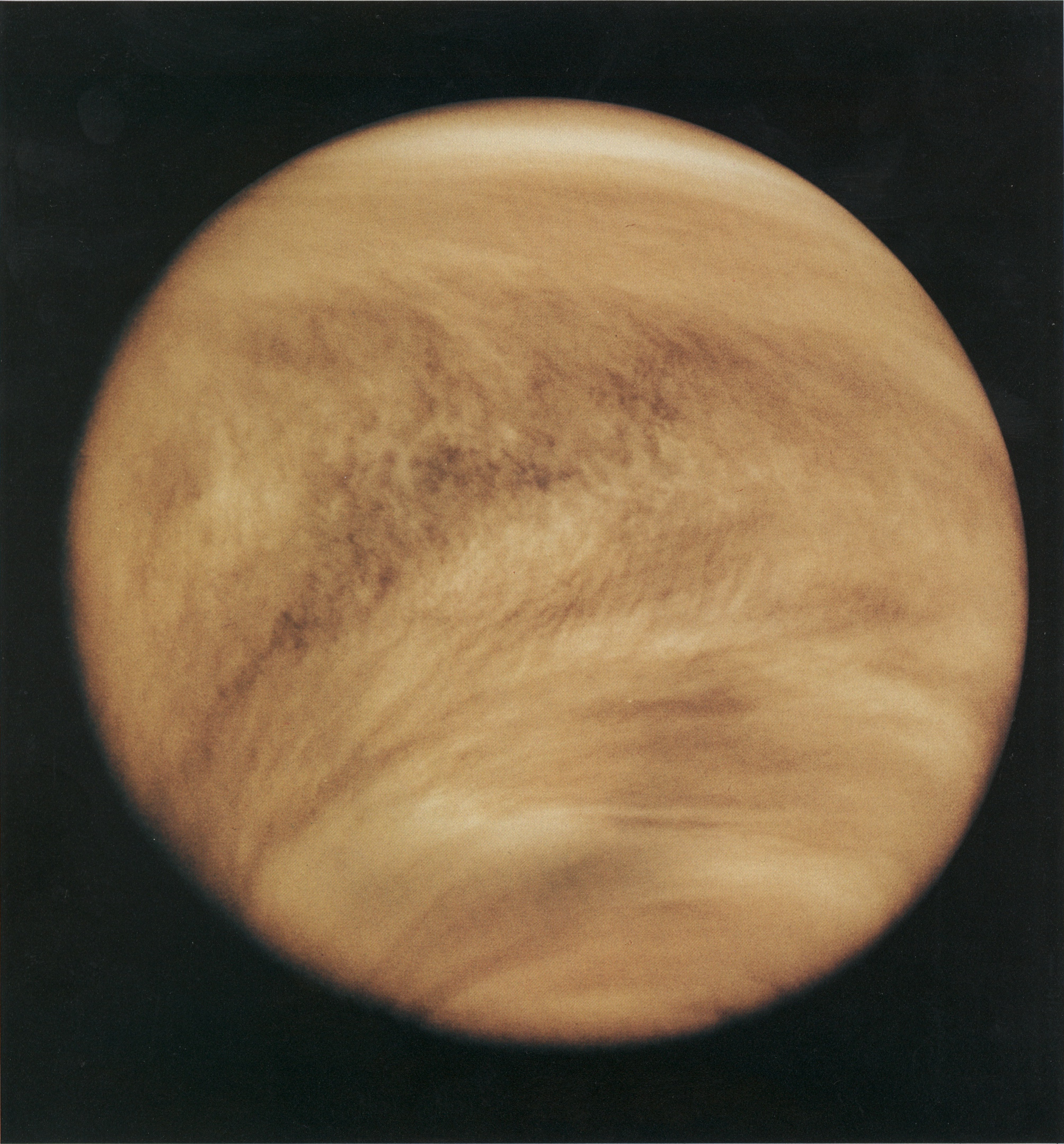





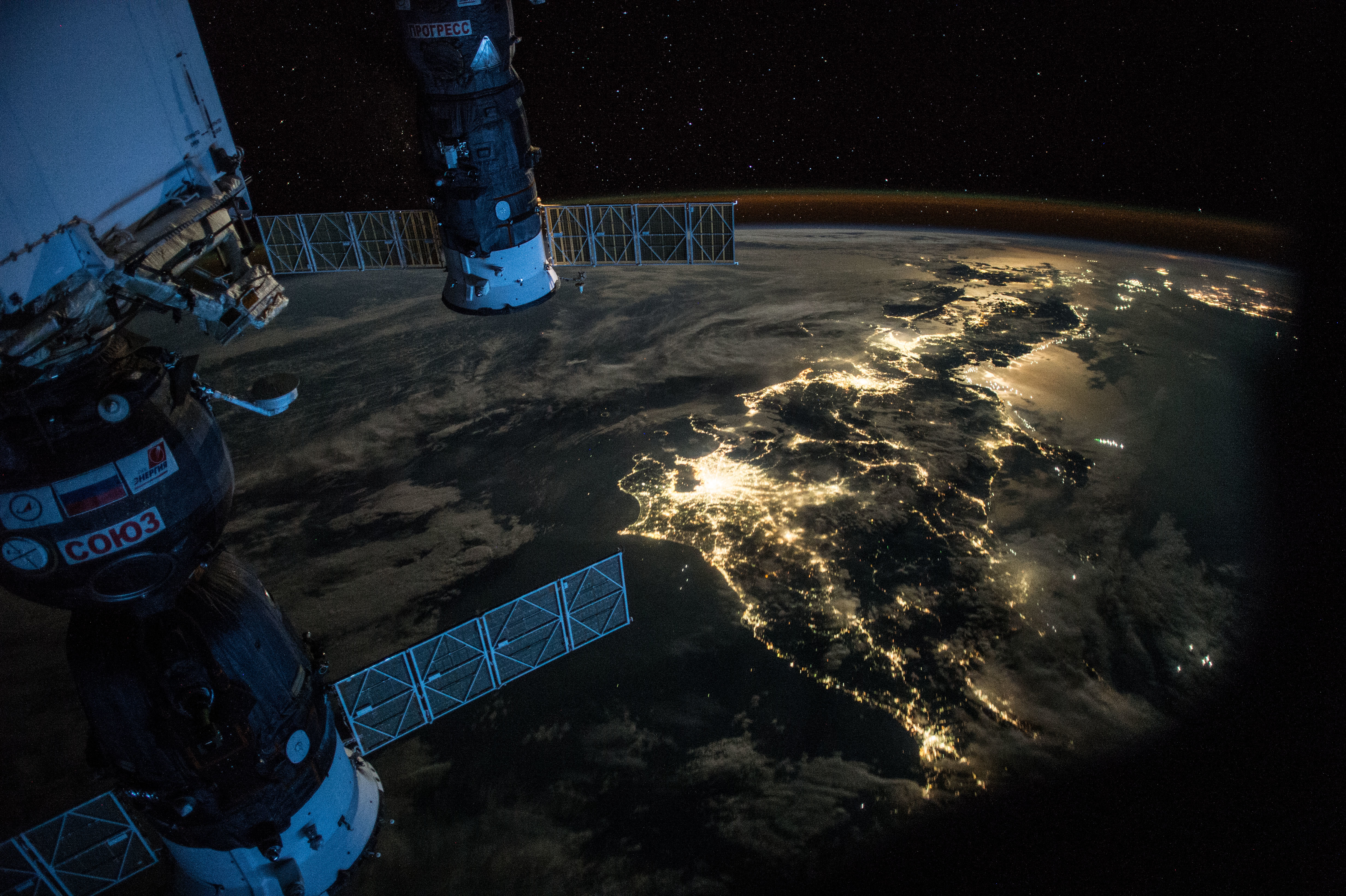
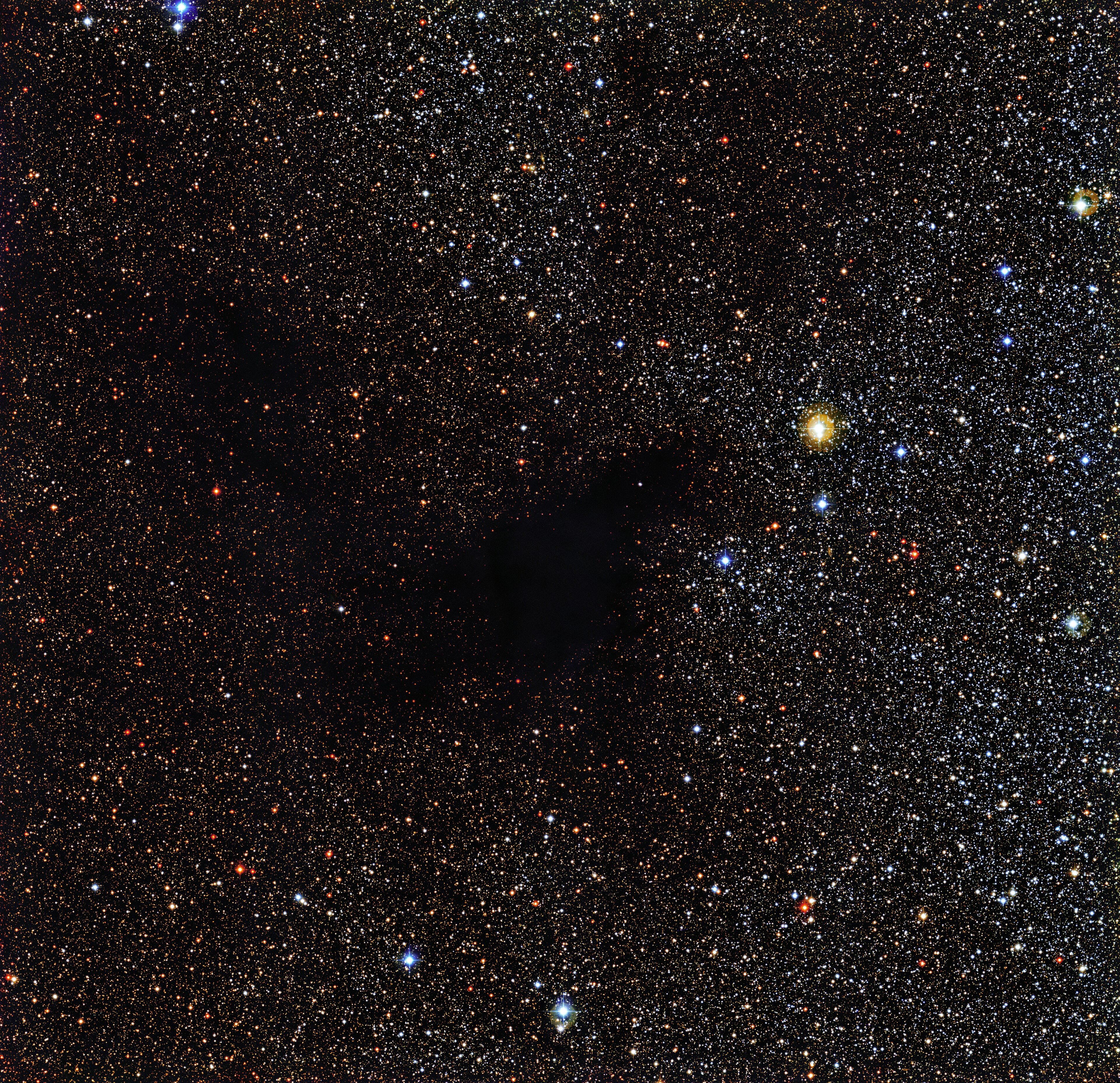
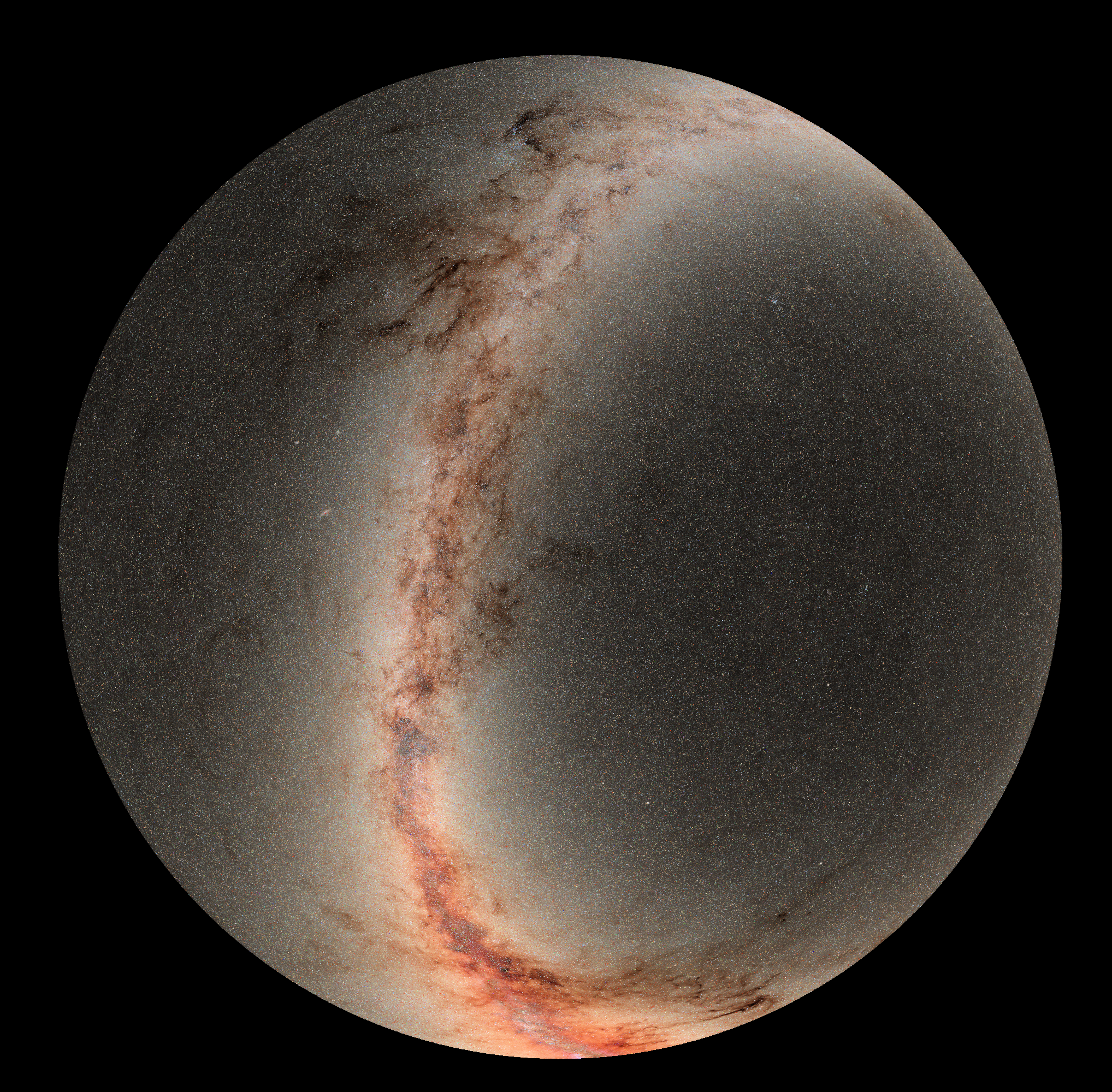
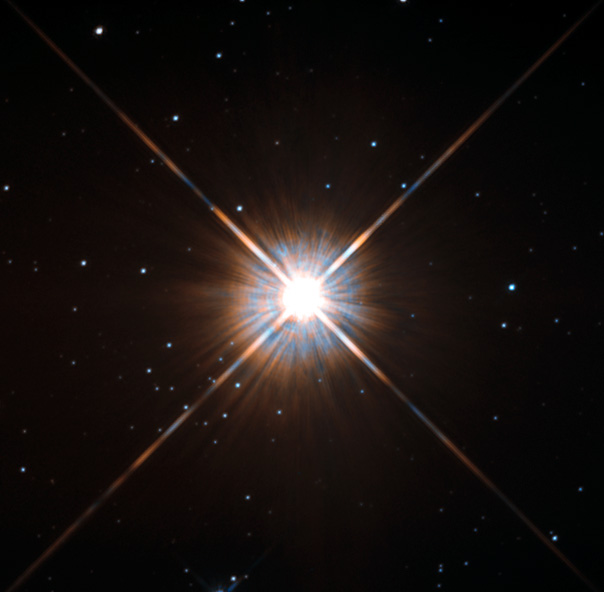
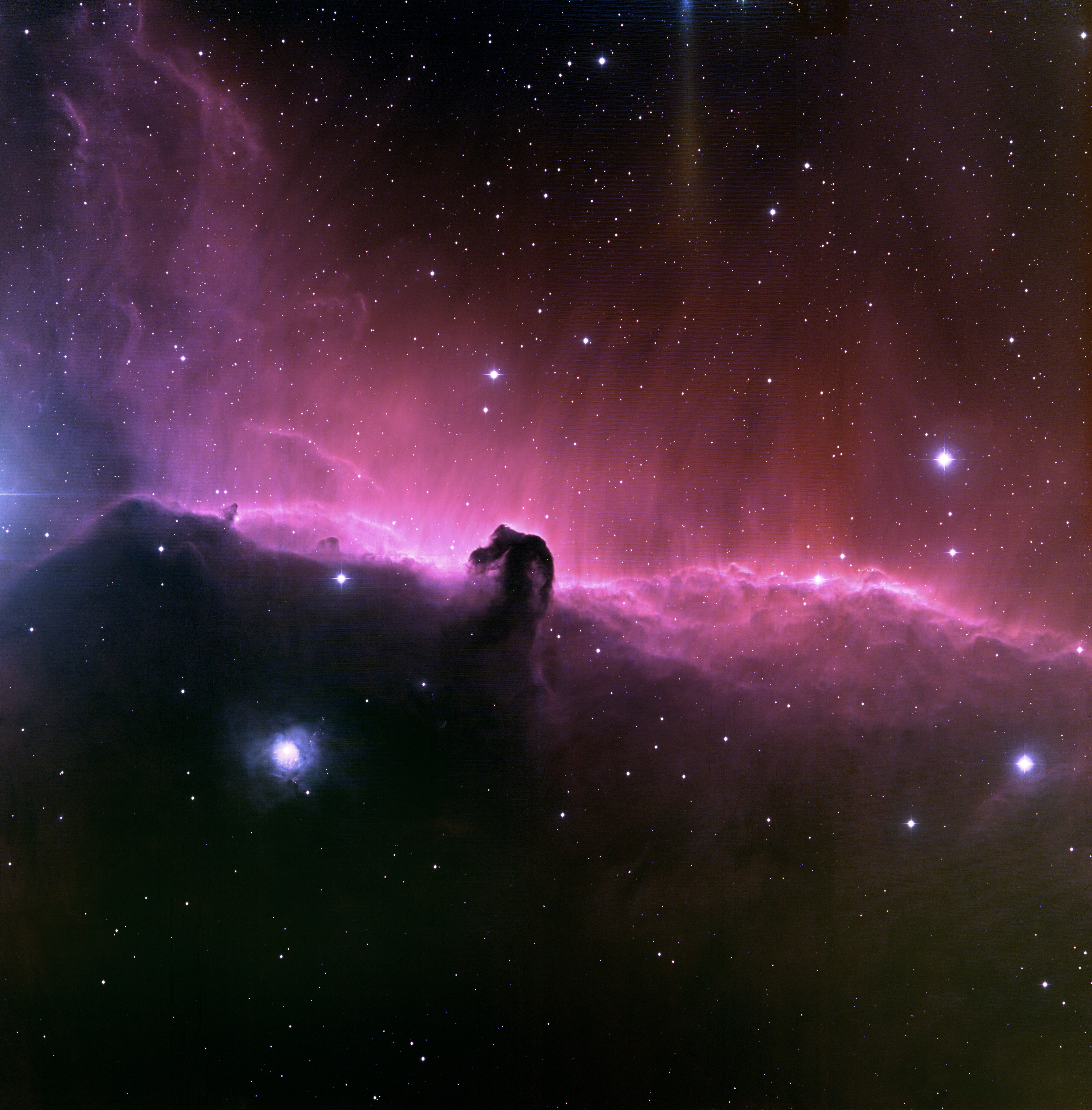


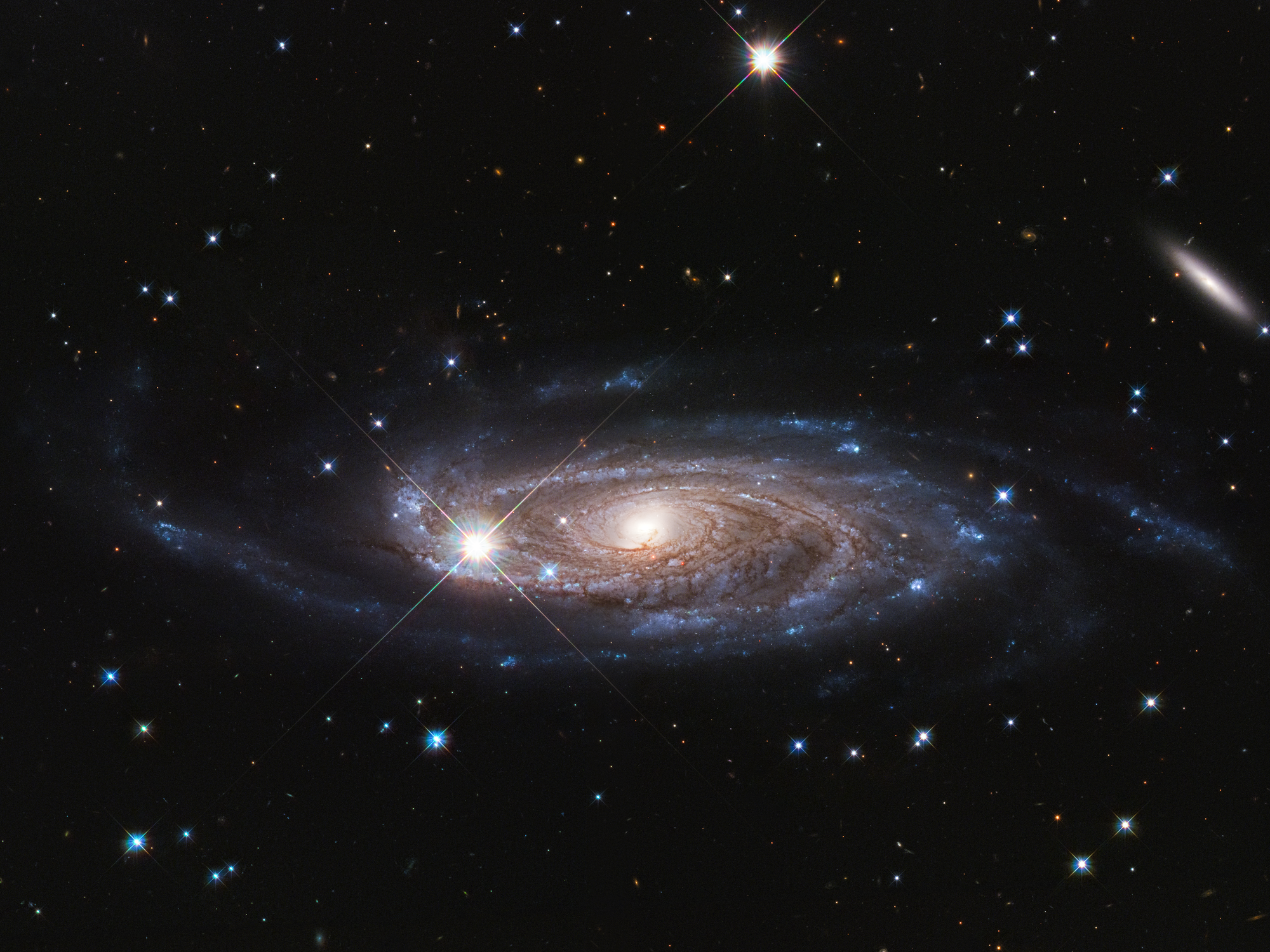
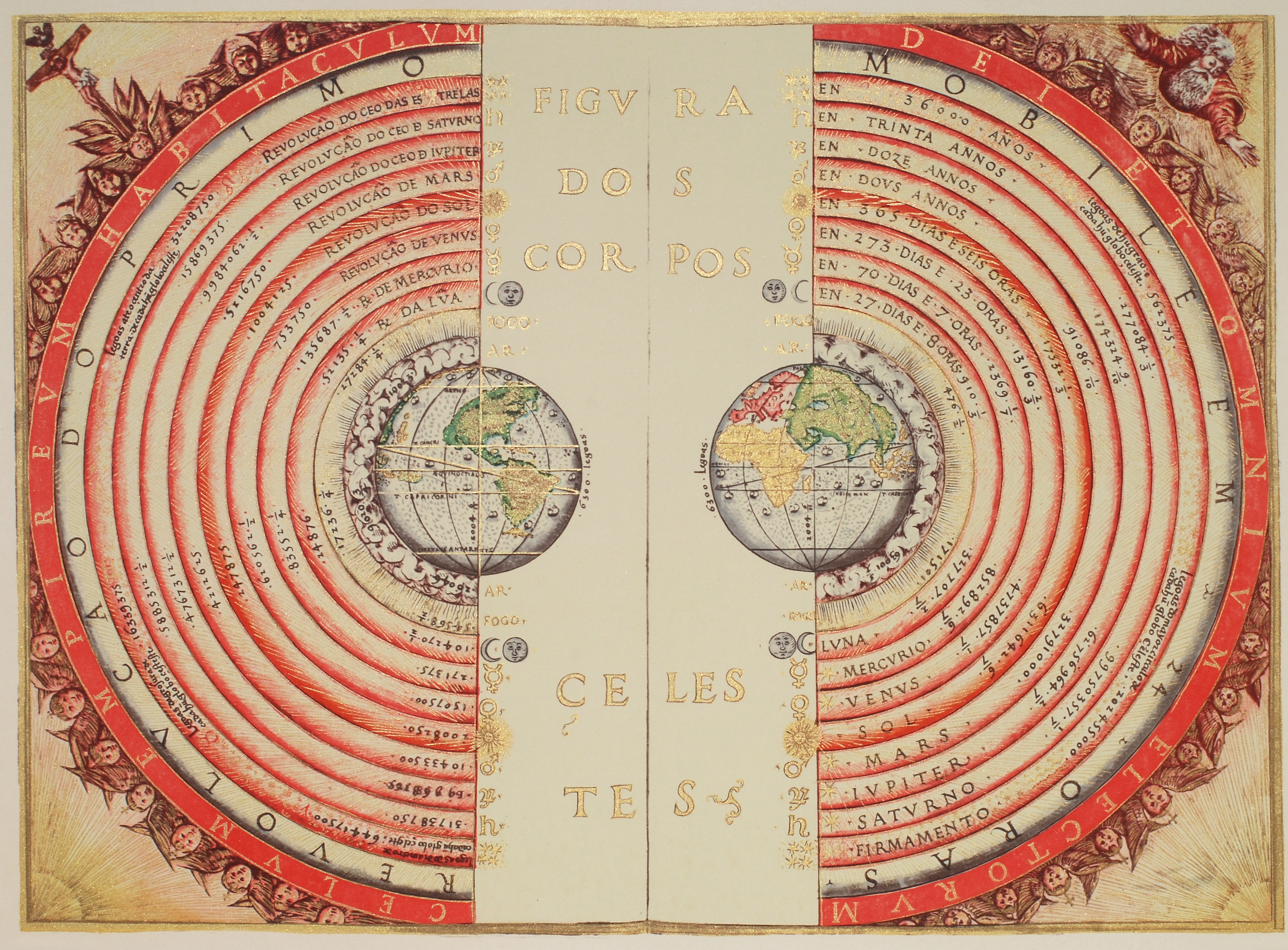

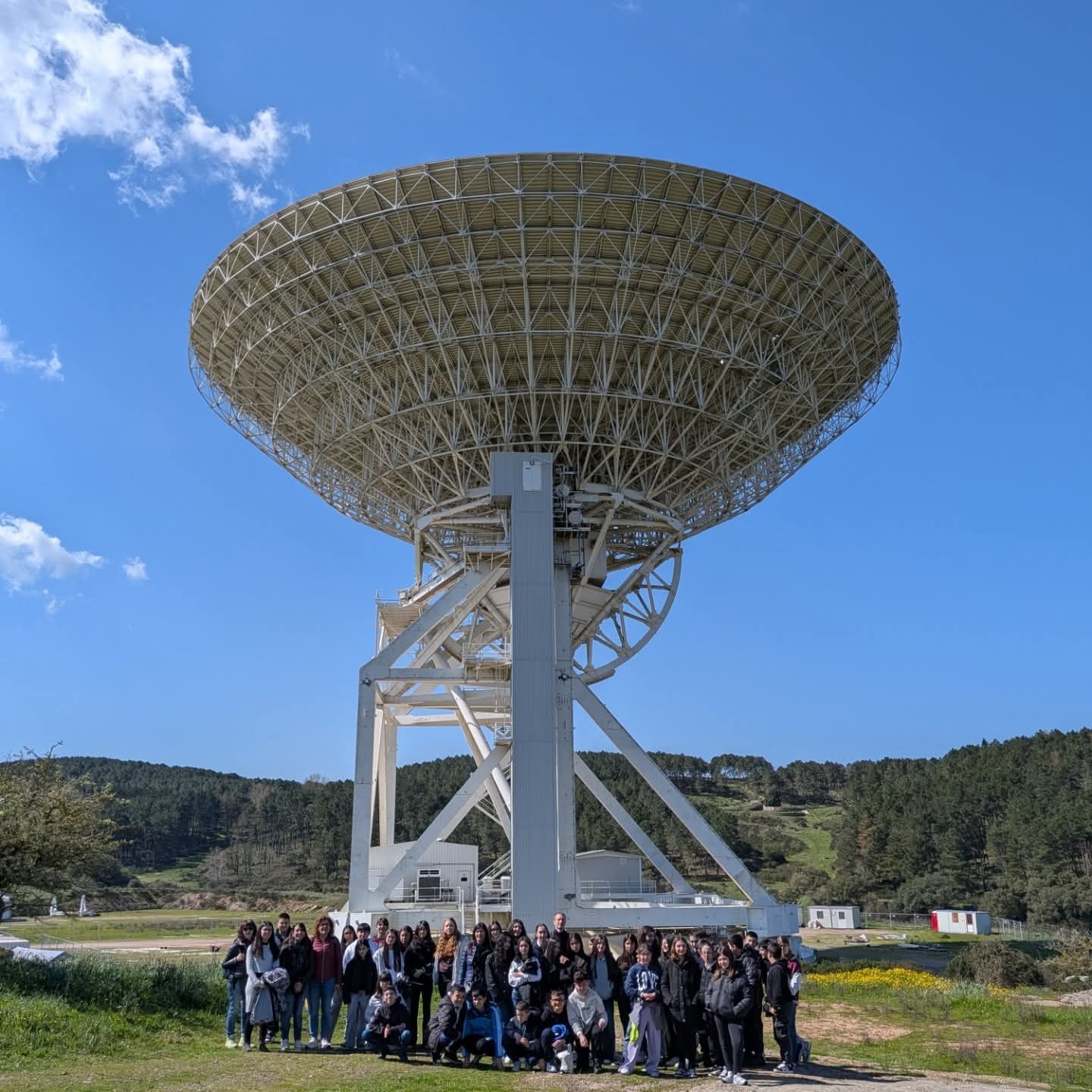
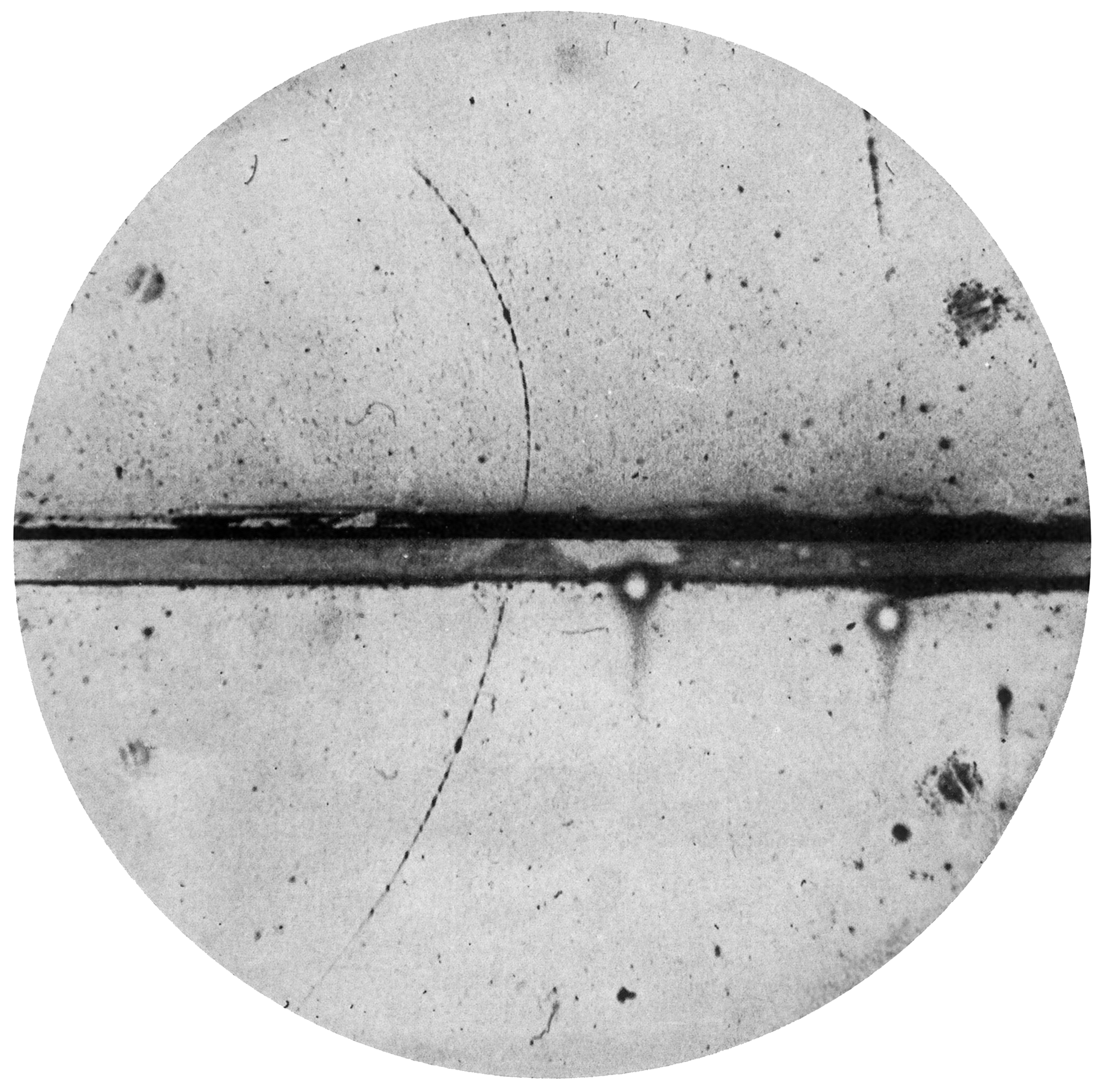


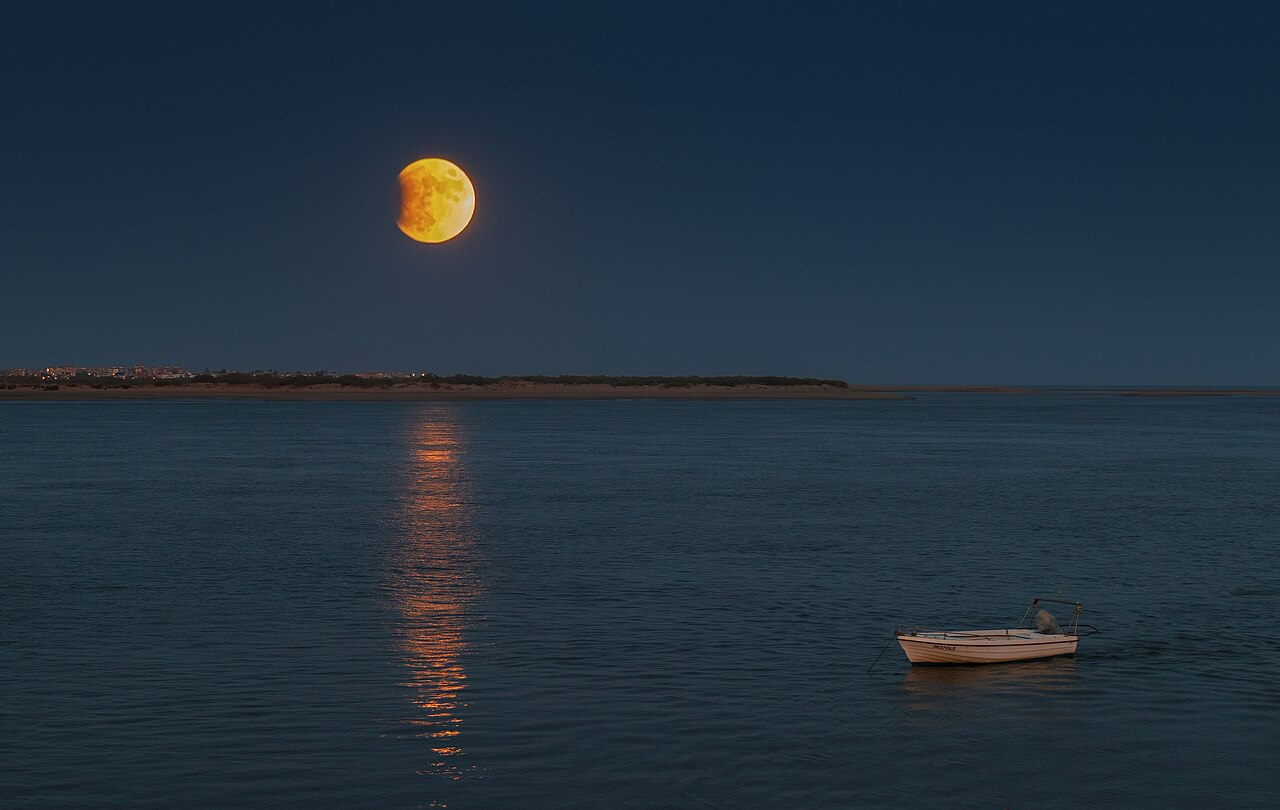
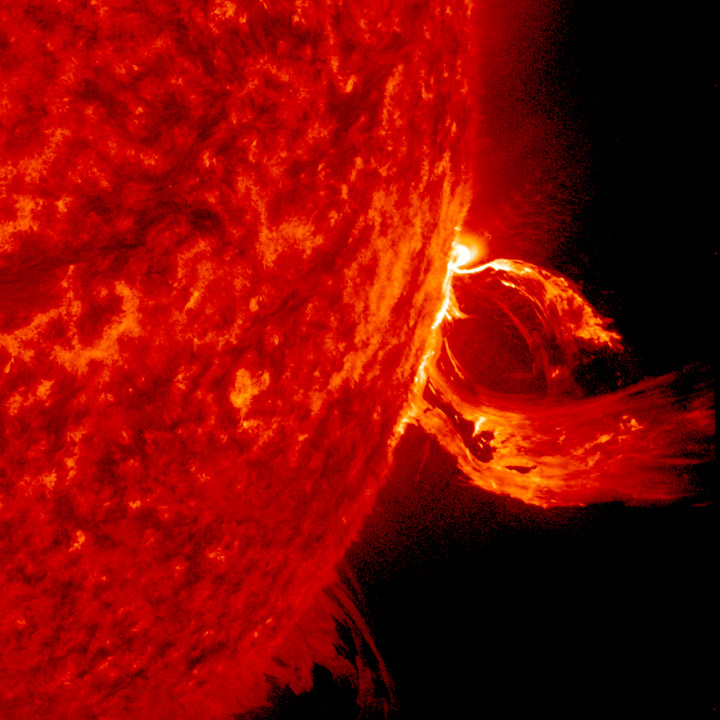
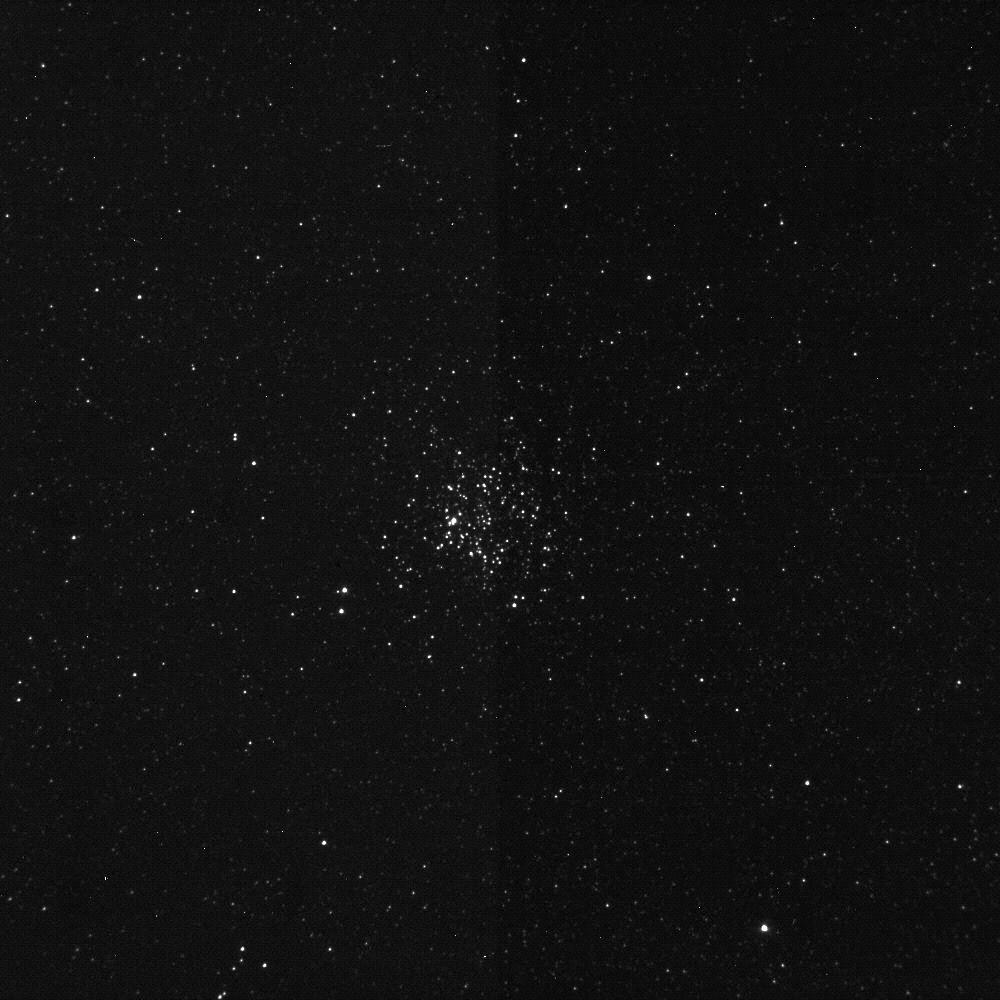
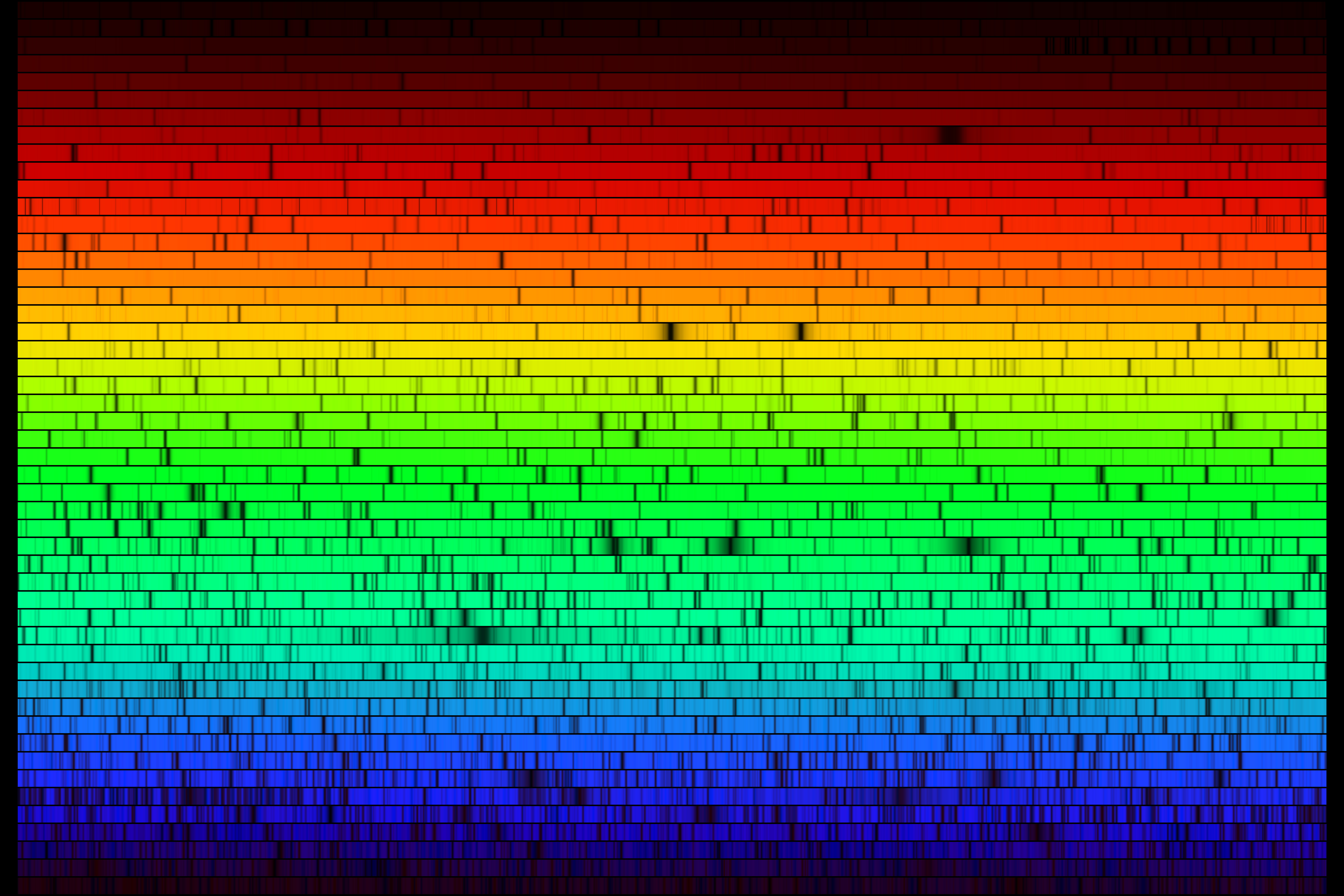
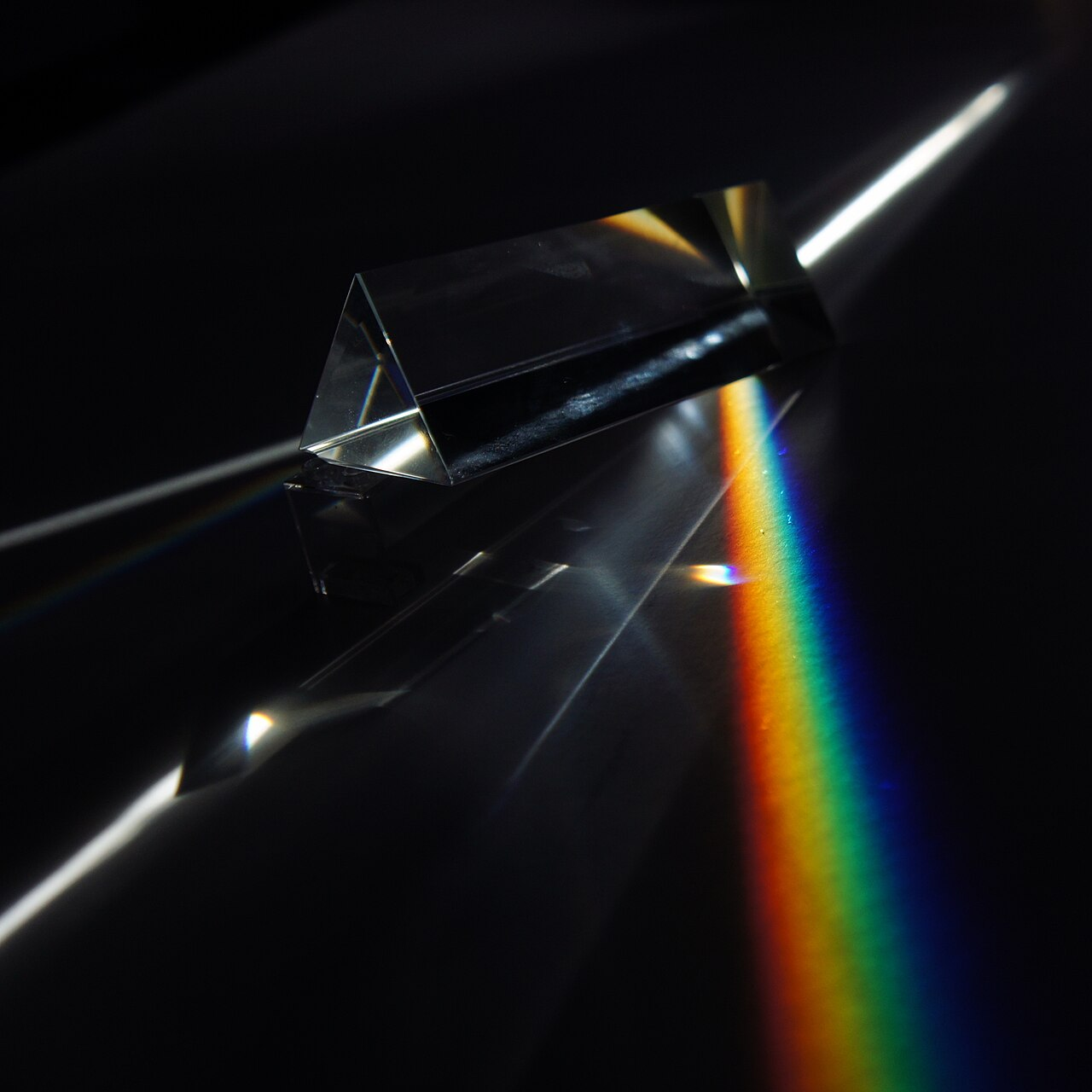
.jpg)